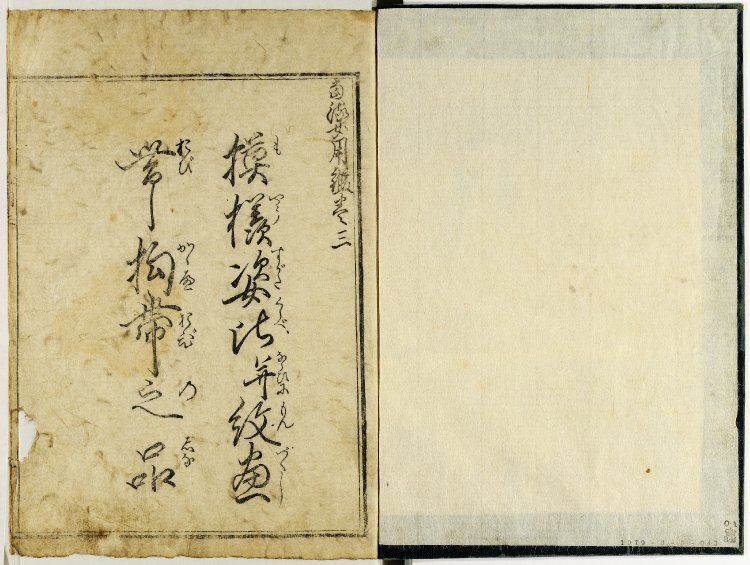
Toryu onna yo kagami (Mirror of Contemporary Women's Customs)
当流女用鑑
- Date:
- 1687
- Medium:
- Woodblock-printed book; ink on paper
- Source:
- British Museum
Description
Tōryū onna yō kagami (Mirror of Contemporary Women's Customs), published in 1687, is one of Yoshida Hambei's practical conduct manuals - a category of seventeenth-century Japanese illustrated book that combined moral instruction with social documentation. The volume supplied its female readership with guidance on proper deportment, dress, household management, the seasonal observances of the Edo-period calendar, the conventions of polite correspondence, and the etiquette of social visits between merchant households. As a printed conduct manual for women it belongs to the larger Tokugawa genre of jokun (women's instruction), a category that included the celebrated Onna daigaku (Greater Learning for Women) attributed to the Confucian scholar Kaibara Ekiken. Hambei's illustrations turned the abstract precepts of jokun into specific pictorial scenes - a woman writing a letter at a desk, a household receiving New Year visitors, a young wife instructing a servant in food preparation - making the manual function as both a behavioural prescription and a visual record of the social practices it sought to regulate. The seventeenth-century Kamigata merchant-class women for whom such books were produced increasingly possessed the literacy and the discretionary purchasing power to consume printed material, and the conduct-manual genre supplied this expanding readership with a sustained body of practical and moral instruction. The British Museum holds this copy under accession number 1979-0305-0-43. The signed monochrome woodblock illustrations are characteristic of Hambei's later 1680s practice, a period in which his collaboration with Saikaku was at its peak and his workshop was producing illustrated books at an extraordinary rate for the Kyoto and Osaka publishers.
More Prints by Yoshida Hambei

Mermaid Encounter at Sea, from Ihara Saikaku's Budō denraiki
武道伝来記・人魚
1687
Woodblock-printed book; ink on paper

Sōgenbi, the Fiery Ghost of an Oil-Stealing Monk, from Shin Otogi Bōko
新御伽婢子・宗玄火
1683
Woodblock-printed book; ink on paper
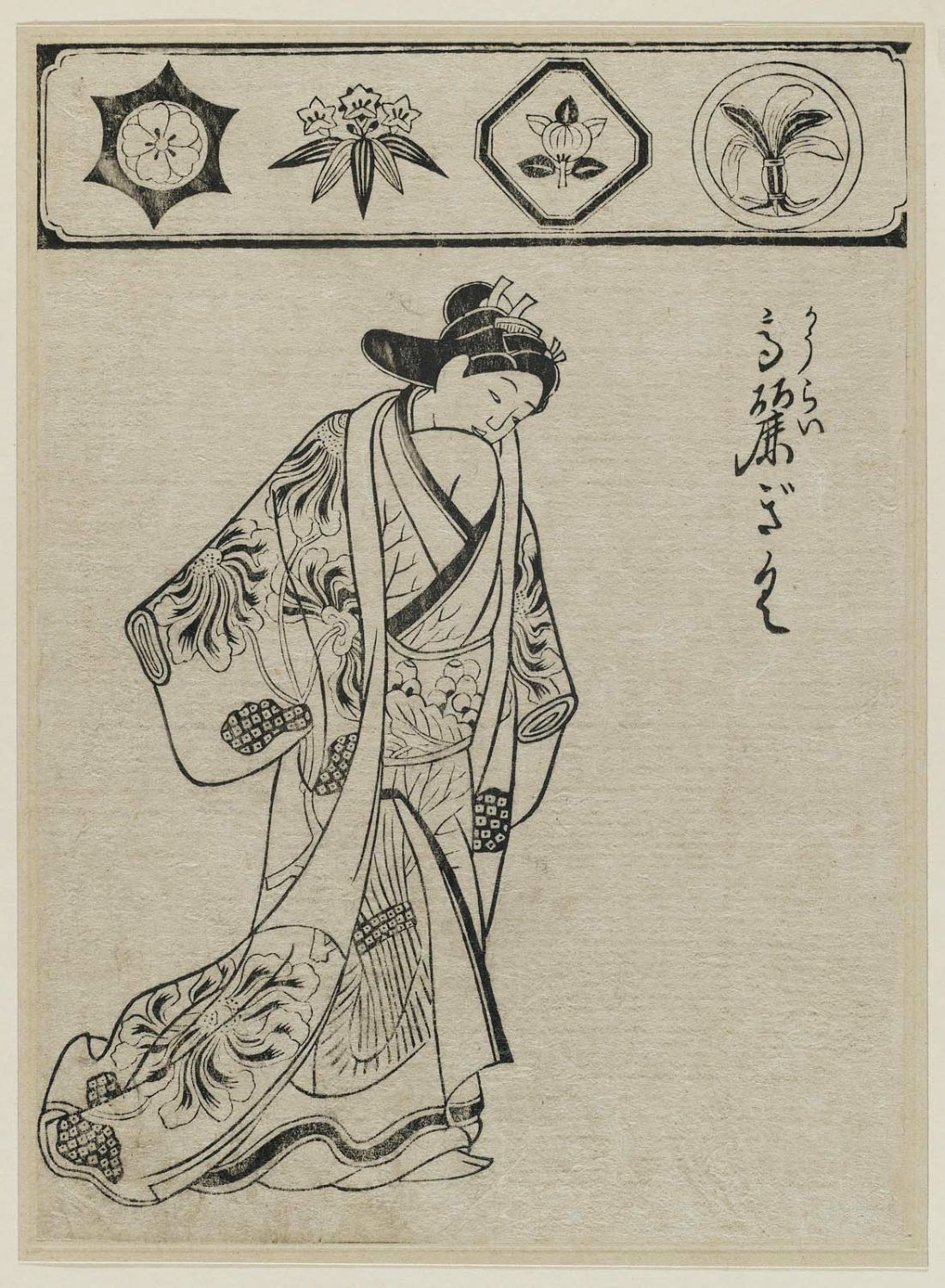
Korean Chrysanthemum Pattern (Koraigiku), from the book Illustrated Encyclopedia for Women (Joyo kinmo zui)
女用訓蒙図彙・高麗菊
1687
Woodblock-printed book; ink on paper
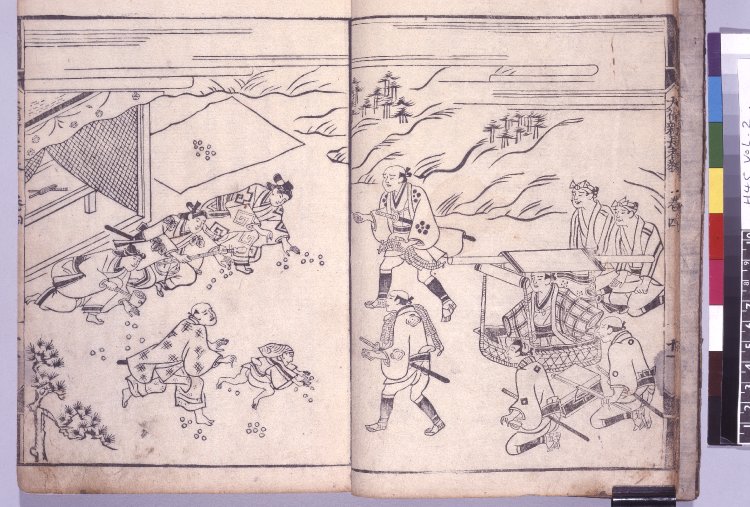
Nihon eitai-gura (Japan's Treasury for the Ages)
日本永代蔵
1688
Woodblock-printed book; ink on paper
Frequently Asked Questions
Toryu onna yo kagami (Mirror of Contemporary Women's Customs) (当流女用鑑) was created by Yoshida Hambei (吉田半兵衛) in 1687.