
Asakusa Scene
- Date:
- 1962
- Medium:
- Stencil print (kappazuri), ink and color on paper
- Dimensions:
- 37.6 × 48.3 cm
- Edition:
- Self-printed
- Source:
- Minneapolis Institute of Art
Description
Asakusa Scene, printed in 1962 as a stencil (kappazuri), presents the famous downtown Tokyo district around Senso-ji Temple — the most popular tourist and entertainment district in the old shitamachi (low city) tradition — with the bustling energy and colorful detail that distinguished Mori's urban genre subjects. Asakusa, with its Nakamise shopping arcade, its theaters, street performers, food stalls, and the constant movement of crowds, provided him with exactly the kind of vivid, popular subject that his folk-art sensibility was best equipped to render. The scene captured the living tradition of Edo popular culture that survived in this district well into the modern period.
More Prints by Yoshitoshi Mori

More Urban Scenes Prints
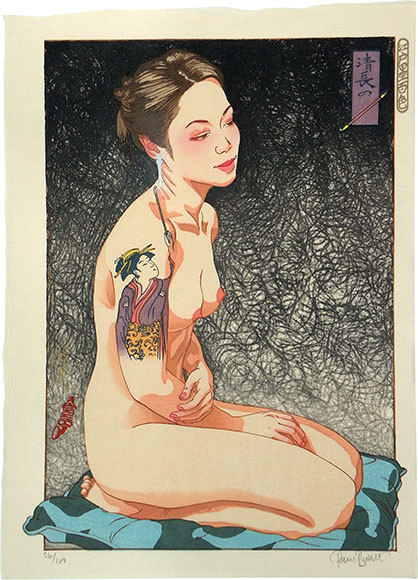
A Hundred Shades of Ink of Edo: Kiyonaga's Pipe (Edo zumi hyaku shoku: Kiyonaga no kiseru)
Woodblock print

View of Kabuki Theater from Matsuya (Ginza Matsuya yori Kabukiza), no. 3 from the series "Pictures of Ginza, First Series (Gashu Ginza dai isshu)"
1928
Color lithograph

Distant View of Mitsukoshi Movie Theater in Shinjuku from the Sixth Floor of Hoteiya (Hoteiya rokkai kara Shinjuku Mitsukoshi Musashi no kan enbo zu), no. 1 from the series "Scenery of Shinjuku (Gashu Shinjuku fukei)"
1930
Color lithograph
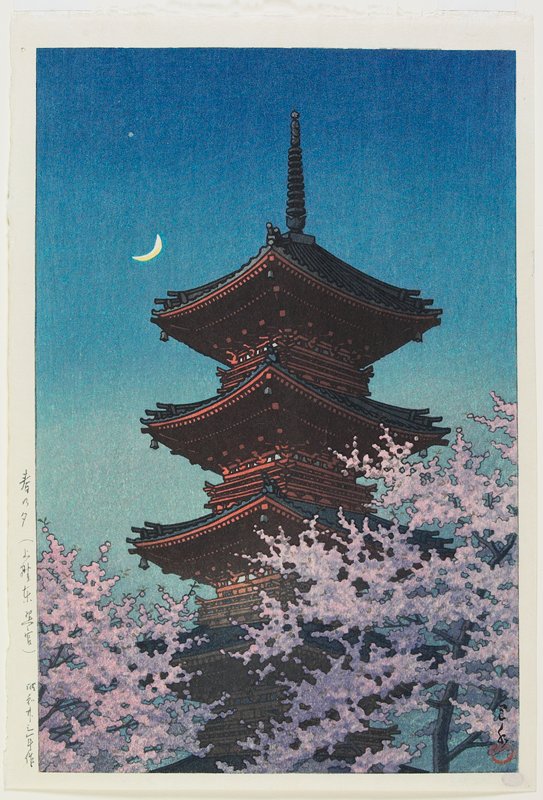
Spring Dusk at the Tōshō Shrine in Ueno
1948
Woodblock print, ink and color on paper
Featured in Collections
Curated cross-cuts that include this print.
Frequently Asked Questions
Asakusa Scene was created by Yoshitoshi Mori (森義利) in 1962.
Asakusa Scene uses Stencil Print, on stencil print (kappazuri), ink and color on paper.
Asakusa Scene depicts urban scenes and temples & shrines, set at Asakusa.
Asakusa Scene measures 37.6 × 48.3 cm.