Asakusa (浅草)
35 prints by 17 artists
About Asakusa
Asakusa is a district in northeastern Tokyo, on the western bank of the Sumida River within present-day Taito Ward, organized around the great Buddhist temple of Senso-ji and its principal deity Kannon. The temple, whose foundation legend dating to 628 tells of two fishermen brothers, the Hinokuma brothers, finding a small golden image of Kannon in their nets in the Sumida River, was the most popular pilgrimage destination in Edo throughout the Tokugawa period, drawing constant traffic of worshippers, vendors, and entertainers, and it served as the cultic anchor of an extensive entertainment quarter that developed around its precincts. By the late Edo period Asakusa contained the largest concentration of theaters, teahouses, archery galleries, storytellers, peep-show booths, kabuki performance halls, and street performers in the city, with the Yoshiwara licensed pleasure quarter situated approximately two kilometers to the north along the Nihon-zutsumi embankment and reached by the riverboat services from Asakusa quay. The district was destroyed in the 1923 Great Kanto Earthquake and again in the firebombing of 1945, and its present form is largely a postwar reconstruction, though the temple compound preserves the historical plan with the great Kaminarimon thunder gate hung with its giant red paper lantern, the Nakamise vendor street running 250 meters north from the gate, the inner Hozomon gate, the five-story pagoda on the west side, and the main hall facing south, all rebuilt in the late 1950s and 1960s in faithful reproduction of the destroyed Edo-period predecessors. For Japanese printmaking, Asakusa figures throughout the meisho-e tradition. Utagawa Hiroshige treated Asakusa repeatedly in his Famous Places in the Eastern Capital and again in One Hundred Famous Views of Edo (Meisho Edo hyakkei, 1856-1858), including the celebrated winter sheet Kinryuzan Temple at Asakusa, in which the great paper lantern of the Kaminarimon is seen from inside the gate against a snow-blanketed approach to the inner temple, and other Asakusa sheets treating the festival of Sanja Matsuri, the Sumida-side dock, the Yoshiwara approach, and the surrounding entertainment quarter. Hokusai included Asakusa in his Thirty-Six Views of Mount Fuji in compositions in which the distant peak is glimpsed across the temple precinct, and Utagawa Kunisada and Kuniyoshi produced theatrical and bijin sheets set in the surrounding entertainment district. The Meiji-period kaika-e of Kobayashi Kiyochika and Inoue Yasuji recorded the district's transformation under gas lamps and modernized architecture, with Kiyochika's celebrated Asakusa night views figuring as some of the finest examples of his kosenga (light-ray pictures) atmospheric practice. The shin-hanga revival returned to Asakusa repeatedly in the work of Kawase Hasui, Tsuchiya Koitsu, Ito Shinsui, and Yoshida Hiroshi, with snow, rain, and night views of the Kaminarimon and the inner precincts forming a recurrent motif, including Hasui's celebrated Snow at Kinryuzan, Asakusa and Koitsu's evening views of the same gate. Yokoyama Taikan and other Nihonga painters of the early twentieth century treated Asakusa in painting traditions that fed back into print idioms. The visual character of Asakusa in prints centers on the great red gate with its massive paper lantern, the crowded Nakamise approach, the five-story pagoda, the temple roofs against the sky, the figures of pilgrims and entertainers, and seasonal phenomena ranging from cherry blossoms and the Sanja festival to fireworks over the nearby Sumida and snowfall on the gate and pagoda. Contemporary visitors find Senso-ji and its approach among the most heavily visited temple complexes in Japan, reached most directly via the Asakusa Line to Asakusa Station, the Tokyo Metro Ginza Line, or the Tobu Skytree Line, and the surrounding district preserves traces of the older entertainment quarter in its remaining theaters, restaurants, and shotengai, with the new Tokyo Skytree visible across the Sumida providing the principal contemporary skyline counterpoint to the temple silhouette.
Prints Depicting Asakusa (35)
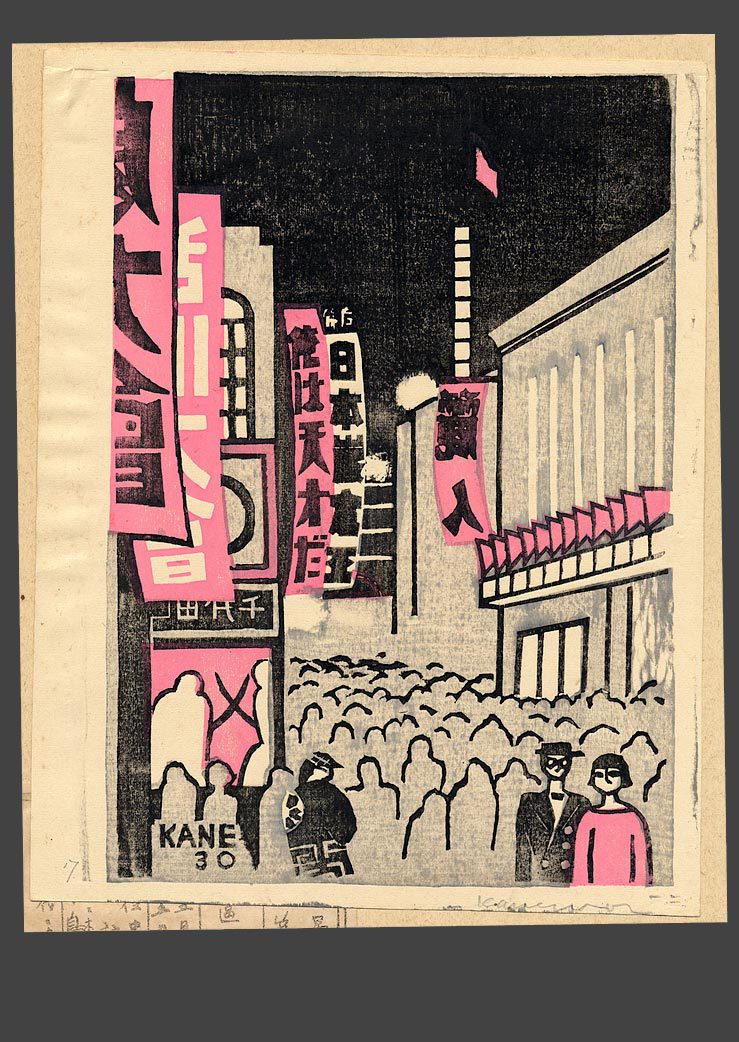
#67 Asakusa
Woodblock print
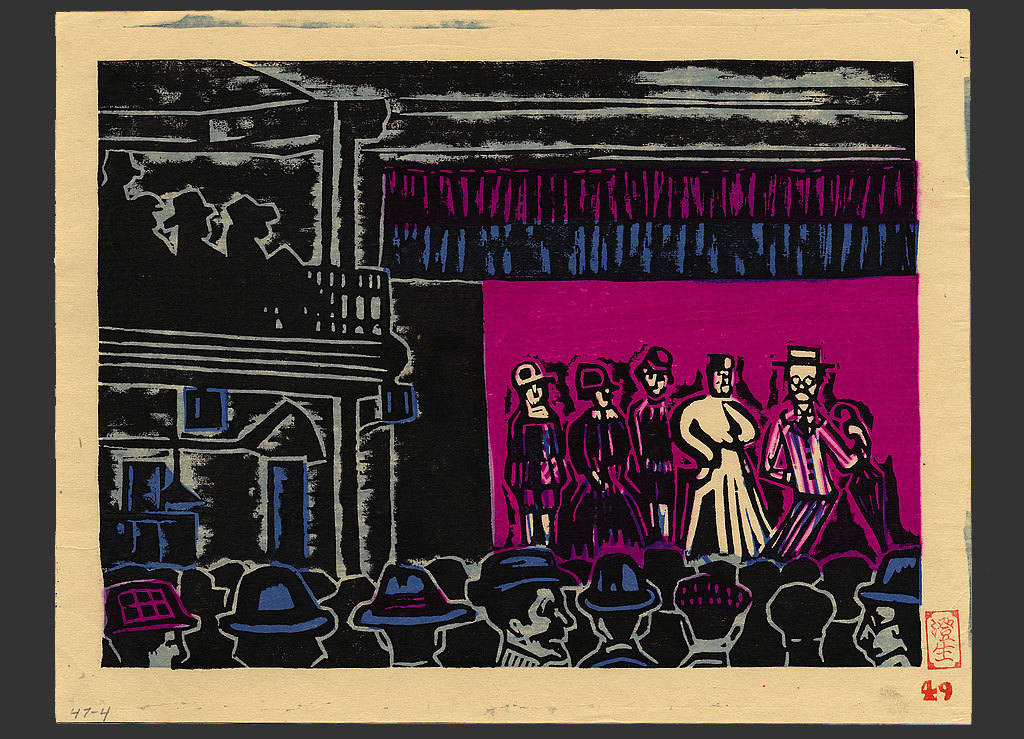
#69 Theatre at Asakusa
Woodblock print
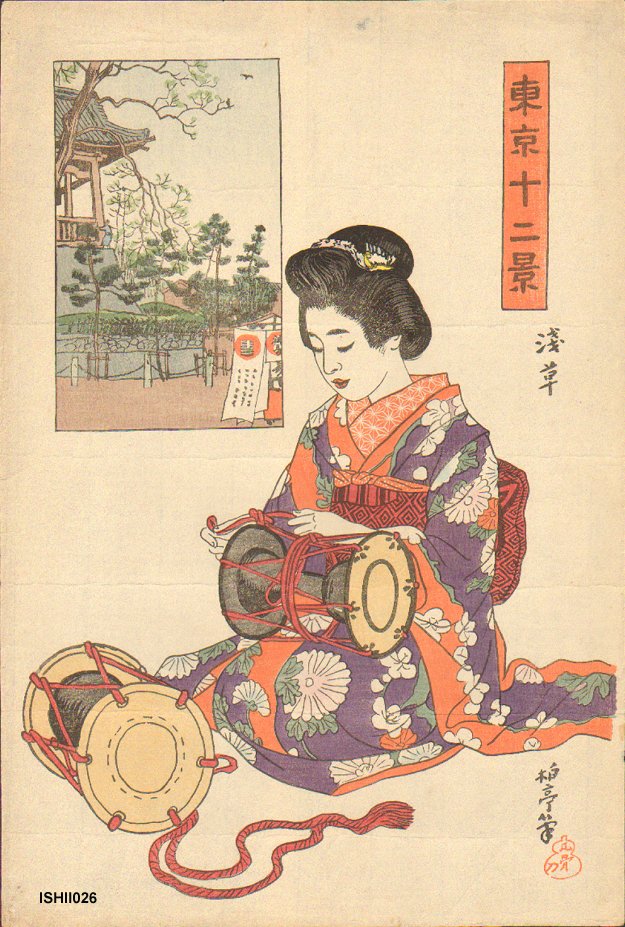
Asakusa
Woodblock print

Asakusa Festival (Asakusa matsuri), from the illustrated book "Picture Book of Amusements of the East (Ehon Azuma asobi)"
c. 1802
Color woodblock print; double-page illustration from book

Asakusa Imado, from the series "Famous Places in the Eastern Capital (Toto Meisho)"
c. 1832/33
Color woodblock print; oban

Asakusa Kannon Hall, from the series Recollections of Tokyo
1945
Color woodblock print

Asakusa Kannon-do
Woodblock print
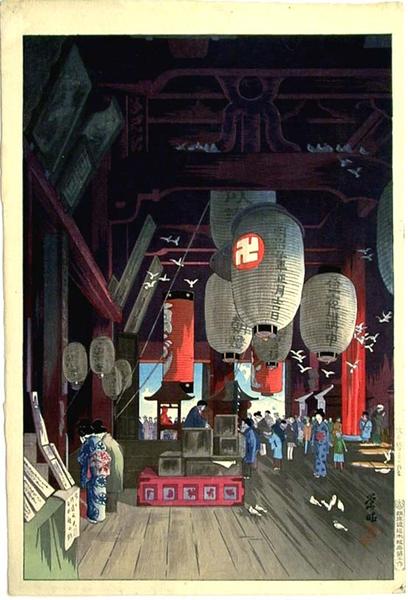
Asakusa Kanzeon Temple
1932
Color woodblock print

Asakusa Kinryuzan
Woodblock print
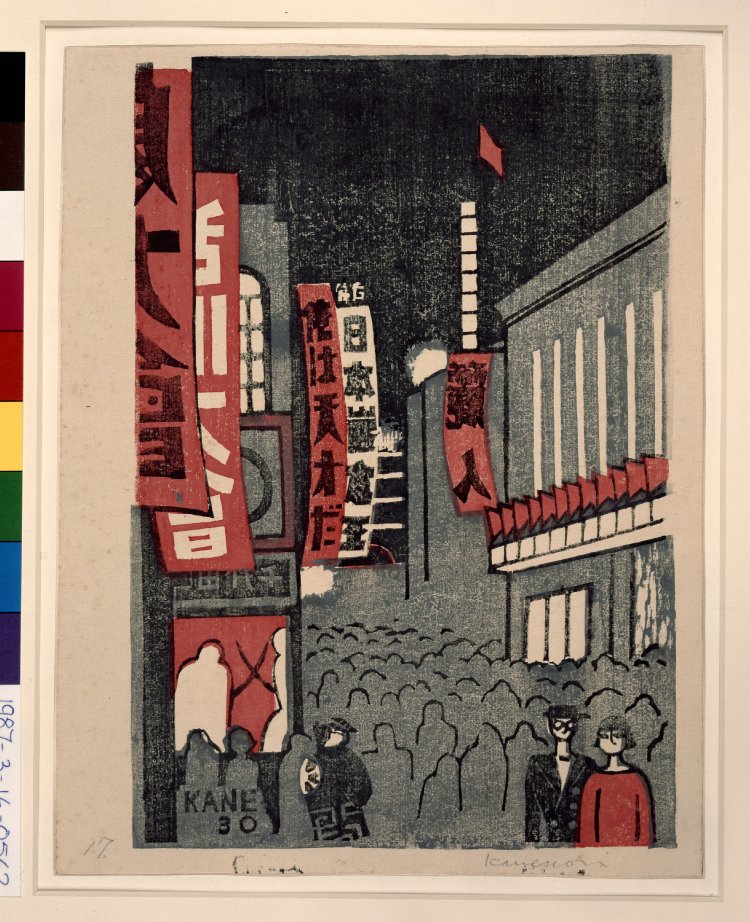
Asakusa rokku (Sixth District of Asakusa) / Shin Tokyo hyakkei (One Hundred New Views of Tokyo, No. 67)
Woodblock print

Asakusa Scene
1962
Stencil print (kappazuri), ink and color on paper
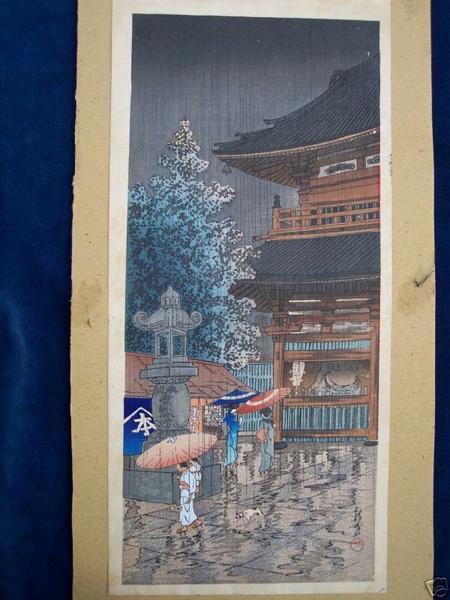
Asakusa Temple
Woodblock print
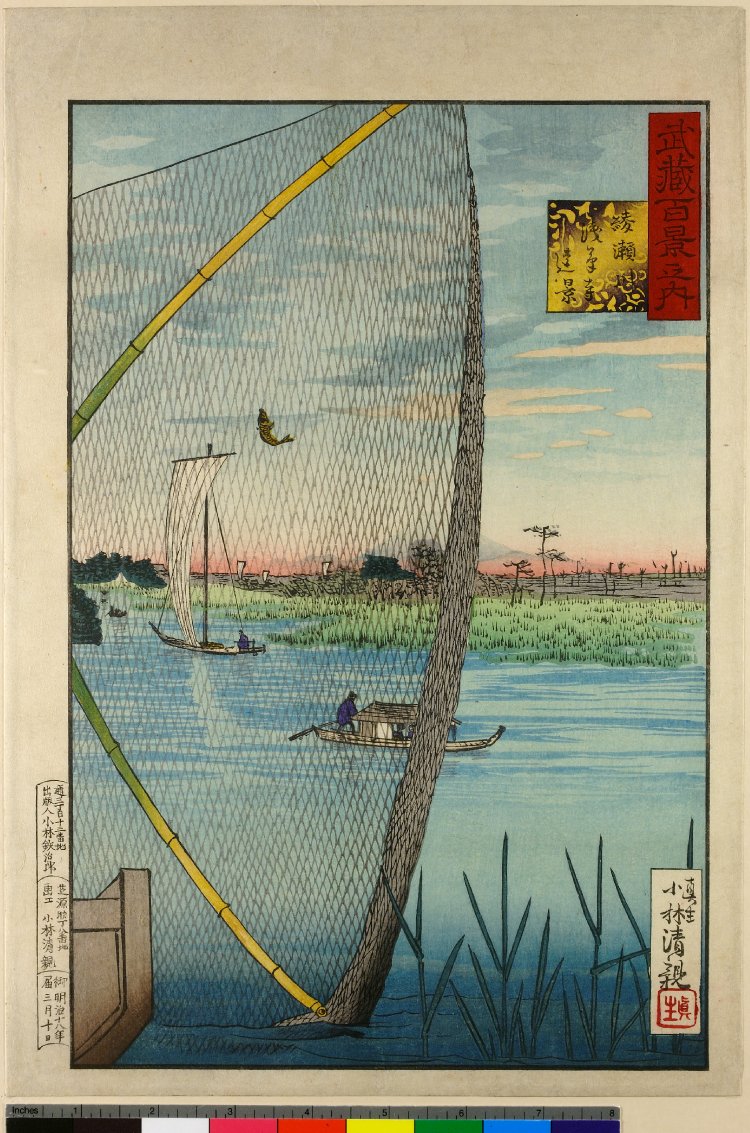
Ayase-gawa Asakusa-dera enkei / Musashi Hyakkei no uchi
Woodblock print

Clearing after a Snowfall at the Kannon Temple in Asakusa (Asakusa Kannon no yukibare), from the series "Twenty Views of Tokyo (Tokyo nijukkei)"
1926
Color woodblock print; oban
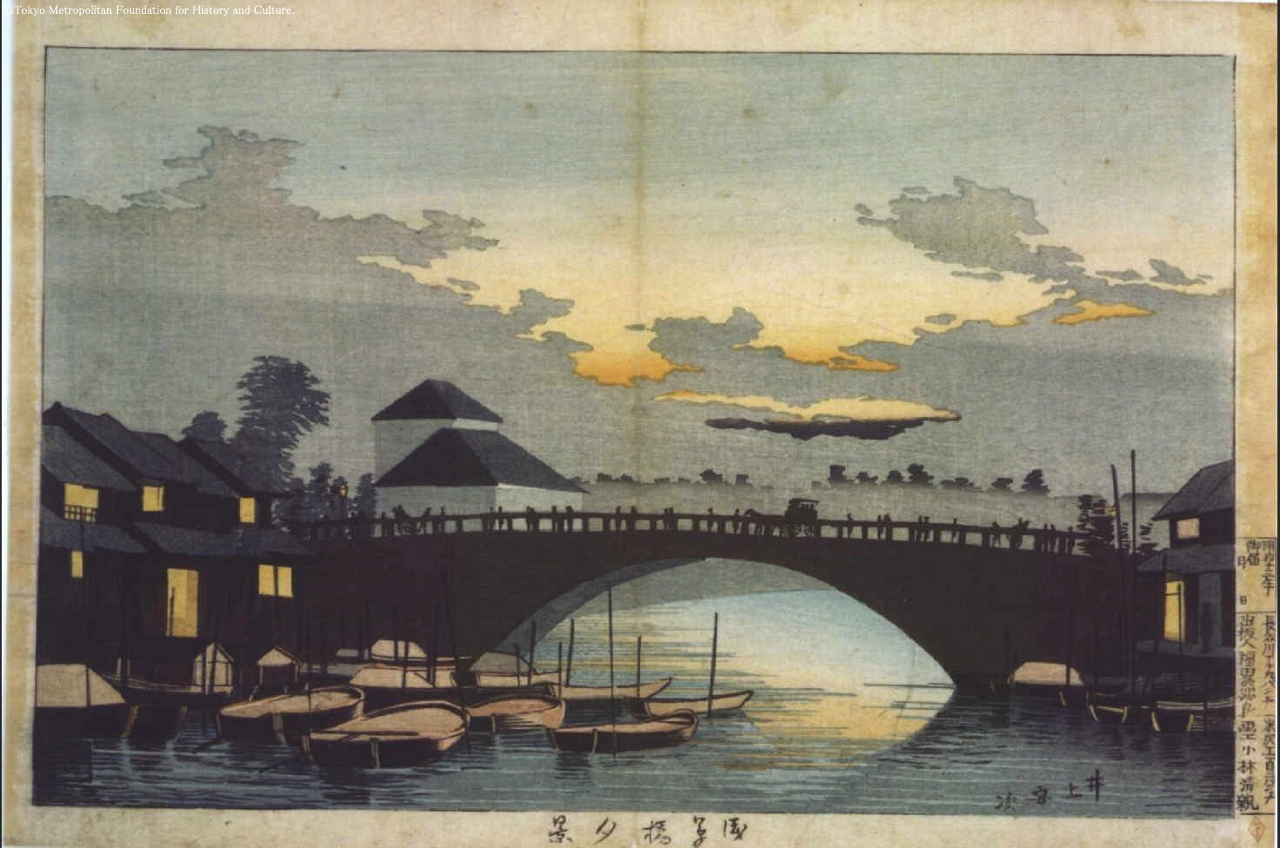
Evening Glow over Asakusa Bridge
Woodblock print

Great Lantern at Asakusa Kannon Temple
浅草観音堂大提灯
1934
Color woodblock print
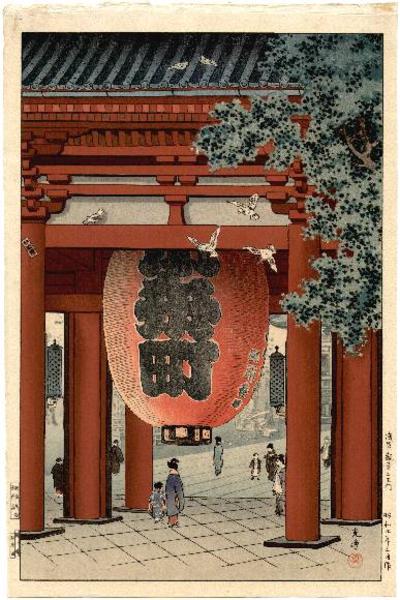
Great Lantern at Asakusa Temple
Woodblock print
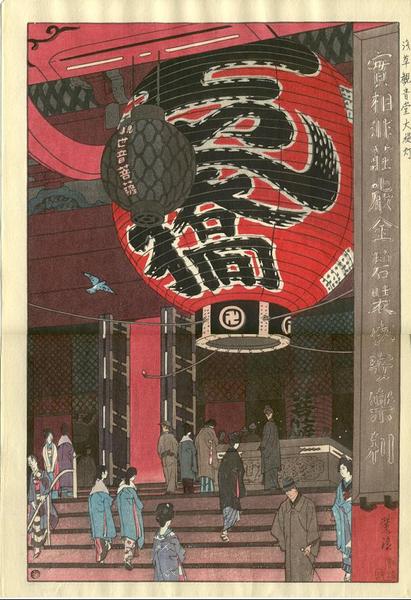
Great Lantern at the Asakusa Kannondo
Woodblock print
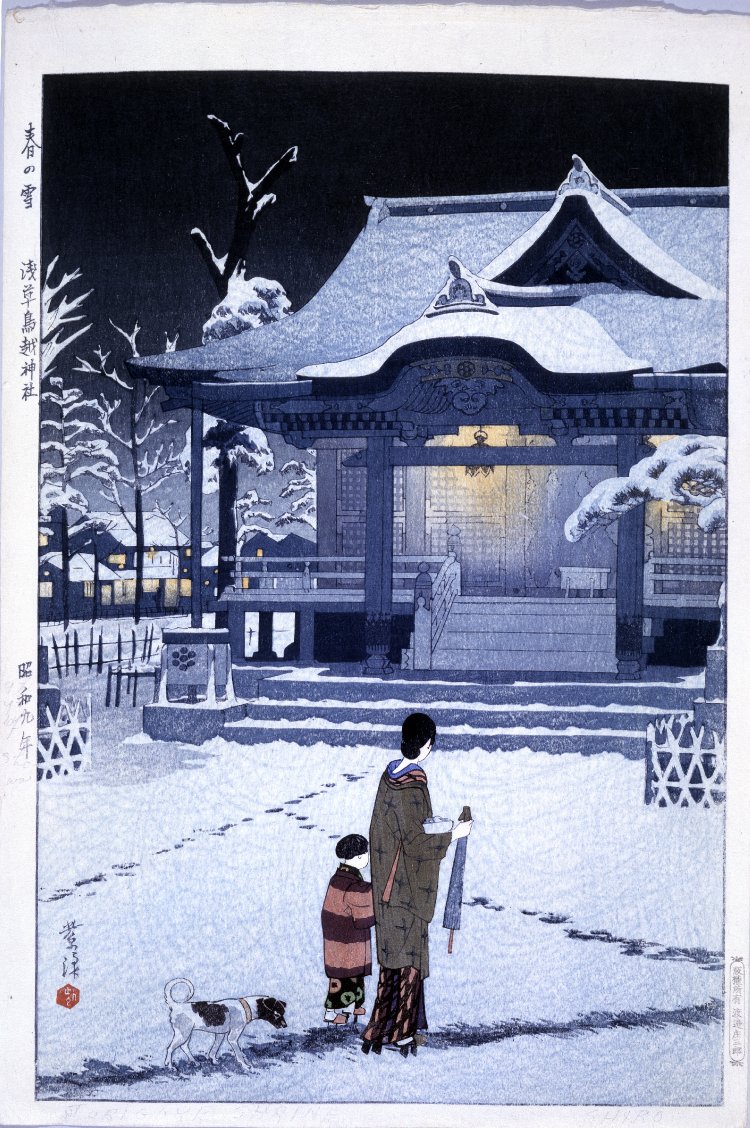
Haru no yuki - Asakusa Torigoe jinja (Spring Snow - The Torigoe Shrine at Asakusa)
Woodblock print
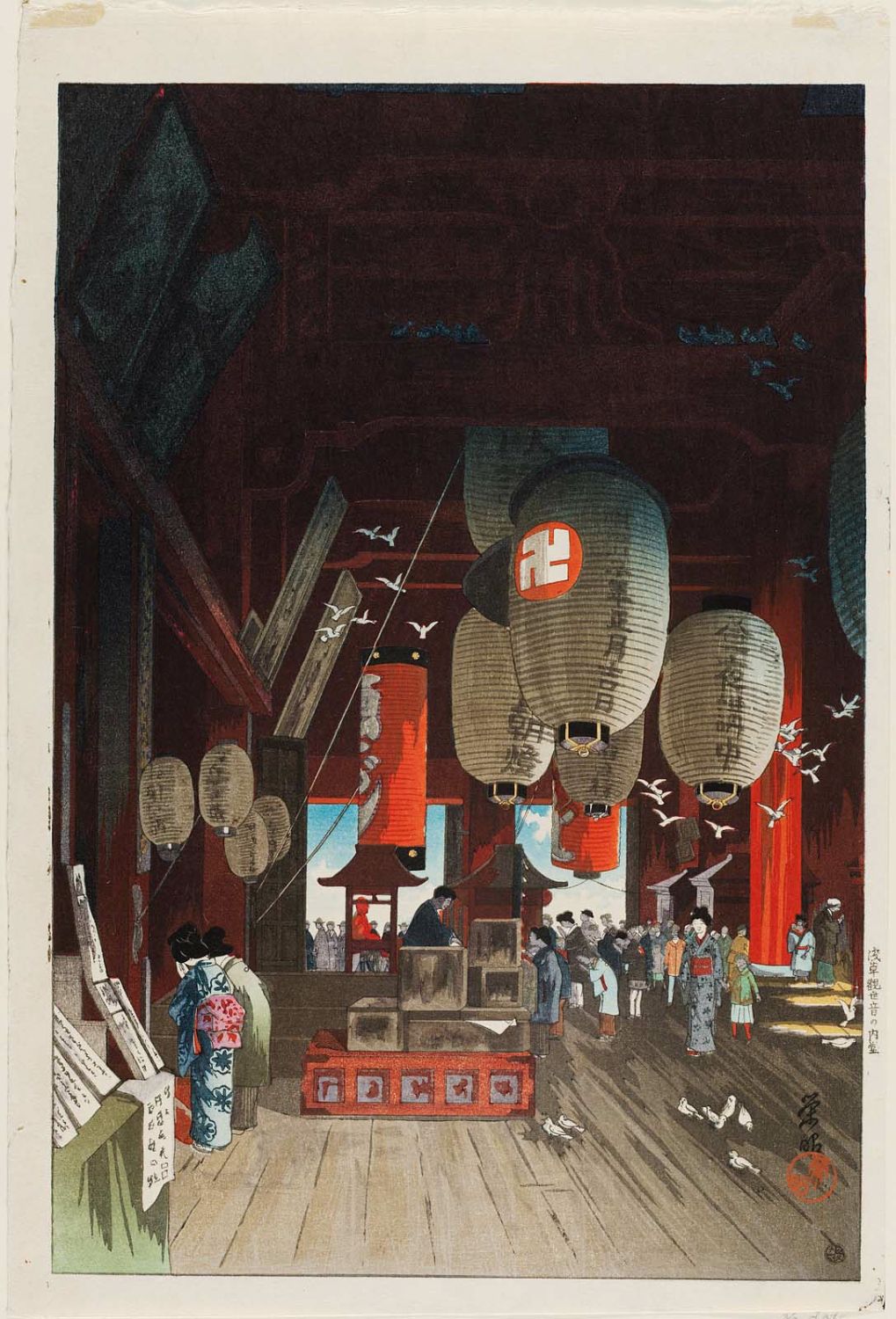
Interior of the Kannon Temple at Asakusa (Asakusa Kannon-dô no naidô)
Japanese, Taishô era–Shôwa era, 20th century
Woodblock print
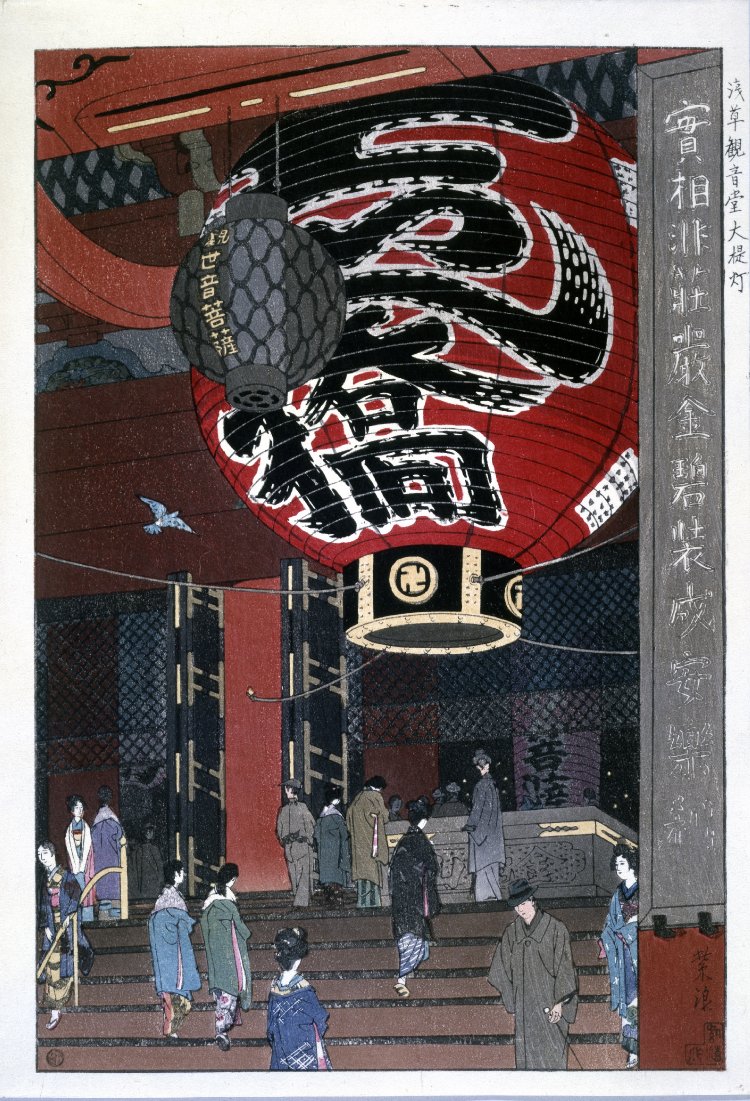
Lantern at Asakusa
Woodblock print

Rain at Asakusa Kannon Temple
1933
Color woodblock print
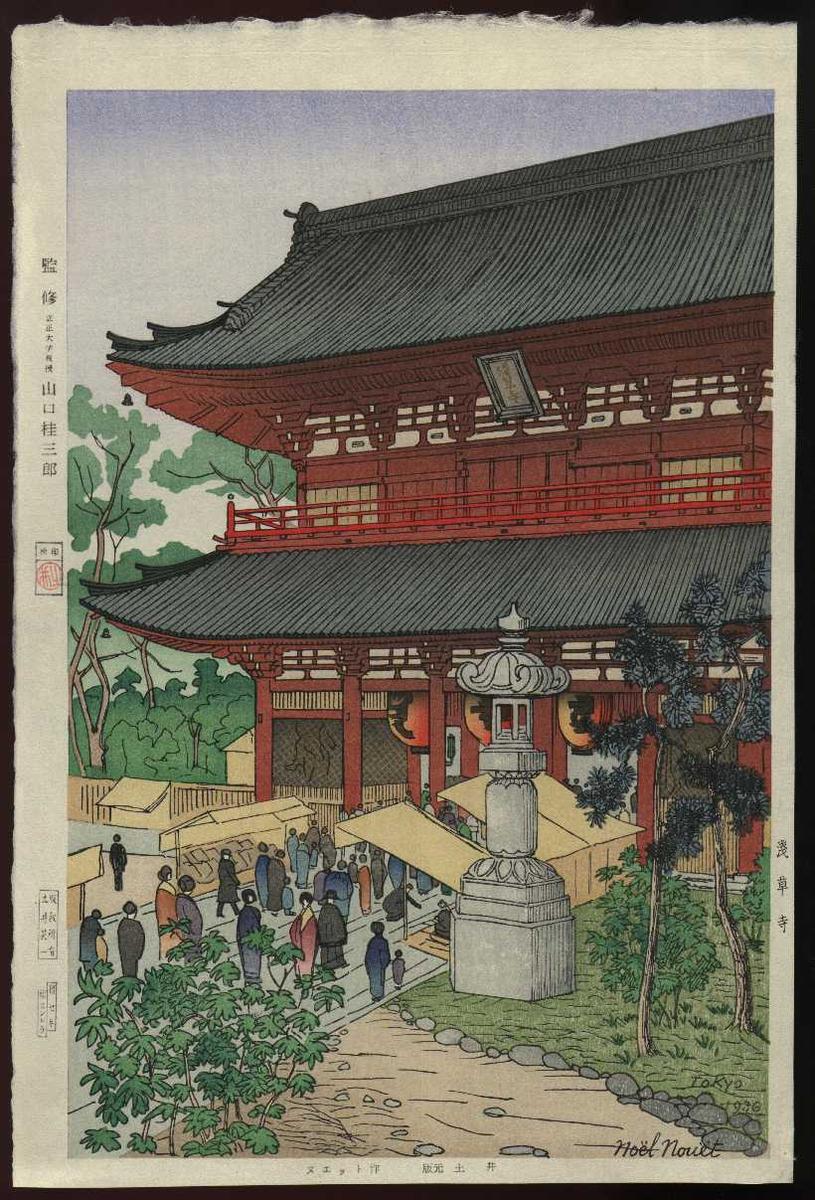
Scenes Of Tokyo Views Asakusa Temple
Woodblock print
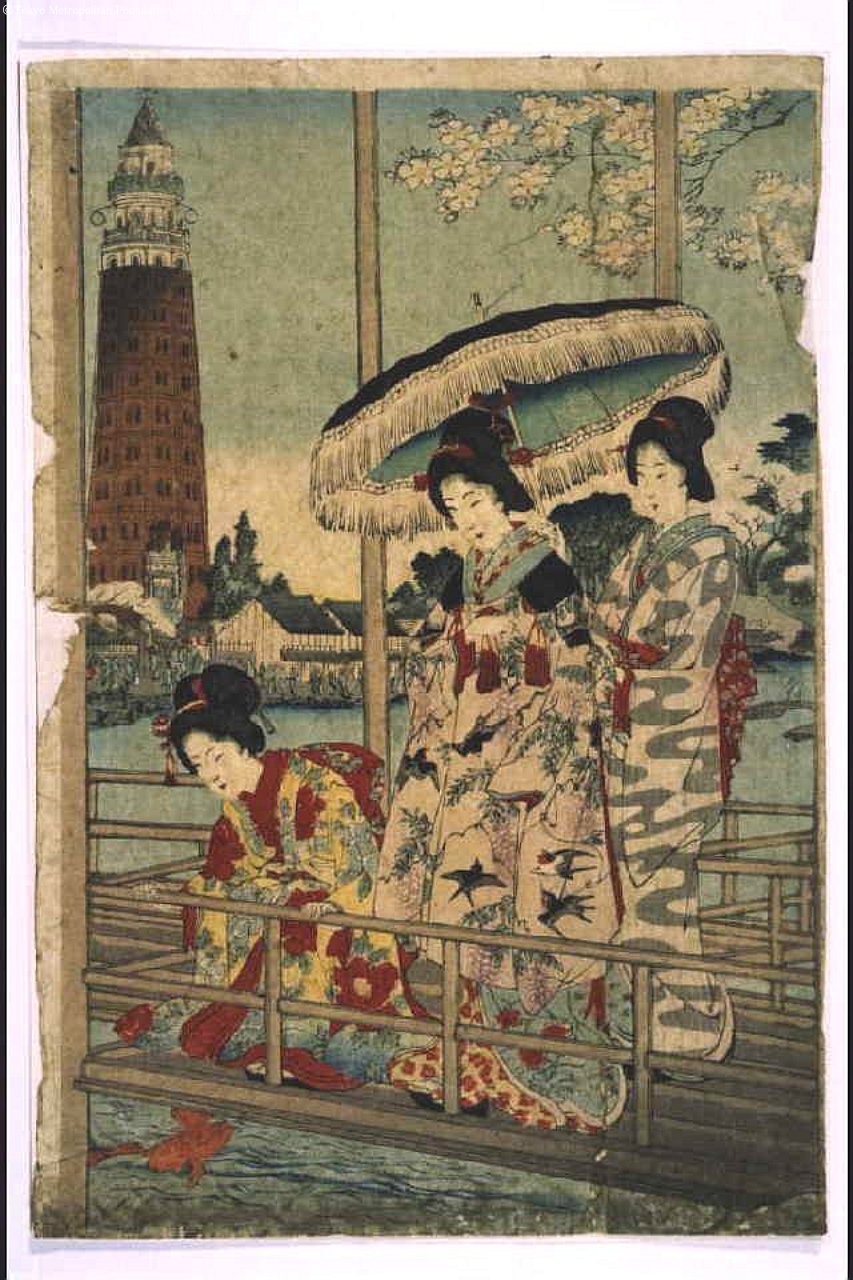
Sightseeing in Asakusa Park
Woodblock print

Summer Night at Asakusa Kuramae
1881
Woodblock print (nishiki-e), ink and color on paper
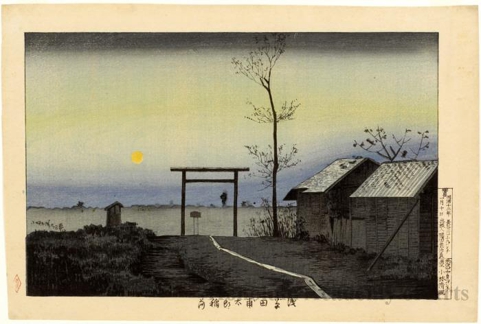
Tarö Inari Shrine at Asakusa Rice Fields
Woodblock print

The Kaminari Gate, Asakusa, from the series Scenes After the Tokyo Earthquake
1925
Color woodblock print
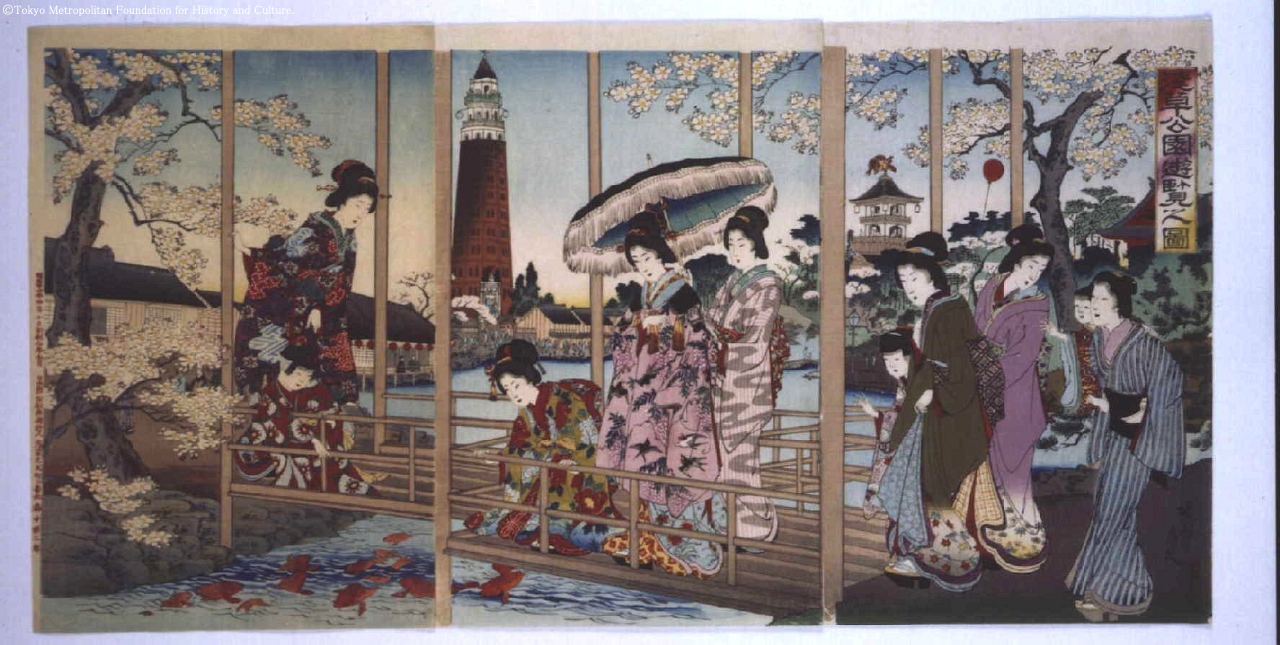
Touring Asakusa Park
Woodblock print
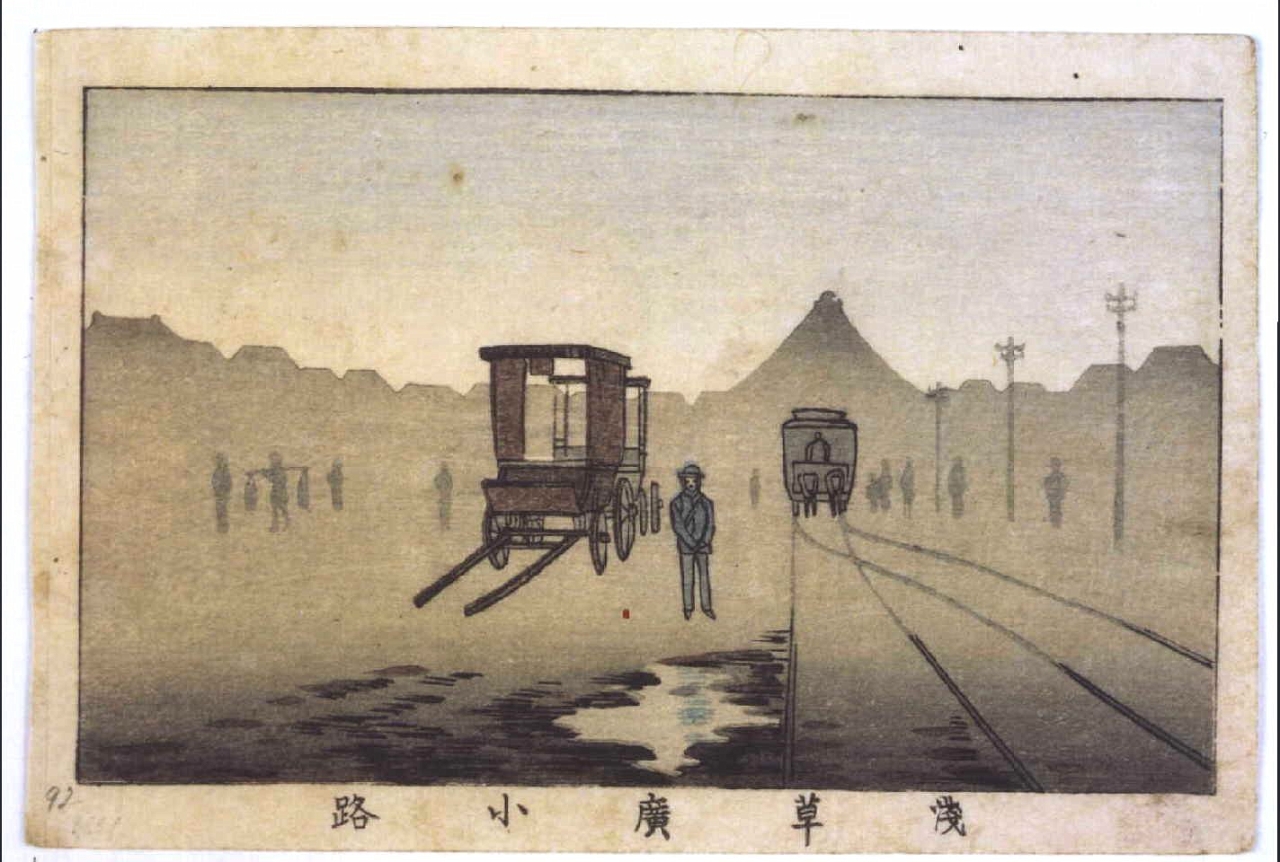
True Pictures of Famous Places in Tokyo: Asakusa Hirokoji Broadway
Woodblock print
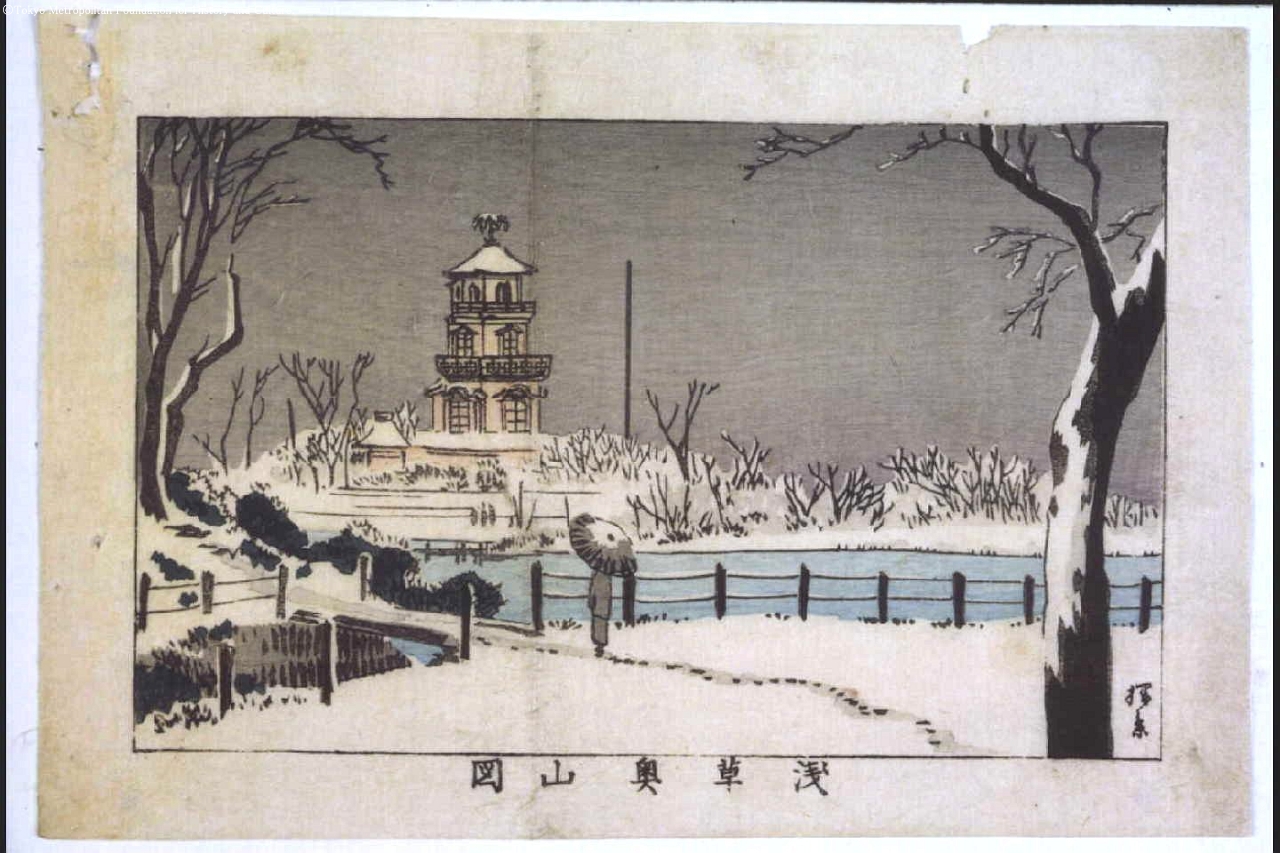
True Pictures of Famous Places in Tokyo: Evening View of Asakusa Park
Woodblock print
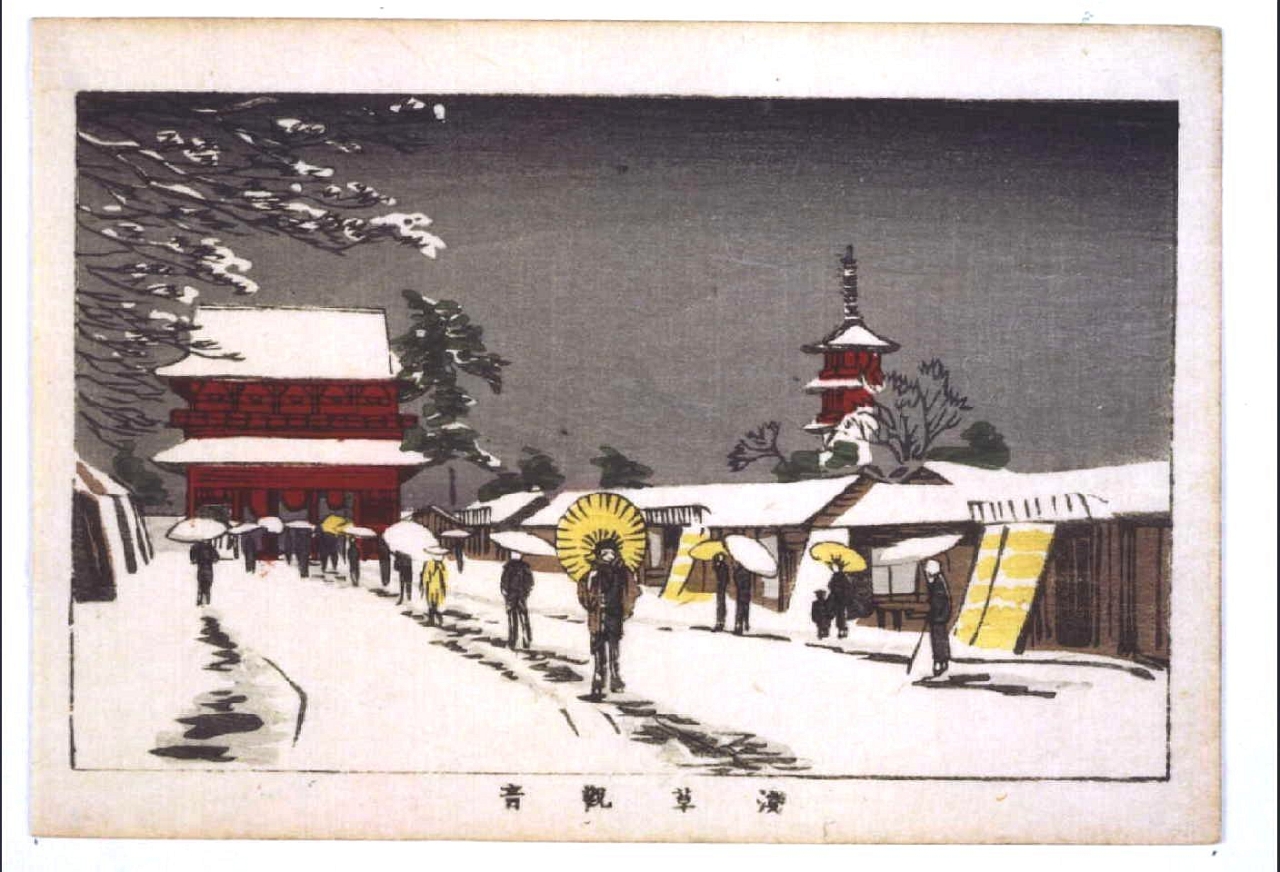
True Pictures of Famous Places in Tokyo: Higashi-monzeki Temple, Asakusa
Woodblock print
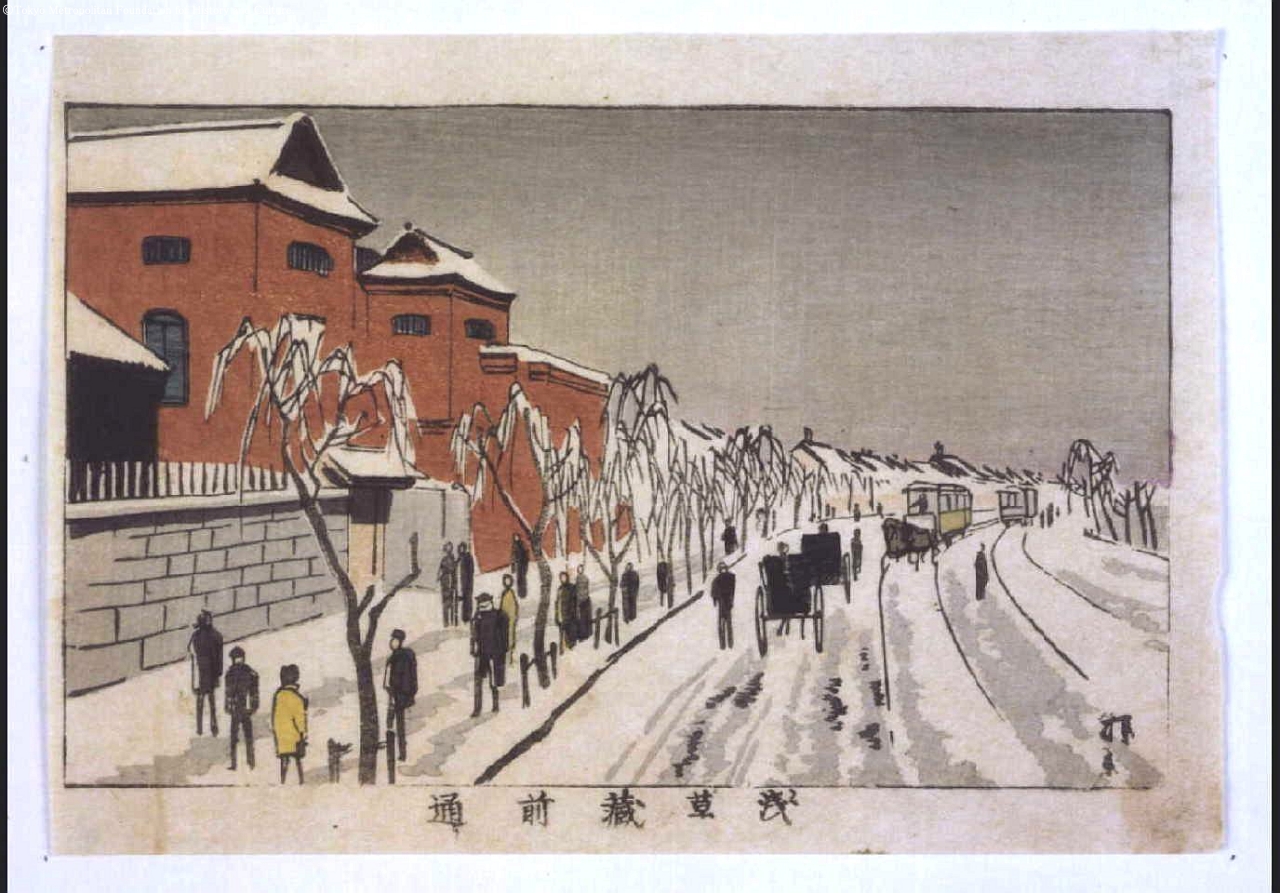
True Pictures of Famous Places in Tokyo: Kuramae Street, Asakusa
Woodblock print
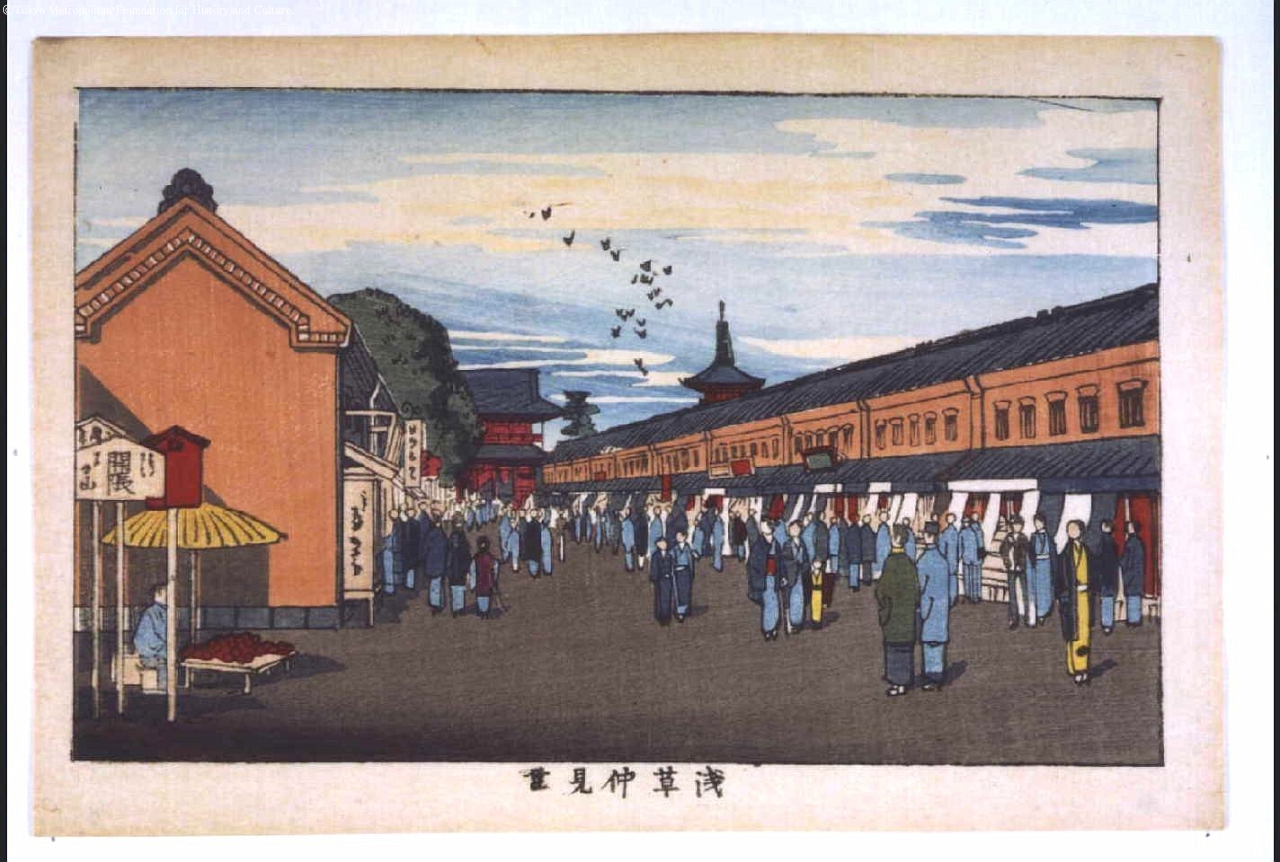
True Pictures of Famous Places in Tokyo: Nakamise Shops, Asakusa
Woodblock print
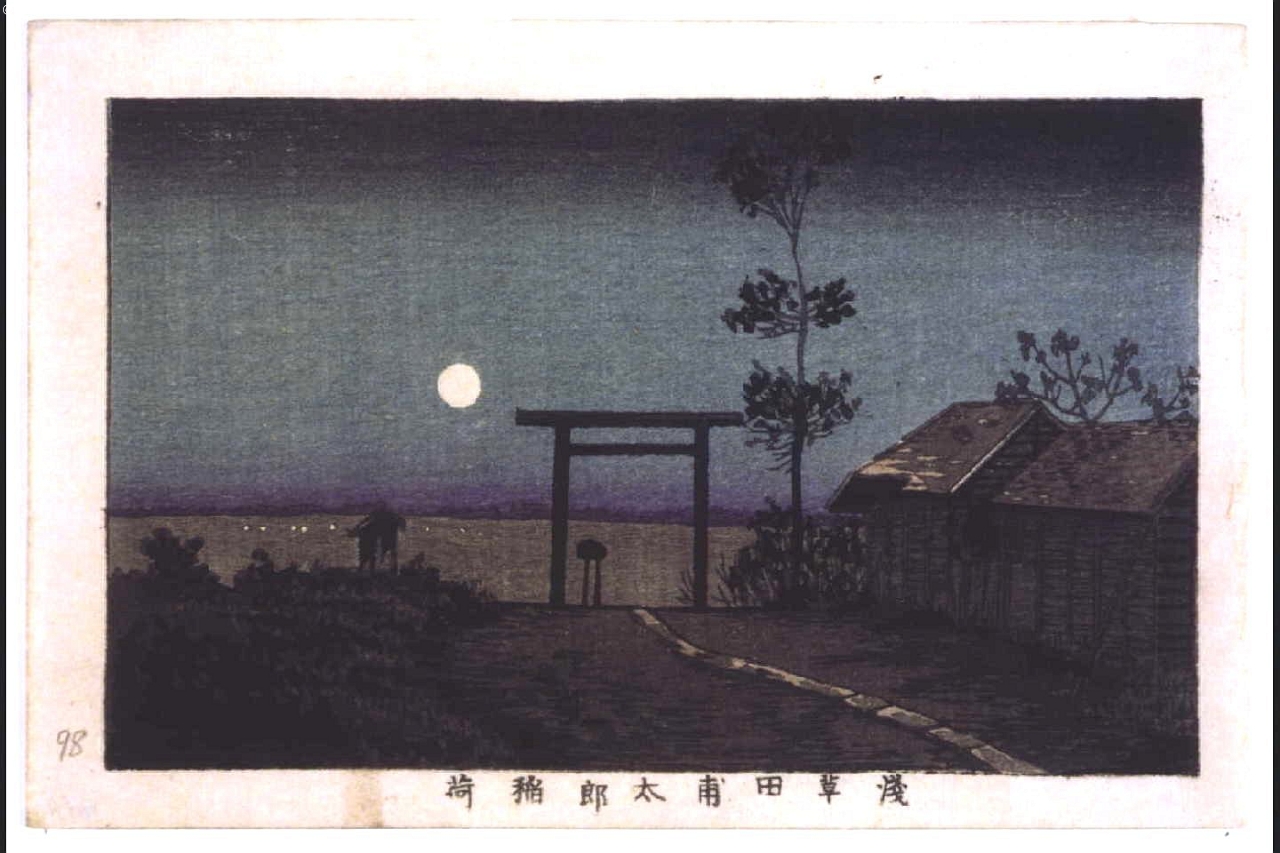
True Pictures of Famous Places in Tokyo: Taro Inari Shrine in Asakusa-tanbo
Woodblock print
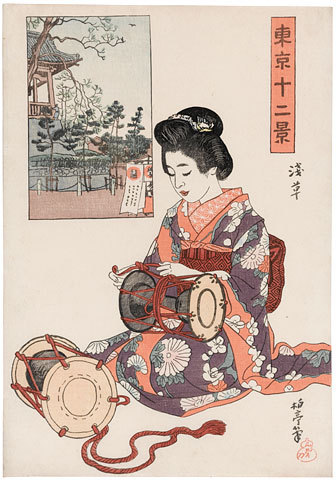
Twelve Views of Tokyo: Asakusa
Woodblock print
Artists Who Depicted Asakusa (17)
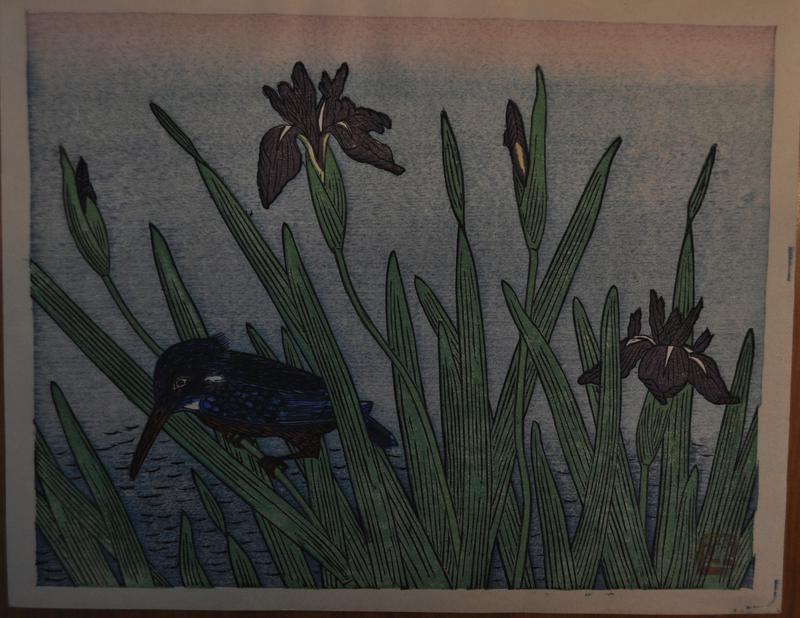
Hiratsuka Un'ichi
平塚運一
1895–1997

Inoue Yasuji
井上安治
1864–1889
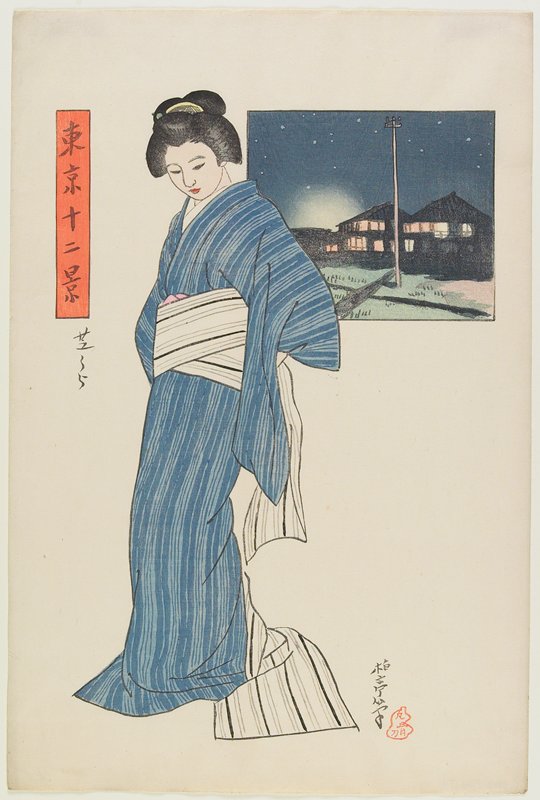
Ishii Hakutei
石井柏亭
1882–1958
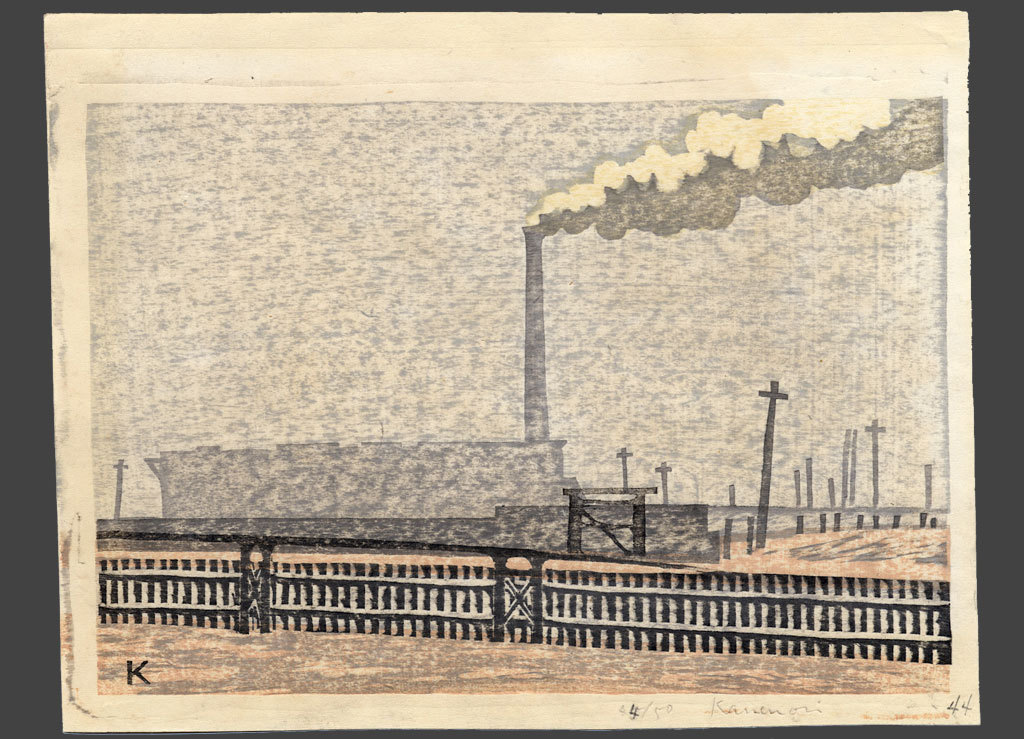
Kanenori Suwa
諏訪兼紀
1897–1932
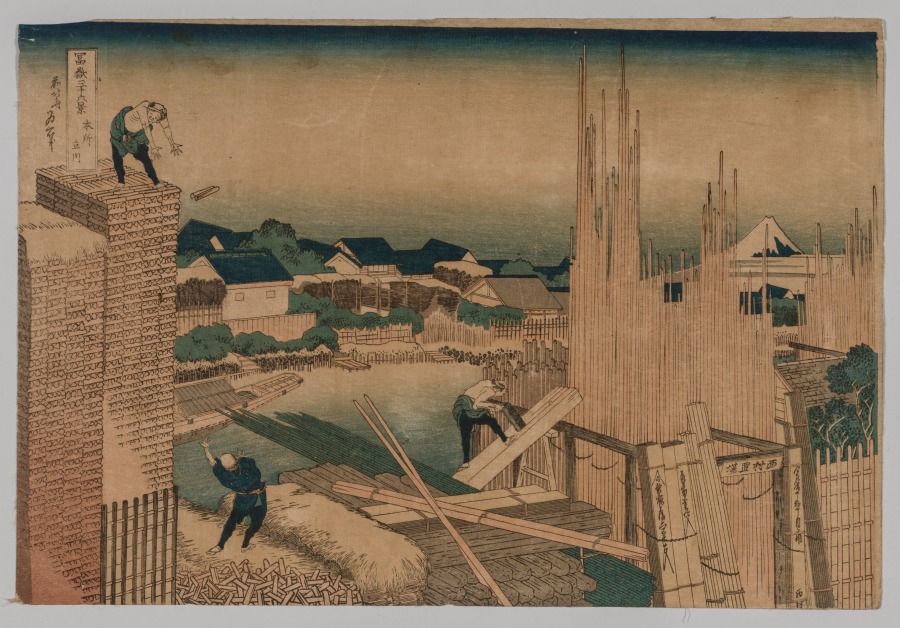
Katsushika Hokusai
葛飾北斎
1760–1849

Kawase Hasui
川瀬巴水
1883–1957
Kobayashi Kiyochika
小林清親
1847–1915

Narazaki Eisho
楢崎栄昌
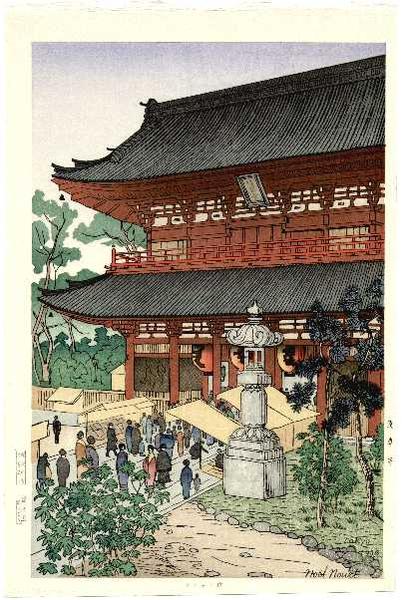
Noël Nouët
1885–1969

Saito Kiyoshi
斎藤清
1907–1997

Shiro Kasamatsu
笠松紫浪
1898–1991
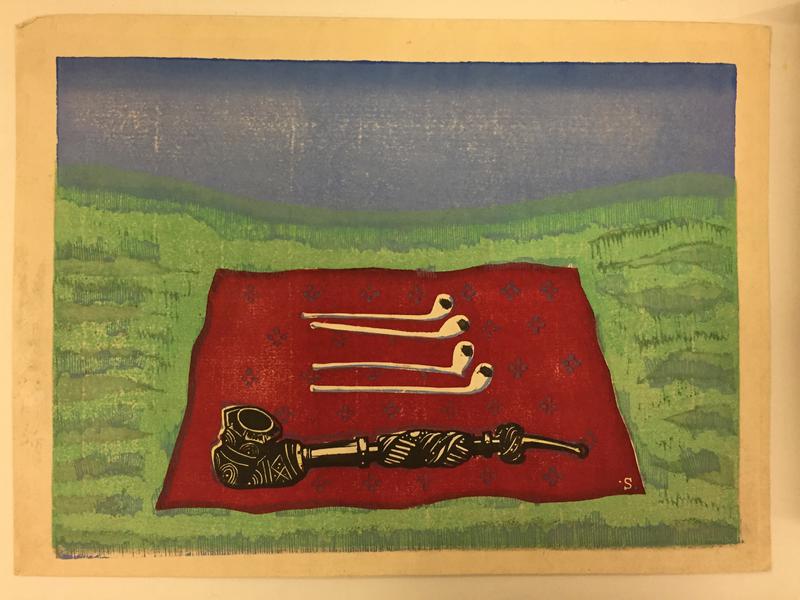
Sumio Kawakami
川上澄生
1895–1972
Takahashi Shotei
高橋松亭
1871–1945
Toyohara Chikanobu
豊原周延
1838–1912

Tsuchiya Koitsu
土屋光逸
1870–1949

Utagawa Kuniyoshi
歌川国芳
1798–1861
Yoshitoshi Mori
森義利
1898–1992
Frequently Asked Questions
Asakusa is a district in northeastern Tokyo, on the western bank of the Sumida River within present-day Taito Ward, organized around the great Buddhist temple of Senso-ji and its principal deity Kannon. The temple, whose foundation legend dating to 628 tells of two fishermen brothers, the Hinokuma brothers, finding a small golden image of Kannon in their nets in the Sumida River, was the most popular pilgrimage destination in Edo throughout the Tokugawa period, drawing constant traffic of worshippers, vendors, and entertainers, and it served as the cultic anchor of an extensive entertainment quarter that developed around its precincts. By the late Edo period Asakusa contained the largest concentration of theaters, teahouses, archery galleries, storytellers, peep-show booths, kabuki performance halls, and street performers in the city, with the Yoshiwara licensed pleasure quarter situated approximately two kilometers to the north along the Nihon-zutsumi embankment and reached by the riverboat services from Asakusa quay. The district was destroyed in the 1923 Great Kanto Earthquake and again in the firebombing of 1945, and its present form is largely a postwar reconstruction, though the temple compound preserves the historical plan with the great Kaminarimon thunder gate hung with its giant red paper lantern, the Nakamise vendor street running 250 meters north from the gate, the inner Hozomon gate, the five-story pagoda on the west side, and the main hall facing south, all rebuilt in the late 1950s and 1960s in faithful reproduction of the destroyed Edo-period predecessors. For Japanese printmaking, Asakusa figures throughout the meisho-e tradition. Utagawa Hiroshige treated Asakusa repeatedly in his Famous Places in the Eastern Capital and again in One Hundred Famous Views of Edo (Meisho Edo hyakkei, 1856-1858), including the celebrated winter sheet Kinryuzan Temple at Asakusa, in which the great paper lantern of the Kaminarimon is seen from inside the gate against a snow-blanketed approach to the inner temple, and other Asakusa sheets treating the festival of Sanja Matsuri, the Sumida-side dock, the Yoshiwara approach, and the surrounding entertainment quarter. Hokusai included Asakusa in his Thirty-Six Views of Mount Fuji in compositions in which the distant peak is glimpsed across the temple precinct, and Utagawa Kunisada and Kuniyoshi produced theatrical and bijin sheets set in the surrounding entertainment district. The Meiji-period kaika-e of Kobayashi Kiyochika and Inoue Yasuji recorded the district's transformation under gas lamps and modernized architecture, with Kiyochika's celebrated Asakusa night views figuring as some of the finest examples of his kosenga (light-ray pictures) atmospheric practice. The shin-hanga revival returned to Asakusa repeatedly in the work of Kawase Hasui, Tsuchiya Koitsu, Ito Shinsui, and Yoshida Hiroshi, with snow, rain, and night views of the Kaminarimon and the inner precincts forming a recurrent motif, including Hasui's celebrated Snow at Kinryuzan, Asakusa and Koitsu's evening views of the same gate. Yokoyama Taikan and other Nihonga painters of the early twentieth century treated Asakusa in painting traditions that fed back into print idioms. The visual character of Asakusa in prints centers on the great red gate with its massive paper lantern, the crowded Nakamise approach, the five-story pagoda, the temple roofs against the sky, the figures of pilgrims and entertainers, and seasonal phenomena ranging from cherry blossoms and the Sanja festival to fireworks over the nearby Sumida and snowfall on the gate and pagoda. Contemporary visitors find Senso-ji and its approach among the most heavily visited temple complexes in Japan, reached most directly via the Asakusa Line to Asakusa Station, the Tokyo Metro Ginza Line, or the Tobu Skytree Line, and the surrounding district preserves traces of the older entertainment quarter in its remaining theaters, restaurants, and shotengai, with the new Tokyo Skytree visible across the Sumida providing the principal contemporary skyline counterpoint to the temple silhouette.
Hanga catalogues 35 prints depicting Asakusa (浅草), by 17 different artists.
Hiratsuka Un'ichi, Inoue Yasuji, and Ishii Hakutei are among the 17 artists who depicted Asakusa in our collection.
Want to rate prints from Asakusa?
Sign up to start rating