
Biography
Insho Domoto (堂本印象, 1891–1975) was one of the most important nihonga (Japanese-style painting) masters of the twentieth century, renowned for his Buddhist-themed paintings and ambitious temple murals, who also produced a small body of woodblock prints that bring his distinctive artistic vision to the shin-hanga medium. A towering figure in the Kyoto art world, Domoto's career encompassed traditional Buddhist painting, modernist abstraction, and monumental architectural decoration, making him one of the most versatile and accomplished Japanese artists of his generation.
Born in 1891 in Kyoto, Domoto grew up surrounded by the ancient capital's extraordinary concentration of Buddhist temples, Shinto shrines, and traditional arts. He studied nihonga painting at the Kyoto Municipal School of Painting (later the Kyoto City University of Arts), where he trained under Nishiyama Suisho, a leading nihonga painter. Domoto proved an exceptionally gifted student, and his early works demonstrated a command of traditional technique combined with an ambitious artistic vision that would define his entire career.
Domoto's most celebrated achievements are his Buddhist paintings and temple murals. He received commissions to paint murals for some of Japan's most important temples, including Tōfuku-ji in Kyoto, creating large-scale works that depict Buddhist deities, celestial beings, and sacred narratives with a combination of traditional iconographic authority and modern artistic dynamism. These murals are considered among the finest examples of twentieth-century Buddhist painting in Japan, and they earned Domoto the highest recognition from the Japanese art establishment.
His easel paintings range from traditional Buddhist and historical subjects executed with meticulous technique to bold, semi-abstract compositions that reflect his engagement with international modernist movements. This stylistic range is remarkable — few artists have moved so convincingly between traditional religious painting and modernist experimentation — and it reflects Domoto's restless intellectual curiosity and technical mastery.
Domoto's woodblock prints, while representing a small fraction of his vast artistic output, bring the same qualities of bold composition and spiritual depth to the shin-hanga medium. His print subjects include Buddhist imagery, landscapes, and figure compositions that bear the unmistakable stamp of his painting style — strong compositional structures, rich color harmonies, and an underlying spiritual gravity that reflects his lifelong engagement with Buddhist art and philosophy.
He received numerous honors, including membership in the Japan Art Academy and the Order of Culture (Bunka Kunsho), Japan's highest cultural award. The Insho Domoto Museum of Fine Arts in Kyoto, established during his lifetime, houses a comprehensive collection of his paintings and works. He died in 1975, leaving a legacy that encompasses traditional Buddhist art, modernist painting, monumental murals, and a small but significant group of woodblock prints. His prints are extremely scarce on the market, as his primary reputation rests on his paintings.
Key Facts
- Active Period
- 1891–1975
- Nationality
- 🇯🇵Japan
- Movement
- Shin-hanga
- Works Indexed
- 34
Frequently Asked Questions
Insho Domoto (堂本印象, 1891–1975) was one of the most important nihonga (Japanese-style painting) masters of the twentieth century, renowned for his Buddhist-themed paintings and ambitious temple murals, who also produced a small body of woodblock prints that bring his distinctive artistic vision to the shin-hanga medium. A towering figure in the Kyoto art world, Domoto's career encompassed traditional Buddhist painting, modernist abstraction, and monumental architectural decoration, making him one of the most versatile and accomplished Japanese artists of his generation.
Insho Domoto was active from 1891 to 1975. They were associated with the Shin-hanga movement.
Insho Domoto's work was shaped by the Shin-hanga tradition in Japanese woodblock printmaking. Shin-hanga: ## What is Shin-hanga? Shin-hanga (新版画), literally "new prints," is the early twentieth-century revival of the collaborative Japanese woodblock workshop, organized between roughly 1915 and 1960 by the Tokyo publisher Watanabe Shōzaburō (1885–1962) and a handful of competing houses.
Insho Domoto's prints frequently feature landscapes, bijin-ga, figures, daily life, portraits, autumn foliage.
Original prints by Insho Domoto can be found in collections including Asian Collection Internet Auction, mfa, Japanese Art Open Database, Museum of Fine Arts.
Woodblock Prints by Insho Domoto (34)
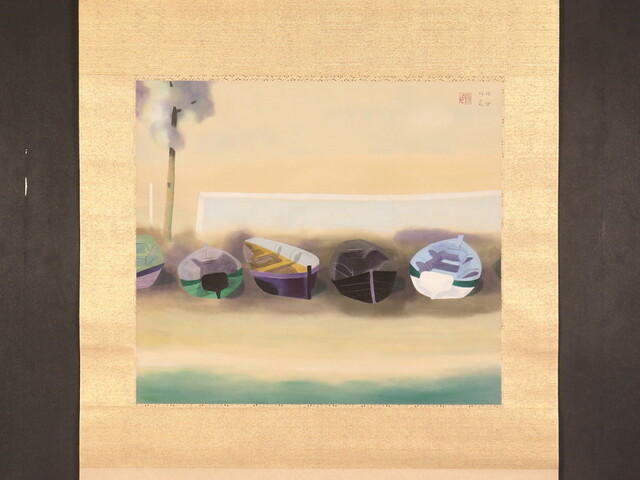
Boats
1891
Silk
Furoshiki (Wrapping Cloth)
early Shôwa period (1926–1989), 1926/35
Silk, plain weave; stenciled and resist dyed (yûzenzome: ita-age, suri yûzenzome, otoshizome and shigokizome)
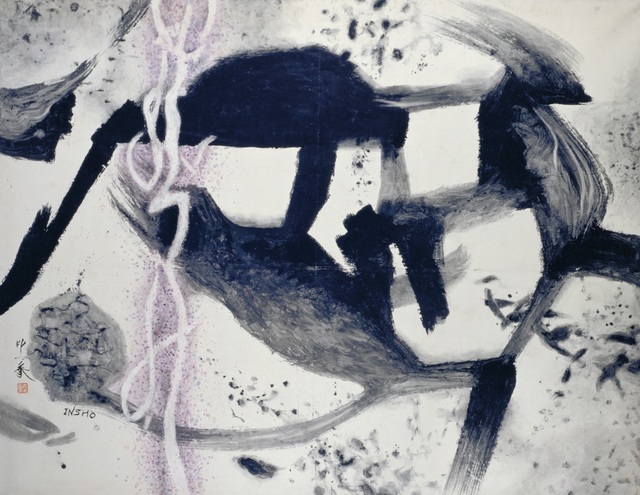
Reaction against Standard
1960
Oil, sumi on canvas
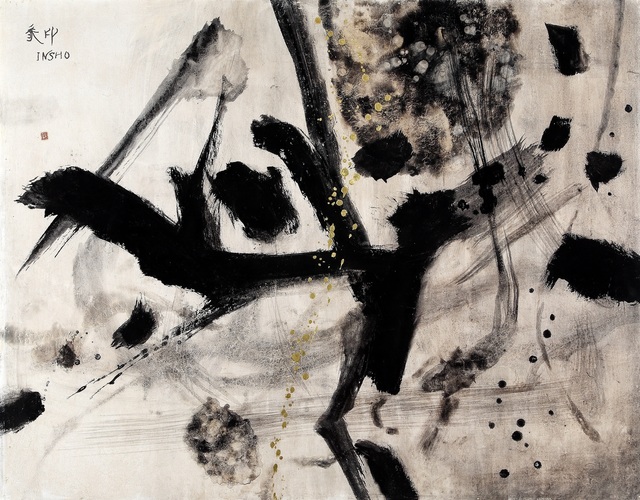
Haboku
1962
Mixed Media on paper on board
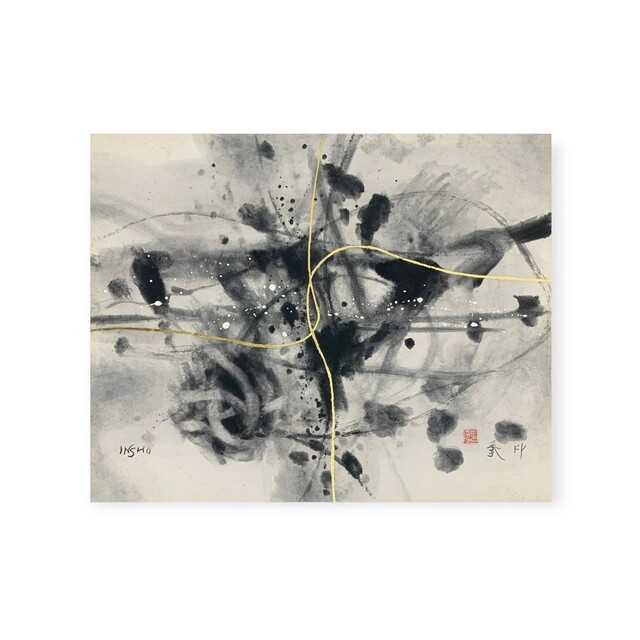
Connecting the Sky
1964
Ink and gold leaf on paper

Untitled
1979
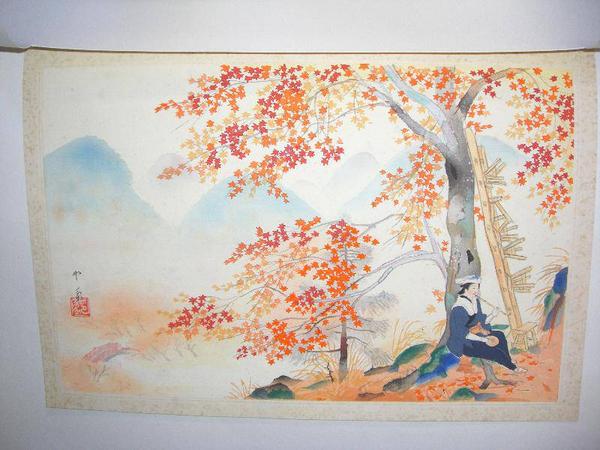
Autumn Scene
Woodblock print
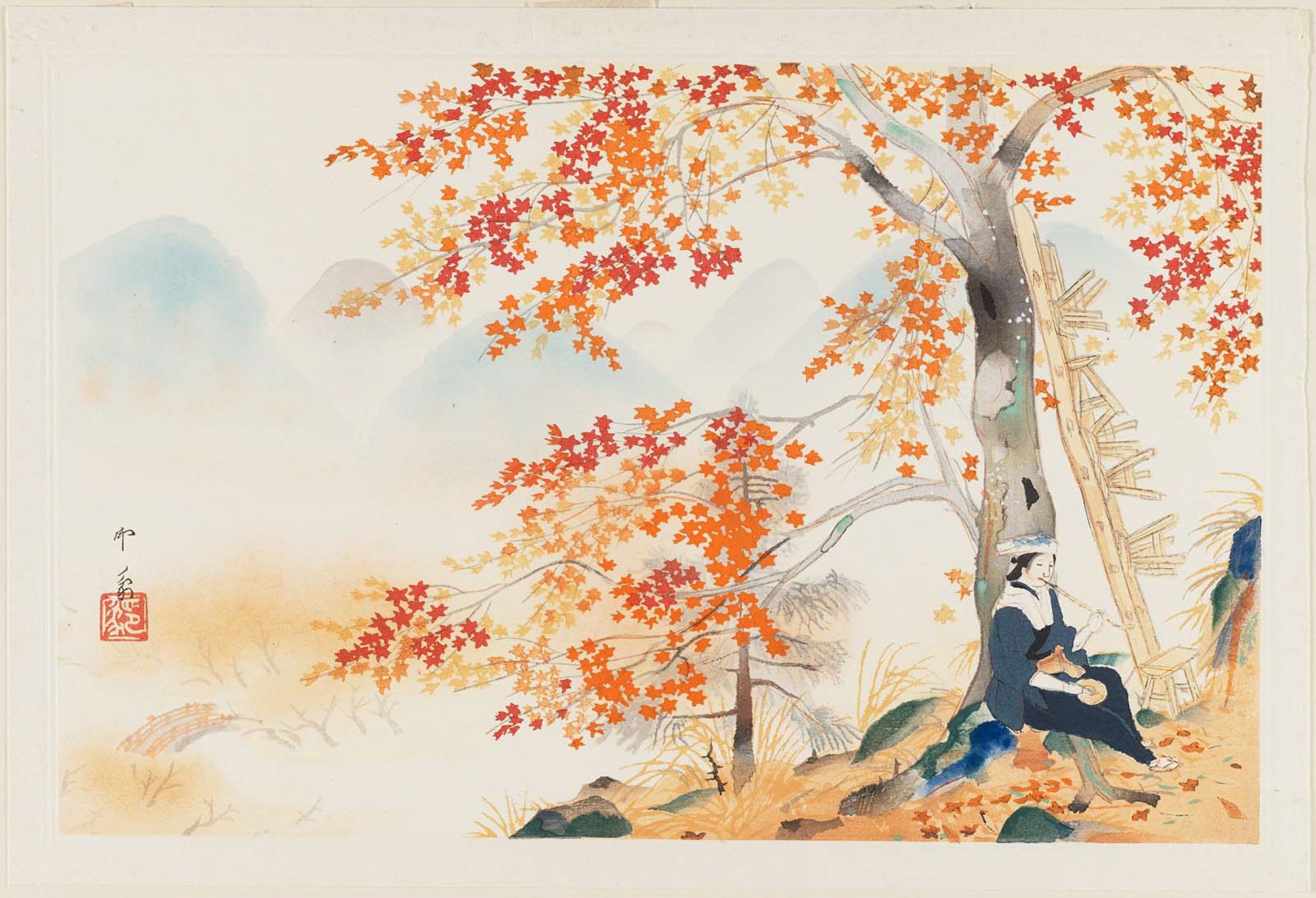
Autumn Maple Leaves at Takao, from the album Eight Views of Kyoto (Kyôto hakkei)
Woodblock print
Various artists
Woodblock print
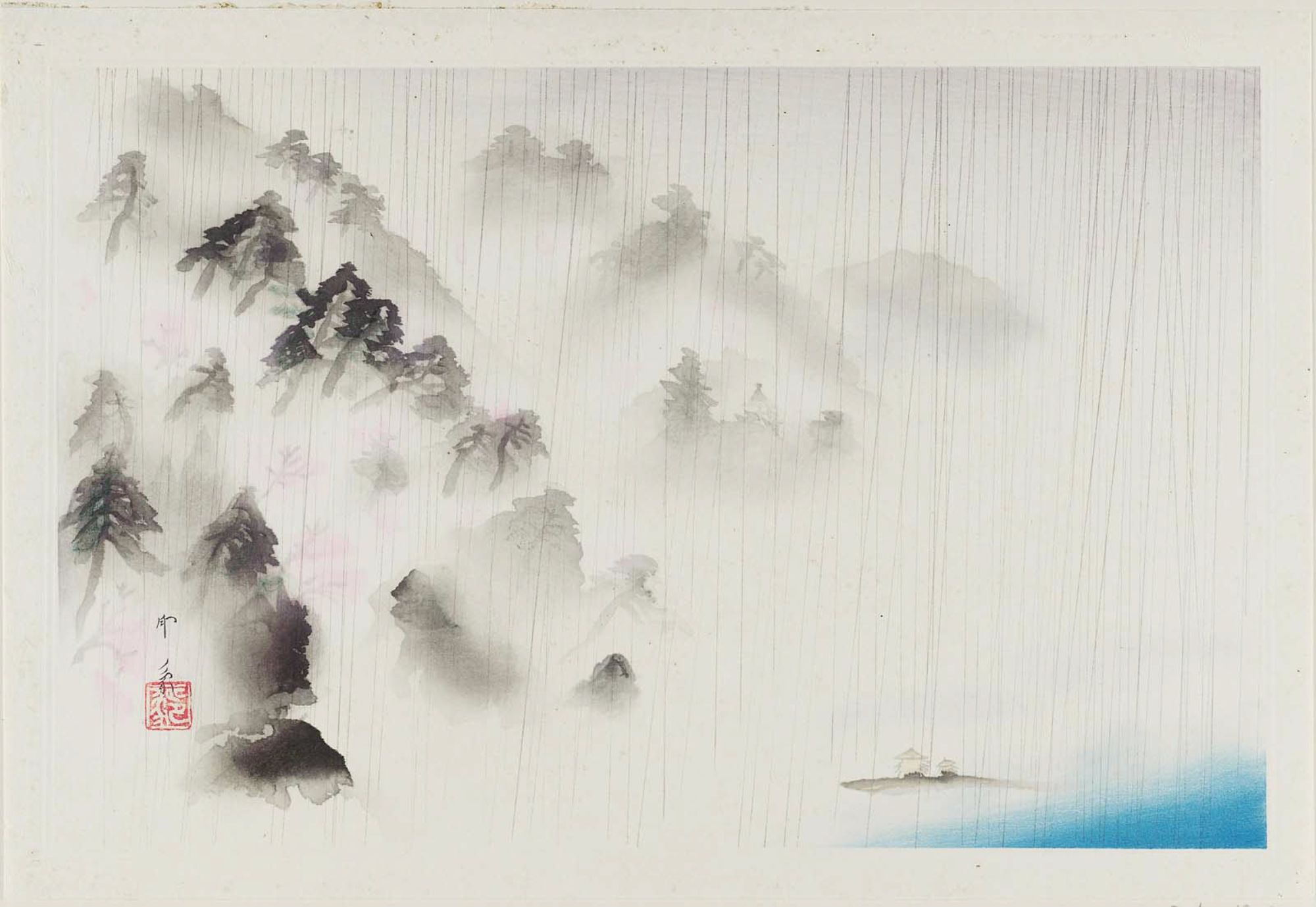
Cherry Blossoms in Rain at Arashiyama, from the album Eight Views of Kyoto (Kyôto hakkei)
Woodblock print
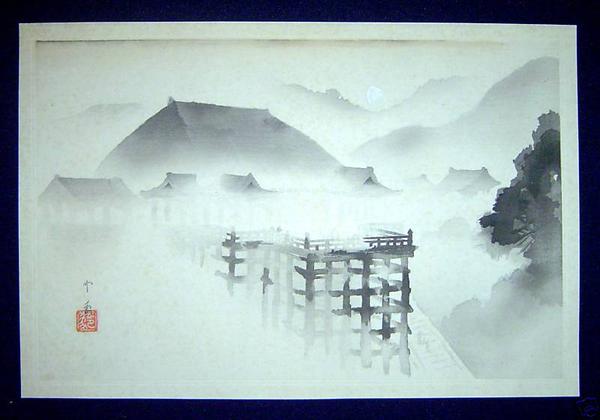
Kiyomizu Temple
Woodblock print
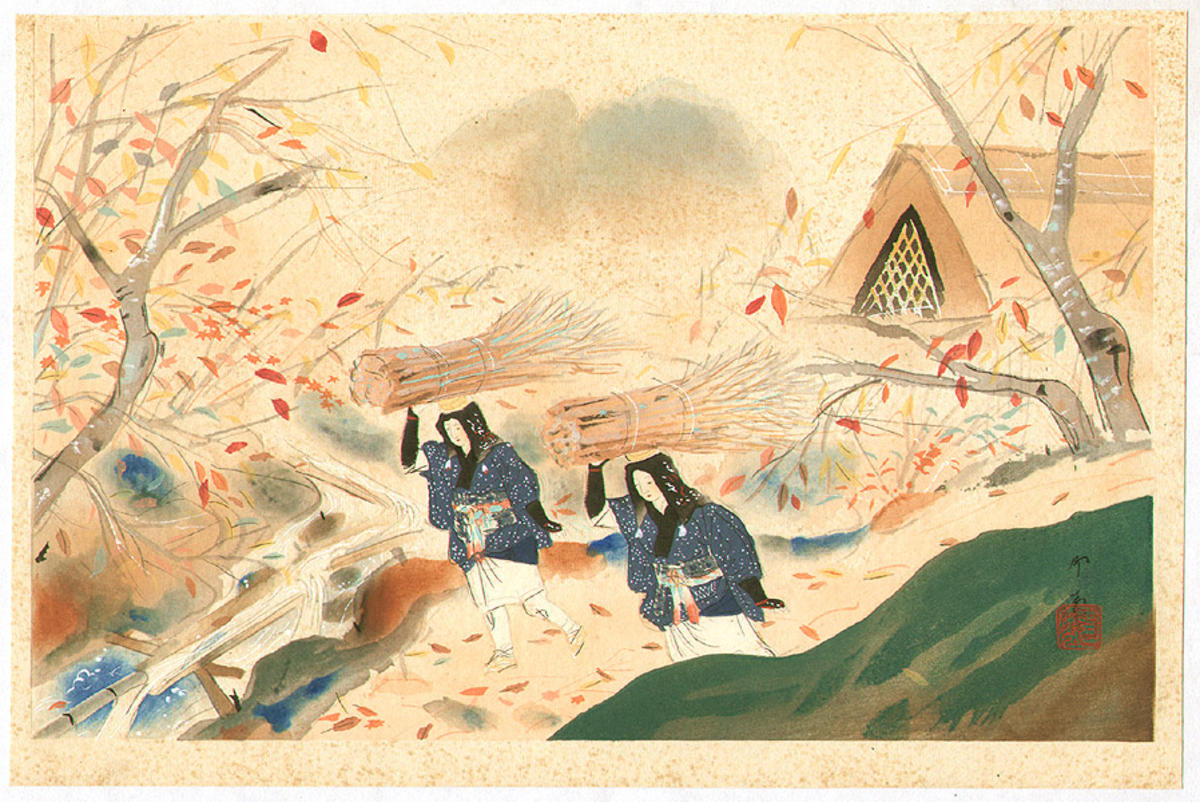
Ohara-me
Woodblock print
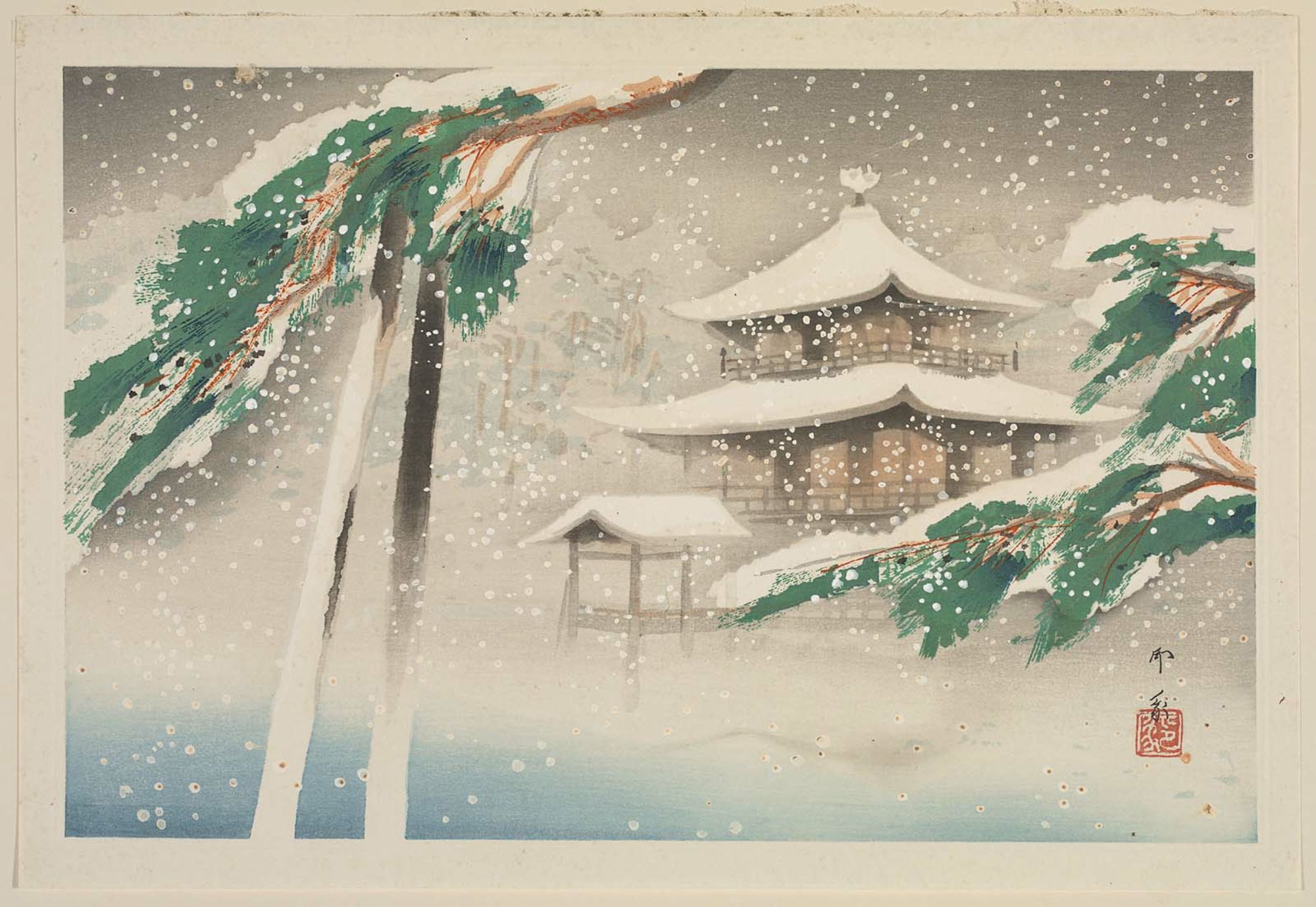
Kinkaku-ji in Snow, from the album Eight Views of Kyoto (Kyôto hakkei)
Woodblock print
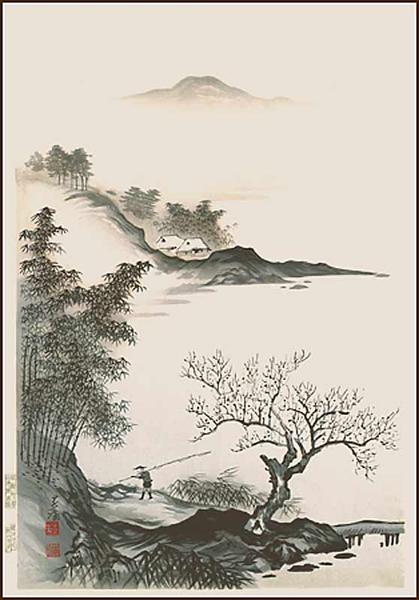
Untitled, coastal scene
Woodblock print
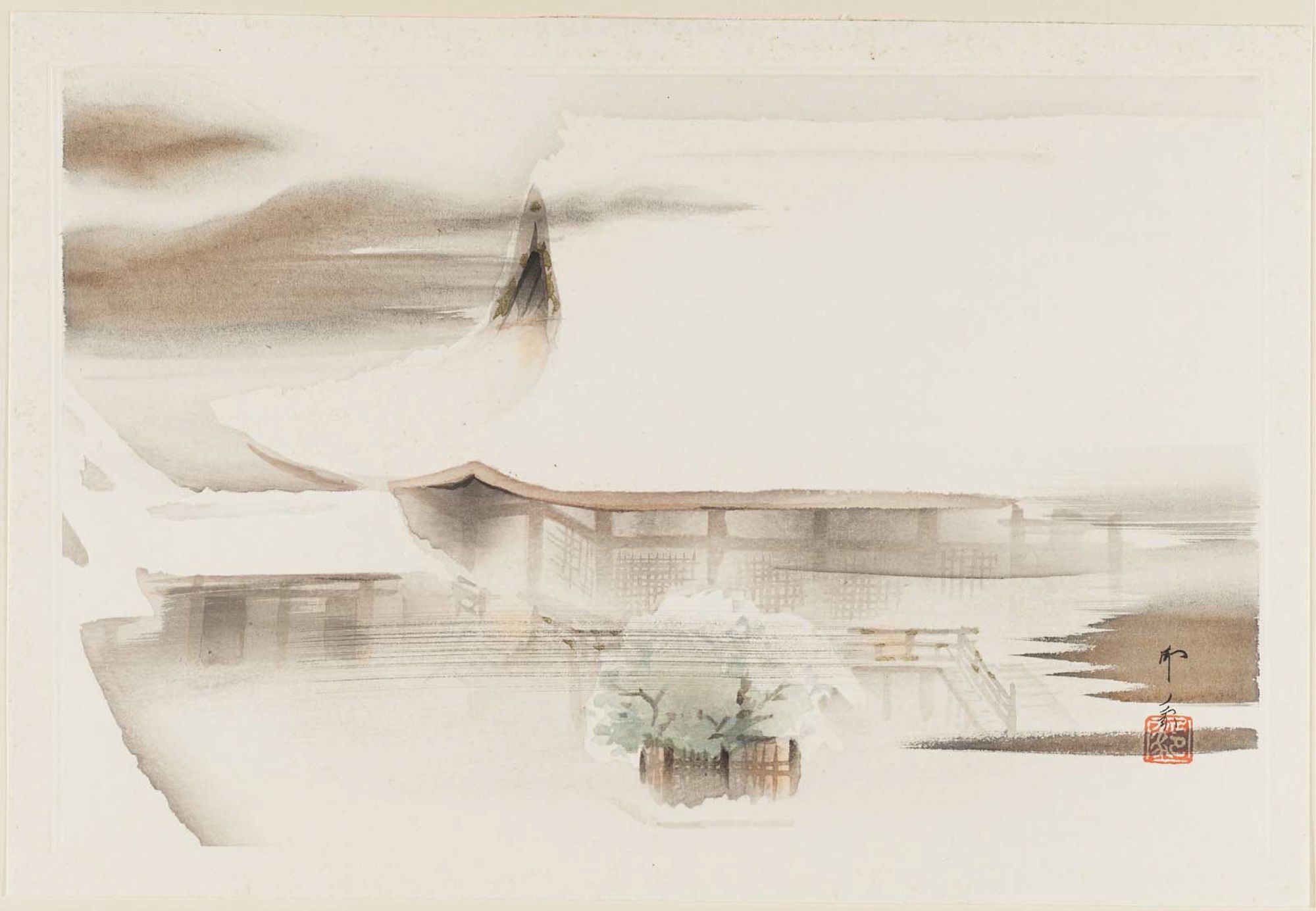
The Imperial Palace in Snow, from the album Eight Views of Kyoto (Kyôto hakkei)
Woodblock print
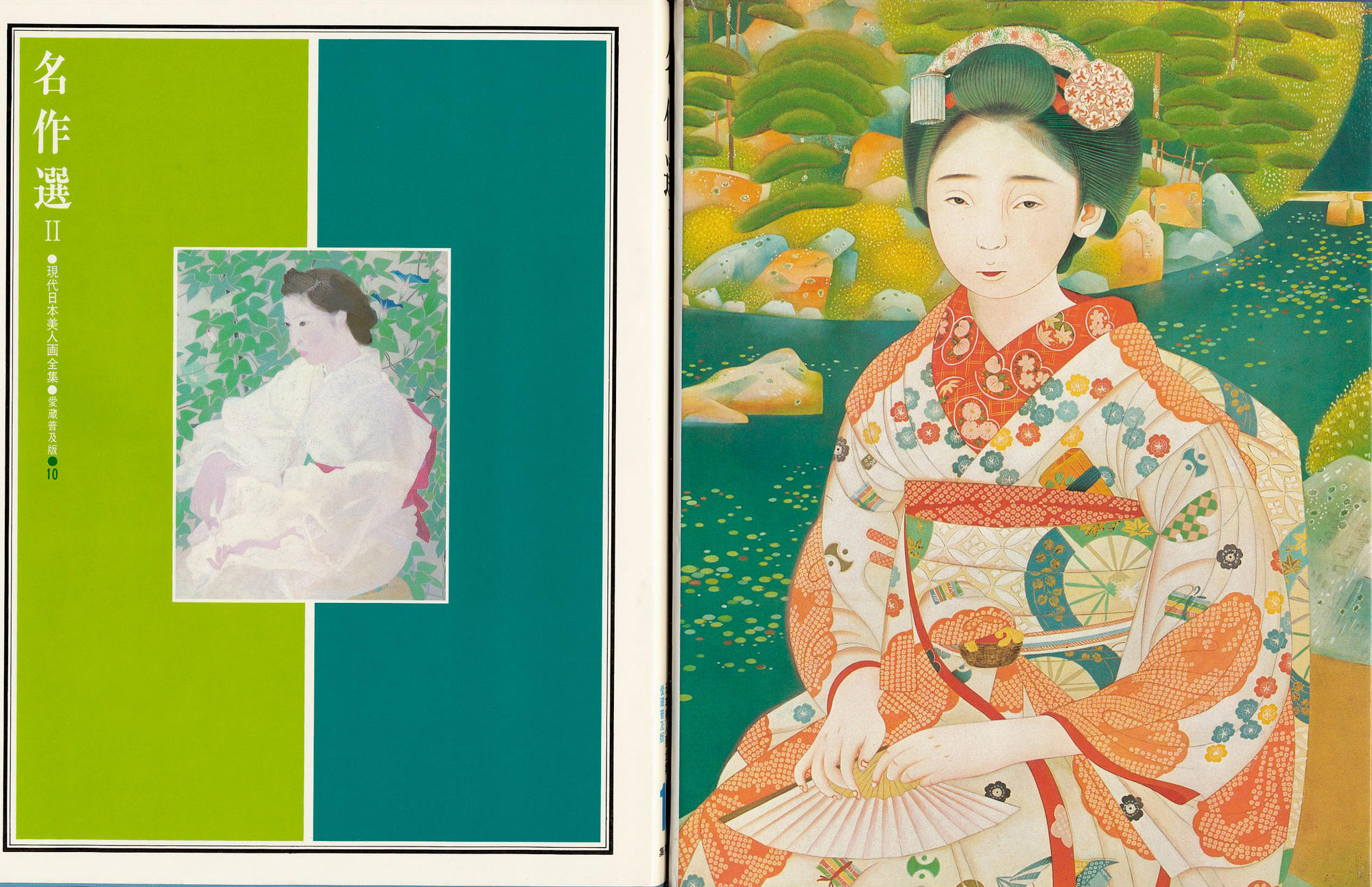
Volume 10 - Masterpiece Selection 2
Woodblock print
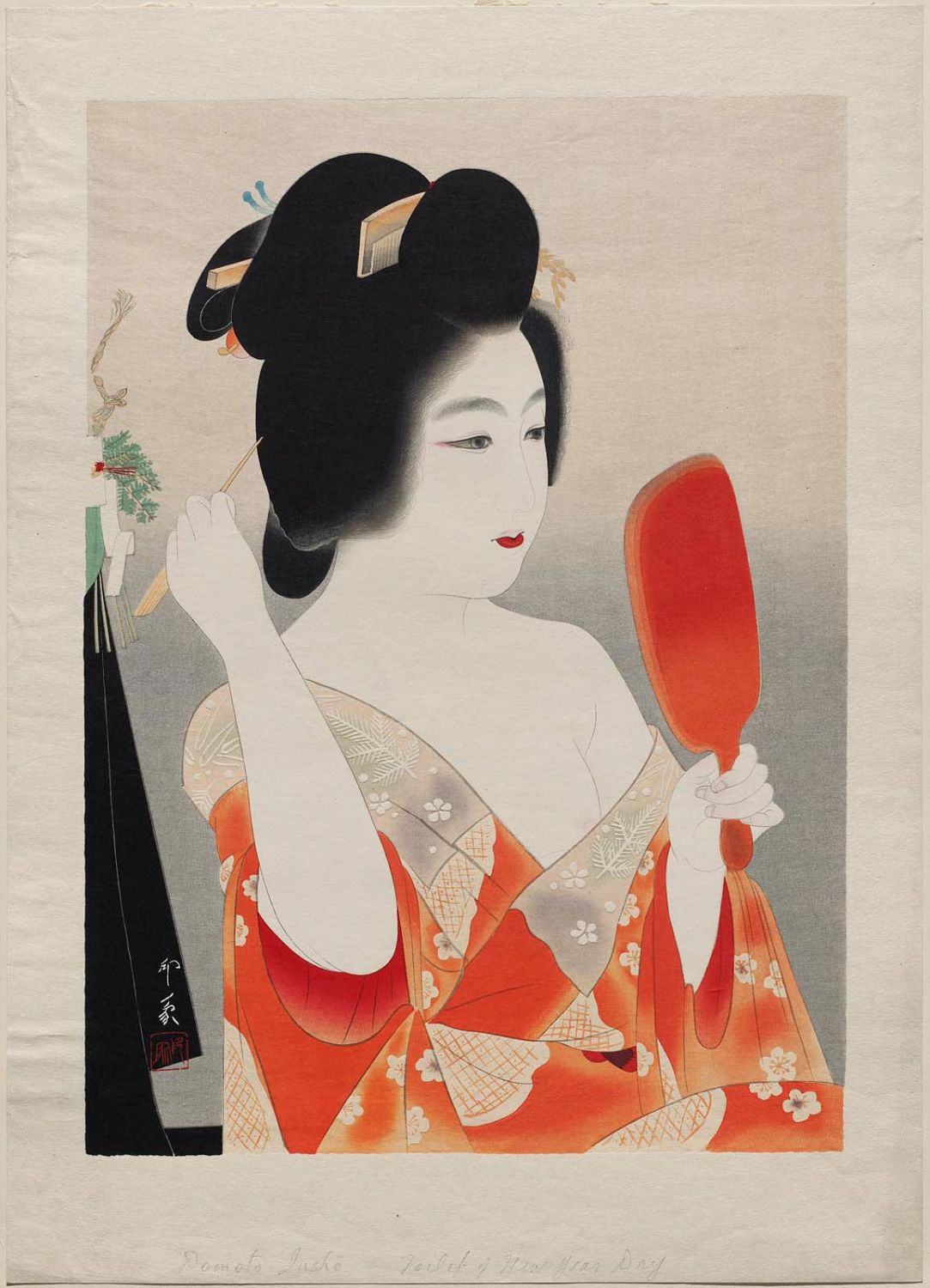
Dressing the Hair for New Years Day
Woodblock print
Imoto Tekiho
Woodblock print
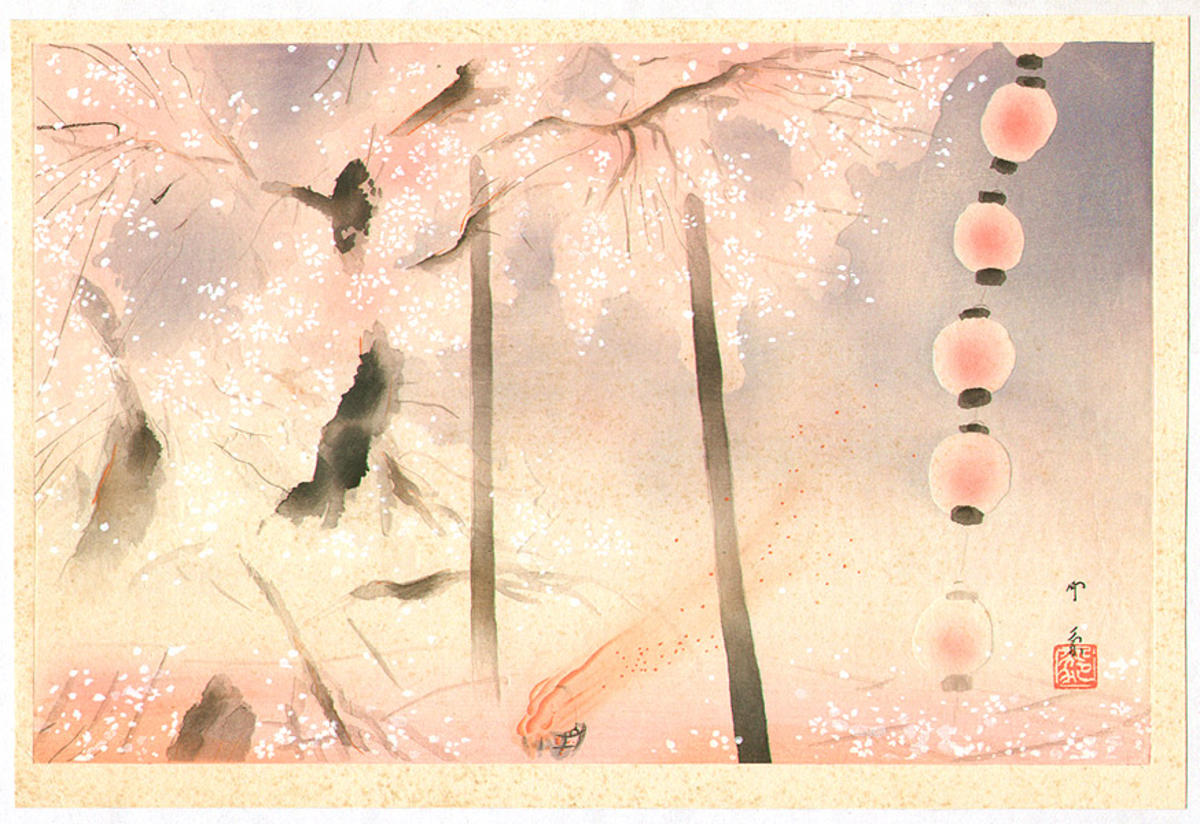
Fire and Cherry Blossoms
Woodblock print
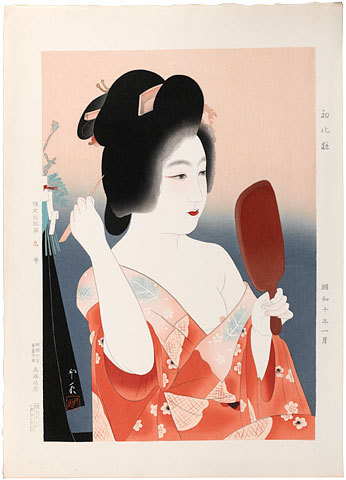
First Make-Up of the New Year
Woodblock print
Dressing the Hair for New Year's Day
Woodblock print
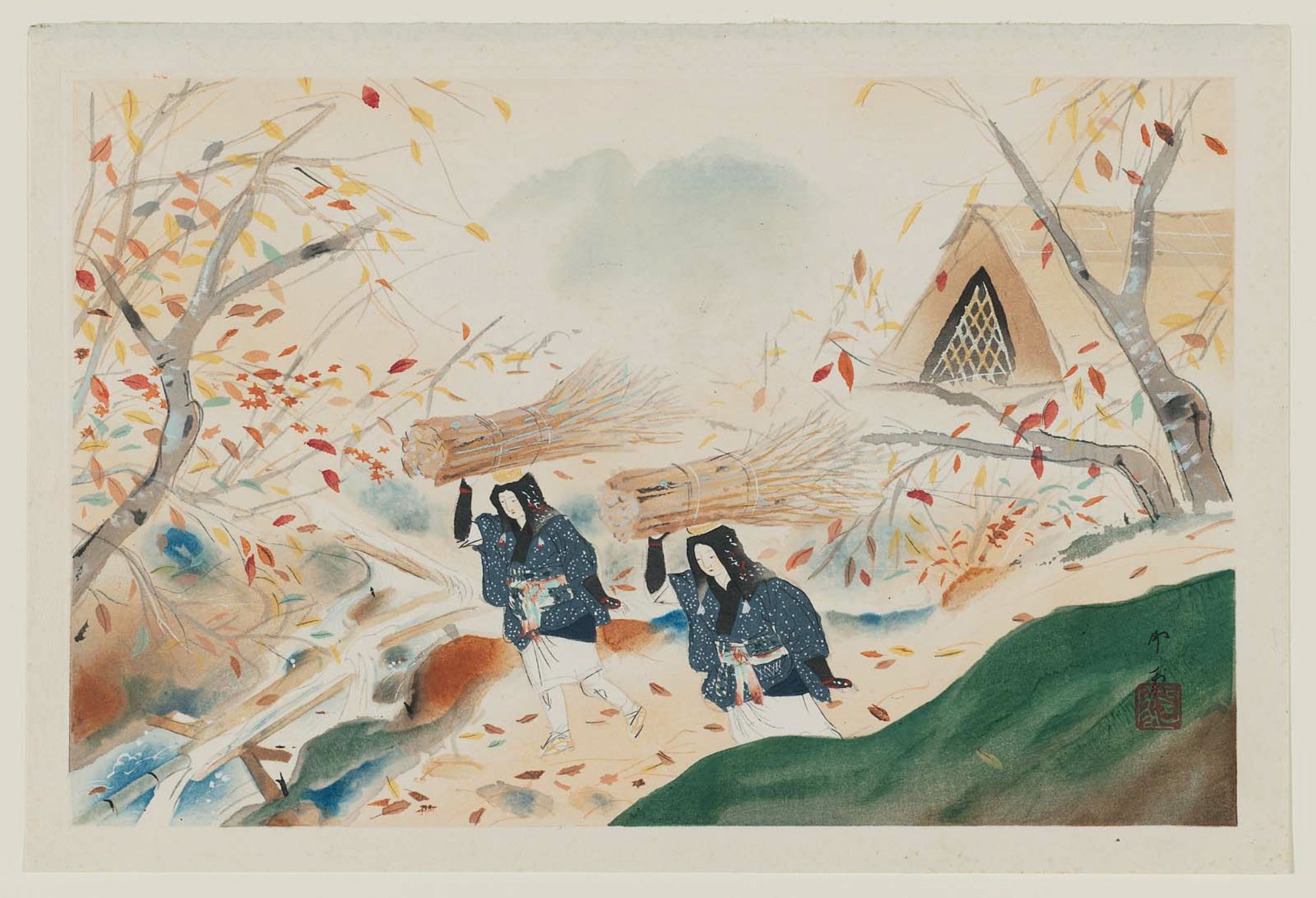
Women of Ôhara (Ôharame), from the album Eight Views of Kyoto (Kyôto hakkei)
Woodblock print
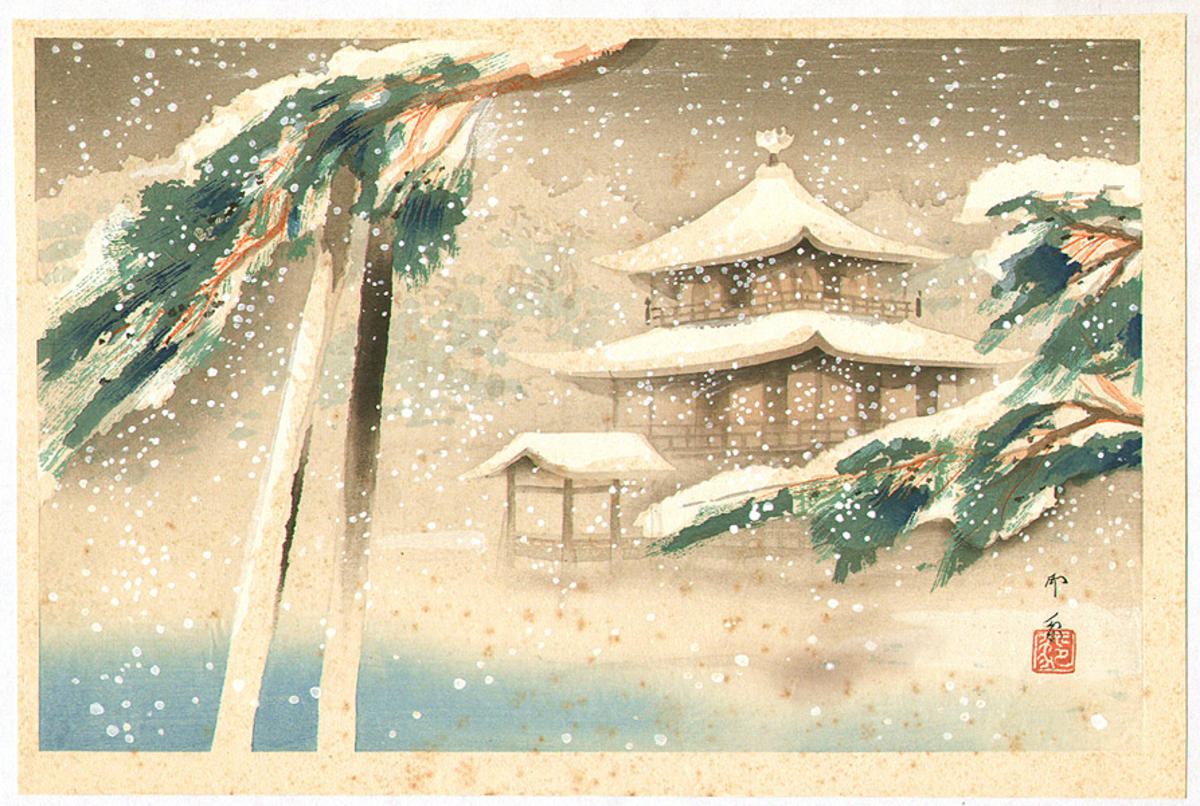
Ginkaku-ji
Woodblock print

Maiko — 舞妓の図
Woodblock print