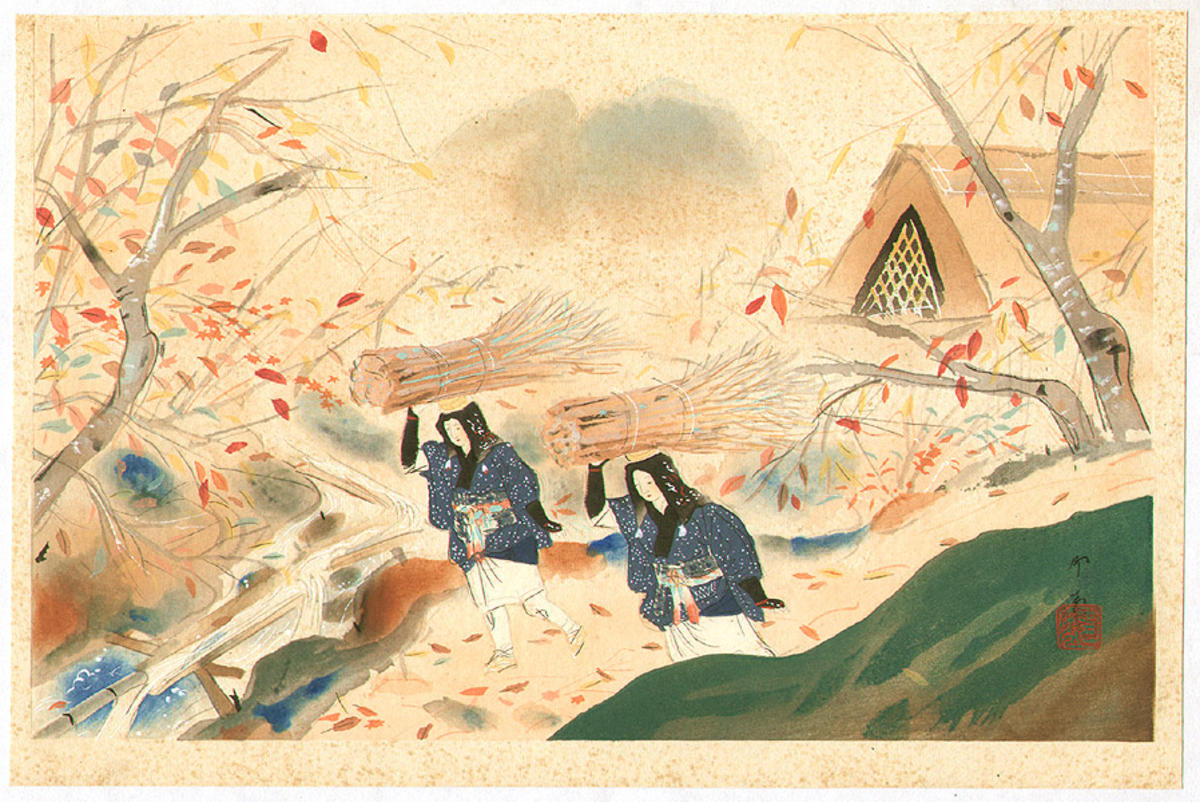
Ohara-me
by Insho Domoto
- Medium:
- Woodblock print
- Format:
- Oban
- Source:
- Japanese Art Open Database
Description
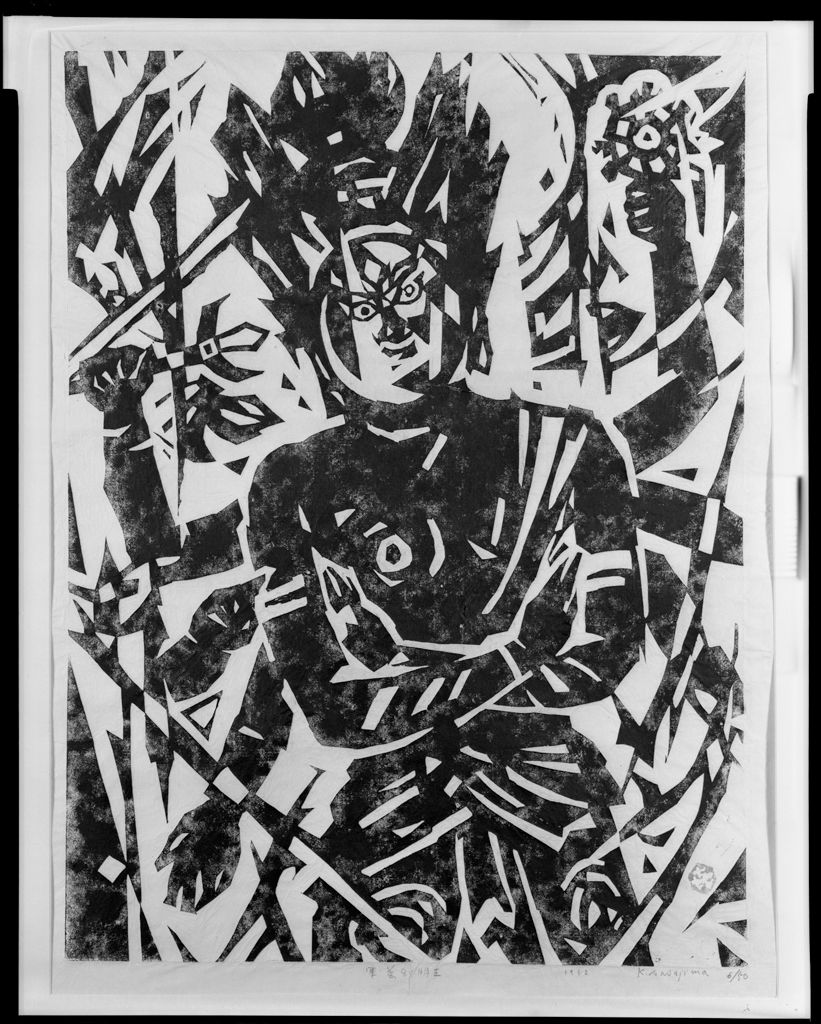
This oban woodblock print depicts an Ohara-me, a woman from the rural village of Ohara in the mountains north of Kyoto. The Ohara women were a familiar sight in the old capital, where they came to sell firewood, charcoal, and wildflowers, carrying their goods balanced on their heads in a posture that became their visual signature in Japanese art. The Ohara-me subject connects Domoto's print to a centuries-old artistic tradition of depicting these village women as emblems of rustic beauty and hard work. Their simple working clothes and erect bearing, shaped by the physical demands of carrying heavy loads, provided a visual contrast to the ornate geisha and maiko figures that dominated Kyoto's bijin-ga tradition. Domoto's rendering honors the dignity of physical labor within a composition designed for aesthetic contemplation.
More Prints by Insho Domoto
More Figures Prints
Featured in Collections
Curated cross-cuts that include this print.
Frequently Asked Questions
Ohara-me was created by Insho Domoto (堂本印象).
Ohara-me depicts figures, bijin-ga, and daily life.