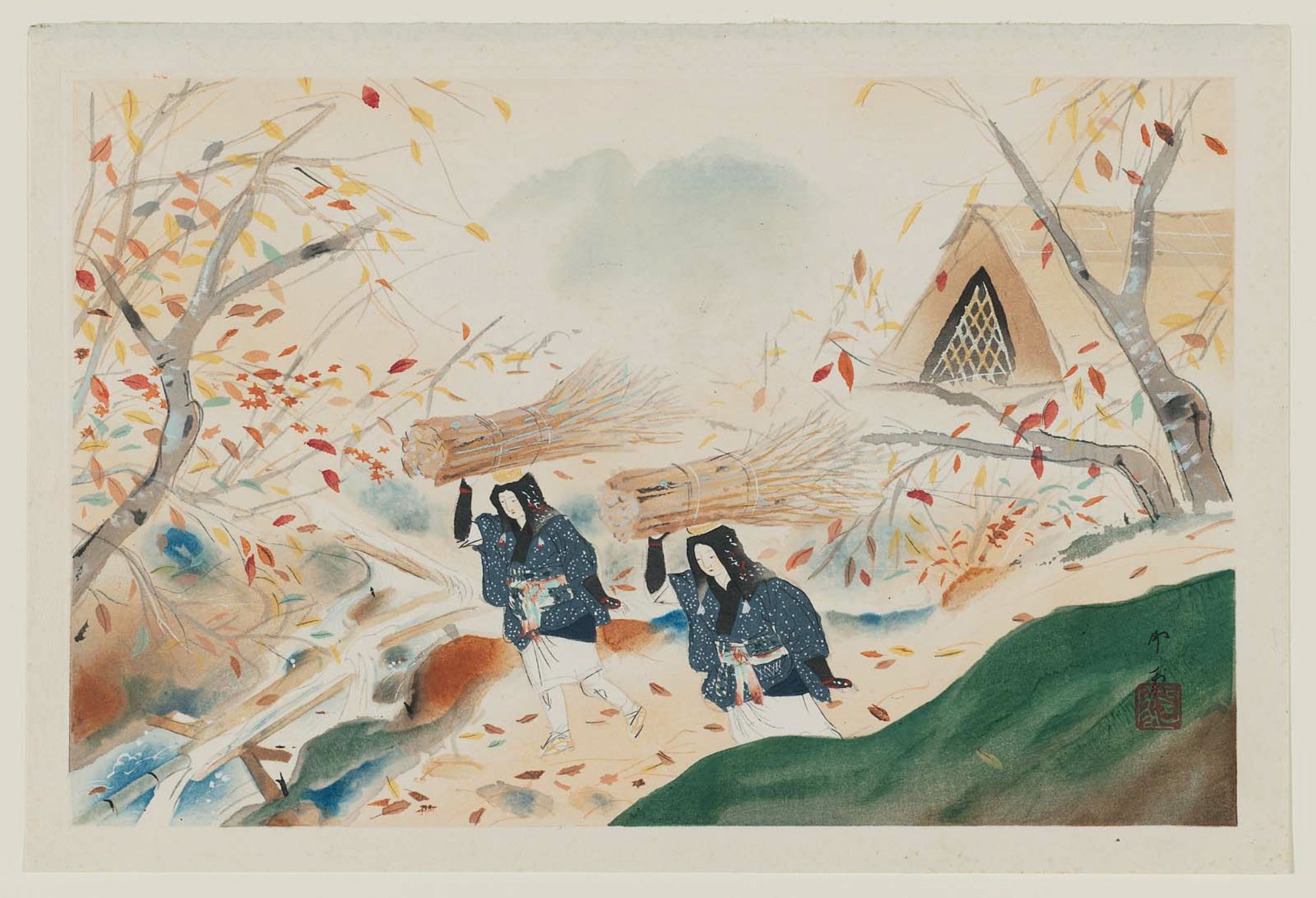
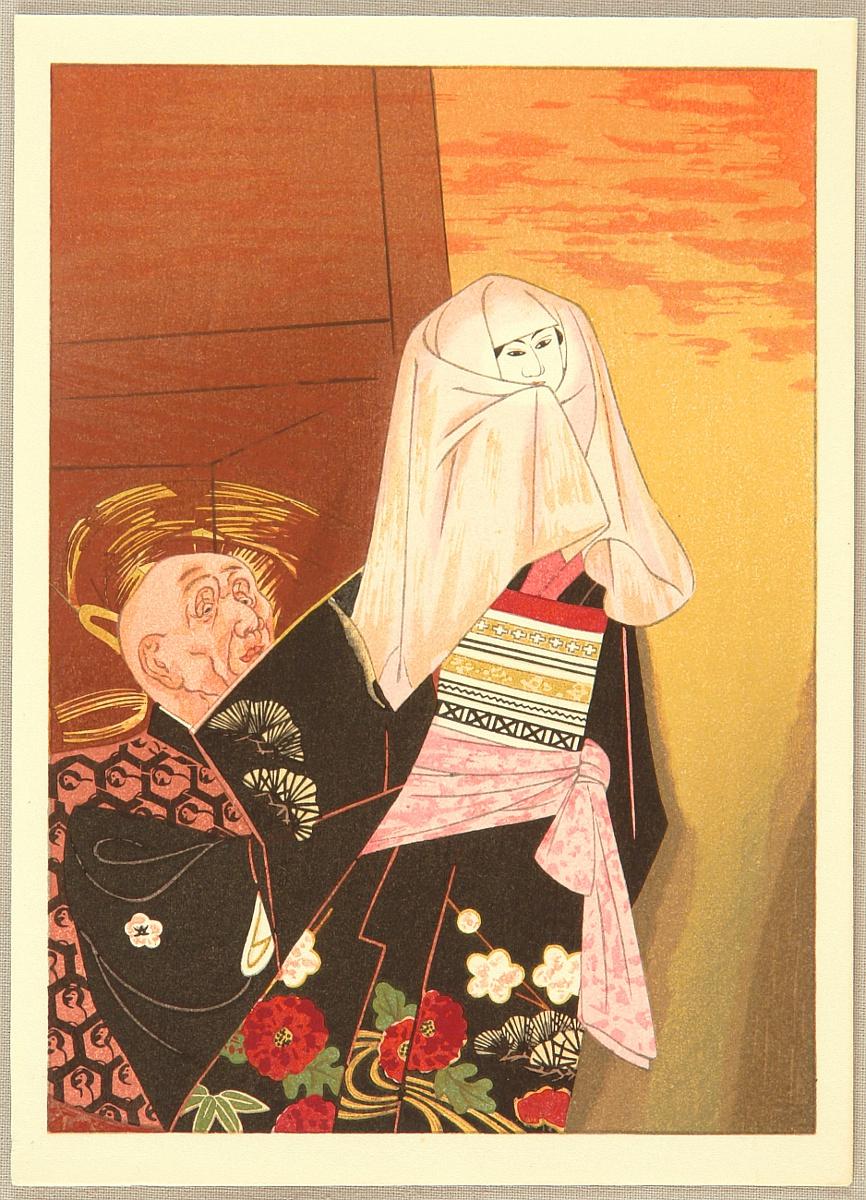
Women of Ôhara (Ôharame), from the album Eight Views of Kyoto (Kyôto hakkei)
by Insho Domoto
Description
From the Eight Views of Kyoto album, this oban woodblock print depicts the women of Ohara (Oharame), the village women who descended from the mountains north of Kyoto to sell firewood and flowers in the city. The Oharame subject has deep roots in Japanese art, appearing in screens, scrolls, and prints for centuries as an emblem of the interdependence between Kyoto and its rural hinterland. Domoto's inclusion of the Oharame in his eight-views series signals their importance to his vision of Kyoto's essential character: the city cannot be understood without acknowledging the rural communities that sustained it. The women's distinctive dress, their erect posture from carrying loads on their heads, and their movement through the landscape create a composition that is simultaneously portrait, genre scene, and landscape view.
More Prints by Insho Domoto
More Landscapes Prints

Lake Kugushi in Wakasa Province (Wakasa Kugushiko), from the series Souvenirs of Travel I (Tabi miyage dai isshu)"
Wakasa Kugushiko
1920
Color woodblock print; oban
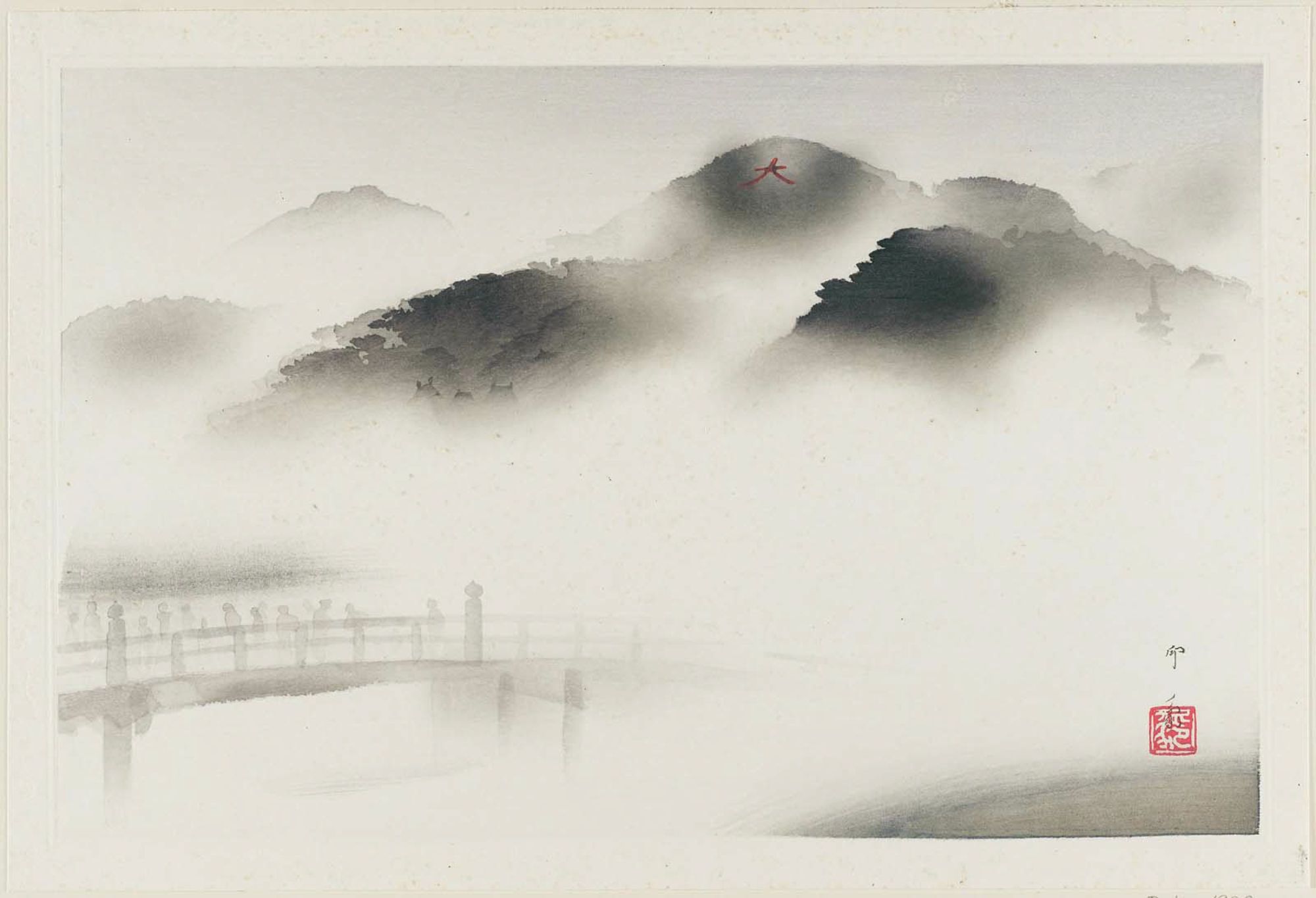
Autumn Maple Leaves at Takao, from the album Eight Views of Kyoto (Kyôto hakkei)
Woodblock print

The Beach at Kaiganji in Sanuki Province (Sanuki Kaiganji no hama), from the series "Collection of Views of Japan II, Kansai Edition (Nihon fukei shu II Kansai hen)"
1934
Color woodblock print; oban

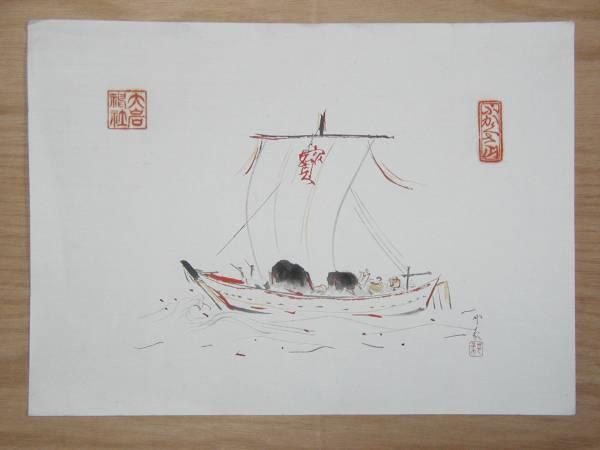
Tea Kettle, section of a sheet from the series "Mirror of Stone Rubbings of Views of the Provinces" (Kohon meihitsu ishizuri kagami)
n.d.
Woodblock print; ishizuri-e, section of harimaze sheet
Featured in Collections
Curated cross-cuts that include this print.
Frequently Asked Questions
Women of Ôhara (Ôharame), from the album Eight Views of Kyoto (Kyôto hakkei) was created by Insho Domoto (堂本印象).
Women of Ôhara (Ôharame), from the album Eight Views of Kyoto (Kyôto hakkei) depicts landscapes, set at Kyoto.