Biography
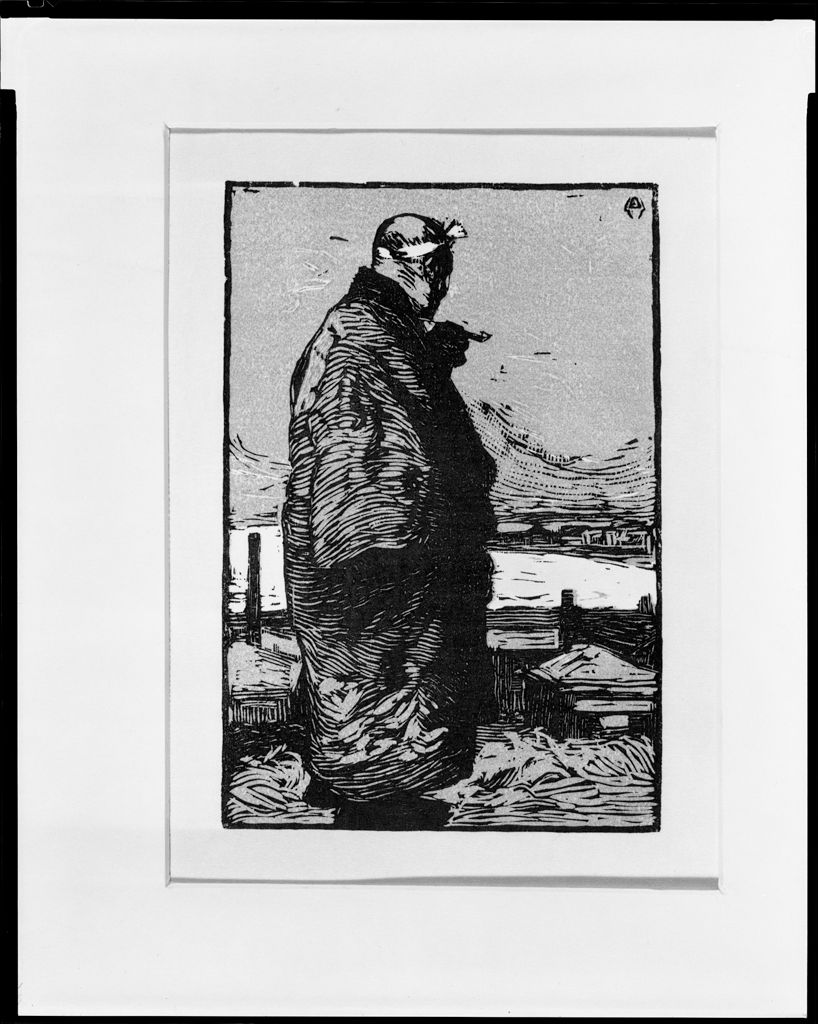
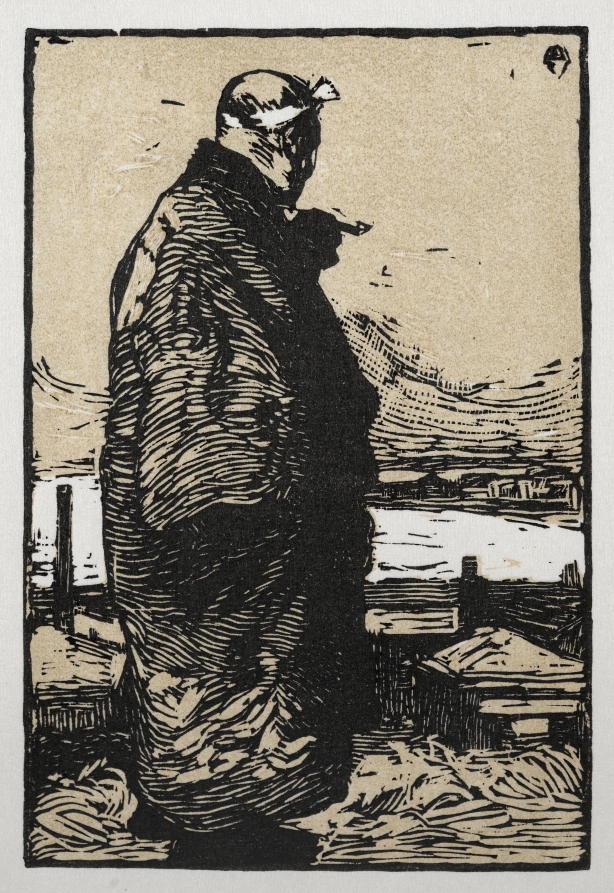
Kanae Yamamoto (山本鼎, 1882–1946) was a Japanese painter, printmaker, and educator who is widely recognized as the father of the sosaku-hanga (creative prints) movement. His 1904 woodblock print "Fisherman" is considered the first modern Japanese creative print — a work entirely designed, carved, and printed by the artist himself — and its creation marks the symbolic birth of a movement that would transform Japanese printmaking over the course of the twentieth century.
Born on October 14, 1882, in Okazaki, Aichi Prefecture, Yamamoto moved with his family to Tokyo while he was still a young child. As a boy — around the age of ten, and roughly a decade before he undertook any formal art training — he was apprenticed to a commercial wood engraver, learning to cut directly into the woodblock, a skill that would later prove central to his revolutionary contribution to Japanese printmaking. He went on to enroll at the Tokyo School of Fine Arts, where he studied Western-style oil painting and developed a strong interest in European artistic traditions. Ueda, in Nagano Prefecture — where his father established himself and where Yamamoto would eventually settle as an adult — became something of a second hometown, though he did not grow up there.
In 1904, while still a student, the twenty-two-year-old Yamamoto created "Fisherman," a small woodblock print depicting a solitary fisherman mending his nets. The work was modest in scale but radical in concept. At a time when Japanese woodblock printing was still firmly rooted in the collaborative ukiyo-e model — in which the artist designed, professional carvers cut the blocks, and professional printers produced the final prints — Yamamoto performed all three operations himself. He published "Fisherman" in the literary magazine Myojo, and the print's appearance is now regarded as the founding moment of the sosaku-hanga movement, although the movement would not coalesce into a formal organization for another decade.
Yamamoto's creative ambitions extended well beyond printmaking. In 1912 he set out for Europe, where he would remain until 1916. He spent extended periods in France, including time in Brittany, as well as several months in London, and he traveled through Italy and Russia. The experience deepened his understanding of European modernism and its emphasis on individual artistic expression, and it exposed him firsthand to the European tradition of the artist's original print, in which the artist's direct involvement in every stage of production was expected rather than exceptional.
Returning to Japan in 1916, Yamamoto brought with him a strengthened conviction that Japanese printmaking needed to break free from the collaborative, publisher-driven model. He became a vocal advocate for the principle that the artist should design, carve, and print his own work — a philosophy that would become the defining credo of the sosaku-hanga movement. Together with fellow artists such as Kogan Tobari, he promoted this vision through exhibitions, publications, and personal example.
Yamamoto's interests, however, were remarkably diverse, and printmaking was only one facet of his creative life. He was an accomplished oil painter whose canvases reflected his engagement with French Impressionism and Post-Impressionism. From 1917 he exhibited his paintings at the Inten, the exhibitions of the Nihon Bijutsuin (Japan Art Institute), an independent artists' society, earning recognition as a painter of stature in his own right.
Perhaps most remarkably, Yamamoto devoted a significant portion of his career to art education. He became a leading figure in the free-drawing movement (jiyuga kyoiku undo) in Japanese schools, arguing that children should be encouraged to draw and paint from direct observation and personal expression rather than copying prescribed models. He founded the Japan Children's Free Drawing Association in 1919 and set out his ideas in a 1921 book on free-drawing education. Much of this work was centered in Nagano Prefecture, where he had settled, and it aligned closely with his sosaku-hanga principles — both championed the primacy of individual creative expression. His impact on Japanese art education was profound and lasting.
Yamamoto also co-founded the Nihon Sosaku Hanga Kyokai (Japan Creative Print Association) in 1918, providing an institutional framework for the nascent movement. The association organized exhibitions and helped disseminate sosaku-hanga ideas to a broader audience. Through these organizational efforts, Yamamoto helped transform what had begun as a personal artistic experiment into a coherent movement with shared principles, exhibition venues, and a growing membership.
In his later years, Yamamoto continued to paint, make prints, and advocate for art education, though his health declined. He died on October 8, 1946, at the age of sixty-three. While his individual prints are relatively few in number and modest in scale compared to the prolific output of later sosaku-hanga masters like Munakata Shiko, his historical significance is immense. Without his pioneering example and tireless advocacy, the sosaku-hanga movement might never have achieved the force and coherence that ultimately brought it international recognition. His legacy lives in every artist who designs, carves, and prints their own woodblock — the fundamental act that "Fisherman" first demonstrated was possible.
Key Facts
- Active Period
- 1882–1946
- Nationality
- 🇯🇵Japan
- Movement
- Sōsaku-hanga
- Works Indexed
- 22
Frequently Asked Questions
Kanae Yamamoto (山本鼎, 1882–1946) was a Japanese painter, printmaker, and educator who is widely recognized as the father of the sosaku-hanga (creative prints) movement. His 1904 woodblock print "Fisherman" is considered the first modern Japanese creative print — a work entirely designed, carved, and printed by the artist himself — and its creation marks the symbolic birth of a movement that would transform Japanese printmaking over the course of the twentieth century.
Kanae Yamamoto was active from 1882 to 1946. They were associated with the Sōsaku-hanga movement.
Kanae Yamamoto's work was shaped by the Sōsaku-hanga tradition in Japanese woodblock printmaking. Sōsaku-hanga: ## What is sōsaku-hanga? Sōsaku-hanga (創作版画, "creative prints") was a twentieth-century Japanese print movement defined by a single commitment: the artist must design, carve, and print every work alone.
Kanae Yamamoto's prints frequently feature figures, landscapes, travel scenes, nude, portraits, animals.
Original prints by Kanae Yamamoto can be found in collections including Honolulu Museum of Art, Fine Arts Museums of San Francisco, Art Institute of Chicago, Cleveland Museum of Art.
Woodblock Prints by Kanae Yamamoto (22)

Gyoshigai
漁師街
1905
Color woodblock print

The Bathers
c. 1910
Color woodblock print
Fisherman
1906
woodcut
French Pastoral in Spring
c. 1912
Woodblock print

View of Moscow
c. 1917
Color woodblock print

Woman on Deck
1912
Color woodblock print
Chinese Lady
ca. 1912–1914
Woodblock print
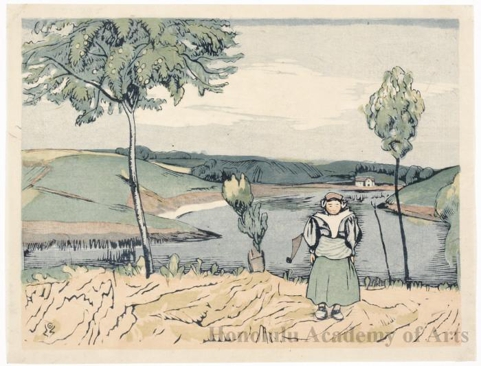
Breton Landscape
c. 1913
Woodblock print
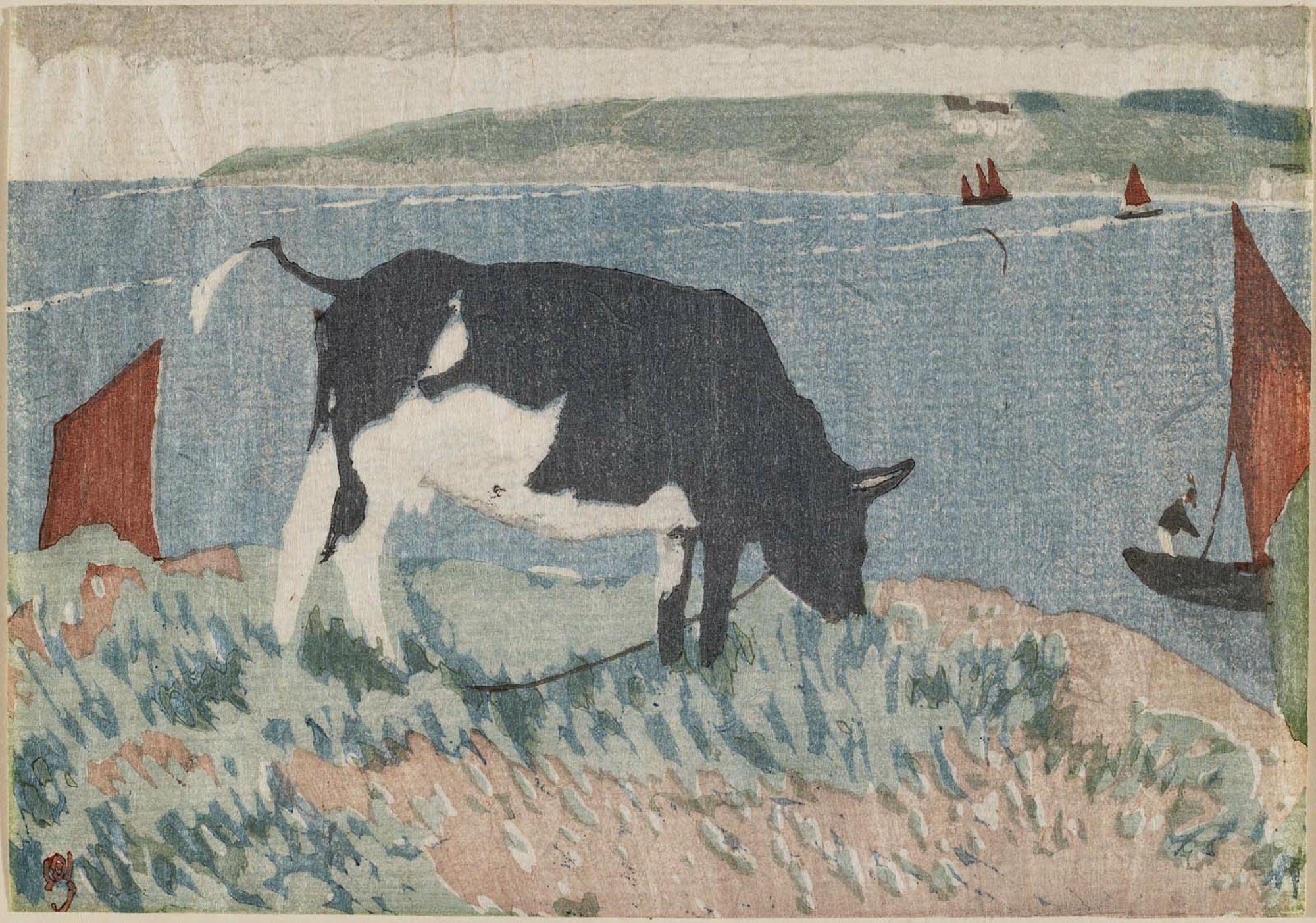
Cow
1915
Woodblock print

Chinese Woman, Hong Kong
1917
Color woodblock print
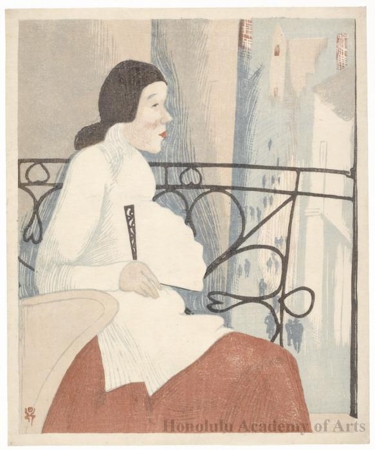
Woman on Balcony
c. 1917
Woodblock print
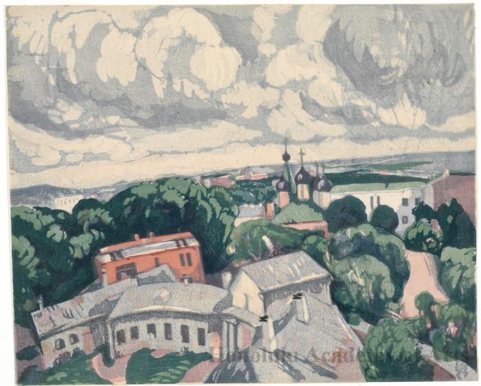
Moscow
1917
Woodblock print
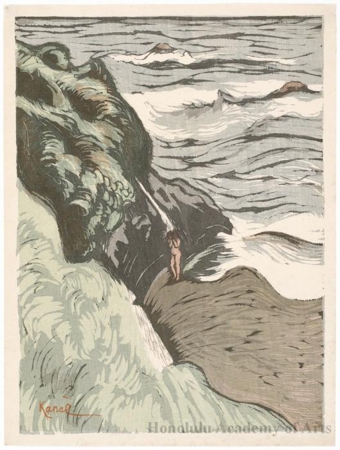
Bather on the Rocks
1918
Woodblock print

Bathing
1918
Color woodblock print
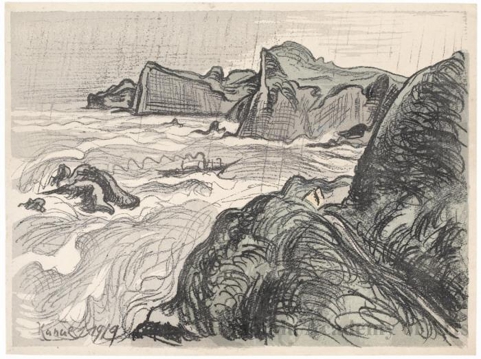
Seascape
1919
Woodblock print
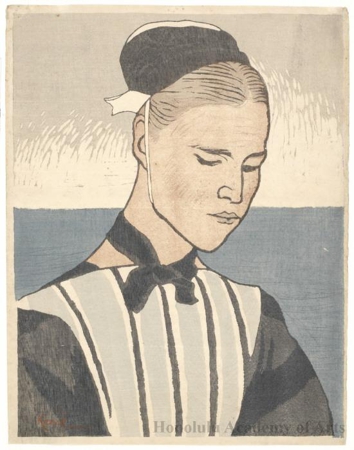
Woman of Brittany
1920
Woodblock print
Image No.6 Motherhood (1)
1950
Woodblock print

Fishermen
Woodblock print
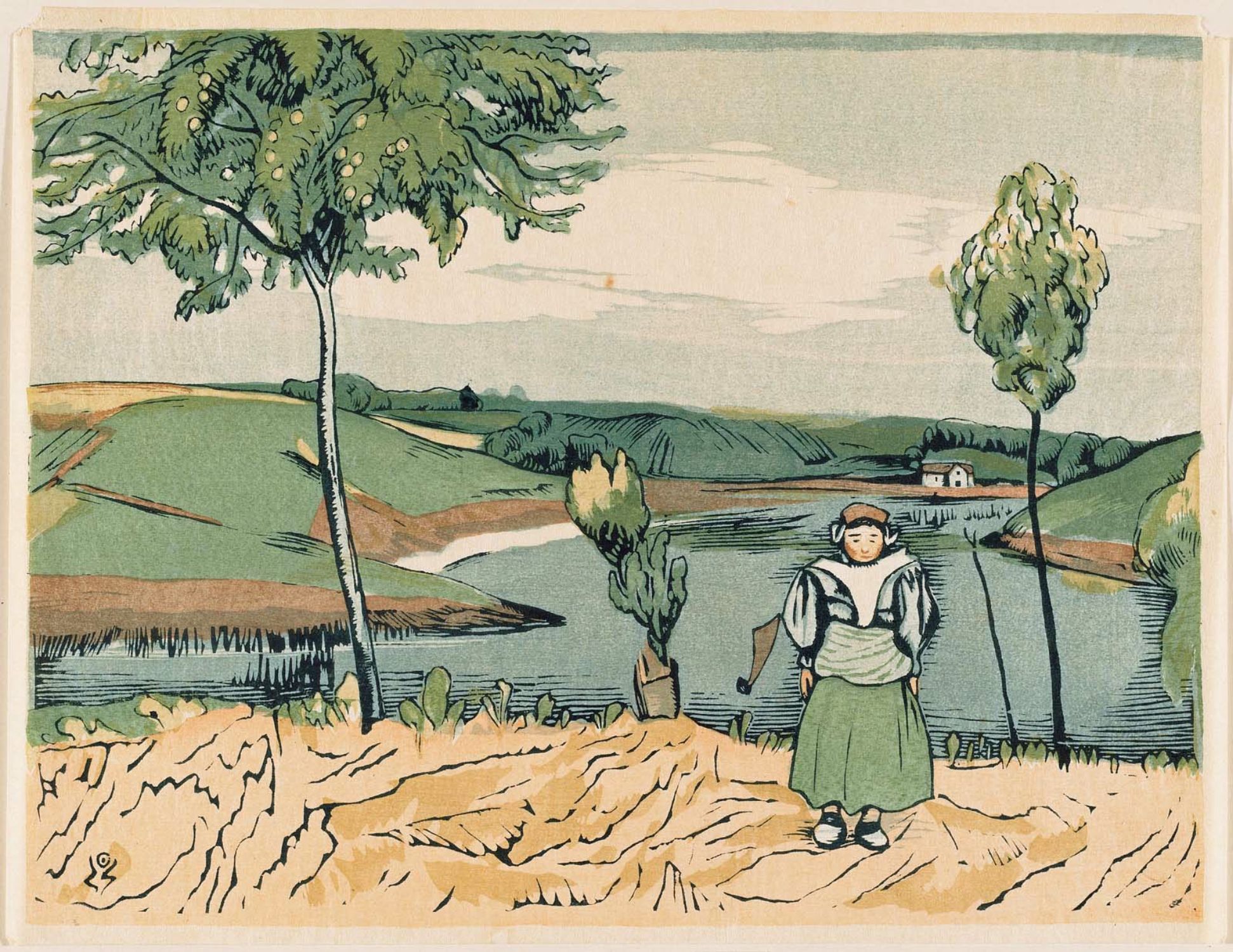
Dutch girl in landscape
Japanese, Taishô era
Woodblock print

Fisherman
Mokuhanga (Japanese woodblock)

Fisherman
Mokuhanga (Japanese woodblock)

Fisherman
Mokuhanga (Japanese woodblock)