
Biography
Katsushika Hokuju (active in the early nineteenth century) was a Japanese woodblock print designer of the late Edo period, remembered for the highly original landscape compositions that place him among the transitional figures in the development of ukiyo-e landscape printmaking. A pupil of the master Katsushika Hokusai — described by the art historian Laurance P. Roberts as one of Hokusai's best students — Hokuju adopted his teacher's family name and worked within the Hokusai school during the decades when the genre of the pure landscape print was emerging as a major branch of ukiyo-e. His synthesis of traditional Japanese composition with imported Western perspective techniques and atmospheric effects reflects the experimental milieu around Hokusai out of which the great landscape series of the following decades, including Hokusai's own Thirty-Six Views of Mount Fuji of the early 1830s, would grow.
Very little documentary evidence survives about Hokuju's life. His exact birth and death dates are not securely recorded, and scholars reconstruct his career from the prints he signed and from the publishers' colophons attached to his designs. He most often signed his work Shotei Hokuju, or simply Hokuju, with the surname Katsushika identifying his school affiliation. Active roughly through the first decades of the nineteenth century, he was producing landscape designs at a moment when the genre was still finding its commercial footing. Earlier ukiyo-e had been dominated by portraits of beautiful women (bijin-ga) and kabuki actors (yakusha-e), with landscape relegated to background elements behind figures. Hokuju belonged to the early generation of designers who made the landscape itself the subject of the print, and he is noted for concentrating on landscape rather than the actor and figure prints that occupied many of his contemporaries.
Hokuju's training under Hokusai placed him within one of the most experimental workshops in Edo. Hokusai had absorbed influences from Western prints that reached Japan through the Dutch trading concession at Nagasaki, and he spent decades testing how Western linear perspective could be reconciled with traditional Japanese pictorial conventions. Hokuju inherited this curiosity and, in some respects, foregrounded the perspective scheme even more openly than his teacher, producing prints with strongly receding diagonals, exaggerated foreground-to-background scale shifts, cast shadows rarely seen in ukiyo-e of the period, and skies graded with atmospheric color in imitation of European light effects.
Among his best-known works is the Eastern Capital (Toto) series, which surveyed celebrated views of Edo, the shogunal capital — among them Ochanomizu, the waterfront at Shinagawa, and the Kinryuzan temple at Asakusa. He also depicted views along the Tokaido, the great highway connecting Edo with Kyoto, in designs such as his scene at Okazaki. In these prints Hokuju worked in the uki-e idiom of perspective pictures — compositions structured around a vanishing point that Japanese printmakers had adapted from Western viewing conventions.
What distinguishes Hokuju's landscape prints visually is the cool, almost crystalline quality of his atmosphere. He favored blues for skies and water, applied in carefully graded bokashi printing where the color fades smoothly from saturated to pale. His clouds are often rendered as flat, sculptural masses with hard edges, and his mountains take on an almost faceted, near-cubistic geometry — unusual choices that lend his scenes a slightly dreamlike, theatrical quality. Architecture such as bridges and temple halls is drawn with crisp geometric precision, its timbers receding into the distance along ruled lines that emphasize the depth of the picture space. Human figures populate the foreground at modest scale, going about the ordinary business of travel and commerce, but they remain clearly subordinate to the landscape itself.
Hokuju's importance to the history of Japanese landscape prints is significant out of proportion to his fame. The great landscape series of the 1830s by Hokusai and Hiroshige are among the most widely reproduced images in world art, and their fame has tended to obscure the artists who experimented before them. Yet the early landscape designs of Hokuju and his contemporaries helped establish that the landscape print could be a commercially viable genre at all — that Japanese audiences would pay for a sheet depicting a famous view rather than a famous actor or courtesan — and helped develop the visual conventions, especially the rigorous use of perspective, that later masters refined. Authentic prints by Hokuju are rare today, and his work is preserved in major museum collections of Japanese woodblock prints. He remains a connoisseur's artist, less widely known than his teacher Hokusai or his successor Hiroshige, but increasingly recognized for his role in shaping the Edo landscape print.
Key Facts
- Nationality
- 🇯🇵Japan
- Movement
- Ukiyo-e
- Works Indexed
- 18
Frequently Asked Questions
Katsushika Hokuju (active in the early nineteenth century) was a Japanese woodblock print designer of the late Edo period, remembered for the highly original landscape compositions that place him among the transitional figures in the development of ukiyo-e landscape printmaking. A pupil of the master Katsushika Hokusai — described by the art historian Laurance P. Roberts as one of Hokusai's best students — Hokuju adopted his teacher's family name and worked within the Hokusai school during the decades when the genre of the pure landscape print was emerging as a major branch of ukiyo-e. His synthesis of traditional Japanese composition with imported Western perspective techniques and atmospheric effects reflects the experimental milieu around Hokusai out of which the great landscape series of the following decades, including Hokusai's own Thirty-Six Views of Mount Fuji of the early 1830s, would grow.
Katsushika Hokuju's work was shaped by the Ukiyo-e tradition in Japanese woodblock printmaking. Ukiyo-e: ## What is ukiyo-e? Ukiyo-e ([浮世絵](/glossary/ukiyo-e)) — literally "pictures of the floating world" — is the Edo-period Japanese print and painting tradition that flourished from roughly 1660 to 1868, depicting the pleasures of urban life in Edo (modern Tokyo): courtesans, kabuki actors, sumo wrestlers, famous landscapes, and seasonal beauties.
Katsushika Hokuju's prints frequently feature bridges, sumo.
Original prints by Katsushika Hokuju can be found in collections including ukiyo-e.org, Art Institute of Chicago, Cleveland Museum of Art, Metropolitan Museum of Art.
Woodblock Prints by Katsushika Hokuju (18)
Courtesan Playing Shamisen
Edo period (1615-1868)
Color woodblock print; surimono

Takanawa Okido at the Shinagawa Station (Shinagawa-juku Takanawa Okido), from the series "Eastern Capital (Toto)"
c. 1789/1818
Color woodblock print; oban

View of the Rokugo River Crossing at the Kawasaki Station (Kawasaki-juku Rokugo kawa watashi no zu), from the series "Tokaido Road (Tokaido)"
c. 1789/1818
Color woodblock print; oban

Looking out to Sea from the Benten Shrine at Susaki in Fukagawa (Fukagawa Susaki Benten yori kaijo o nozomu), from the series "Eastern Capital (Toto)"
c. 1789/1818
Color woodblock print; oban

View of Tsukuda Island (Tsukudajima no kei), from the series "Eastern Capital (Toto)"
c. 1789/1818
Color woodblock print; oban

Shichiri Beach at Enoshima (Enoshima Shichirigahama)
c. 1789/1818
Color woodblock print; oban
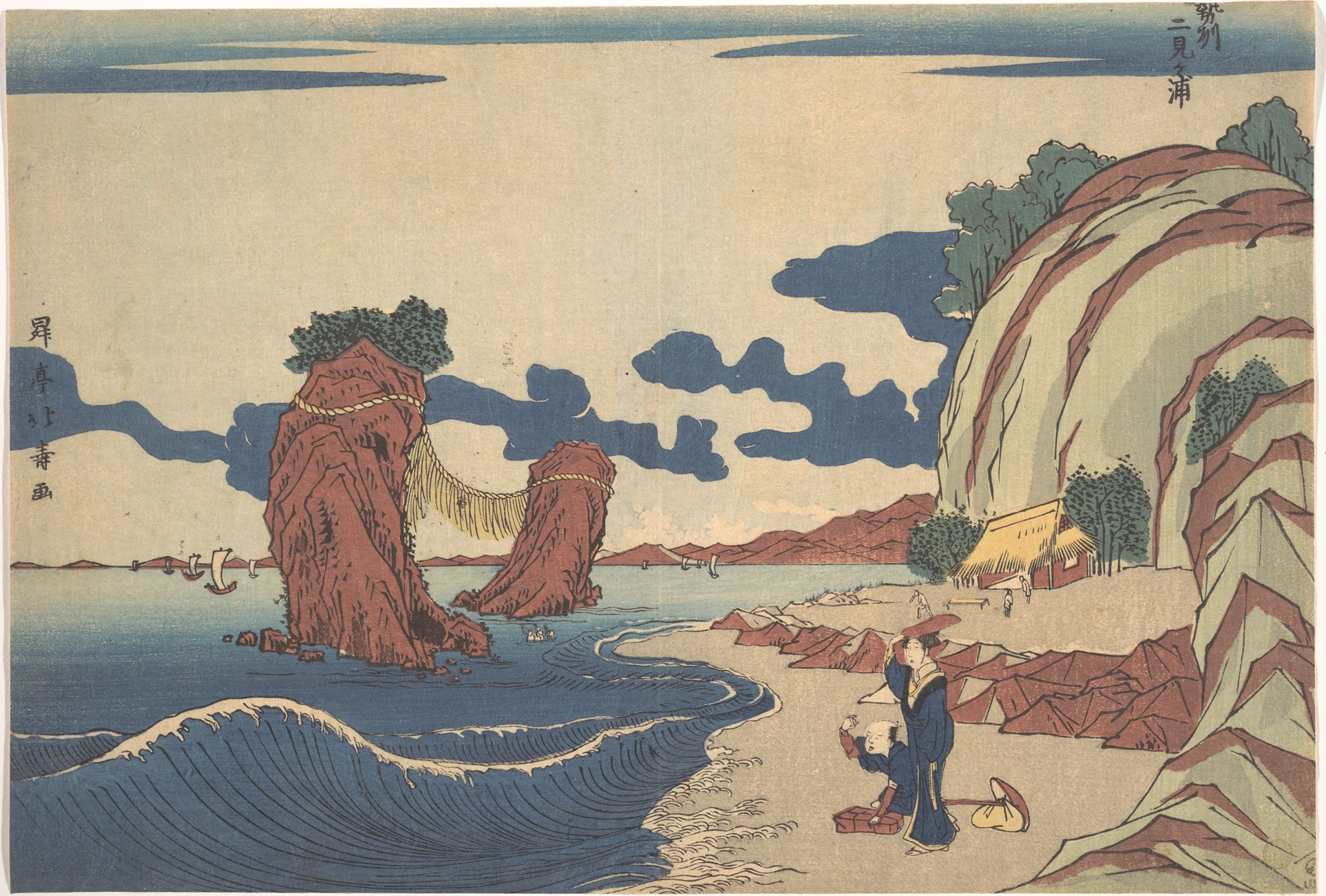
View of Futami Beach at Ise
ca. 1810–1820
Woodblock print; ink and color on paper
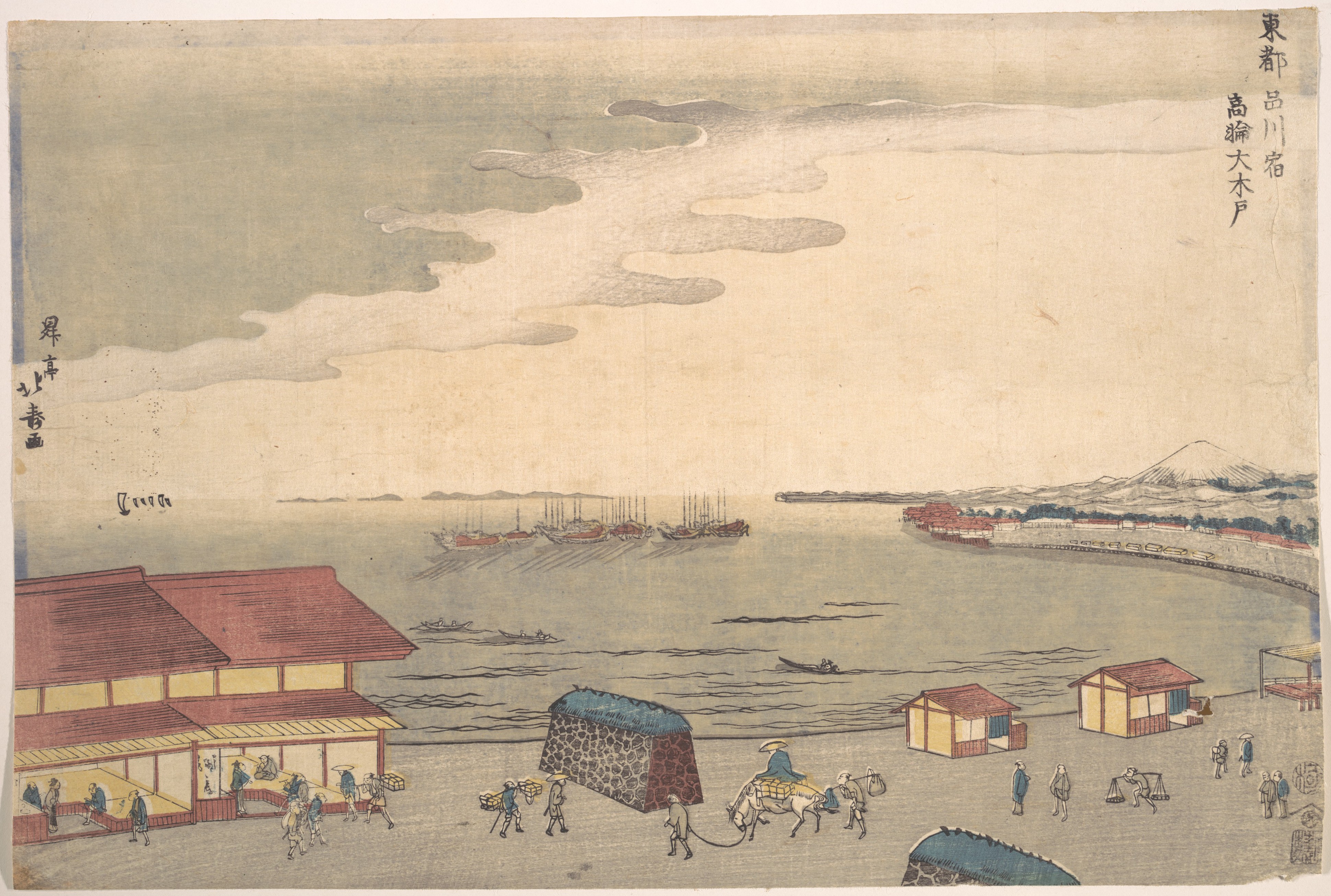
Shore Scene Showing European Influence
ca. 1810–1820
Woodblock print; ink and color on paper
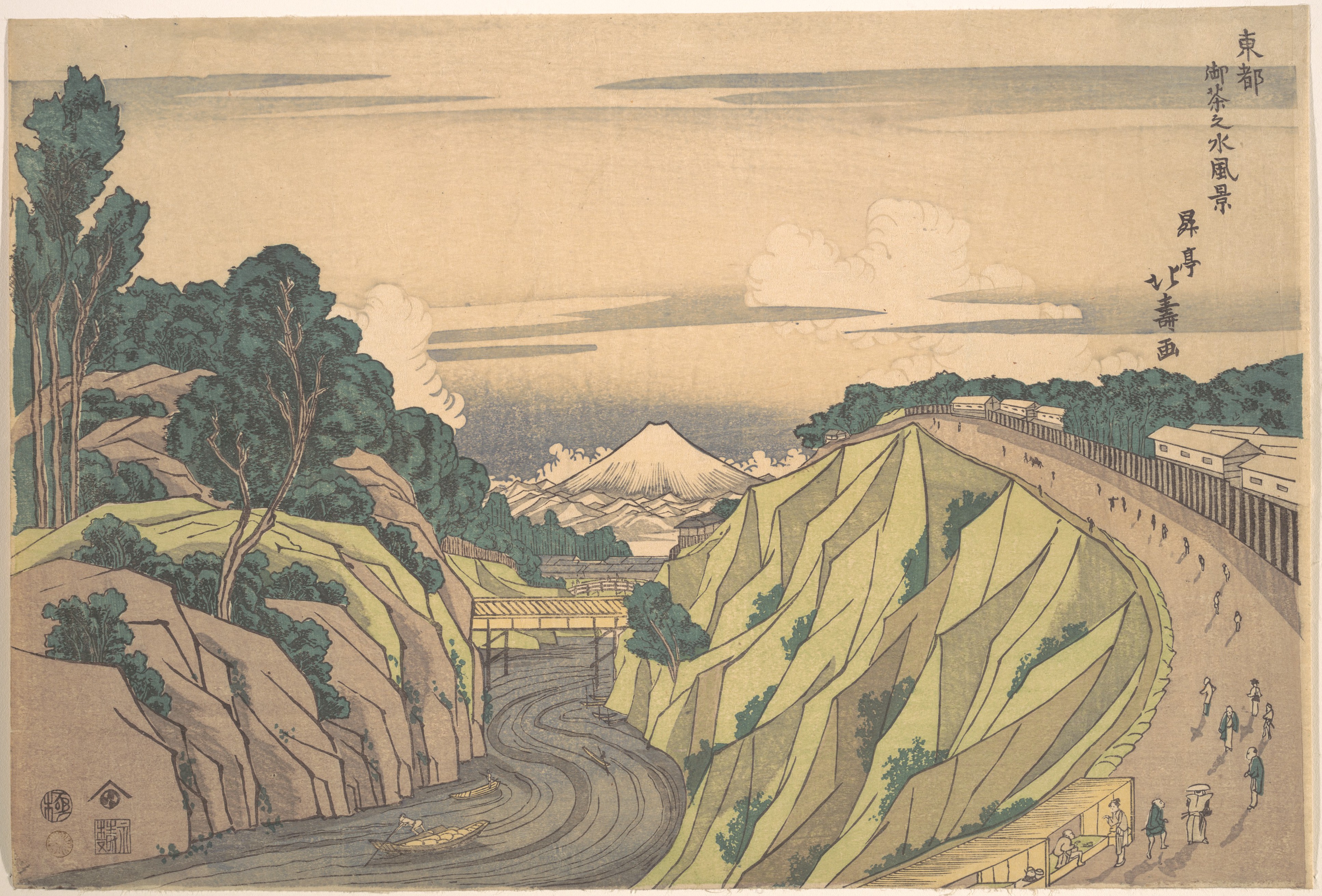
View of Ochanomizu in the Eastern Capital
ca. 1810–1820
Woodblock print; ink and color on paper

Susaki, from the series "New Perspective Pictures (Shin uki-e)"
c. 1810s
Color woodblock print
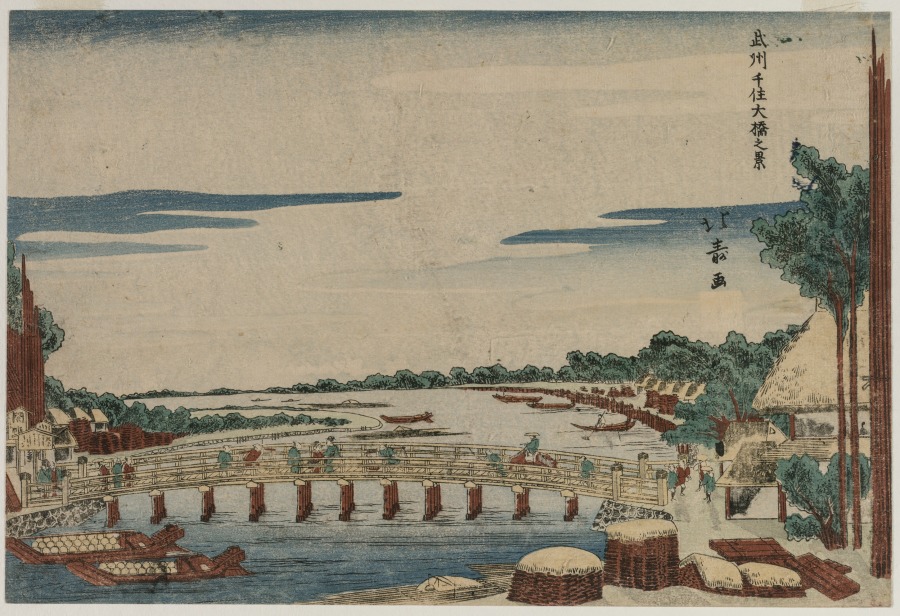
A View of the Great Bridge at Senju in Musashi Province
c. 1820s
color woodblock print

Actors Nakamura Utaemon as Kumagai Jirō Naozane and Arashi Rikan as the maiden Kohagi, actually Atsumori
1835

Futatsuryu of Izutsuya as a Musician (Hayashi), from the series "Parade of the Shimanouchi Pleasure Quarter (Shimanouchi nerimono)"
1836
Color woodblock print; oban
Mt. Dokan

Shinsen Banshoku zukō
c.1830s or 1840s.
Woodblock- printed book; 1 vol.
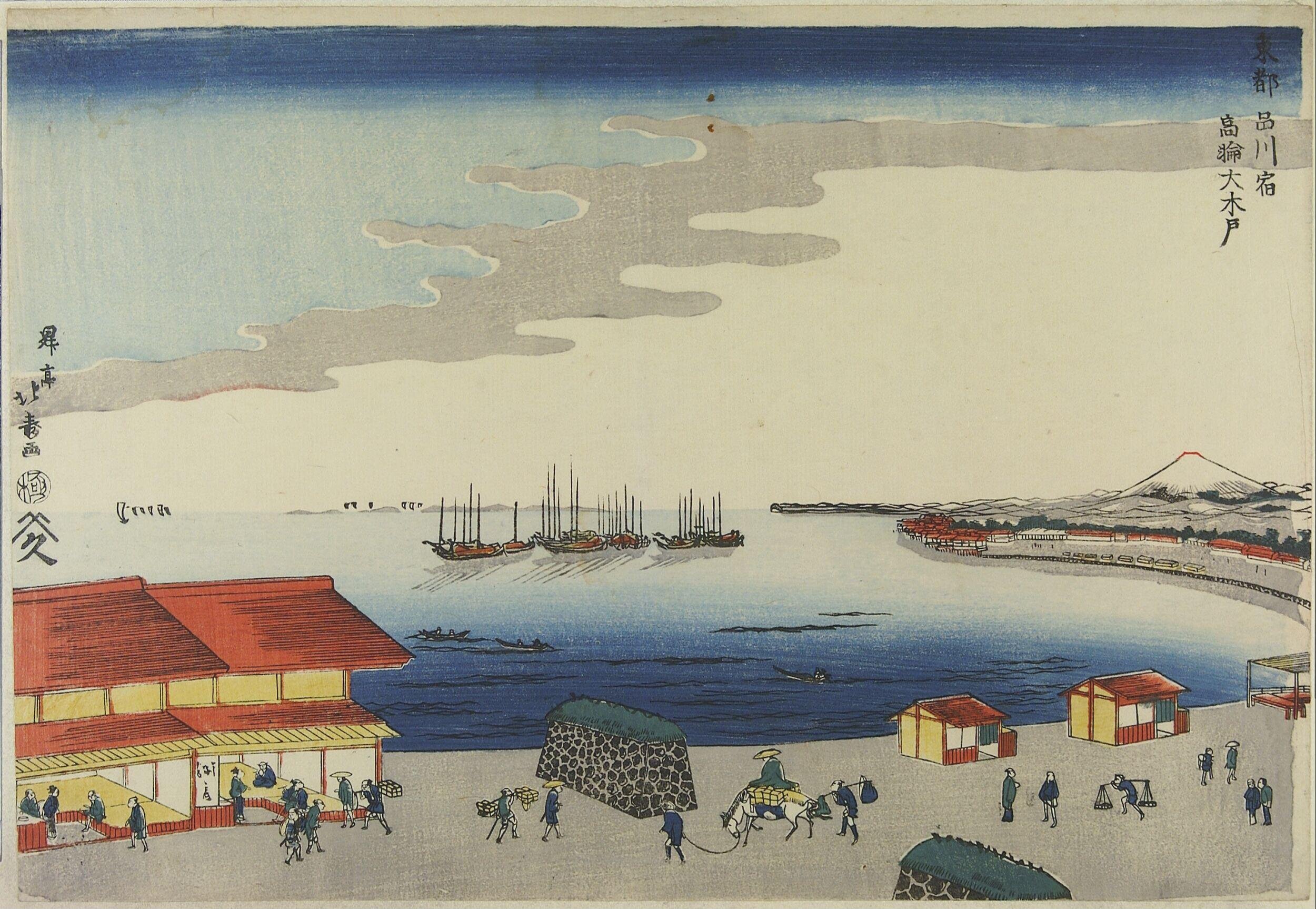
Okido Barrier in the Takanawa District by the Shinagawa Post Station in the Eastern Capital
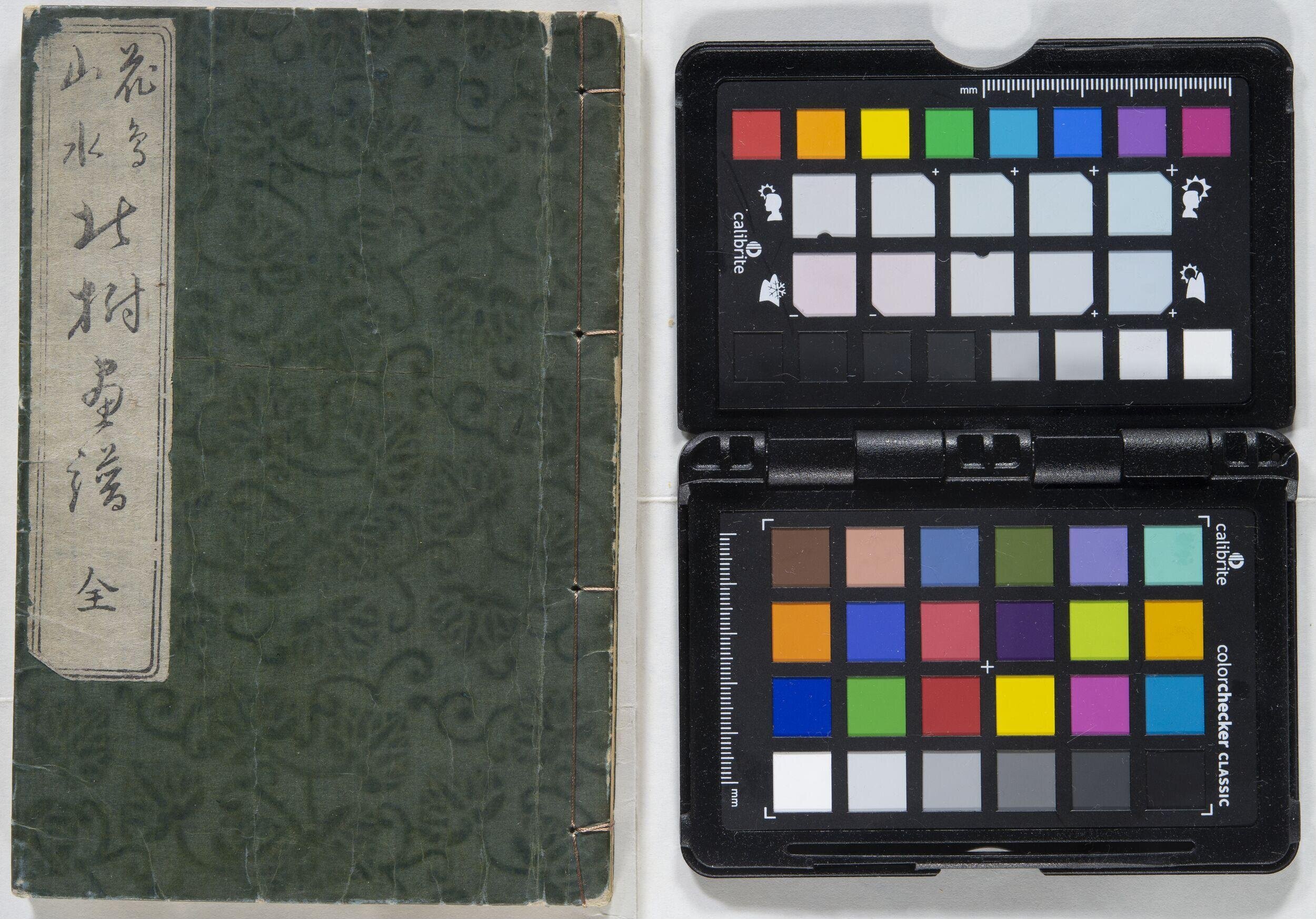
Hokuju's Picture Album (Hokuju gafu)
19th century
