Biography
Kitagawa Toyohide (北川豊秀), who signed his prints under the personal gō (art-name) Ichiryūtei (一流亭), and occasionally Isshintei (一信亭), was an Osaka ukiyo-e printmaker active across an exceptionally narrow window of years between about 1838 and 1843. Only a handful of designs — barely a dozen, and probably fewer than fifteen — can be attributed to him today, a body of work whose abrupt curtailment was a direct consequence of the Tenpō Reforms of 1842, the shogunate's wide-ranging programme of sumptuary legislation that virtually halted print publication in Osaka for roughly five years and that defined the limits of his career.
Nothing certain is known of his birth, his death, or his early training, and the surviving published scholarship — most thoroughly assembled on osakaprints.com under the curation of John Fiorillo — notes only that his use of a 'Toyo' (豊) element predates Utagawa Kunisada's adoption of the Toyokuni name in 1844 by some six years, which has invited speculation, never fully proven, that he received some form of training in the orbit of Utagawa Toyokuni I. The toshidama cartouche — a stylised wish-fulfilling jewel that the Utagawa school used as its identifying mark — appears on at least two of Toyohide's prints, which supports though does not confirm an Utagawa-school apprenticeship and a possible connection with Kunisada. Whatever his lineage, by the late 1830s he was working in the Osaka publishing trade and producing yakusha-e (actor prints) for the city's theatres.
Kamigata (Osaka–Kyoto) print culture of the late 1830s and early 1840s differed in important respects from the contemporaneous Edo ukiyo-e market. Osaka prints were produced in much smaller editions for a more closely-knit community of theatre patrons, kabuki critics, and amateur poets, and they tended to favour single-actor compositions on the ōban-format vertical sheet over the wider triptych formats favoured in Edo. Connoisseurship of fine printing was particularly high in the Osaka market, and many Osaka prints of this period were issued in deluxe editions employing metallic pigments, mica, blind embossing, and other refinements that drove up their cost but secured the loyalty of collectors. Toyohide's prints were issued by the Osaka publisher Honsei (Honya Seishichi), one of a number of houses that produced small print runs aimed at this connoisseur audience rather than the larger commercial market that Edo publishers commanded.
Toyohide's recorded works concentrate on portraits of leading kabuki actors of the Osaka stage at the close of the 1830s and the opening of the 1840s. Among his documented designs are Onoe Kikugorō III as Shirai Gonpachi in Ume no hatsuharu gojūsantsugi at the Kado Theatre in March 1841 and, later that year, the same actor as Yomoshichi in Tōkaidō yotsuya kaidan at the Ōnishi Theatre in September 1841, while one of his very latest sheets shows Arashi Tokusaburō II as Miyamoto Musashi in Katakiuchi ganryūjima at the Kado Theatre in March 1843. Such prints supply scholarship with detailed information about Osaka stage practice in the final months before the Tenpō crackdown.
The Tenpō Reforms, decreed by senior councillor Mizuno Tadakuni in 1841 and intensified through 1842, banned the production of single-actor prints, restricted the use of luxury pigments, prohibited the depiction of specific named performers, and effectively suspended Osaka's commercial print industry. Toyohide managed publication as late as early 1843 — the Arashi Tokusaburō print of March 1843 is one of the very latest Osaka prints produced before the full force of the reforms shut down the workshops. After 1843 his name does not appear in the records, and it is generally assumed that he ceased to publish, although nothing certain is known of his subsequent activities. A second artist also using the name Kitagawa Toyohide is recorded in 1862–63 — this was the artist Hasegawa Munehiro adopting the name during a separate period of production, and modern attribution distinguishes between Toyohide I (the present artist) and Toyohide II.
No pupils of Toyohide I have been identified, and impressions of any of his prints are infrequently encountered today; his surviving designs, fewer than fifteen in total, are held in a small number of public and private collections. His prints are uncommon and his name is little known outside the specialist Kamigata-print scholarship; he is nonetheless one of the small number of Osaka designers active in the immediate prelude to the Tenpō Reforms whose work survives in identifiable quantity, and his prints supply a documentary record of late-Tenpō Osaka kabuki at the moment immediately preceding the shogunate's suppression of the trade.
Key Facts
- Nationality
- 🇯🇵Japan
- Movement
- Ukiyo-e
- Works Indexed
- 5
Frequently Asked Questions
Kitagawa Toyohide (北川豊秀), who signed his prints under the personal gō (art-name) Ichiryūtei (一流亭), and occasionally Isshintei (一信亭), was an Osaka ukiyo-e printmaker active across an exceptionally narrow window of years between about 1838 and 1843. Only a handful of designs — barely a dozen, and probably fewer than fifteen — can be attributed to him today, a body of work whose abrupt curtailment was a direct consequence of the Tenpō Reforms of 1842, the shogunate's wide-ranging programme of sumptuary legislation that virtually halted print publication in Osaka for roughly five years and that defined the limits of his career.
Kitagawa Toyohide's work was shaped by the Ukiyo-e tradition in Japanese woodblock printmaking. Ukiyo-e: ## What is ukiyo-e? Ukiyo-e ([浮世絵](/glossary/ukiyo-e)) — literally "pictures of the floating world" — is the Edo-period Japanese print and painting tradition that flourished from roughly 1660 to 1868, depicting the pleasures of urban life in Edo (modern Tokyo): courtesans, kabuki actors, sumo wrestlers, famous landscapes, and seasonal beauties.
Kitagawa Toyohide's prints frequently feature kabuki, theater, castles.
Original prints by Kitagawa Toyohide can be found in collections including Museum of Fine Arts, Boston, British Museum.
Woodblock Prints by Kitagawa Toyohide (5)
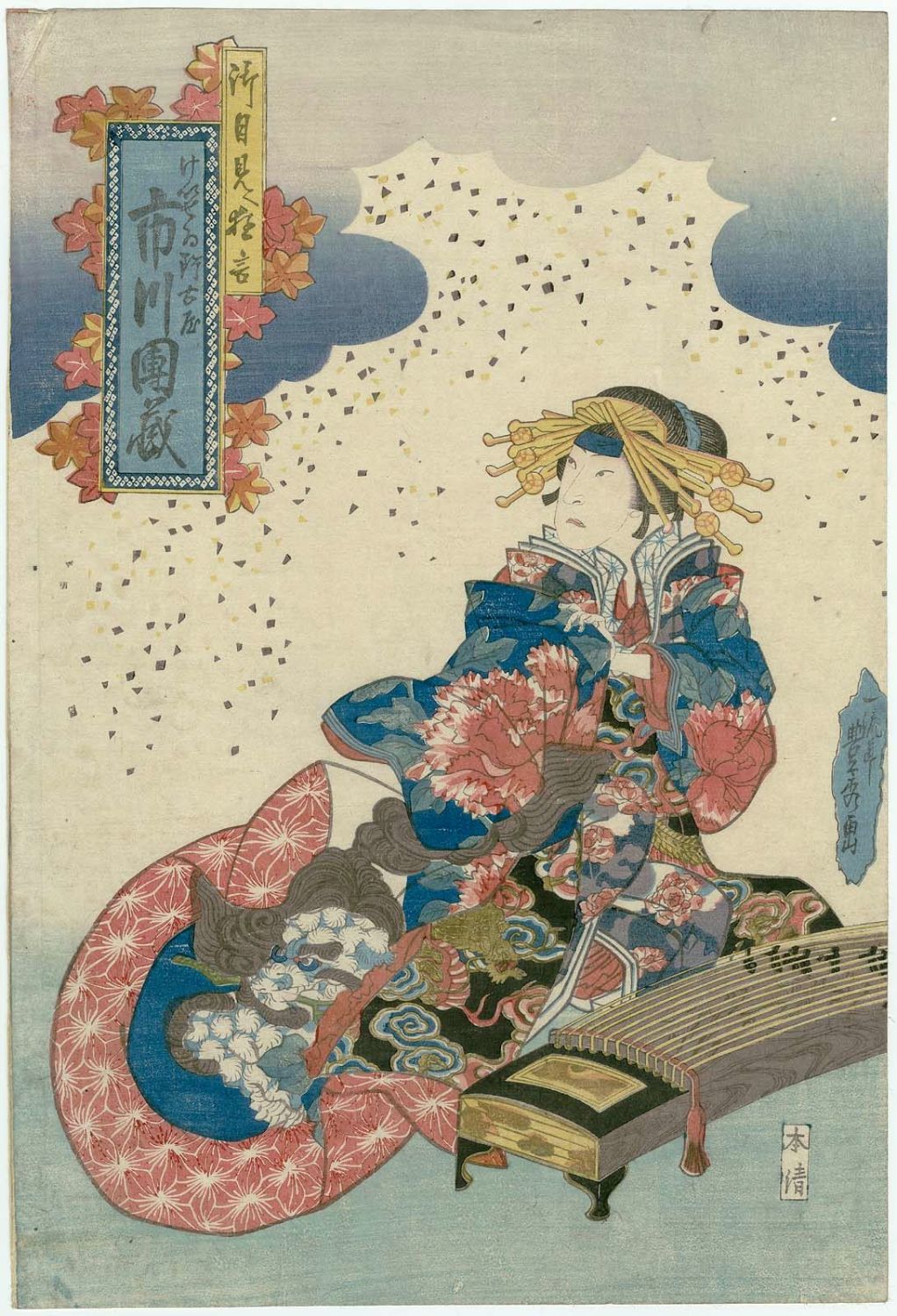
Actor Ichikawa Danzō as the Courtesan Akoya
1839
Woodblock print (nishiki-e); ink and color on paper
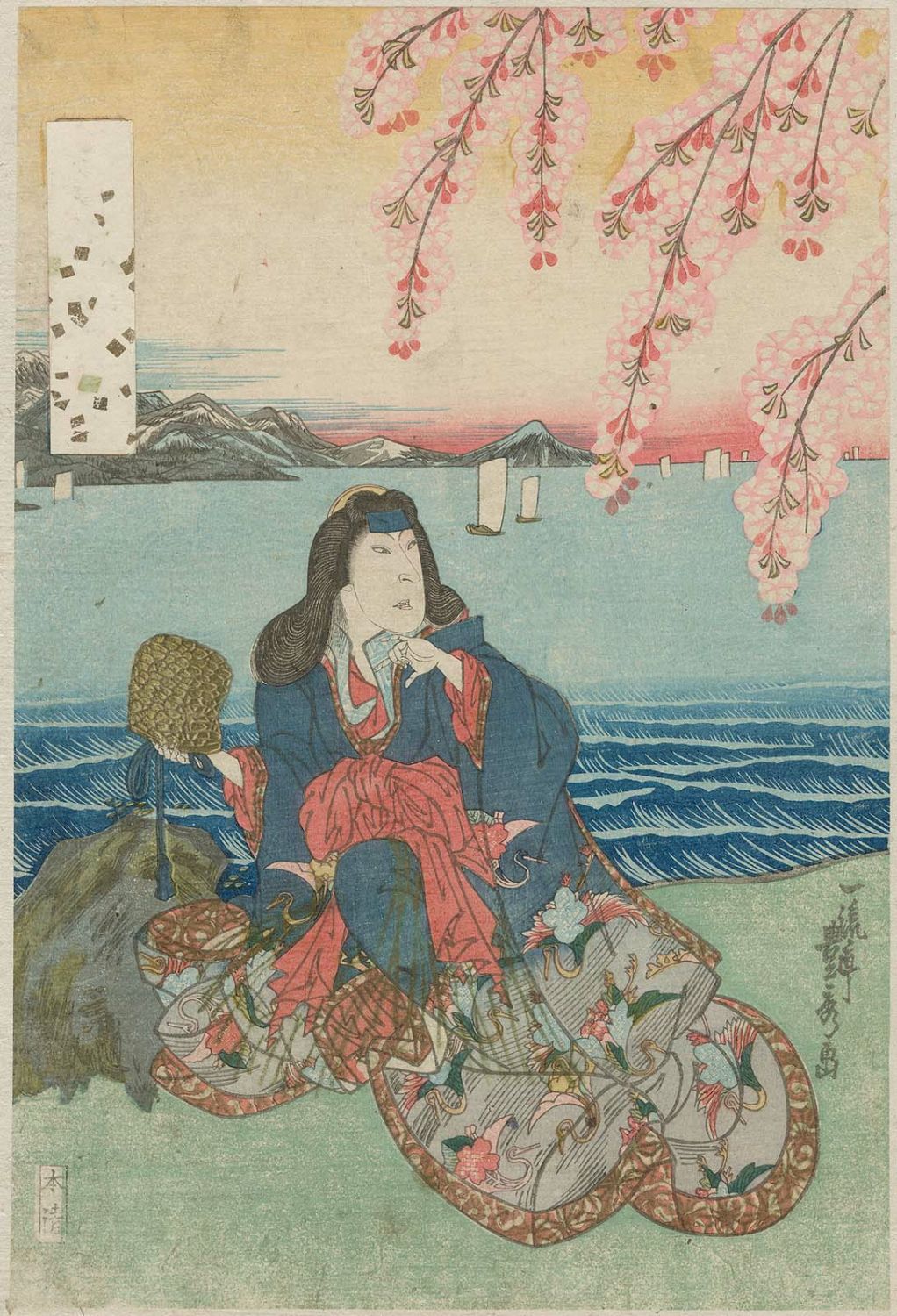
Actor Nakamura Tomijūrō as Matsukaze
1839
Woodblock print (nishiki-e); ink and color on paper
Actor Arashi Tokusaburō II (later Kitsusaburō II) as O-Karu with Onoe Kikugorō as Kampei, by Castle Moat in Night Scene (from Chūshingura)
c. 1840
Color woodblock diptych (nishiki-e); ink and color on paper
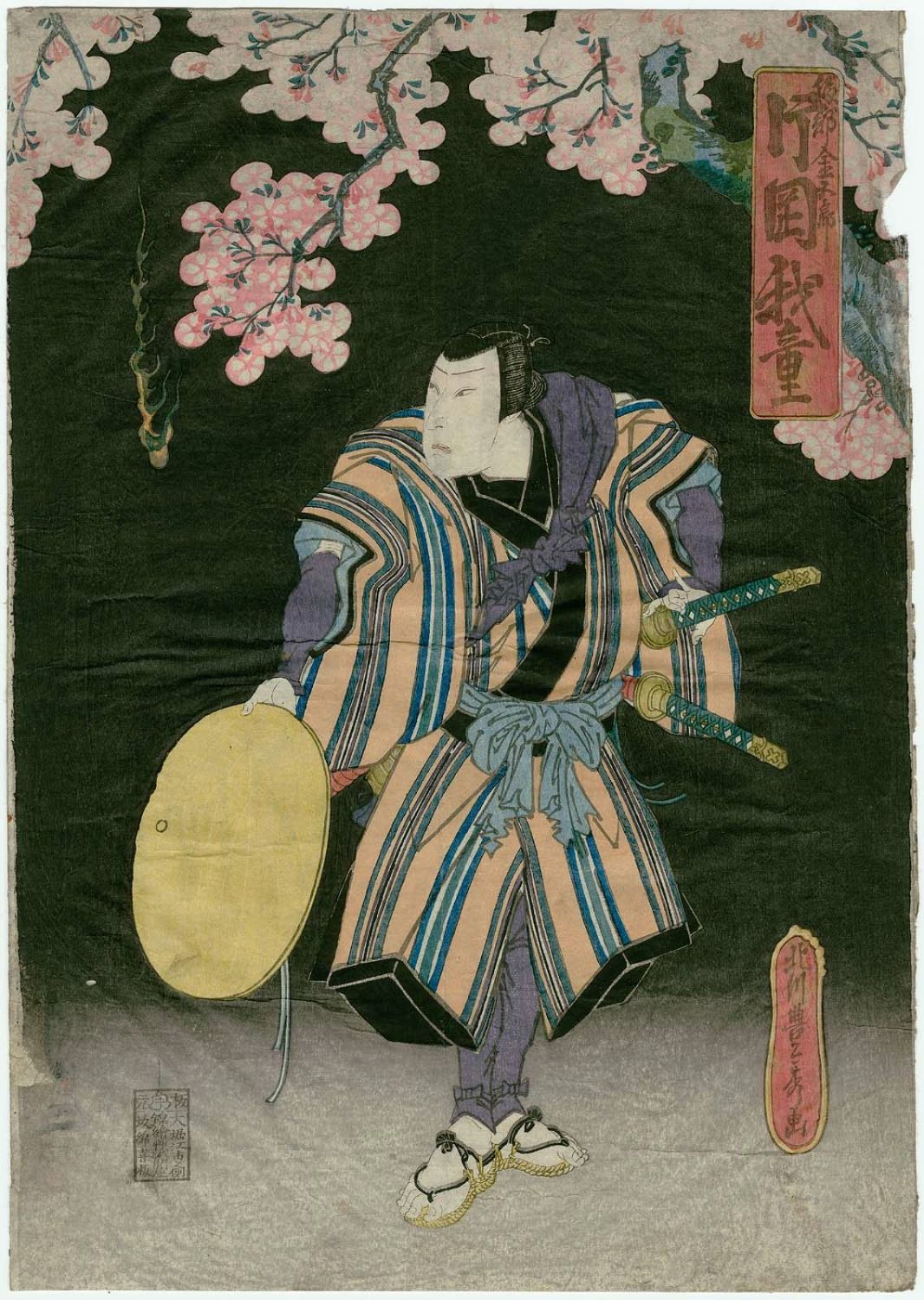
Actor Kataoka Gadō II as Hattori Kingorō
1841
Woodblock print (nishiki-e); ink and color on paper
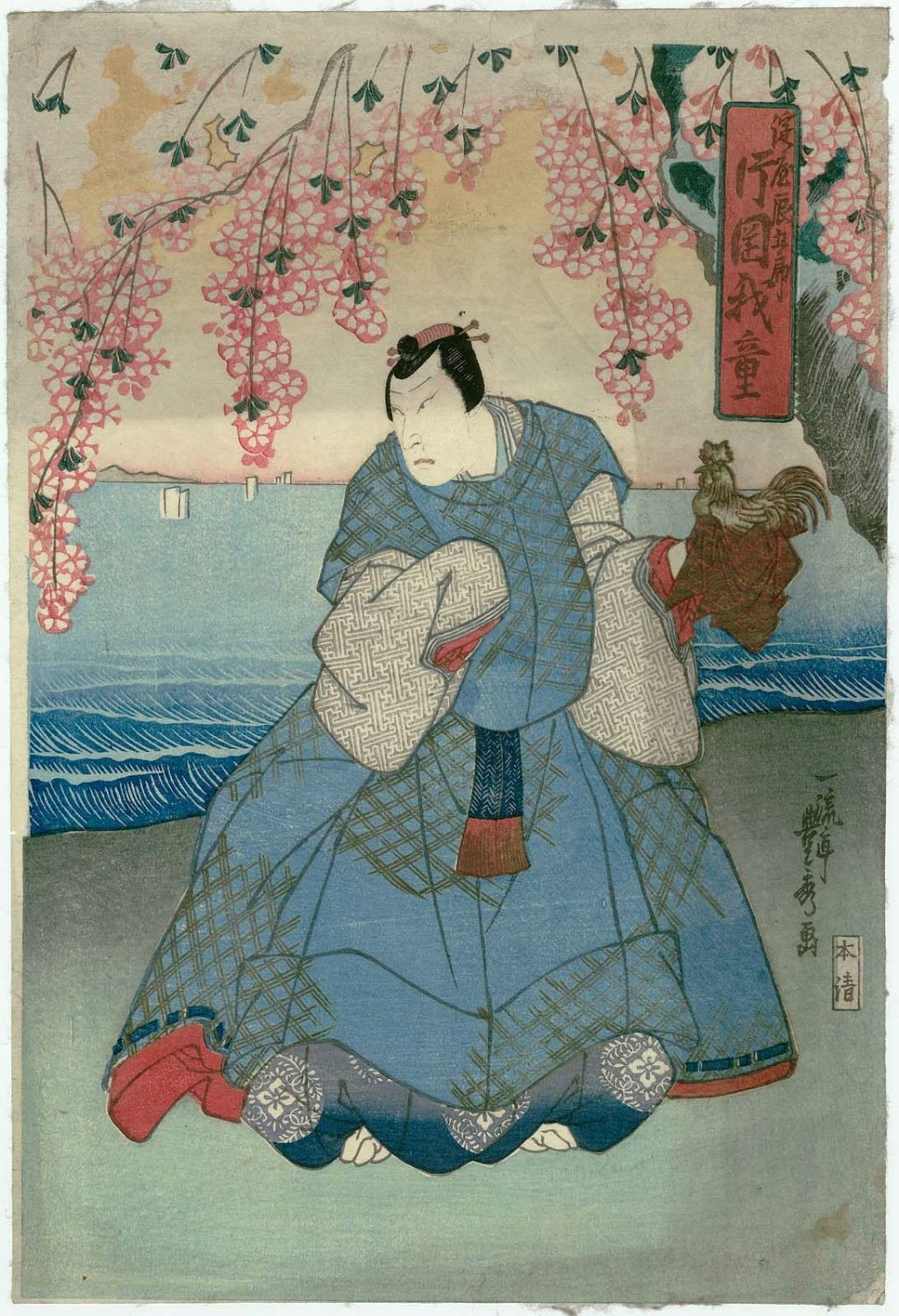
Actor Kataoka Gadō II as Yodoya Tatsugorō
1841
Woodblock print (nishiki-e); ink and color on paper