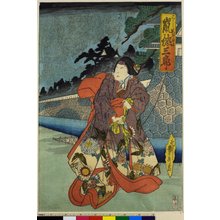
Actor Arashi Tokusaburō II (later Kitsusaburō II) as O-Karu with Onoe Kikugorō as Kampei, by Castle Moat in Night Scene (from Chūshingura)
- Date:
- c. 1840
- Medium:
- Color woodblock diptych (nishiki-e); ink and color on paper
- Source:
- British Museum
Description
A two-sheet diptych by Kitagawa Toyohide showing a Chūshingura scene in which the actor Arashi Tokusaburō II (who would later succeed as Kitsusaburō II) appears in the cross-dressed female role of O-Karu, joined by Onoe Kikugorō in the role of her husband Kampei, beside a castle moat in a night scene. The Chūshingura - the dramatised retelling of the 1701-1703 vengeance of the forty-seven rōnin of the Akō domain against the magistrate Kira Yoshinaka - was the most-staged play in the entire Edo and Osaka kabuki repertoire across the eighteenth and nineteenth centuries, restaged in successive adaptations at every major theatre at least once a year. The Kampei-Okaru subplot is one of the most affecting strands of the eleven-act drama: Kampei, dismissed from the household of his lord, retreats with his wife Okaru to her parents' village, where she eventually sells herself into prostitution at the Gion pleasure quarter to fund her husband's contribution to the vendetta. The scene depicted here belongs to the Chūshingura's middle acts, the moment at which Kampei and Okaru meet beside the moat of a castle at night. The diptych format - two ōban sheets composed as a continuous horizontal image - allowed Toyohide to develop the night-scene atmosphere across a wider visual field than the single-figure single-sheet format of his other surviving prints. The work is held by the British Museum, accessioned among its extensive holdings of nineteenth-century Osaka actor prints. Signed Kitagawa Toyohide ga.
More Prints by Kitagawa Toyohide
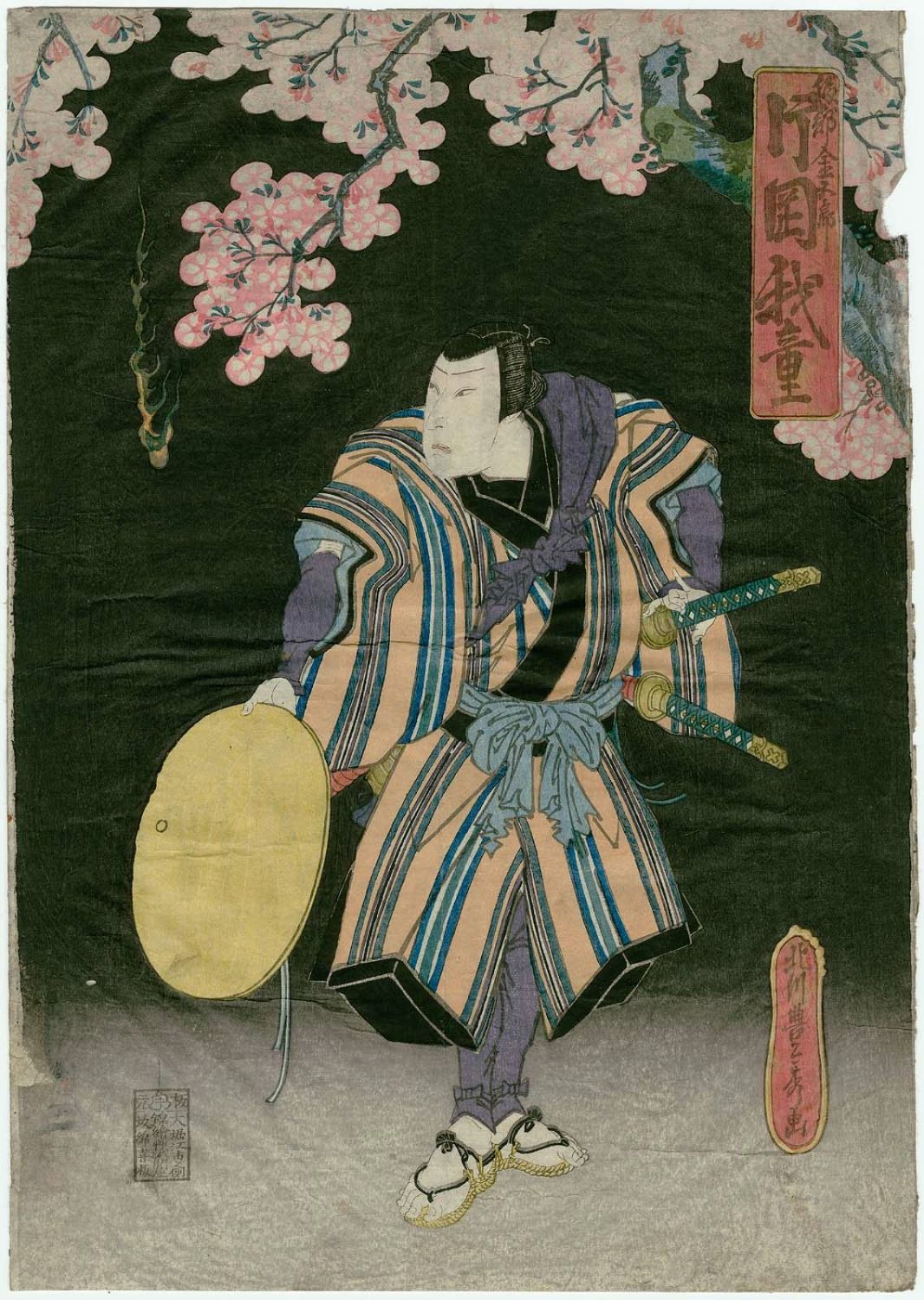
Actor Kataoka Gadō II as Hattori Kingorō
1841
Woodblock print (nishiki-e); ink and color on paper
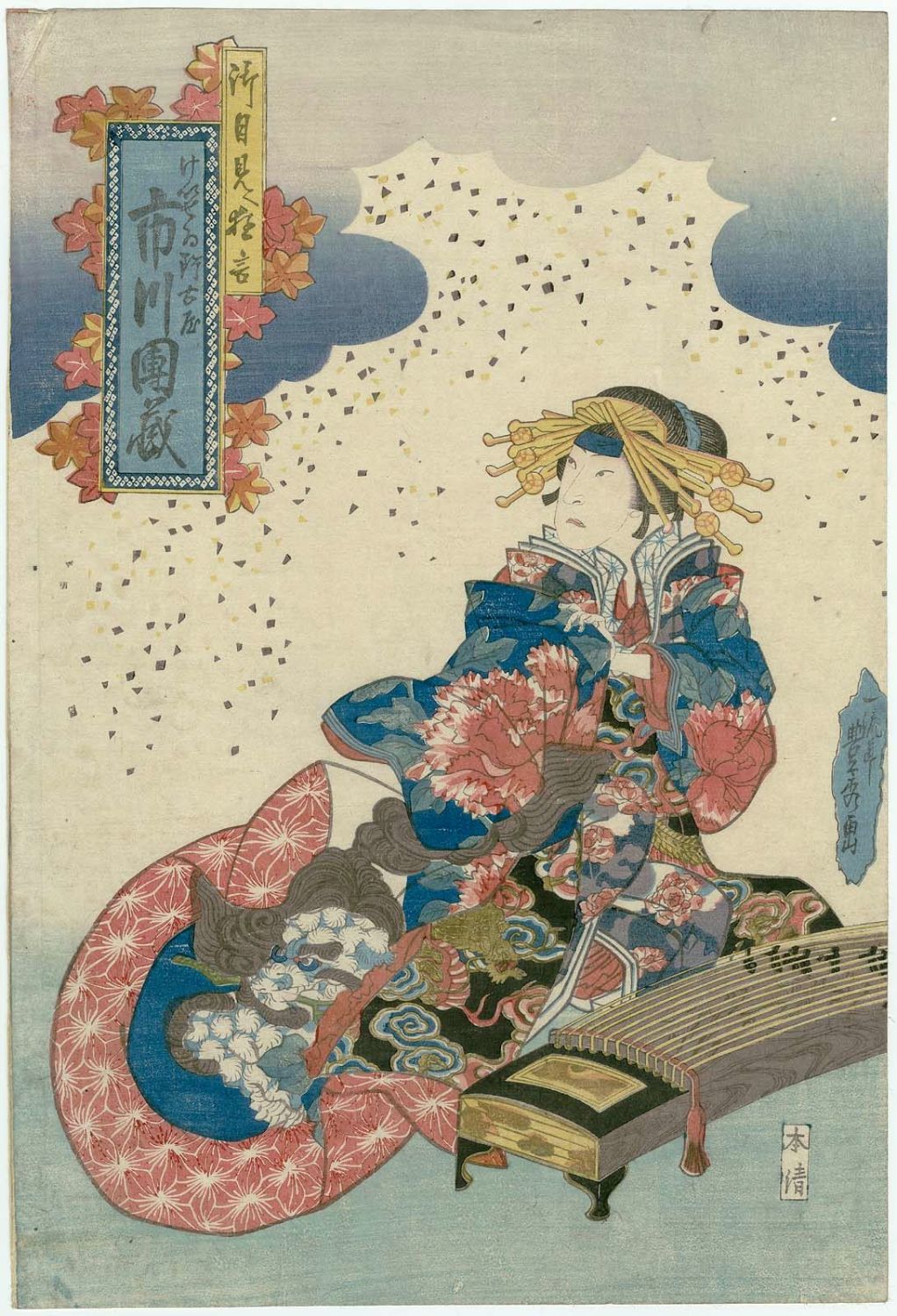
Actor Ichikawa Danzō as the Courtesan Akoya
1839
Woodblock print (nishiki-e); ink and color on paper
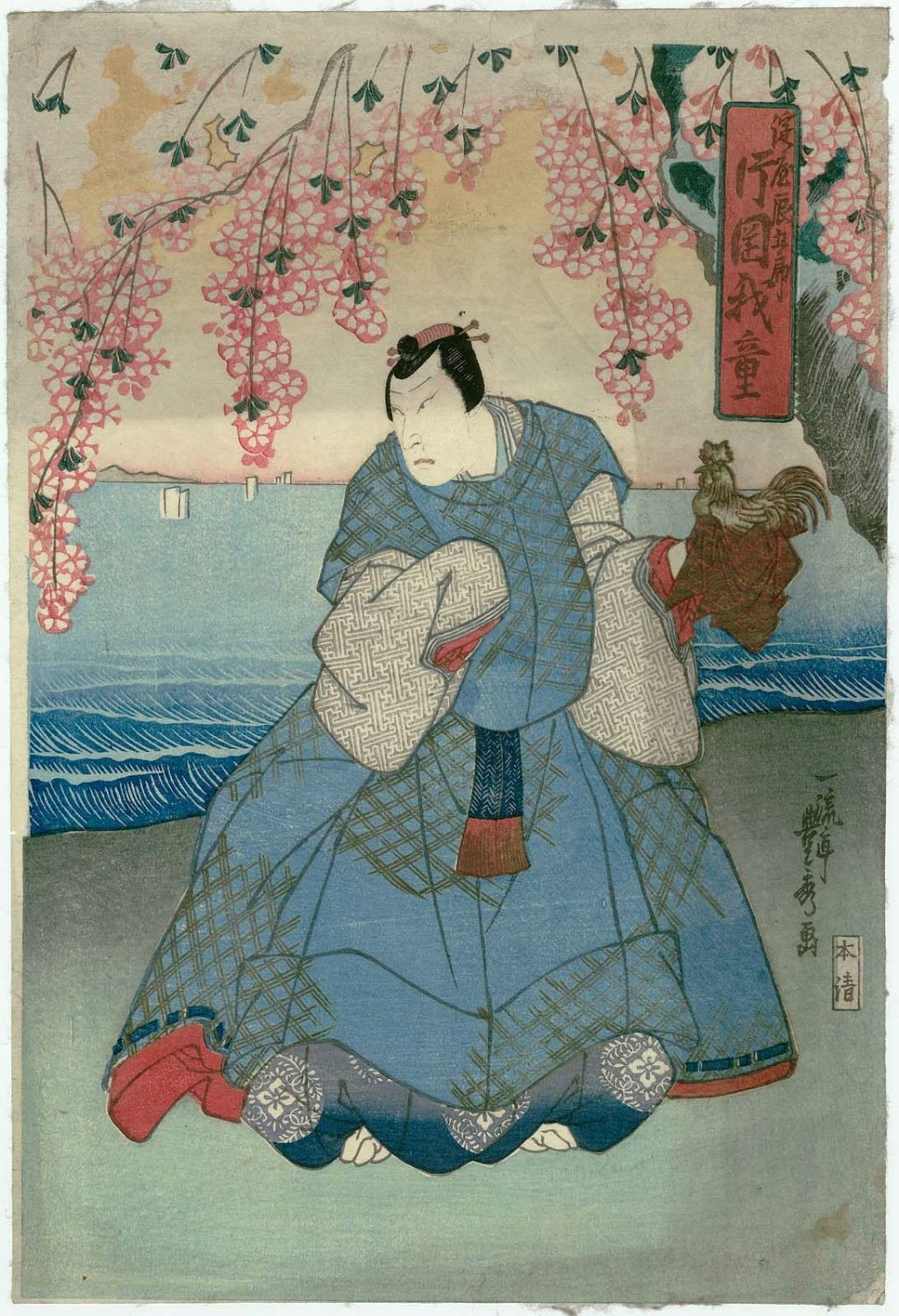
Actor Kataoka Gadō II as Yodoya Tatsugorō
1841
Woodblock print (nishiki-e); ink and color on paper
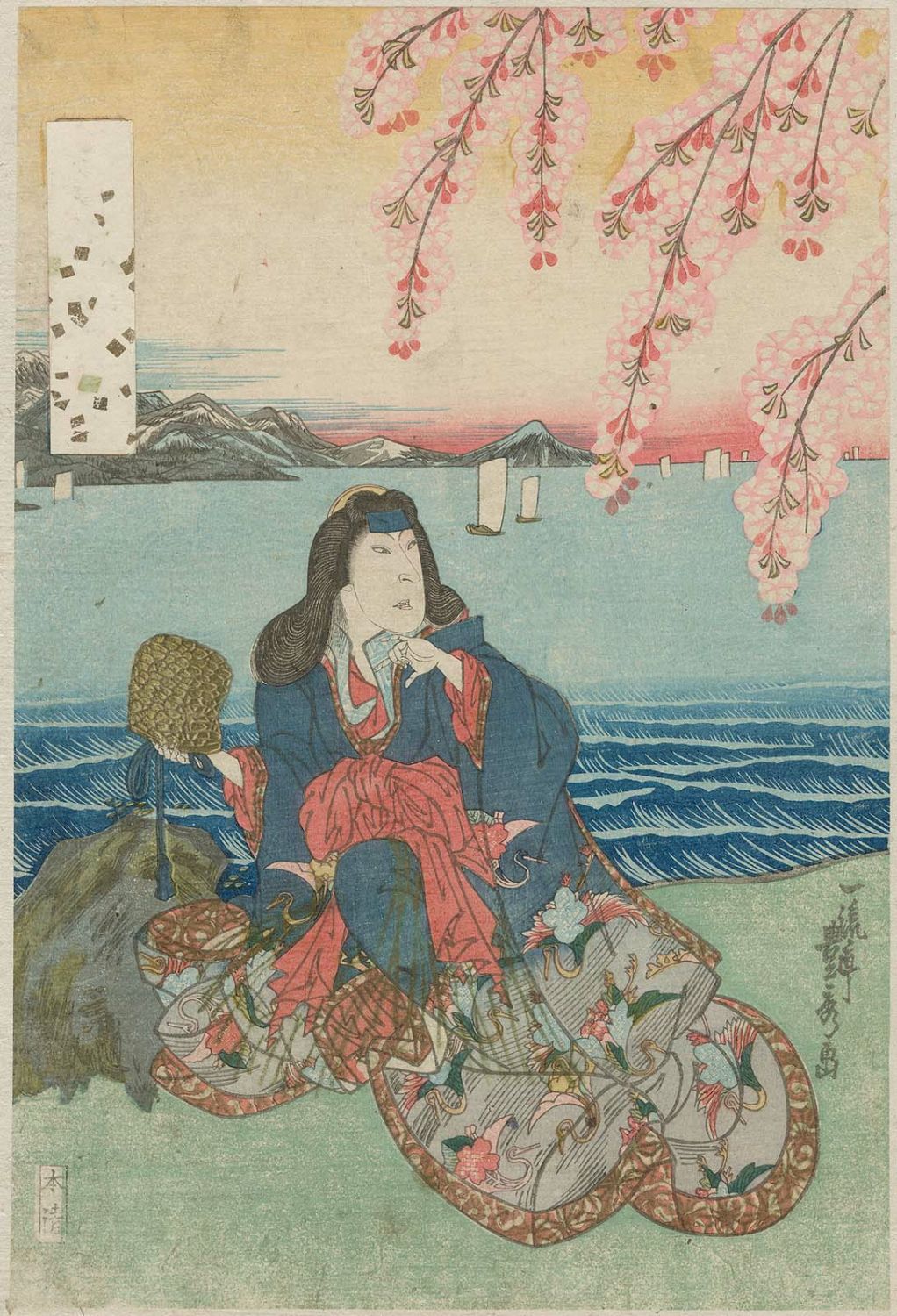
Actor Nakamura Tomijūrō as Matsukaze
1839
Woodblock print (nishiki-e); ink and color on paper
More Castles Prints


Frequently Asked Questions
Actor Arashi Tokusaburō II (later Kitsusaburō II) as O-Karu with Onoe Kikugorō as Kampei, by Castle Moat in Night Scene (from Chūshingura) was created by Kitagawa Toyohide (北川豊秀) in c. 1840.
Actor Arashi Tokusaburō II (later Kitsusaburō II) as O-Karu with Onoe Kikugorō as Kampei, by Castle Moat in Night Scene (from Chūshingura) depicts castles, kabuki, and theater.