Biography
Kobayashi Kiyochika (小林清親, 1847–1915) was the pioneering Japanese woodblock print artist who revolutionized the medium by introducing Western-influenced lighting effects into traditional printmaking, creating the genre known as kosen-ga or "light pictures." His atmospheric views of a rapidly modernizing Tokyo, rendered with dramatic contrasts of light and shadow unprecedented in the woodblock tradition, represent one of the most original artistic responses to the transformation of Japan during the Meiji era.
Born in Honjo, Edo (modern Tokyo), on September 10, 1847, Kiyochika came from a low-ranking samurai family that served the Tokugawa shogunate. The Meiji Restoration of 1868, which overthrew the Tokugawa government and launched Japan's modernization, stripped his family of its social position and livelihood. This personal experience of the old order's collapse and the new era's dislocations gave Kiyochika an intimate understanding of the transformation he would later document in his prints.
Kiyochika's artistic education was eclectic, reflecting the cultural ferment of early Meiji Japan. He studied traditional Japanese painting but was also deeply influenced by Western art and photography, which were flooding into Japan through the newly opened treaty ports. He is believed to have studied Western-style painting with the English journalist and artist Charles Wirgman, who published the satirical magazine Japan Punch in Yokohama. This exposure to Western methods of representing light, shadow, and atmospheric perspective became the foundation of his revolutionary approach to woodblock printmaking.
Kiyochika's most celebrated works are the kosen-ga, or "light pictures," produced primarily between 1876 and 1881. These prints depict views of Tokyo — its new Western-style brick buildings, gas-lit streets, steam trains, iron bridges, and harbor scenes — rendered with dramatic lighting effects that were entirely new to the woodblock medium. In prints such as "Night View of Surugacho" and "Fireworks at Ryogoku Bridge," artificial light from gas lamps, fireworks, and locomotive headlights illuminates the nocturnal cityscape, creating effects of startling beauty and modernity. In "View of the Pine of Success and Oumayagashi" and "Fireflies at Ochanomizu," natural phenomena — moonlight, fireflies, sunset — are rendered with a sensitivity to atmospheric light that owes as much to Western landscape painting as to the Japanese tradition.
What made the kosen-ga truly revolutionary was Kiyochika's synthesis of Western and Japanese techniques. He used Western perspective, chiaroscuro, and atmospheric effects while working entirely within the Japanese woodblock medium, relying on the traditional skills of carvers and printers to achieve his effects through layers of transparent color, graduated printing (bokashi), and innovative use of the paper's natural tone. The results were prints that looked like nothing produced before — neither wholly Western nor wholly Japanese, but something genuinely new.
The kosen-ga were published primarily by Fukuda Kumajiro between 1876 and 1881, and they were commercially successful, appealing to a Meiji-era audience eager for images of their transforming city. However, the arrival of cheaper Western printing technologies and the economic pressures of the period led Kiyochika to shift his focus in the 1880s. He produced war prints documenting the Sino-Japanese War of 1894–1895 and the Russo-Japanese War of 1904–1905, as well as satirical prints (ponchi-e) and illustrations for newspapers and magazines. While these later works are competent and sometimes powerful, they are generally considered less artistically significant than the kosen-ga.
Kiyochika was also a gifted teacher whose most famous student, Tsuchiya Koitsu, would later become one of the leading landscape artists of the shin-hanga movement. Through Koitsu and other students, Kiyochika's emphasis on atmospheric light and mood as the primary subjects of a landscape print — rather than mere topography — influenced the development of twentieth-century Japanese printmaking.
In addition to the kosen-ga, Kiyochika produced prints of flowers and birds, humorous subjects, and historical scenes, as well as landscape prints of the rural areas surrounding Tokyo that show a gentler, more contemplative side of his artistic personality.
Kiyochika died on November 28, 1915, in Tokyo. During his lifetime and for decades afterward, he was primarily remembered as an illustrator and war print artist, with his kosen-ga recognized only by a small circle of connoisseurs. The post-World War II era brought a dramatic reassessment of his work, as scholars and collectors recognized the kosen-ga as one of the most original artistic achievements of the Meiji period. Today his light pictures are considered among the most important Japanese prints of the nineteenth century.
Kiyochika's works are held in major collections including the Museum of Fine Arts Boston, the British Museum, the Library of Congress, the Art Institute of Chicago, and the Machida City Museum of Graphic Arts. His influence on subsequent Japanese printmaking — particularly the shin-hanga movement's emphasis on atmospheric landscape — ensures his place as one of the pivotal figures in the transition from traditional ukiyo-e to modern Japanese printmaking.
Key Facts
- Active Period
- 1847–1915
- Nationality
- 🇯🇵Japan
- Movement
- Meiji/Taishō Prints
- Works Indexed
- 1069
Frequently Asked Questions
Kobayashi Kiyochika (小林清親, 1847–1915) was the pioneering Japanese woodblock print artist who revolutionized the medium by introducing Western-influenced lighting effects into traditional printmaking, creating the genre known as kosen-ga or "light pictures." His atmospheric views of a rapidly modernizing Tokyo, rendered with dramatic contrasts of light and shadow unprecedented in the woodblock tradition, represent one of the most original artistic responses to the transformation of Japan during the Meiji era.
Kobayashi Kiyochika was active from 1847 to 1915. They were associated with the Meiji/Taishō Prints movement.
Kobayashi Kiyochika's work was shaped by the Meiji/Taishō Prints tradition in Japanese woodblock printmaking. Meiji/Taishō Prints: Meiji and Taishō era prints (1868–1926) bridge the transition from traditional ukiyo-e to the modern shin-hanga and sosaku-hanga movements.
Kobayashi Kiyochika's prints frequently feature abstract, landscapes, night scenes, warriors, seascapes, figures.
Original prints by Kobayashi Kiyochika can be found in collections including Hara Shobo, Chazen Museum of Art, Japanese Art Open Database, Edo-Tokyo Museum.
Based on 407 recorded auction sales from 2010–2025, most Kobayashi Kiyochika prints sold in the $150–$300 range, with a median around $200. Top results exceeded $500. Actual prices vary widely with edition, condition, and subject.
Series by Kobayashi Kiyochika
Instructive Models of Lofty Ambition
1 print
Chôga Kyoshinkai
1 print
Ancient Patterns
1 print
Famous Sights of Japan
7 prints
The Unofficial History of Japan
1 print
Episodes from Unknown Japanese History
1 print
Pictures of the Presentation of the Grand Potato
1 print
Instructive Guide for Fixing One's Aim and Pressing On
1 print
Woodblock Prints by Kobayashi Kiyochika (1069)
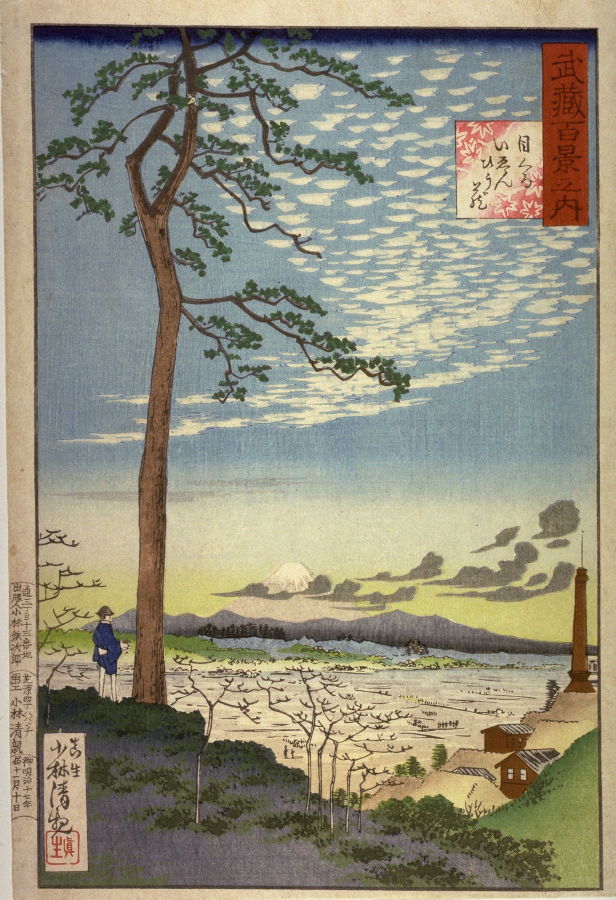
Tall Buildings near Meguro (Meguro ien hiugma) from the series One Hundred Views of Musashi (Musashi hyakkei no ushi)
Woodblock print
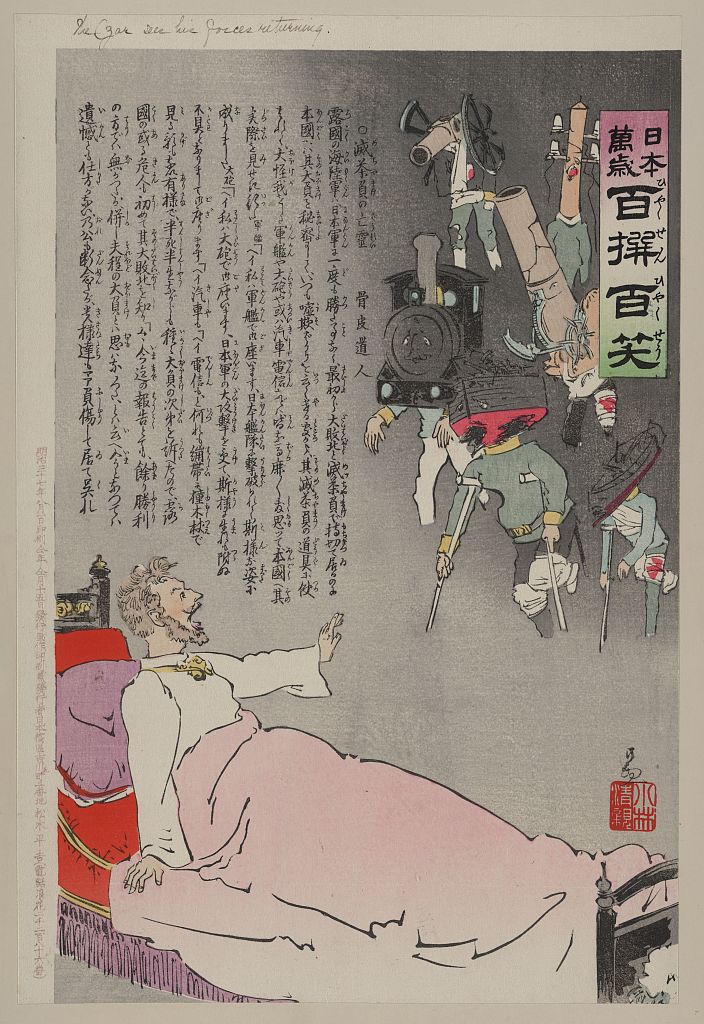
The Czar sees his forces returning
Woodblock print
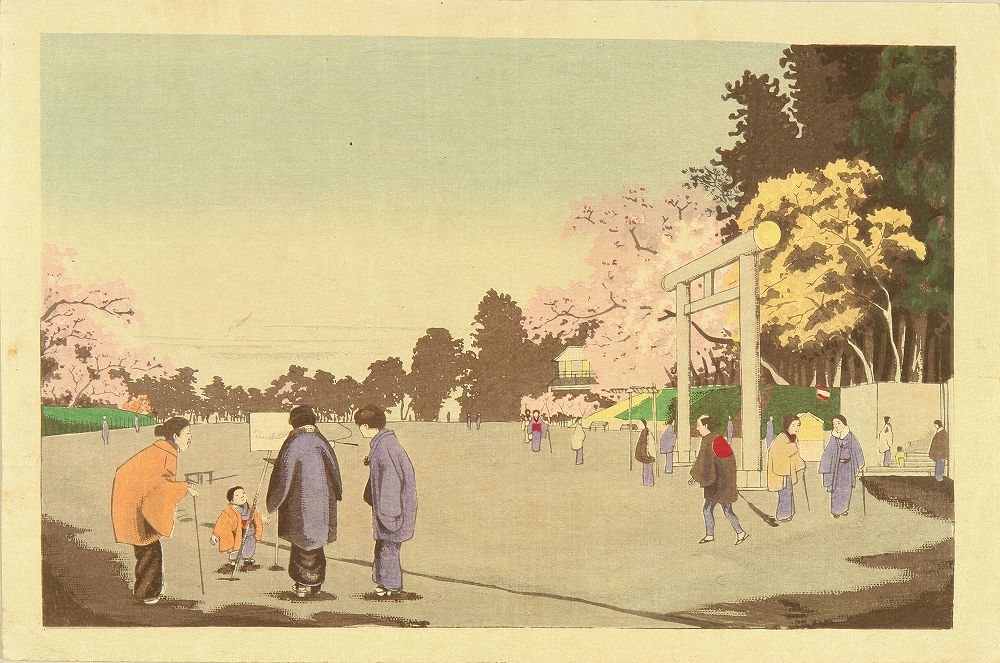
Ueno koen gaka shasei (A painter in the Ueno Park), from
Woodblock print
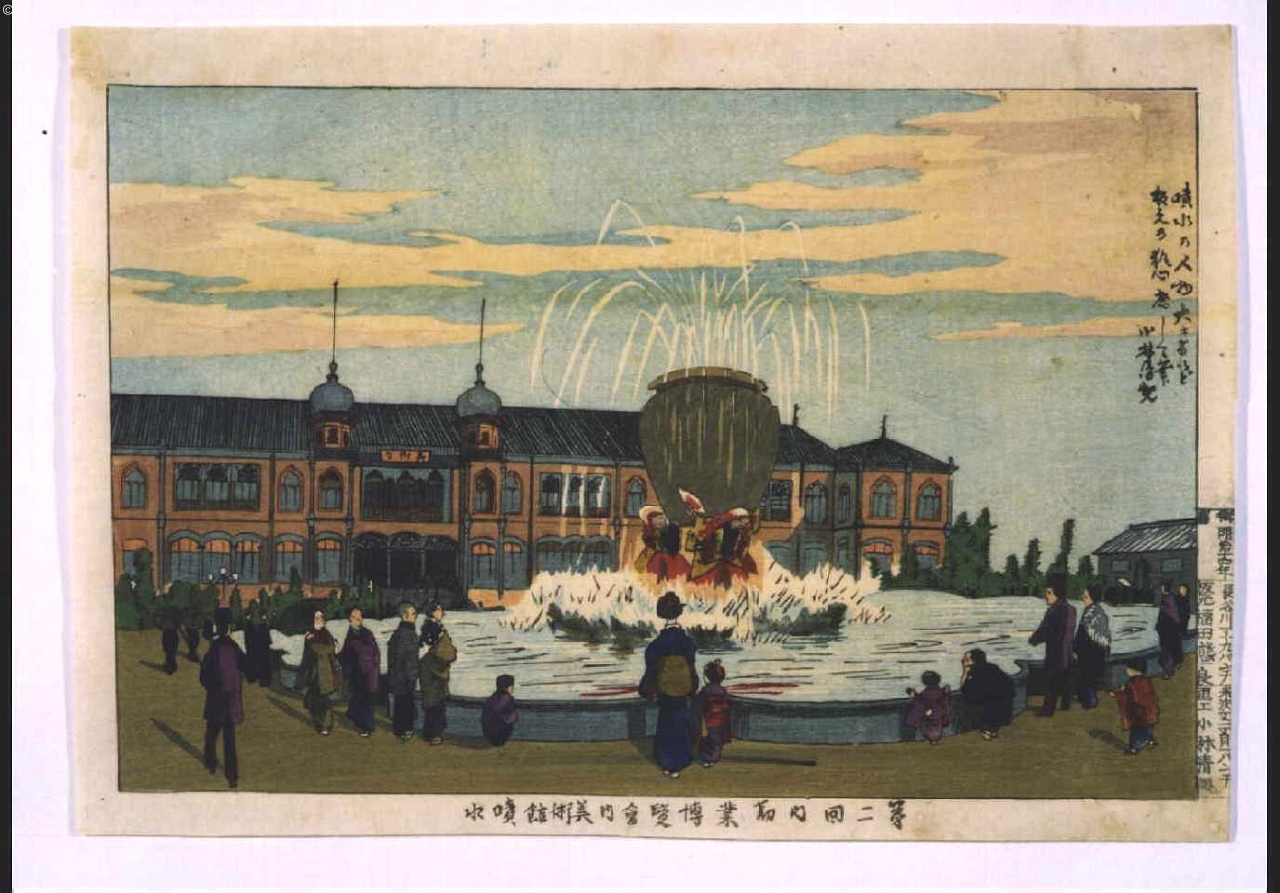
The Fountain Outside the Art Museum at the Second Exhibition for the Promotion of Domestic Industry
Woodblock print
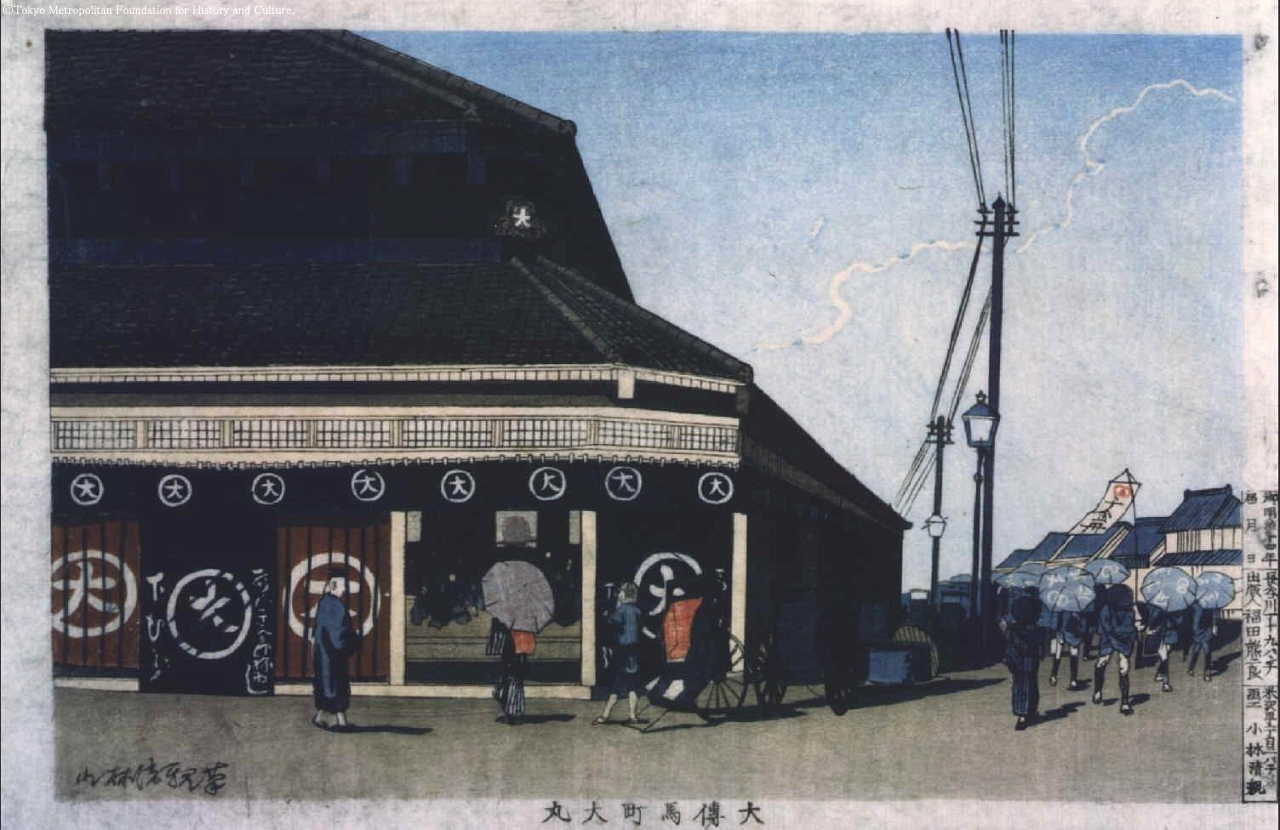
The Daimaru Dry Goods Store in Odenma-cho
Woodblock print
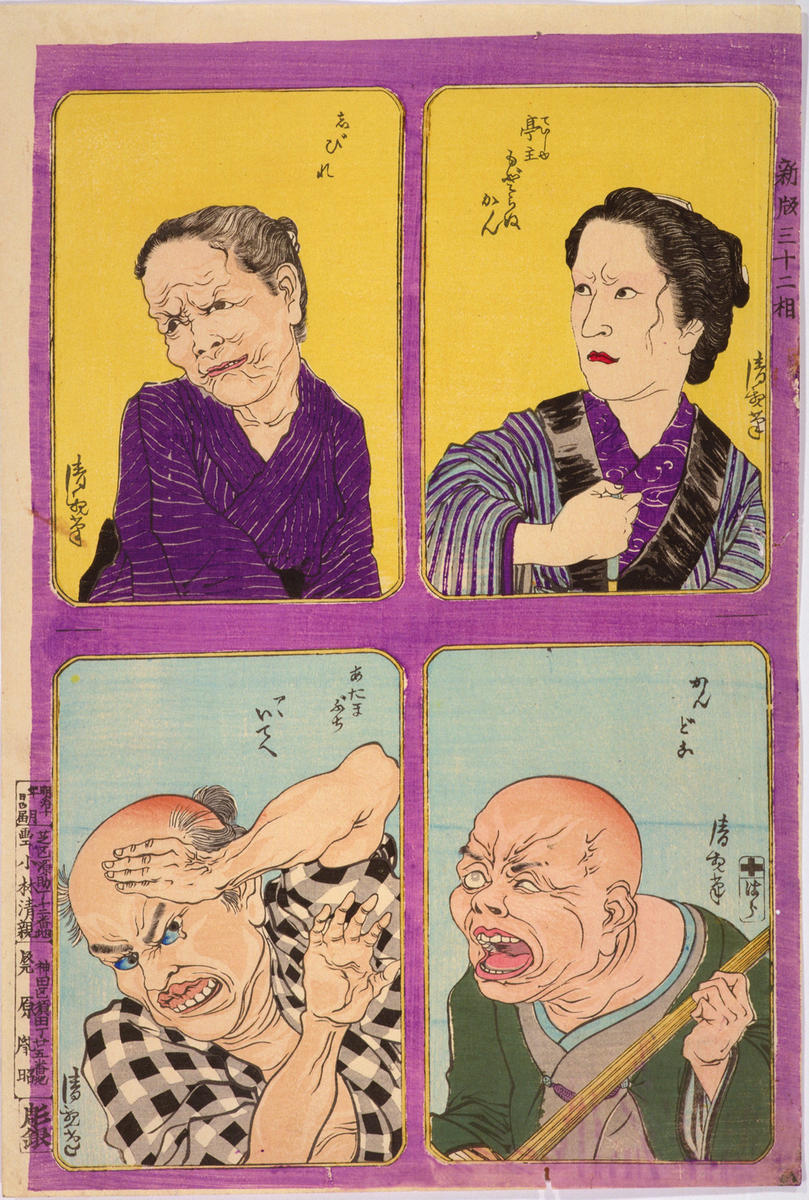
Teishu modoranukan kandoko shibire atamabuchi — 亭主もどらぬかん かんどこ しびれ あたまぶち
Woodblock print
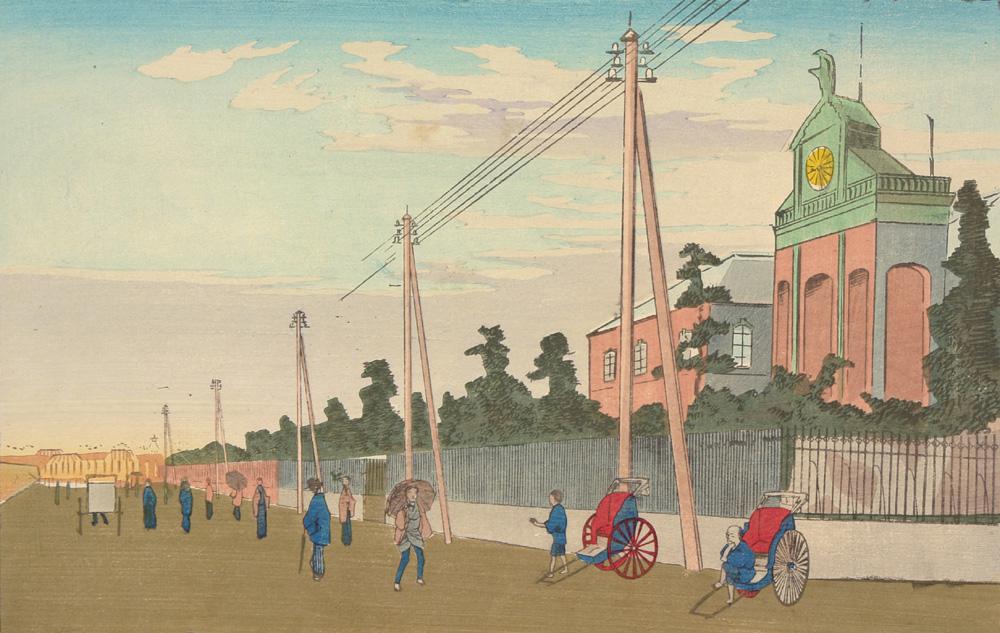
The Bureau for Paper Money at Tokiwa Bridge
Woodblock print
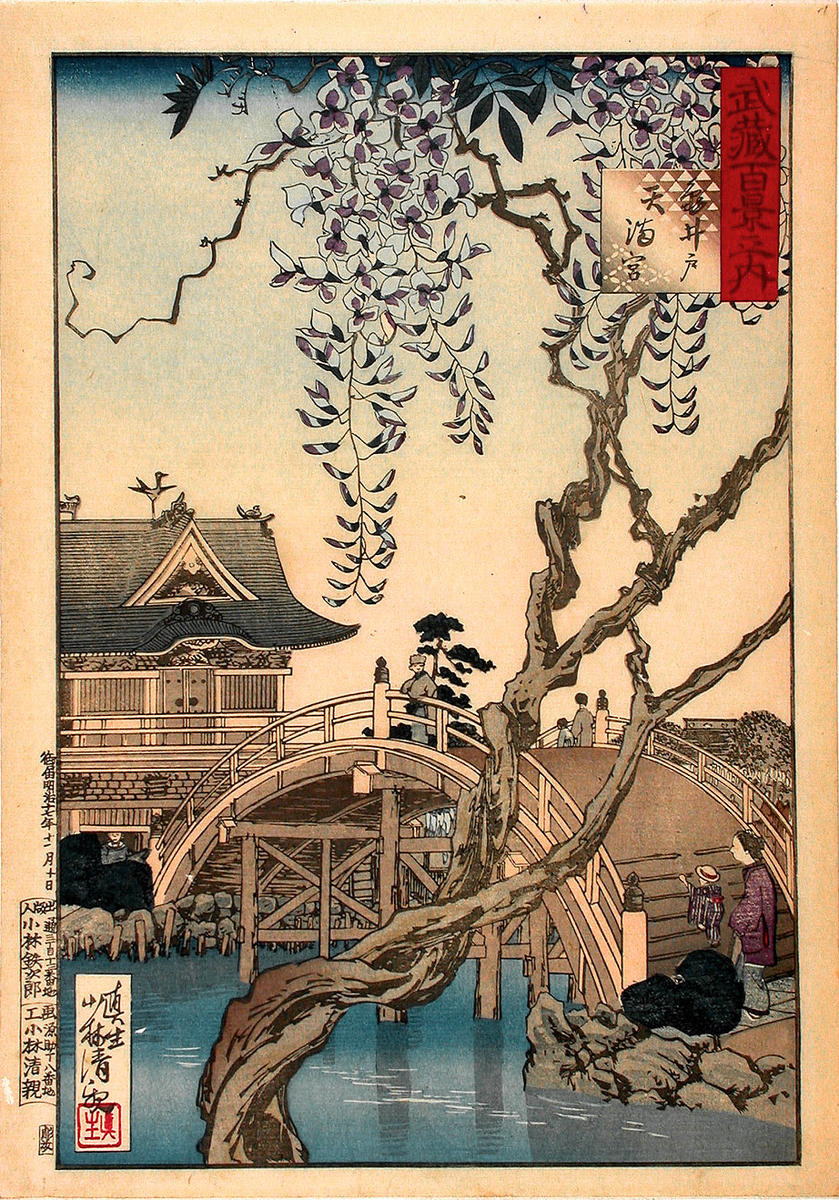
Tenmagu shrine at Kameido
Woodblock print
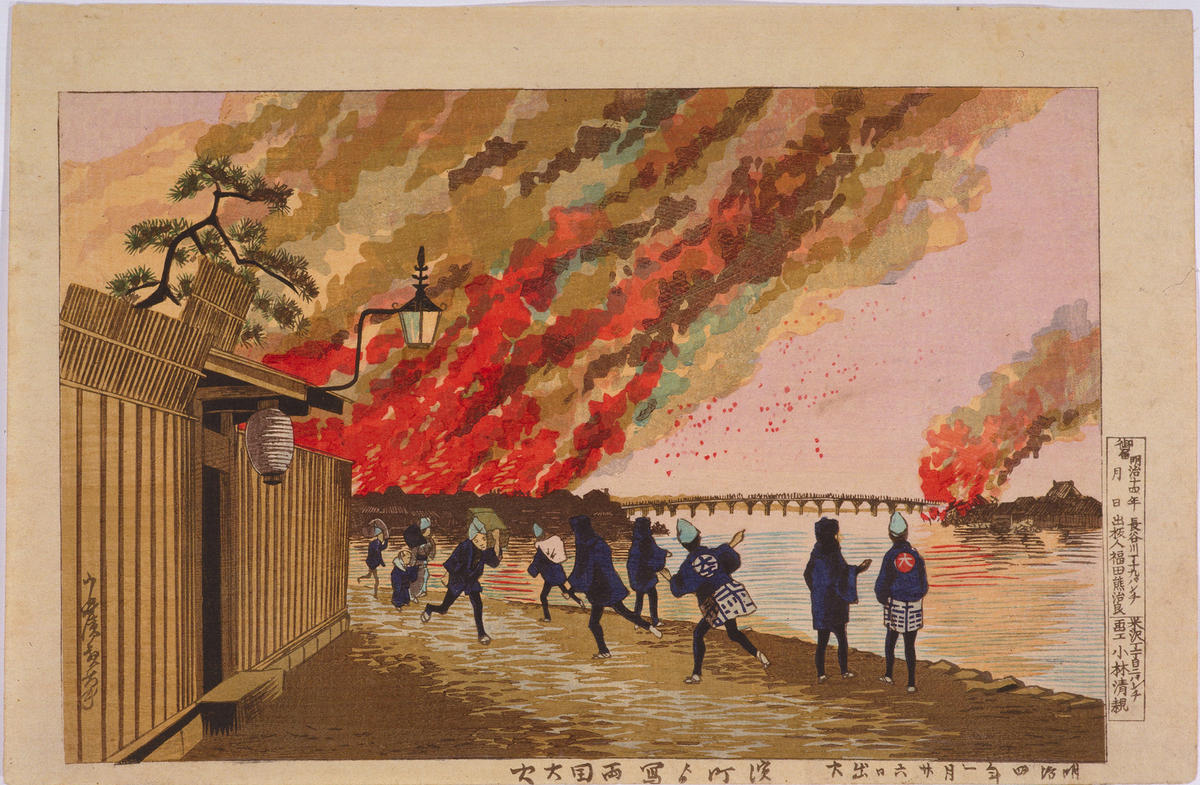
The Great Fire at Ryogoku Viewed from Hamacho — 浜町〓(より)写両国大火 明治四年一月廿六日出火
Woodblock print
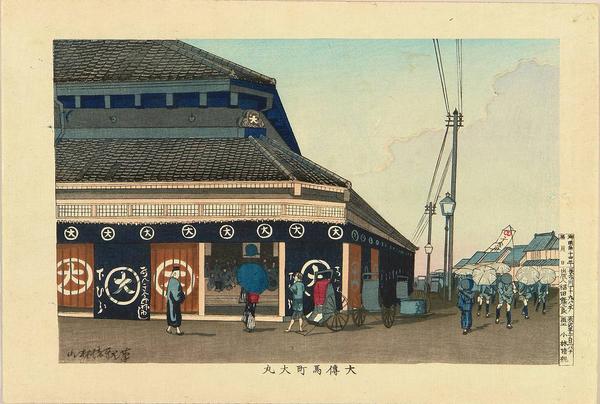
The Daimaru Store at Odenmacho — 大伝馬町大丸
Woodblock print
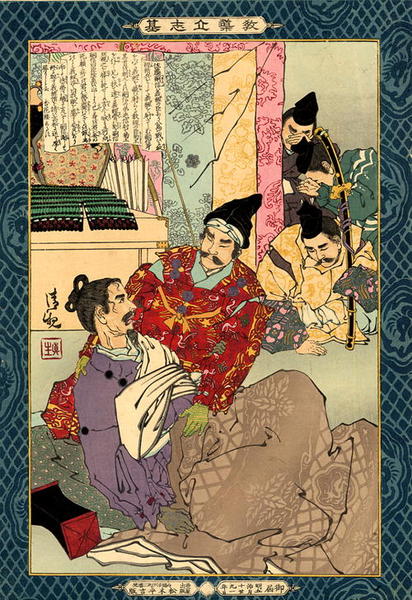
The dying Saito Tsuginobu
Woodblock print
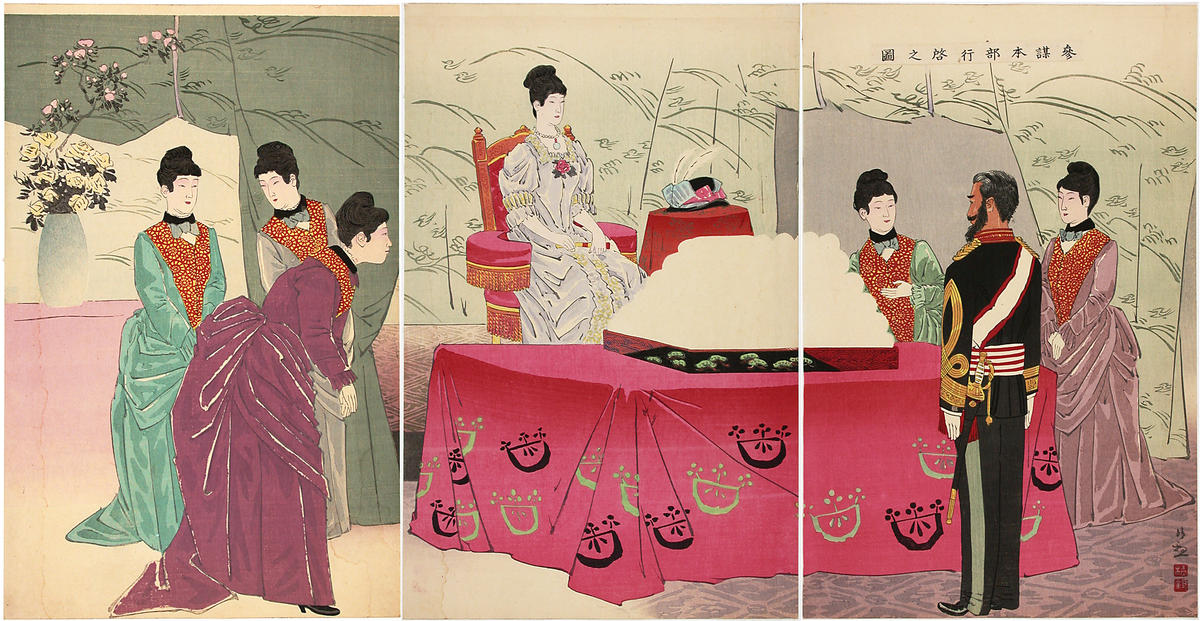
The Empress Visiting the General Staff Headquarters — 野戦病院行啓之図
Woodblock print
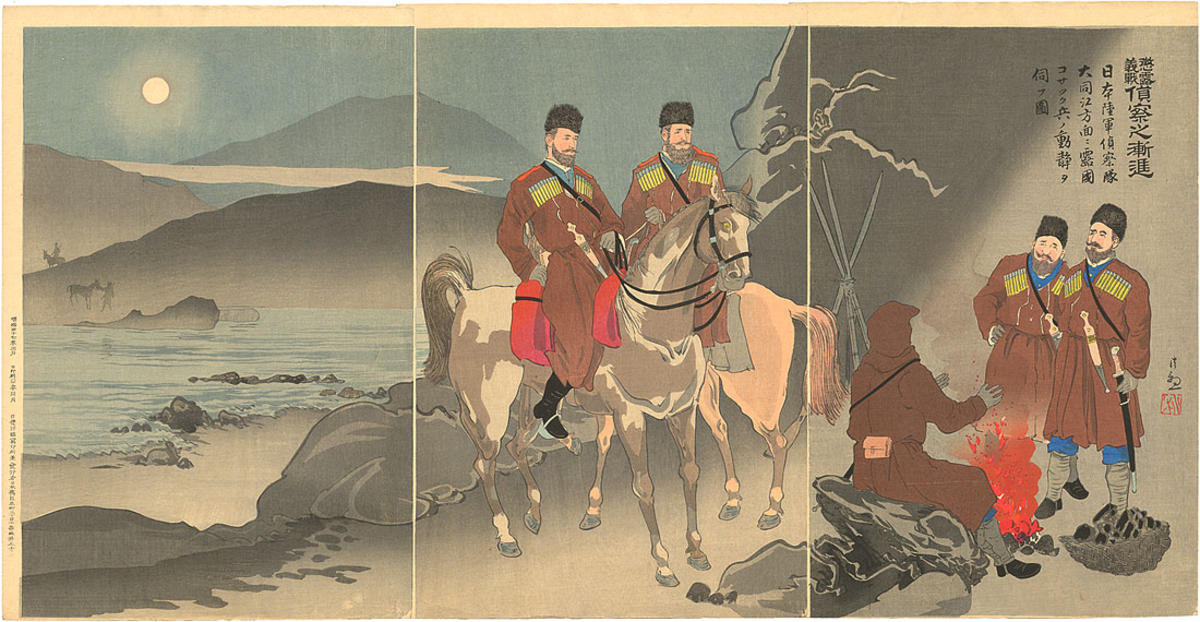
The Russian Cossack advance scouting party- Choro Gisen - The Crusade to Punish the Russians
Woodblock print
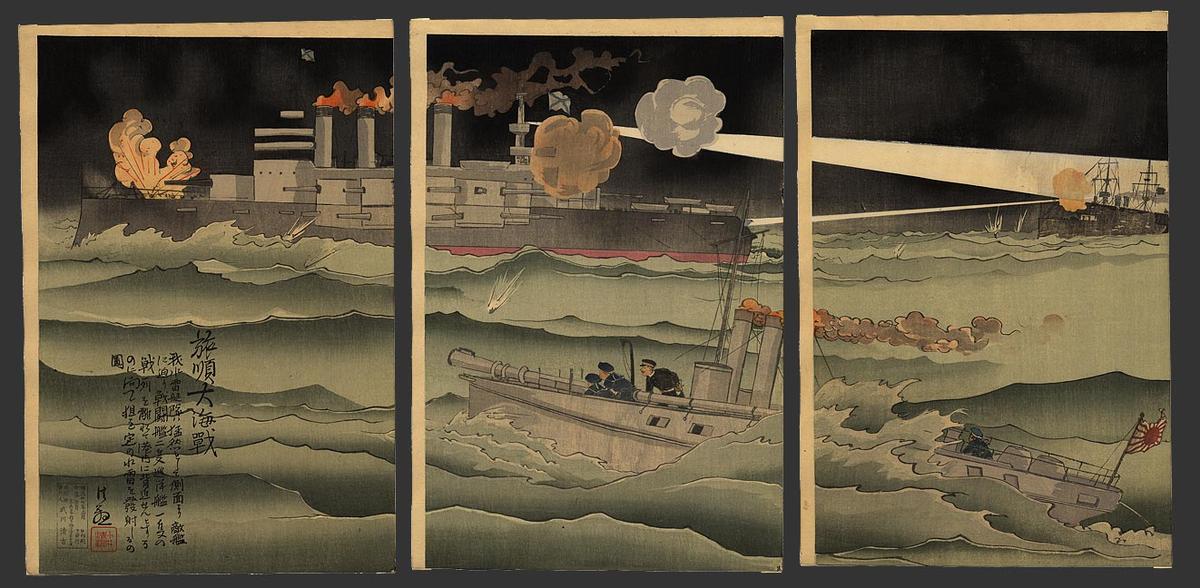
The great sea battle at Port Arthur
Woodblock print
![[A Russian officer and a Japanese officer are standing on a large map, the Japanese officer has pulled up a piece of the map causing the Russian officer to slip and fall] by Kobayashi Kiyochika](https://data.ukiyo-e.org/loc/images/00990v.jpg)
[A Russian officer and a Japanese officer are standing on a large map, the Japanese officer has pulled up a piece of the map causing the Russian officer to slip and fall]
Woodblock print
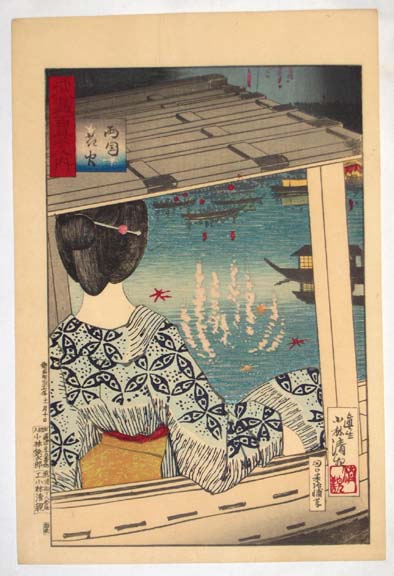
Untitled
Woodblock print
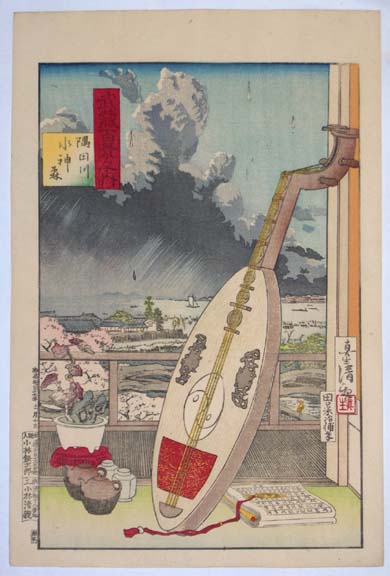
Untitled
Woodblock print
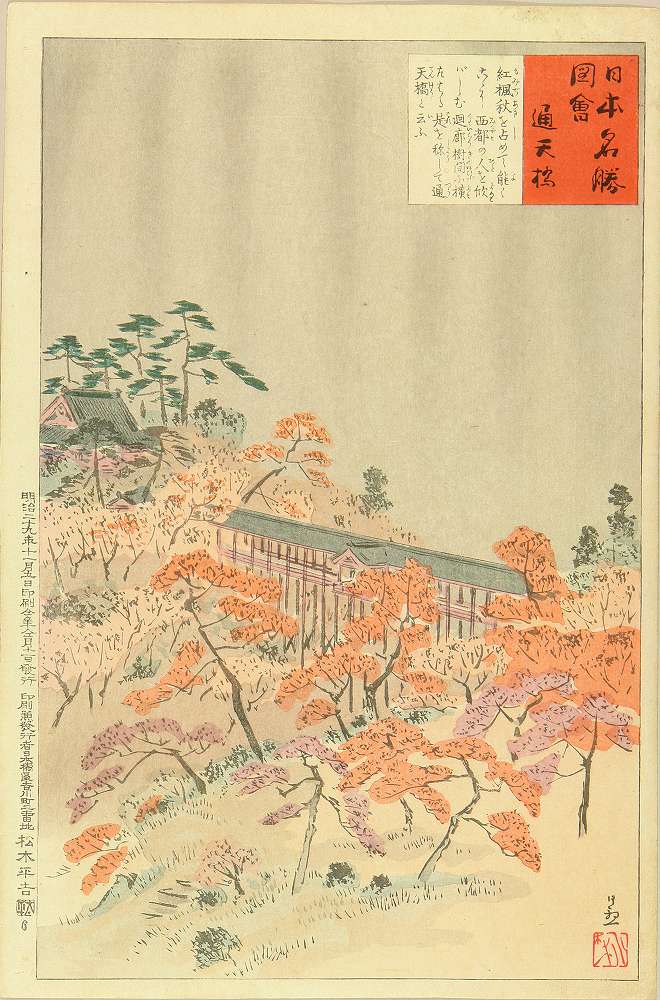
Tsuten Bridge, from
Woodblock print
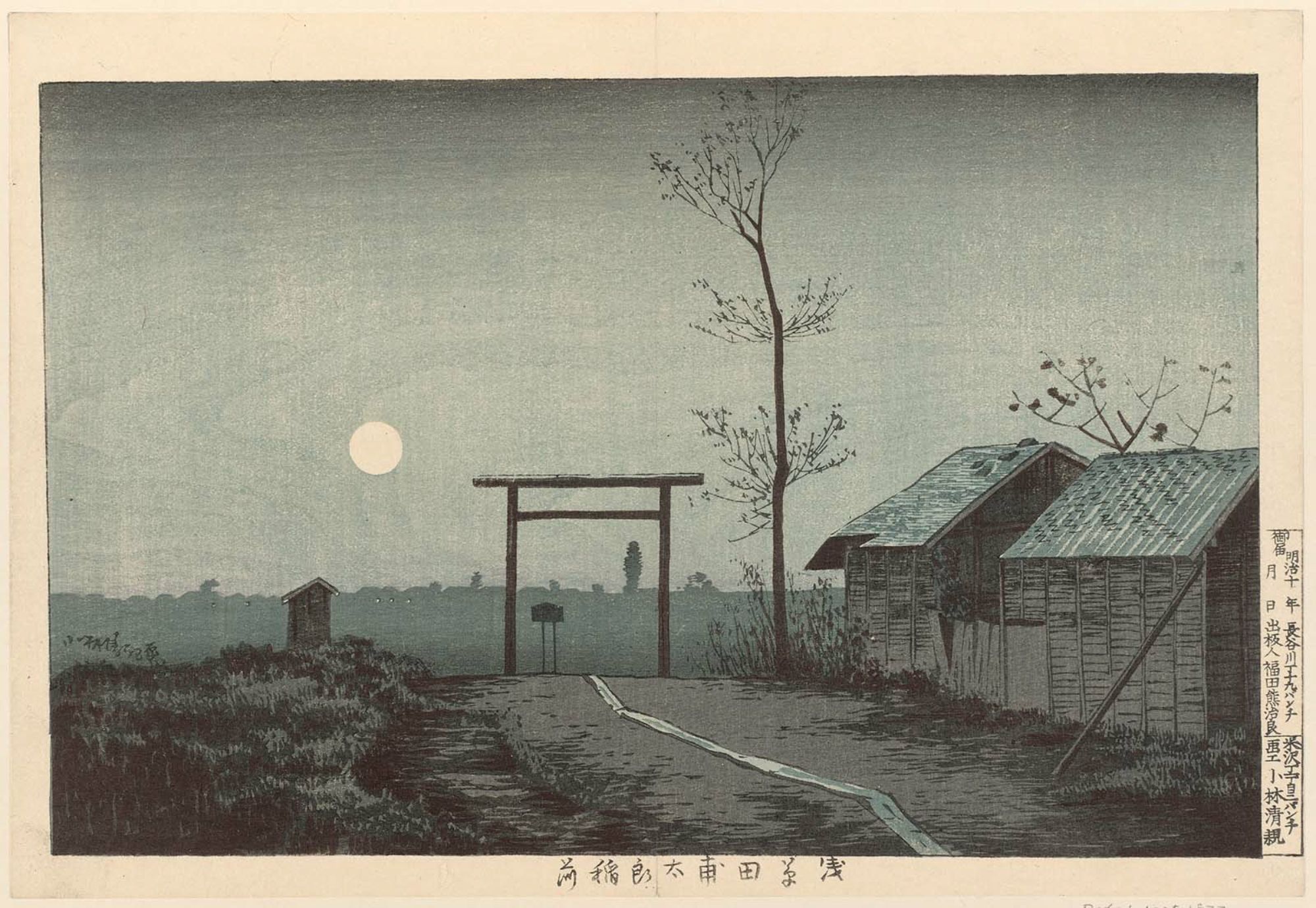
Tarô Inari Shrine at Asakusa Ricefields (Asakusa tanpo Tarô Inari mae)
Woodblock print
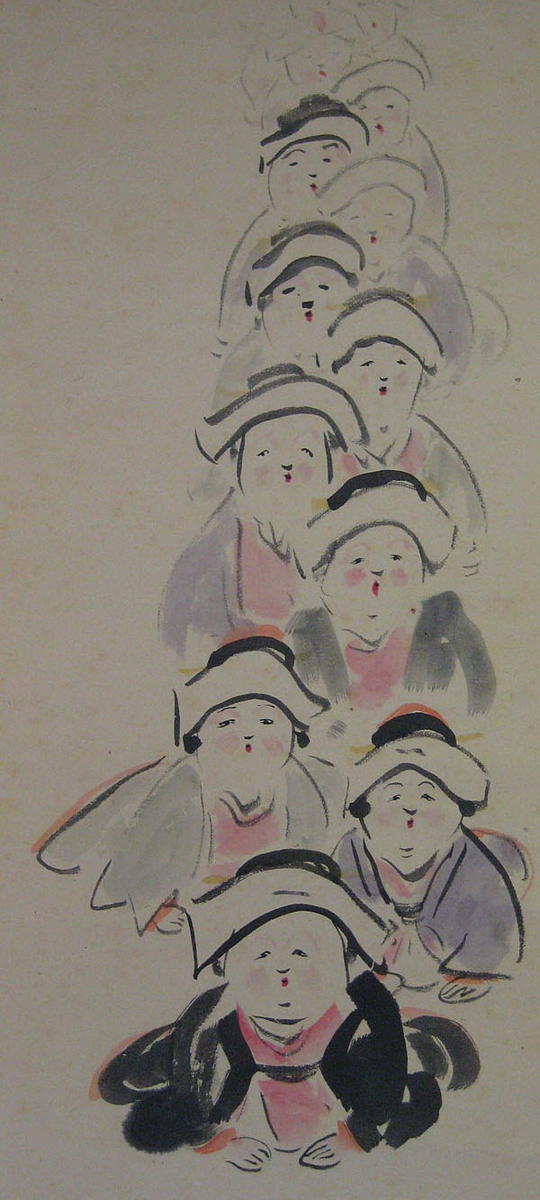
One Hundred Blessings — 百福図
Woodblock print
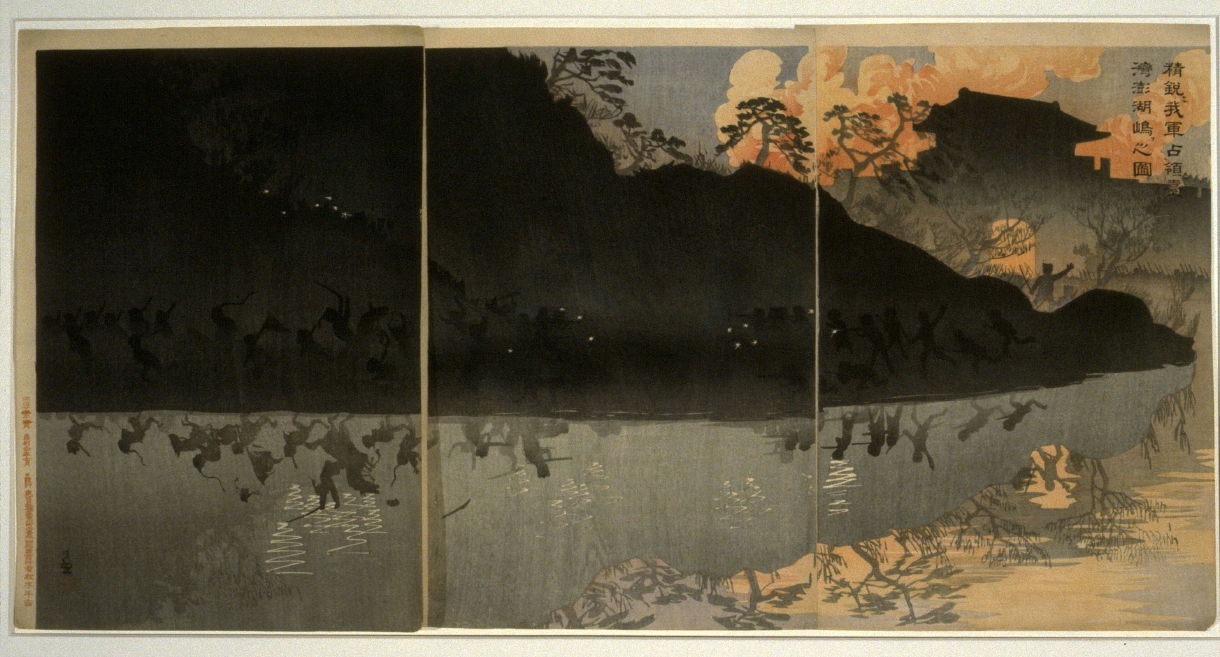
Our Valiant Army Conquers an Island off Taiwan
Woodblock print
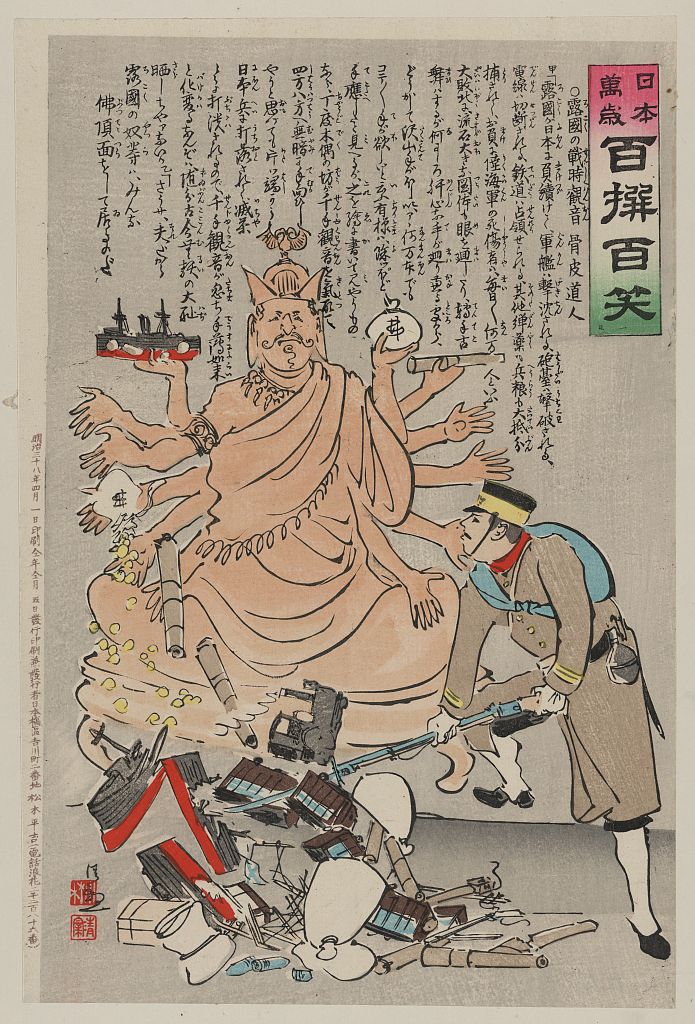
One thousand armed Russian Bodhisattva of mercy of the Russo-Japanese War.
Woodblock print

Tokugawa Tsunayoshi-ko
Woodblock print
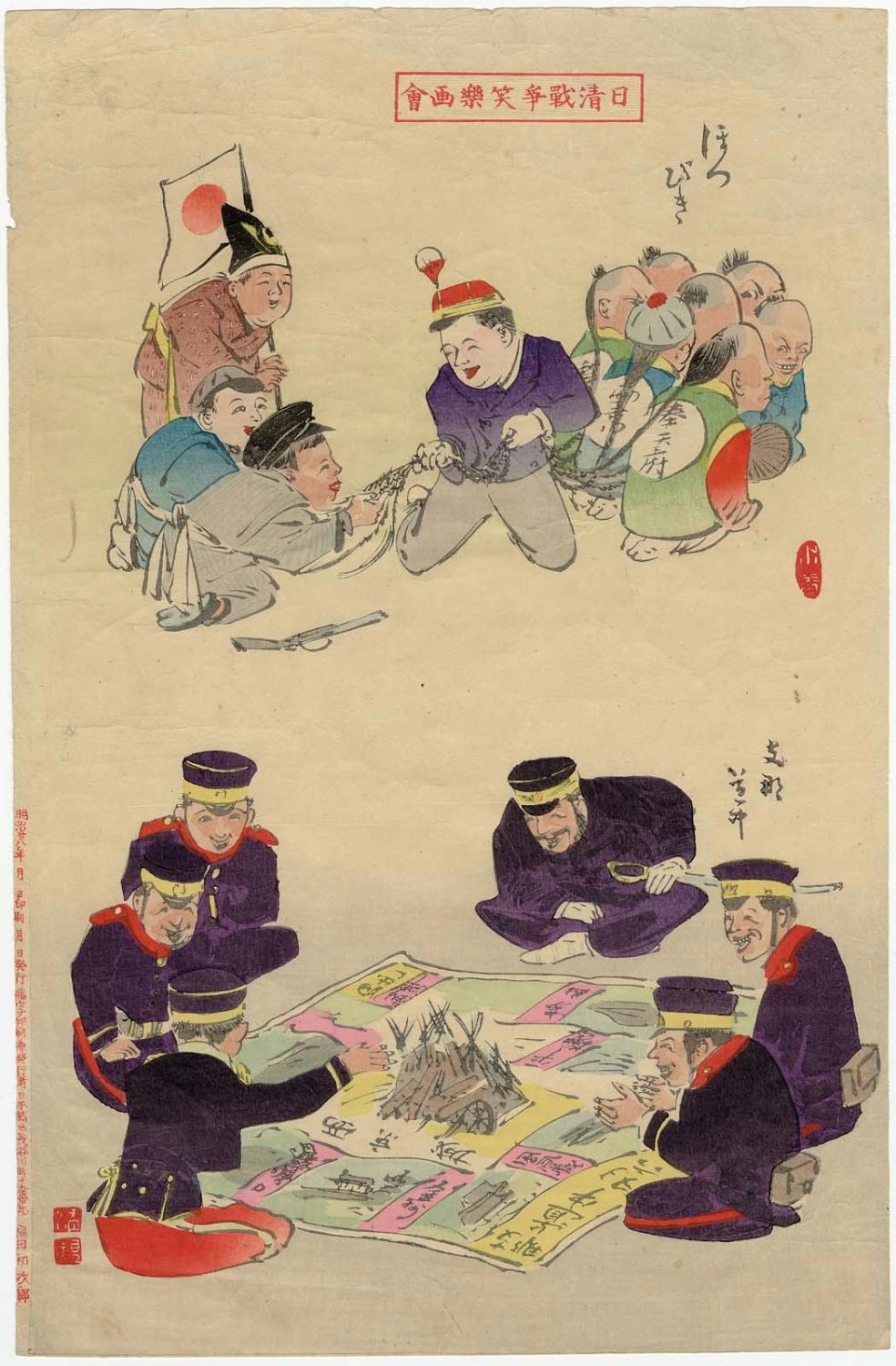
Tug-of-war with Hair (Hatsu-biki), and Board Game of China (Shina dôchû), from the series Comical Art Exhibit of the Sino-Japanese War (Nissei sensô shôraku gakai)
Woodblock print