Biography
Shōda Kōhō (庄田耕峰, c. 1871–1946) is the elusive shin-hanga designer most often associated with the Tokyo publisher Hasegawa Takejirō and his successor firm Nishinomiya Yosaku. Shōda left almost no biographical paper trail in Japan, and even his life dates remain conjectural: Helen Merritt's Guide to Modern Japanese Woodblock Prints gives 1875–1925, while Amy Reigle Stephens proposes 1871–1946, the dates most often used in current museum catalogues. What is securely his is the work — roughly 120 woodblock designs, almost all landscape kacho-e and nocturnes produced for Hasegawa-Nishinomiya between the early 1910s and the late 1930s, a body of prints that gained an international following only after the American collector Robert O. Muller's holdings were dispersed and catalogued in 2003.
It is essential to distinguish Shōda Kōhō from Ohara Koson (1877–1945), the better-known shin-hanga bird-and-flower designer who later signed Shōson and Hōson. The two share the syllable Kō and the rough chronology of the shin-hanga moment, and prints by each have been routinely misattributed to the other in dealer catalogues and online listings. Koson's kacho-e were published mostly by Watanabe, Daikokuya, and Kawaguchi in larger ōban formats and dense polychrome; his landscapes are rare. Shōda Kōhō's work, by contrast, is overwhelmingly small-format — chuban nocturnes and tanzaku pillar prints — and almost entirely associated with Hasegawa-Nishinomiya, the chirimen-gami specialist house in Tokyo founded by Hasegawa Takejirō in 1885.
Shōda Kōhō's most celebrated body of work is the so-called Night Scenes series (Yoru no fūkei), a collaborative set of about twenty-one chuban prints initiated in the 1910s. The series gathered designs by Shōda and colleagues — Arai Yoshimune, Kobayashi Kiyochika, Kobayashi Eijirō, Suzuki Gyosui, and Yoshimoto Gessō — and depicted evening views of Japan in a restrained palette of sepia or deep cobalt blue. Many of Shōda's best-known prints belong to this set: Lake Biwa, with figures in a lantern-lit boat over the misty lake; Fishboat on Moonlit Sea, with a single fishing boat picked out by the full moon between tall reeds; Ōhashi Bridge at Atago, with lantern-bearing pedestrians on the Sumida bridge; Shrine Gate at Miyajima, with the great vermilion torii rising from the moonlit tide; and Country Scene with Moon, a quiet canal stretch under a hanging moon. The Night Scenes were small (most about 18 by 25 cm), inexpensive at point of sale, and astonishingly popular: Hasegawa-Nishinomiya kept reissuing them through the 1920s and 1930s, with post-war reprints continuing into the 1950s.
With Yoshimoto Gessō, Shōda Kōhō also produced a long sequence of tanzaku and hashira-e (pillar prints) for Hasegawa-Nishinomiya, issued in sets of twelve, with about ninety-six different images catalogued. The format — a narrow vertical strip roughly 8 by 36 cm, originally designed to fit on a wooden house pillar — required compositional ingenuity Shōda evidently relished: a long-tailed rooster on a pine branch with Fuji in the distance, a black cat with glowing eyes coiled under a leafy branch, a courtesan against a flowering plum. The Art Institute of Chicago's Tying on Tanzaku and the Museum of Fine Arts, Houston's Black Cat at Night both belong to this series. His broader oeuvre extends to chuban-format kacho-e outside the Night Scenes set — A Sudden Shower on Cherry Blossoms, A Frog on Lotus Leaf, Peony in Rain — quietly inventive designs aimed at a domestic and tourist market rather than the export-art trade, which is partly why they entered Western museum collections later than the work of his contemporaries. Today his prints are held by the Art Institute of Chicago, the Museum of Fine Arts in Houston, and the Art Gallery of Greater Victoria.
Key Facts
- Active Period
- 1871–1946
- Nationality
- 🇯🇵Japan
- Movement
- Shin-hanga
- Works Indexed
- 17
Frequently Asked Questions
Shōda Kōhō (庄田耕峰, c. 1871–1946) is the elusive shin-hanga designer most often associated with the Tokyo publisher Hasegawa Takejirō and his successor firm Nishinomiya Yosaku. Shōda left almost no biographical paper trail in Japan, and even his life dates remain conjectural: Helen Merritt's Guide to Modern Japanese Woodblock Prints gives 1875–1925, while Amy Reigle Stephens proposes 1871–1946, the dates most often used in current museum catalogues. What is securely his is the work — roughly 120 woodblock designs, almost all landscape kacho-e and nocturnes produced for Hasegawa-Nishinomiya between the early 1910s and the late 1930s, a body of prints that gained an international following only after the American collector Robert O. Muller's holdings were dispersed and catalogued in 2003.
Shōda Kōhō was active from 1871 to 1946. They were associated with the Shin-hanga movement.
Shōda Kōhō's work was shaped by the Shin-hanga tradition in Japanese woodblock printmaking. Shin-hanga: ## What is Shin-hanga? Shin-hanga (新版画), literally "new prints," is the early twentieth-century revival of the collaborative Japanese woodblock workshop, organized between roughly 1915 and 1960 by the Tokyo publisher Watanabe Shōzaburō (1885–1962) and a handful of competing houses.
Shōda Kōhō's prints frequently feature landscapes, rain, cats, fish, spring, winter.
Original prints by Shōda Kōhō can be found in collections including Museum of Fine Arts, Houston, Japanese Art Open Database, Art Gallery of Greater Victoria.
Woodblock Prints by Shōda Kōhō (17)
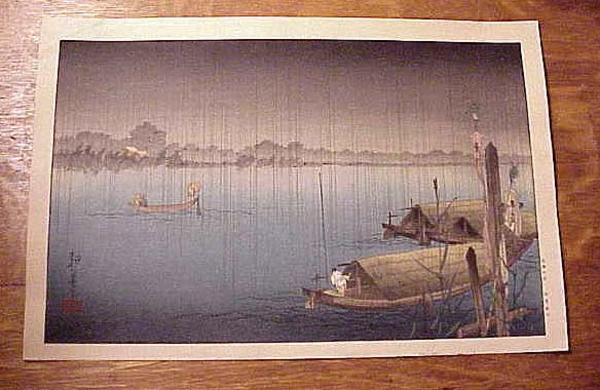
A River in the Rain
circa 1910s
Color woodblock print (Hasegawa cat. no. 1106)
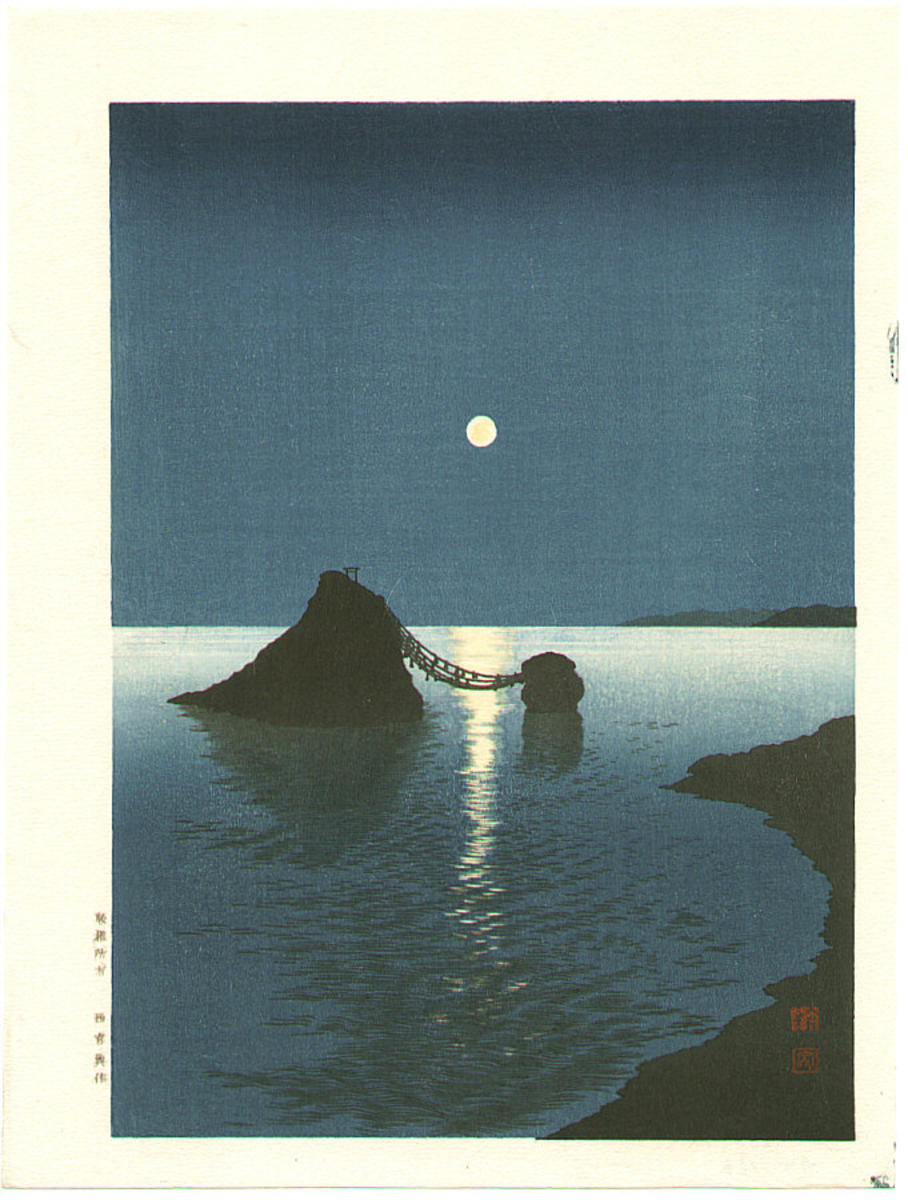
Wedding Rocks, Futamigaura
circa 1910-1930s
Color woodblock print; chuban; from the Night Scenes series

Unknown Night Boat Scene
circa 1910-1930s
Color woodblock print
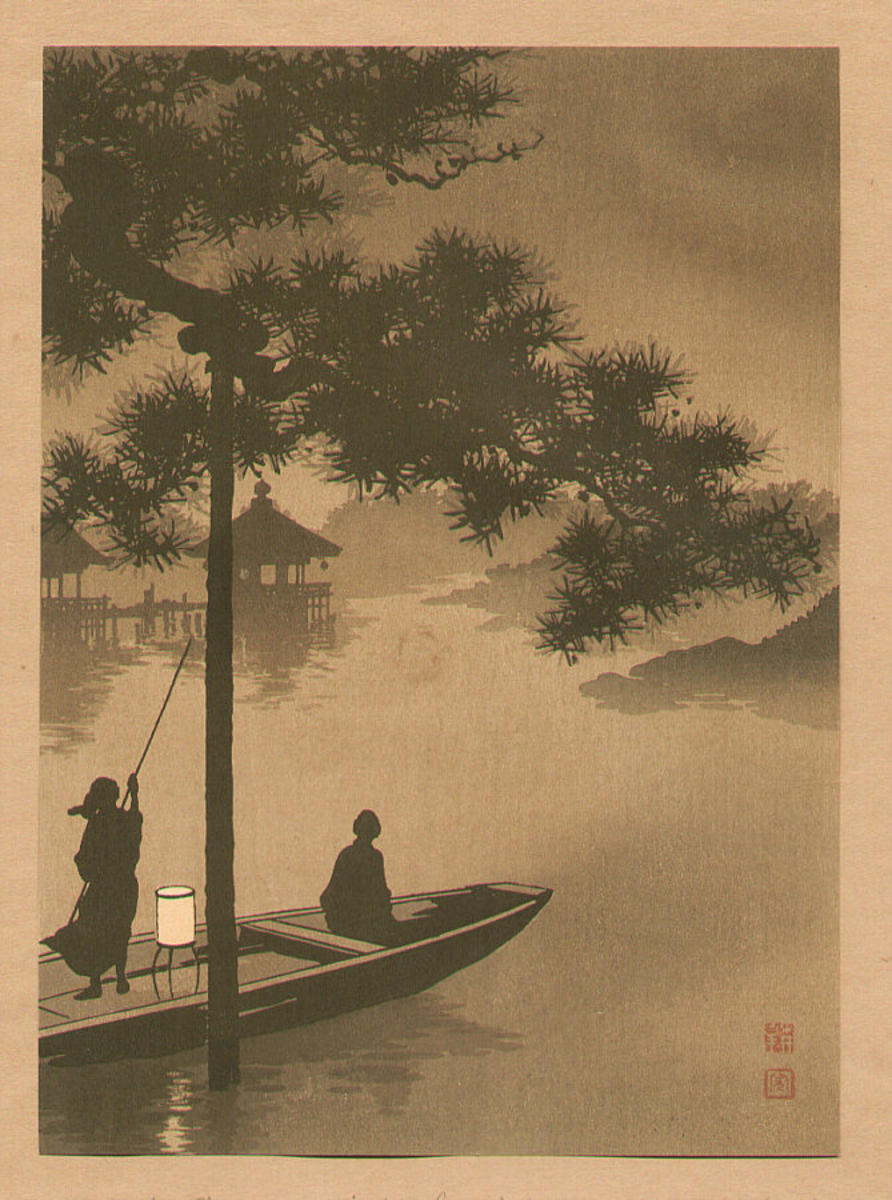
Lake Biwa
circa 1910-1930s
Color woodblock print; chuban; from the Night Scenes series
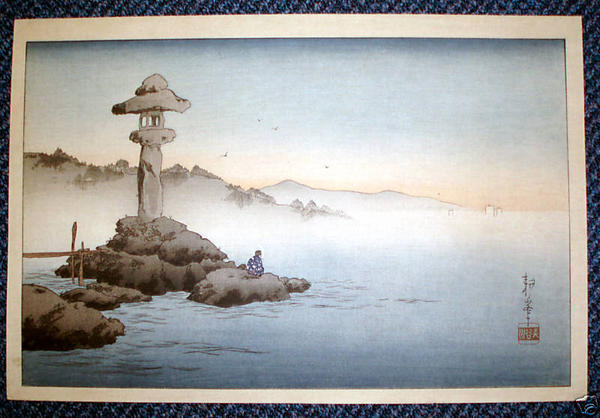
A Stone Lantern on the Seashore
circa 1910-1930s
Color woodblock print
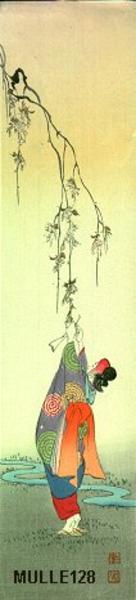
Beauty
early 20th century
Color woodblock print; tanzaku (pillar print)
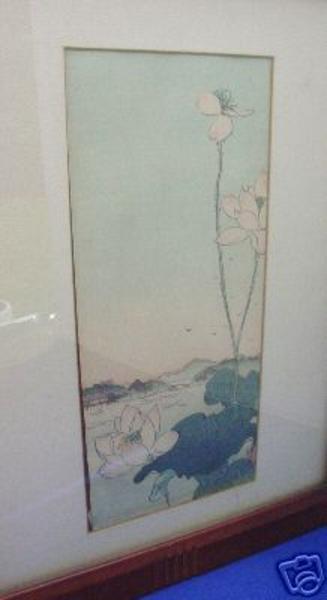
Lotus
circa 1910-1930s
Color woodblock print; tanzaku
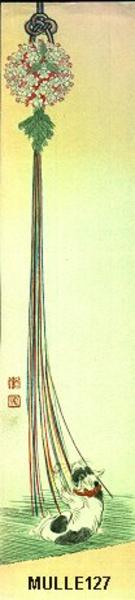
Cat
circa 1910-1930s
Color woodblock print
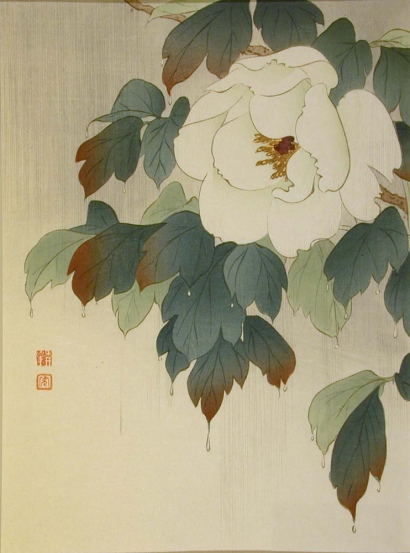
Peony in Rain
early 20th century
Color woodblock print

Egret in Rain
circa 1910-1930s
Color woodblock print
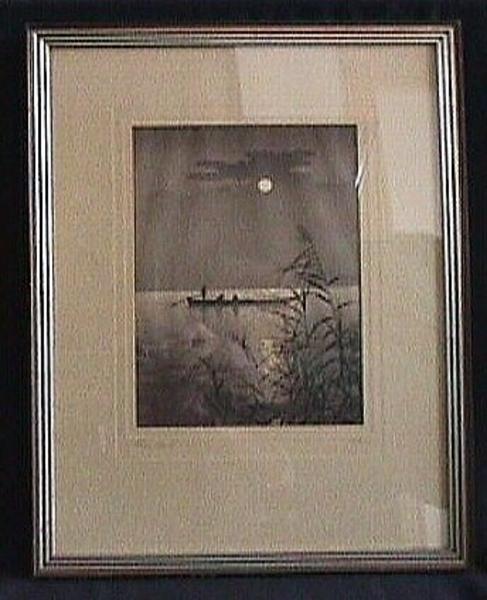
Fish Boat
early 20th century
Color woodblock print; sepia tones
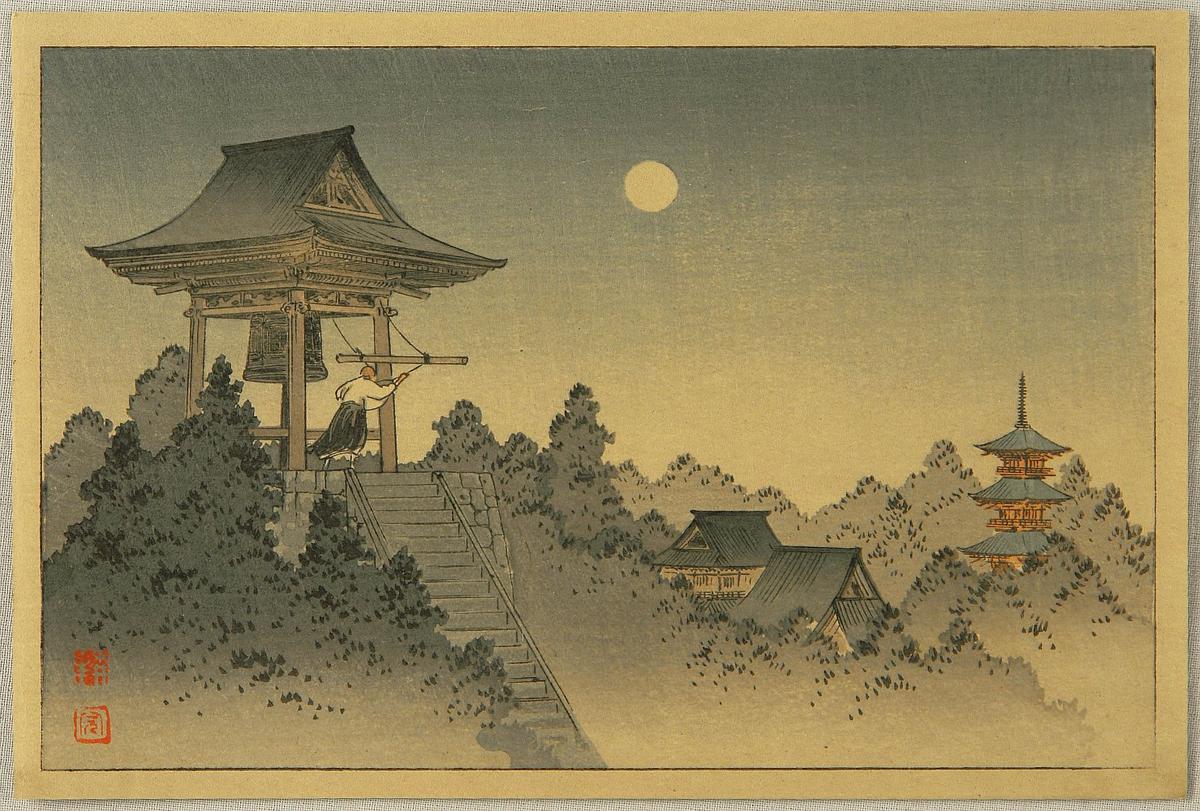
Temple Bell
circa 1910-1930s
Color woodblock print

A Spring Picnic in the Field
circa 1910-1930s
Color woodblock print
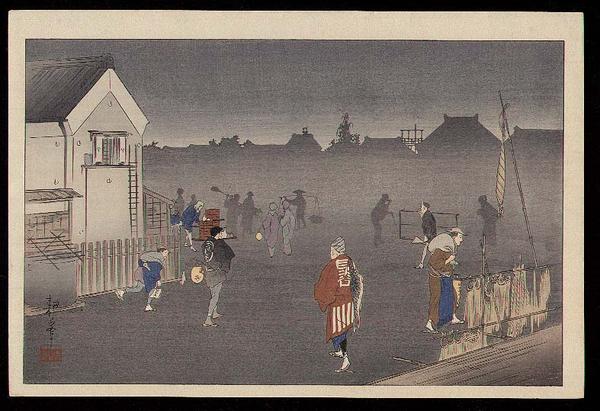
Street Scene at the End of the Year
circa 1910-1930s
Color woodblock print
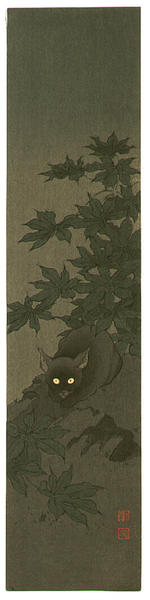
Black Cat at Night
1920-1929
Woodblock print; ink and color on paper, from the series Japanese Scenes on Tanzaku
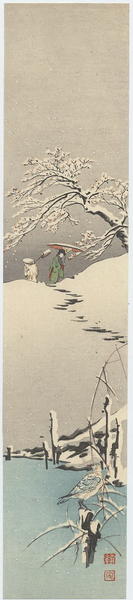
Bijin by Pond in Snow
circa 1920-1935
Color woodblock print
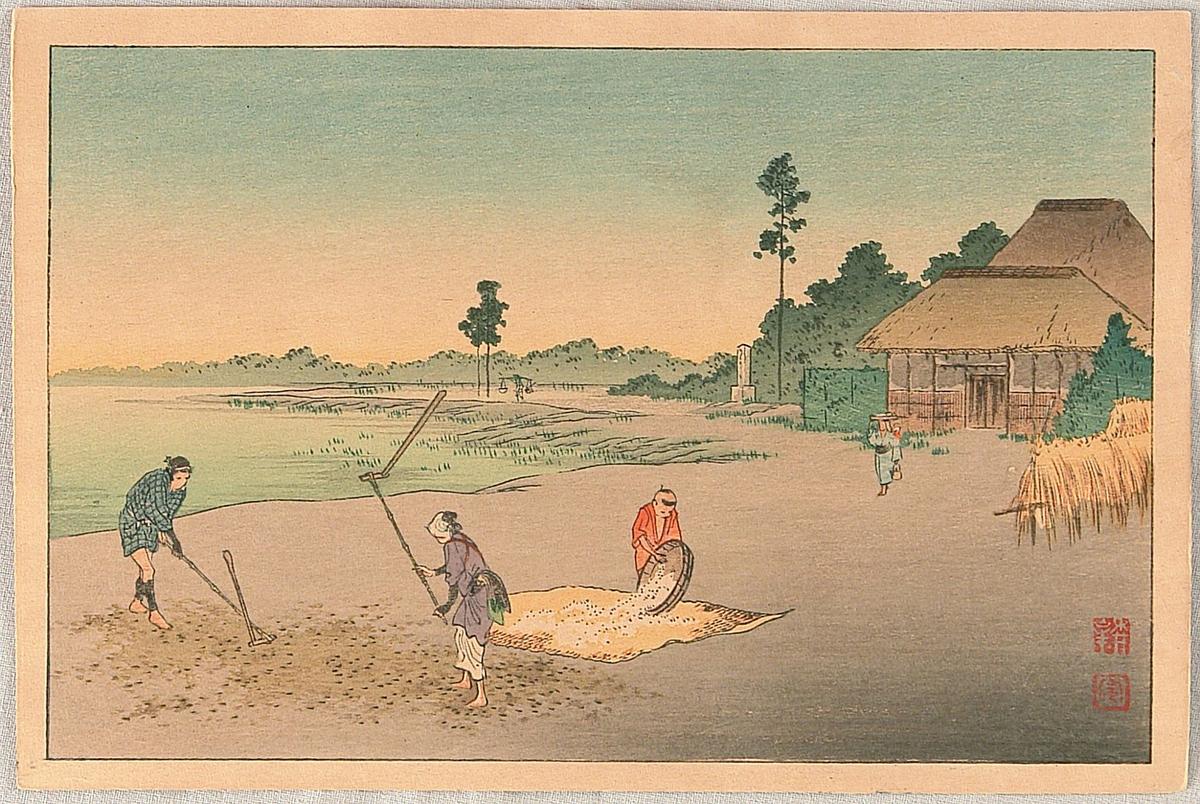
Harvest
circa 1930s
Color woodblock print