Cat
by Shōda Kōhō
- Date:
- circa 1910-1930s
- Medium:
- Color woodblock print
- Source:
- Japanese Art Open Database
Description
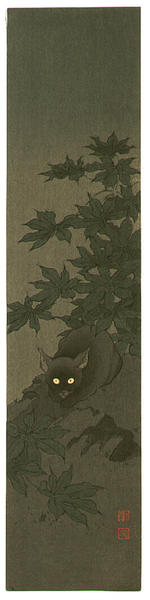
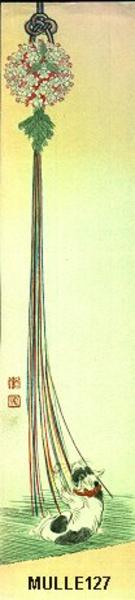
Cat, published around 1920 by the Hasegawa publisher in Tokyo, is among the quieter and more domestically scaled of Shoda Koho's shin-hanga kacho-e designs, a sheet in which the firm's atmospheric sensibility is condensed into a single small animal study. A cat is shown seated and turned slightly toward the viewer, its body composed in the alert repose familiar from a long tradition of feline subjects in Japanese painting. Koho organizes the composition around the single luminous form of the animal, allowing a softly graduated background to suggest the interior or veranda setting without committing to specific architectural detail. The palette is restrained, dominated by muted greys, warm umber, and the soft tones of the cat's fur, with the eyes and whiskers articulated as small precise accents that draw the viewer into the animal's quiet alertness. The Hasegawa carvers translated the painter's brush into a delicate keyblock for the cat's outline and the fine articulation of its features, while the printers used overlaid bokashi gradations to model the fur and the recessive background, achieving the soft tonal transitions that the studio became known for. The design extends Koho's shin-hanga kacho-e vocabulary from bird and floral subjects into the domestic animal tradition, a move consistent with the broader Hasegawa interest in small-format intimate subjects intended for both export and domestic display. Issued in the small chuban format characteristic of the firm's catalogue, the print was marketed to foreign collectors and to a growing domestic audience attentive to the shin-hanga revival of classical Japanese subjects. The impression documented in the Japanese Art Open Database (https://ukiyo-e.org/image/jaodb/Koho_Shoda-No_Series-Cat-00035330-031126-F06) preserves the subtle fur tonalities and crisp keyblock features that distinguish strong impressions of this quietly observed animal study.