Biography
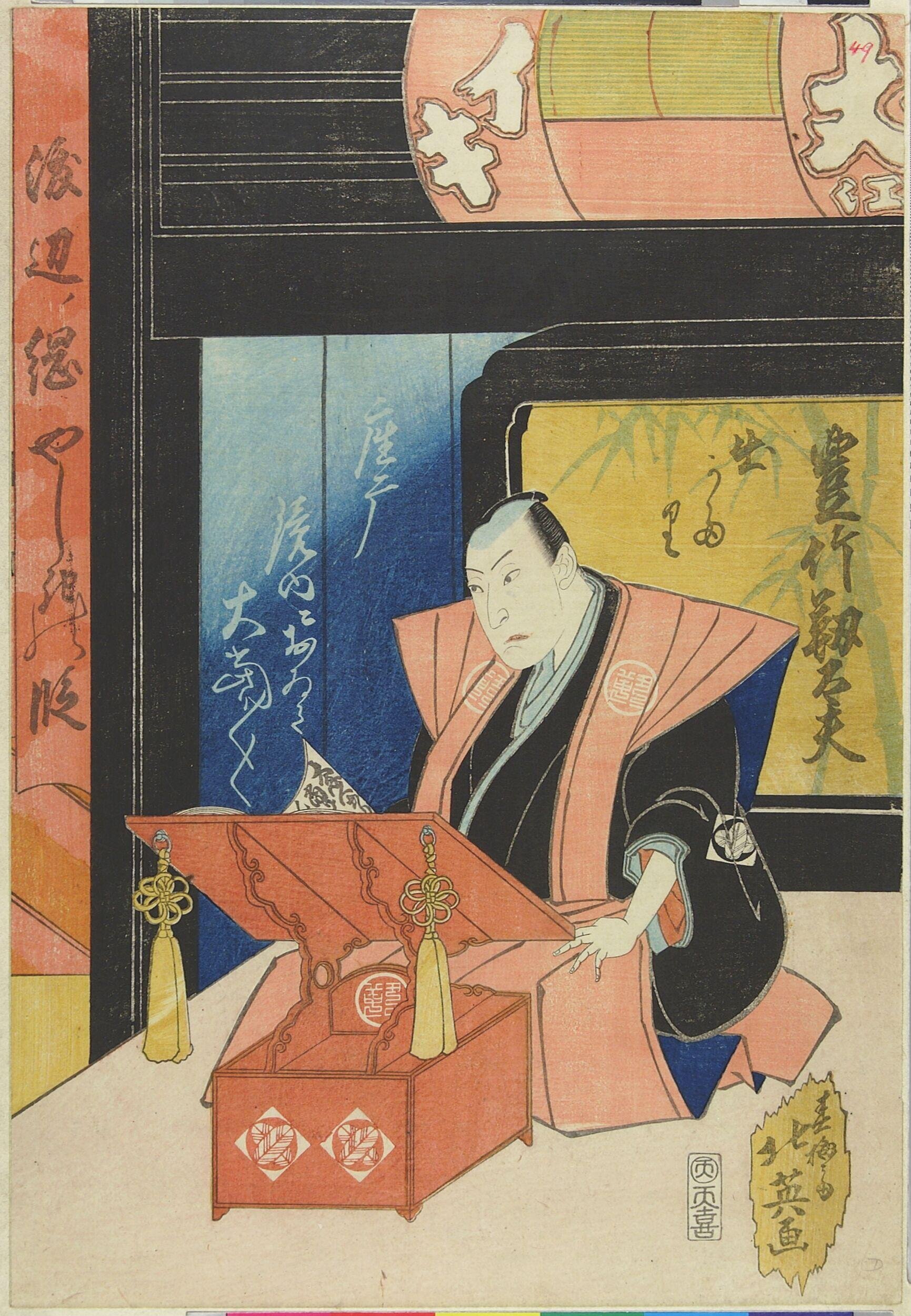
Shunbaisai Hokuei (active c. 1824–1837) stands among the most prolific and accomplished designers of the Osaka school of ukiyo-e during its golden decade of the 1830s. Working almost exclusively in the specialized genre of yakusha-e (kabuki actor portraits), Hokuei produced a tightly focused body of work that captured the celebrated stars of the Kamigata theater world with unusual psychological force and graphic boldness. His prints remain definitive documents of Osaka kabuki at the height of its artistic achievement, preserving the likenesses and signature roles of actors who otherwise survive only as names in playbills and theatrical records.
Hokuei trained under Shunkosai Hokushu, the leading Osaka actor-print designer of the preceding generation, and acknowledged him as his teacher on several of his early designs. Hokushu himself is traditionally said to have studied under Katsushika Hokusai, though this teacher–student relationship has never been conclusively documented. Over his career Hokuei signed his work under several names — among them Shunko (he is sometimes identified as Shunko III), Shunkosai, Shunbaisai, and Sekkaro — a multiplicity that in earlier Western literature occasionally caused his prints to be confused with his teacher's. Later scholarship on Kamigata-e has clarified his distinct identity and stylistic signature.
The Osaka, or Kamigata, school of ukiyo-e developed in parallel to the better-known Edo (Tokyo) tradition but with markedly different priorities. Where Edo publishers issued landscapes, beautiful women, and warrior prints in large commercial runs, Osaka printmaking was overwhelmingly devoted to kabuki and was largely funded by private subscription. Wealthy connoisseurs and theater fan clubs commissioned commemorative portraits of specific actors in specific roles, often in small editions printed with luxurious techniques: silver and metallic pigments, deep blind embossing (karazuri), and lavish use of expensive imported Berlin blue (bero-ai). The result was a body of prints that prized refinement and exclusivity over the mass appeal of Edo work, and Hokuei's oban (vertical large-format) actor portraits are among the most technically accomplished prints ever issued in Japan.
Hokuei's career coincided with the revival of Osaka kabuki in the early 1830s, when a constellation of star performers transformed the city's stages. His most frequent subject was Arashi Rikan II, and he also portrayed other leading actors of the Kamigata stage, including Nakamura Utaemon III and Nakamura Matsue, often in the explosive mie poses (held theatrical stances) that define a kabuki actor's signature moments. The early-to-mid 1830s were his most productive years; by one scholarly accounting, his designs accounted for a majority of all the prints published in Osaka in the years 1832–1836, an output centered on the major productions of the city's leading theaters.
Hokuei's compositional approach typically isolated his subjects against monochrome or subtly graded backgrounds, focusing the viewer's attention on facial expression, costume detail, and the eloquent geometry of the actor's pose. The Kamigata-e tradition favored a closer, more intimate framing than Edo work, and Hokuei pushed this toward expressive intensity, especially in the charged dramatic and supernatural roles that the kabuki repertoire favored.
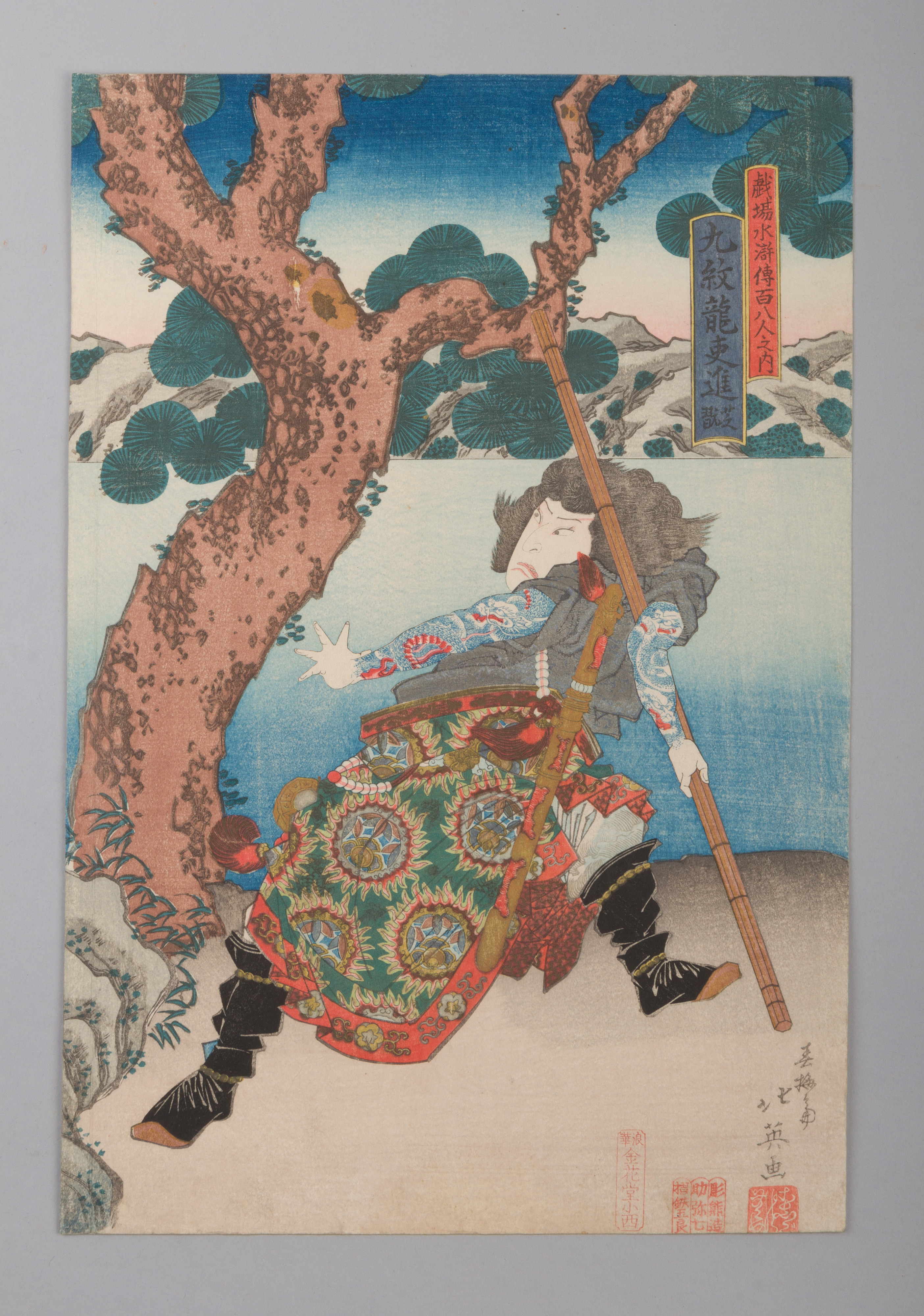
Beyond straight actor portraiture, Hokuei occasionally took up warrior and historical subjects drawn from popular legend, reflecting the vogue for musha-e (warrior prints) that Utagawa Kuniyoshi had ignited in Edo in the late 1820s. Such designs demonstrate a range that extended past the half-length actor portrait for which he is best known.
Hokuei died in 1837, still at the height of his powers; the cause is not recorded. His death came only a few years before the Tempo Reforms (1841–1843), which would temporarily devastate the kabuki theater and the print industry that depended on it. He left behind a number of pupils — the records name well over a dozen — who carried the Kamigata actor-print tradition into the mid-19th century, though none matched the concentrated brilliance of his brief career. Today Hokuei is recognized as one of the foremost designers of the Osaka school, alongside figures such as Hokushu, Hasegawa Sadanobu I, and Utagawa Yoshitaki, and his actor portraits are prized as a peak of Kamigata printmaking technique and as a vivid window into a regional theatrical culture that has otherwise largely vanished from view.
Key Facts
Frequently Asked Questions
Shunbaisai Hokuei (active c. 1824–1837) stands among the most prolific and accomplished designers of the Osaka school of ukiyo-e during its golden decade of the 1830s. Working almost exclusively in the specialized genre of yakusha-e (kabuki actor portraits), Hokuei produced a tightly focused body of work that captured the celebrated stars of the Kamigata theater world with unusual psychological force and graphic boldness. His prints remain definitive documents of Osaka kabuki at the height of its artistic achievement, preserving the likenesses and signature roles of actors who otherwise survive only as names in playbills and theatrical records.
Shunbaisai Hokuei's work was shaped by the Ukiyo-e tradition in Japanese woodblock printmaking. Ukiyo-e: ## What is ukiyo-e? Ukiyo-e ([浮世絵](/glossary/ukiyo-e)) — literally "pictures of the floating world" — is the Edo-period Japanese print and painting tradition that flourished from roughly 1660 to 1868, depicting the pleasures of urban life in Edo (modern Tokyo): courtesans, kabuki actors, sumo wrestlers, famous landscapes, and seasonal beauties.
Shunbaisai Hokuei's prints frequently feature summer.
Original prints by Shunbaisai Hokuei can be found in collections including Victoria and Albert Museum, Cleveland Museum of Art.
Woodblock Prints by Shunbaisai Hokuei (13)
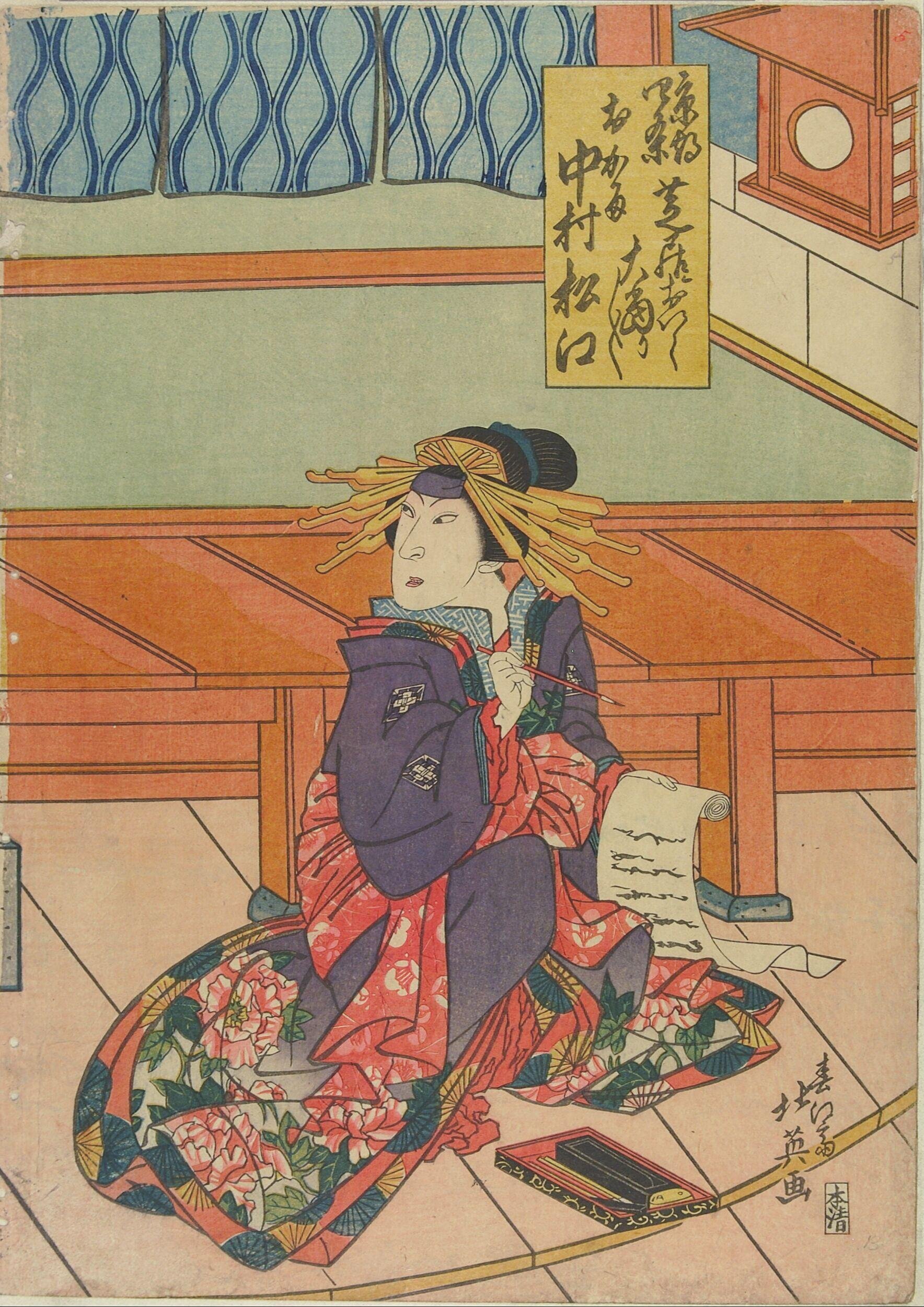
Actor Nakamura Matsue as Okaru
1831

Arashi Rikan II as Danshichi Kurōbei in "Mirror of Naniwa: The Summer Festival"
1832
color woodblock print
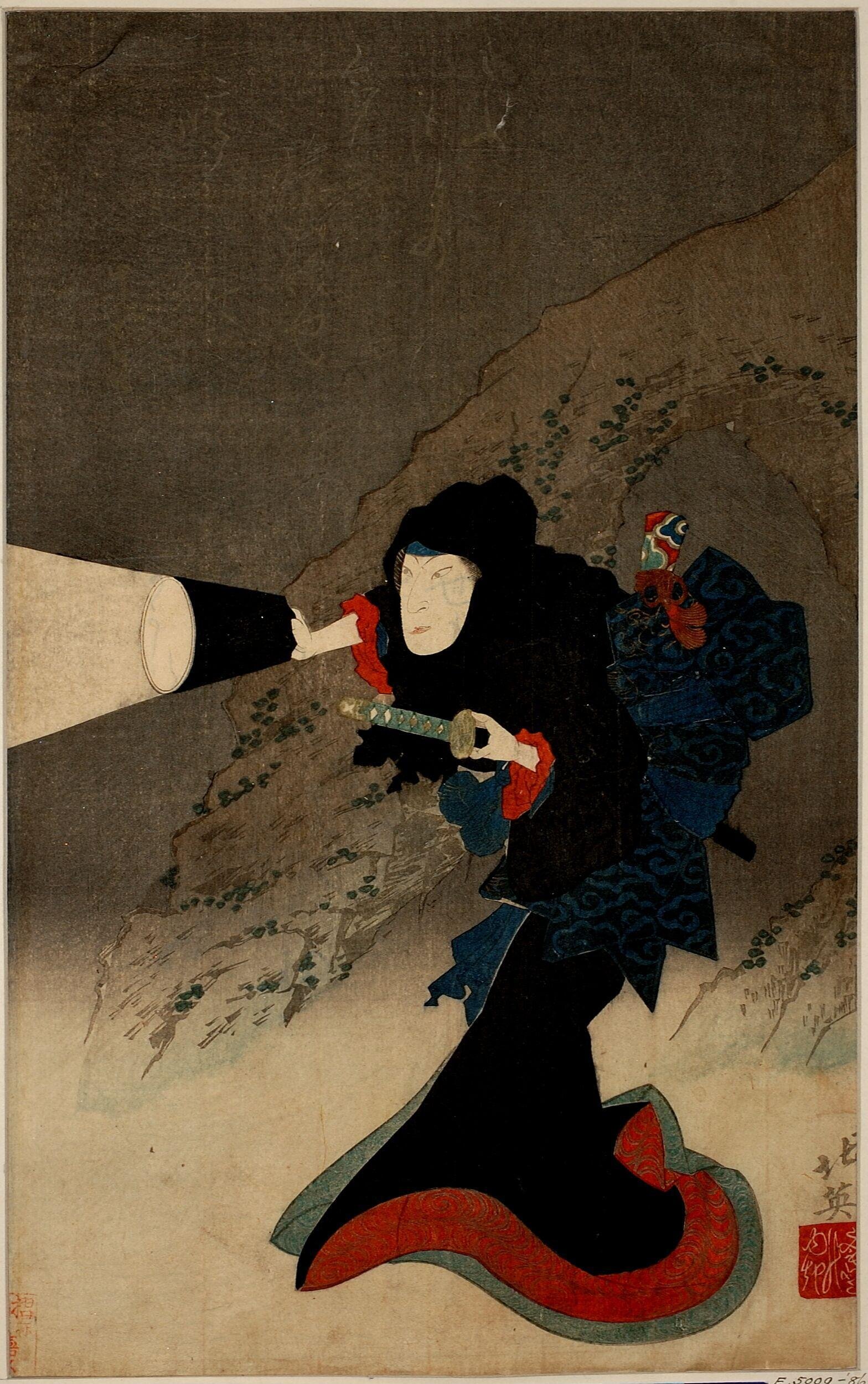
Actor Iwai Shijaku as Osuma no Kata
1832
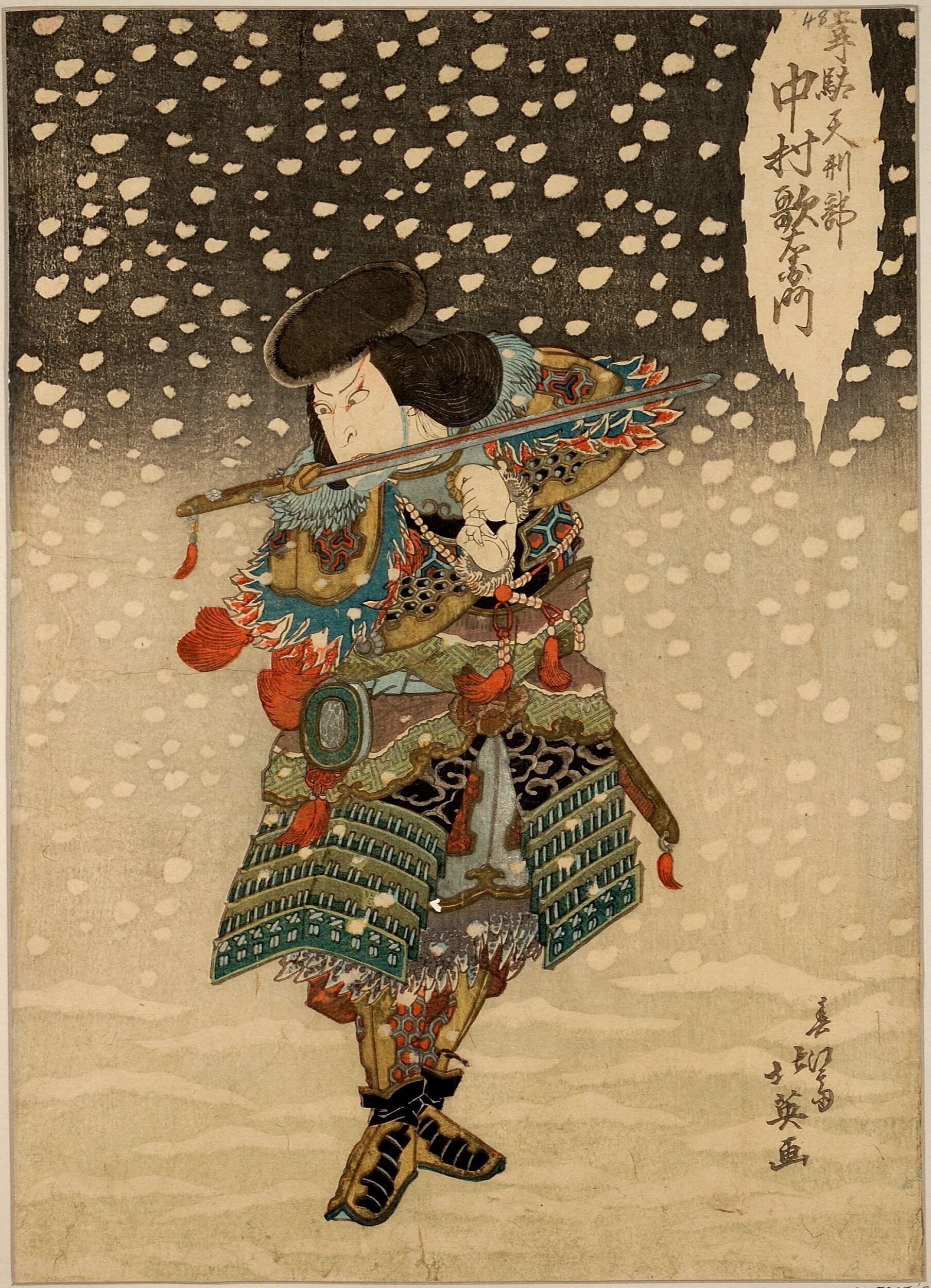
Actor Nakamura Utaemon III as Idaten Keibu
1832
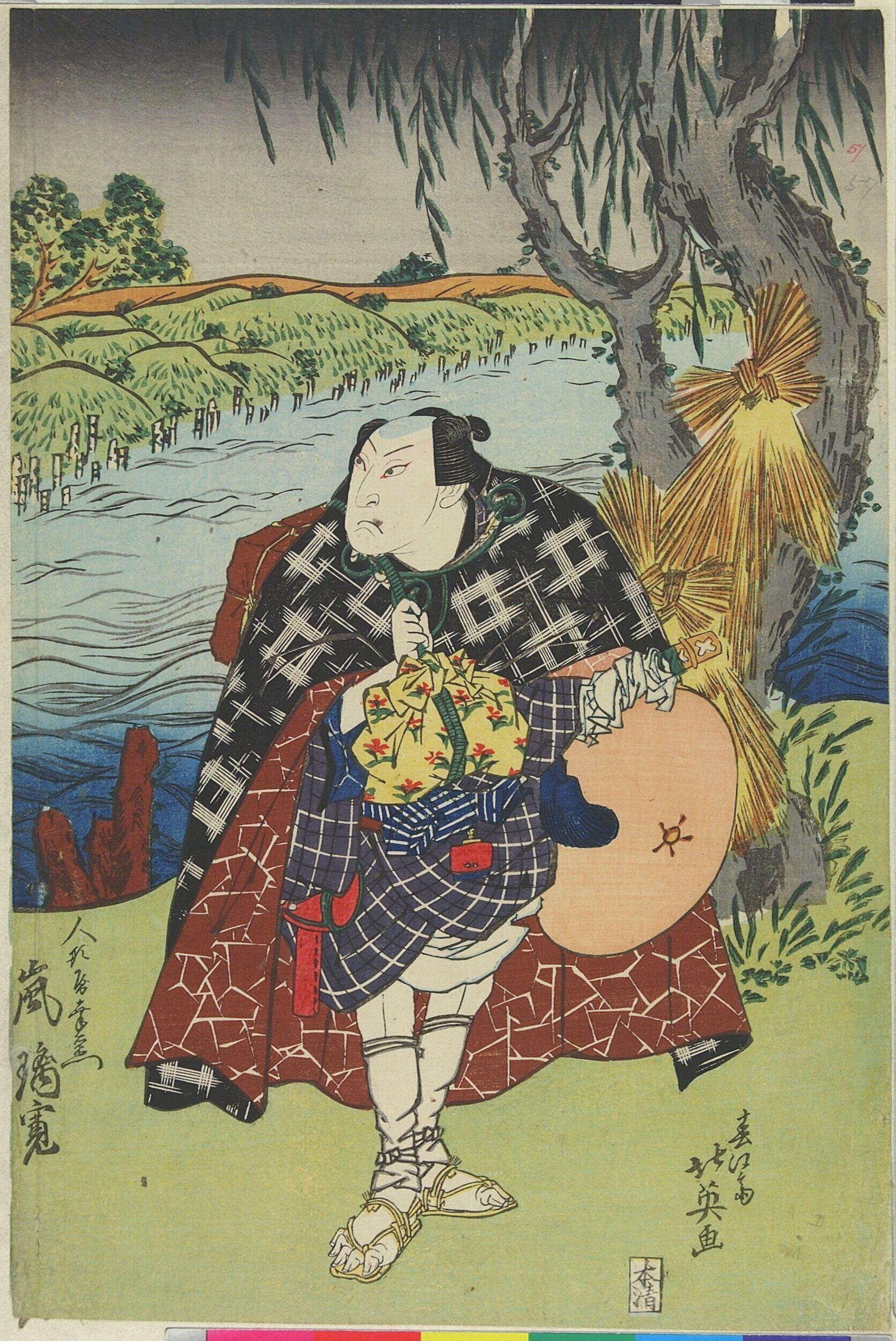
Actor Arashi Rikan II as Ningyōya Kōemon
1832
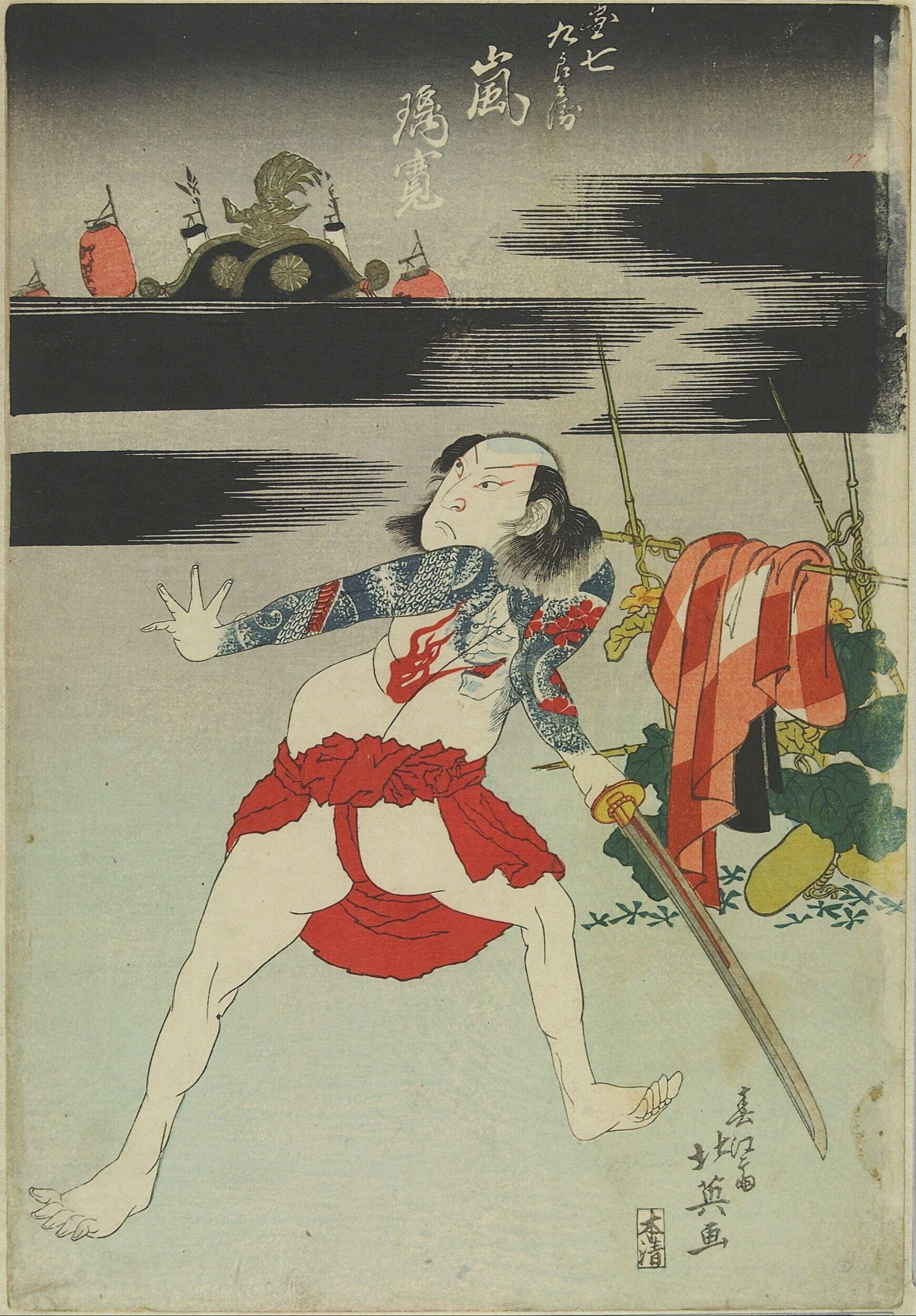
Actor Arashi Rikan III as Danshichi Kurobei
1832
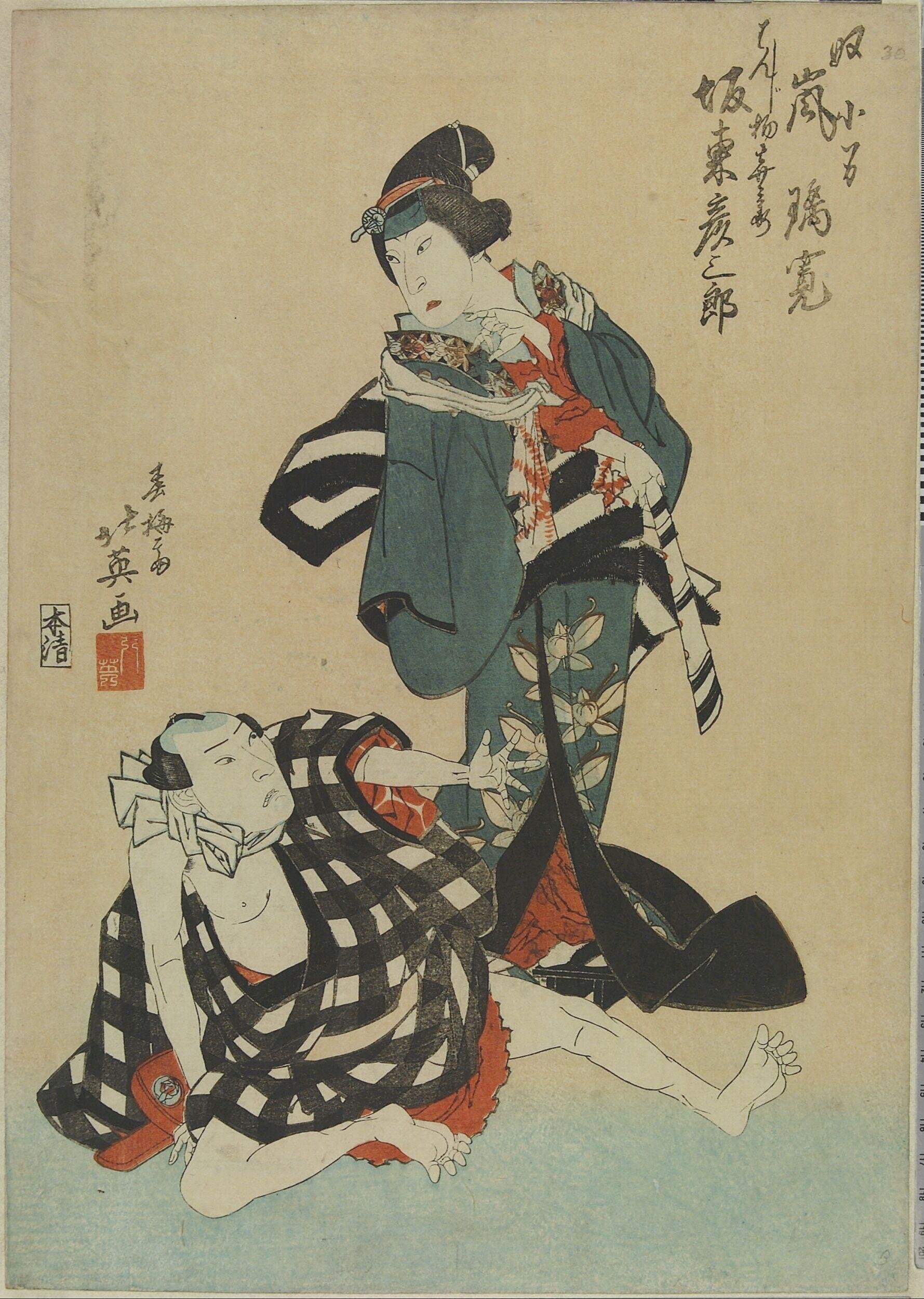
Actors Arashi Rikan as Yakko no Koman and Bandō Hikosaburō as Hanjimono Kihei
1834
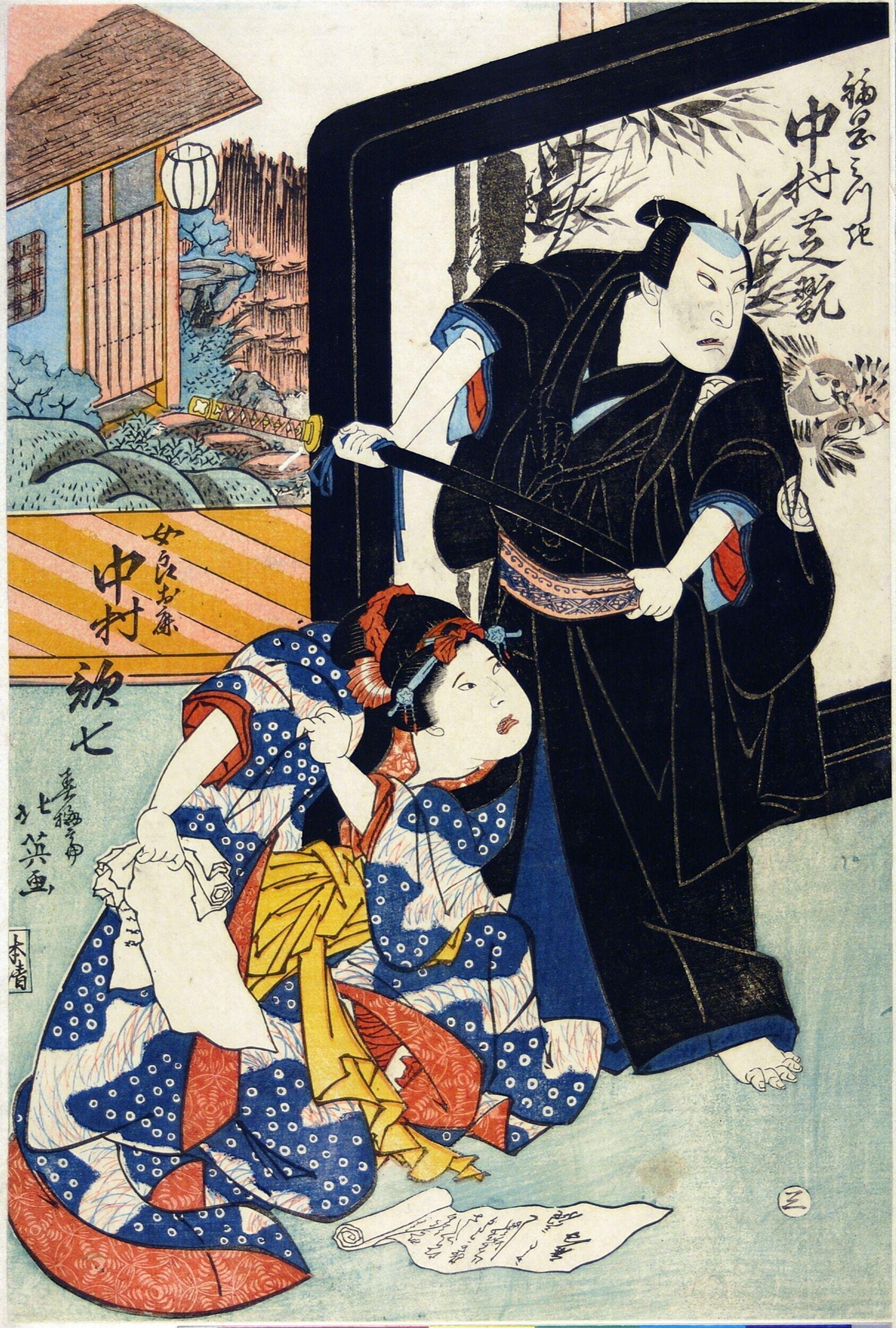
Actors Nakamura Shikan as Fukuoka Mitsugi and Nakamura Kashichi as Courtesan Oshika
1835
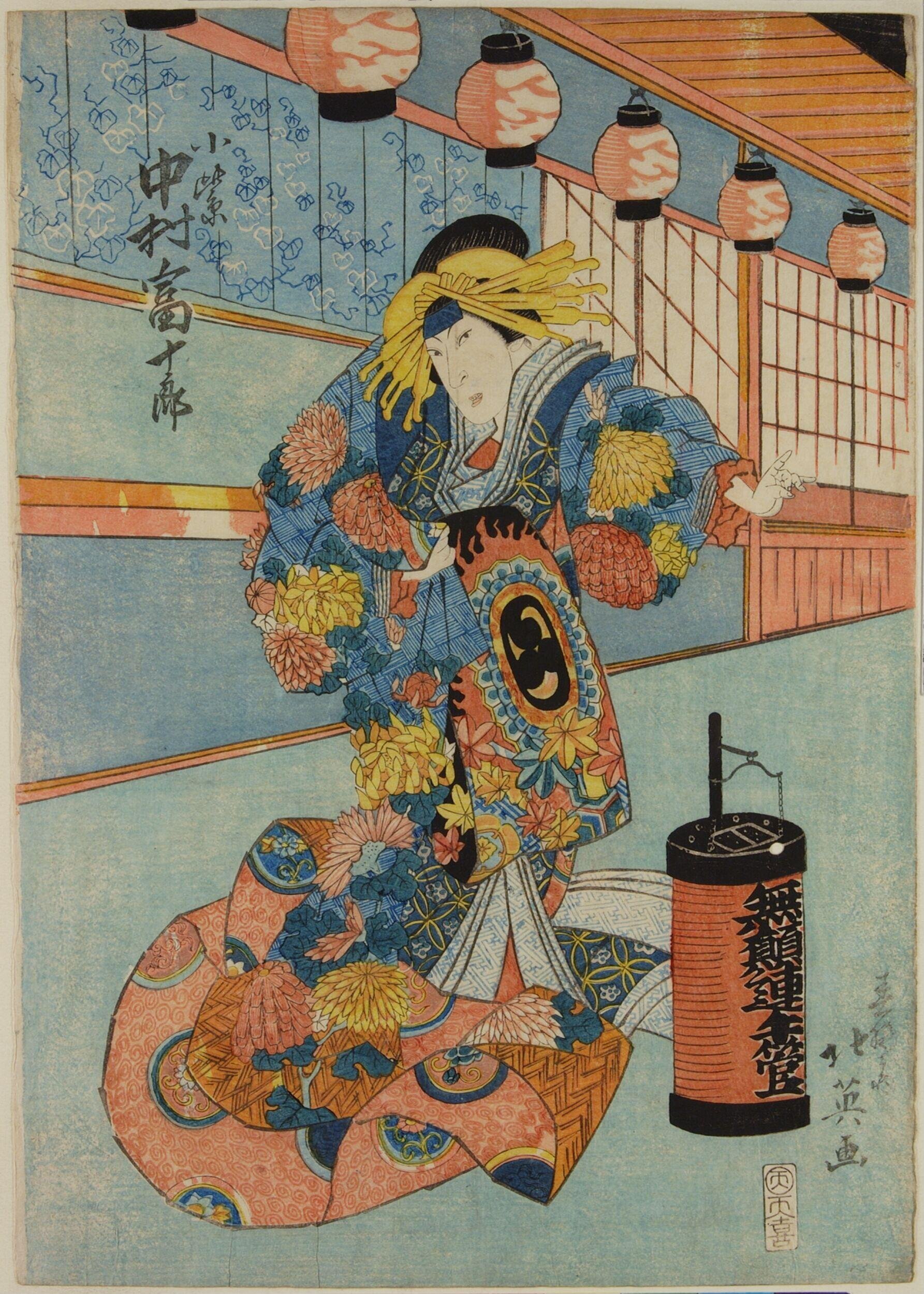
Actor Nakamura Tomijūrō as Komurasaki
1835
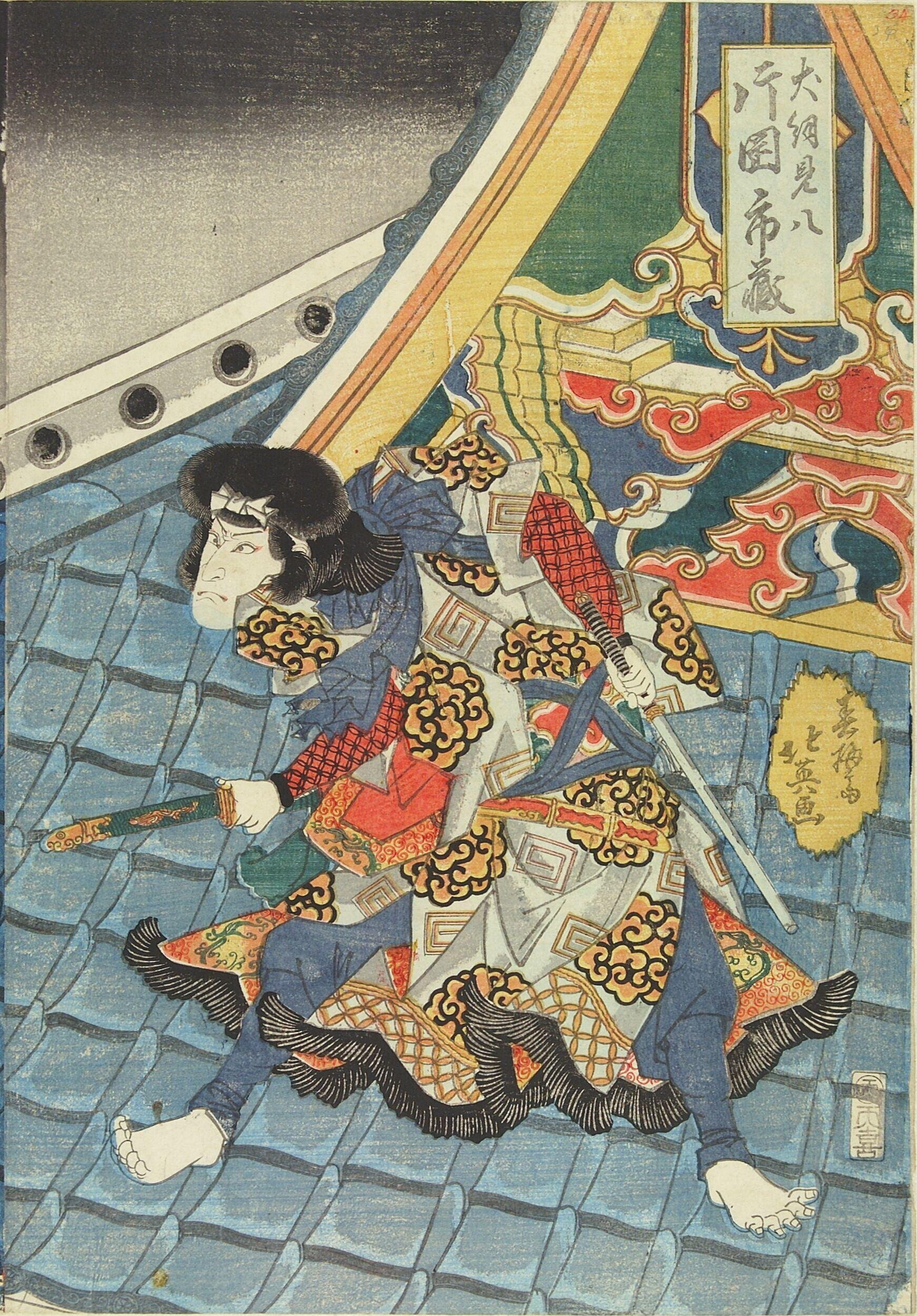
Actors Kataoka Ichizō I as Inukai Genpachi and Arashi Rikan II as Inuzaka Shino
1836
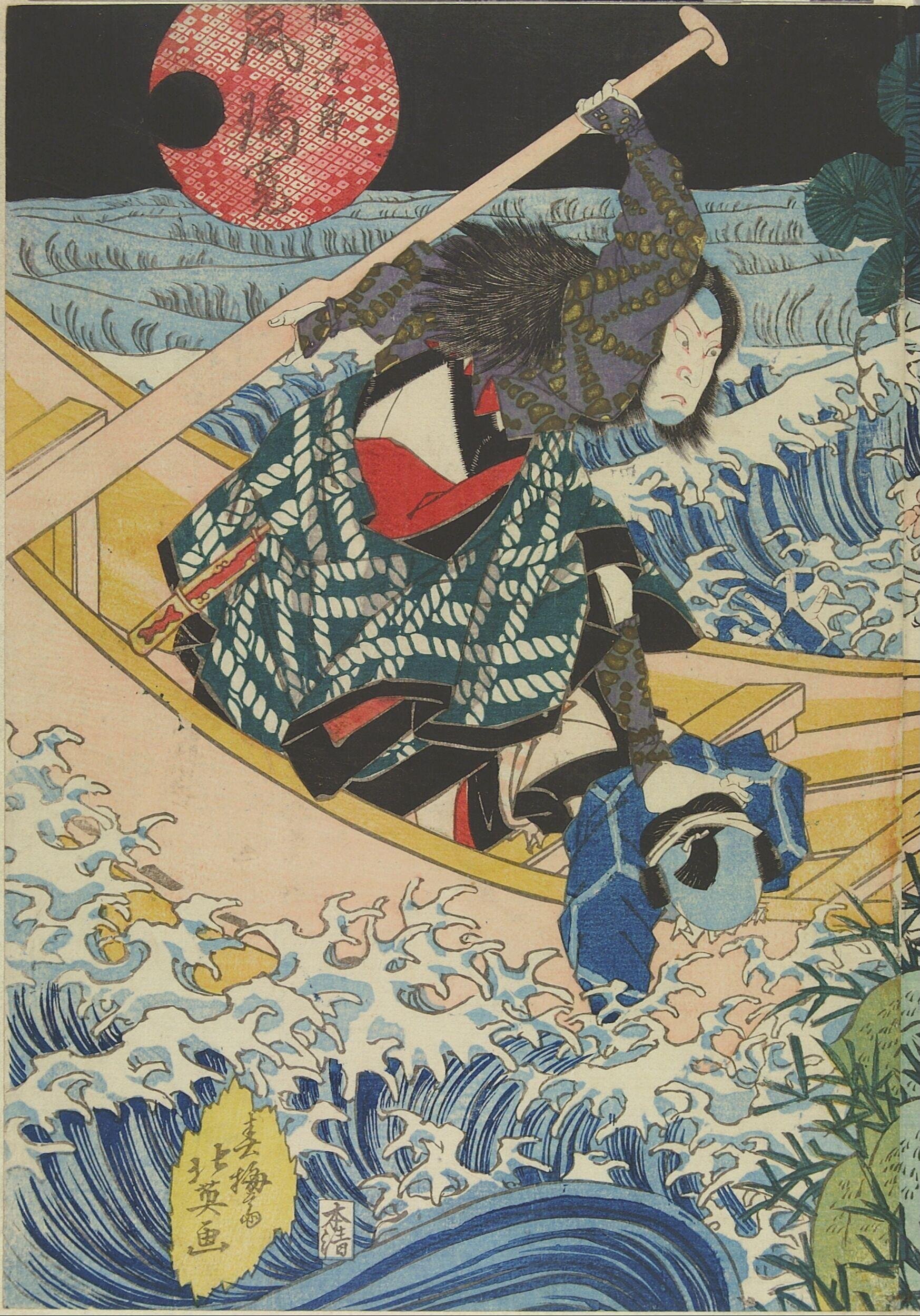
Actors Arashi Rikan as the Boatman Higuchi no Jirō and Iwai Shijaku as his wife, Oyoshi
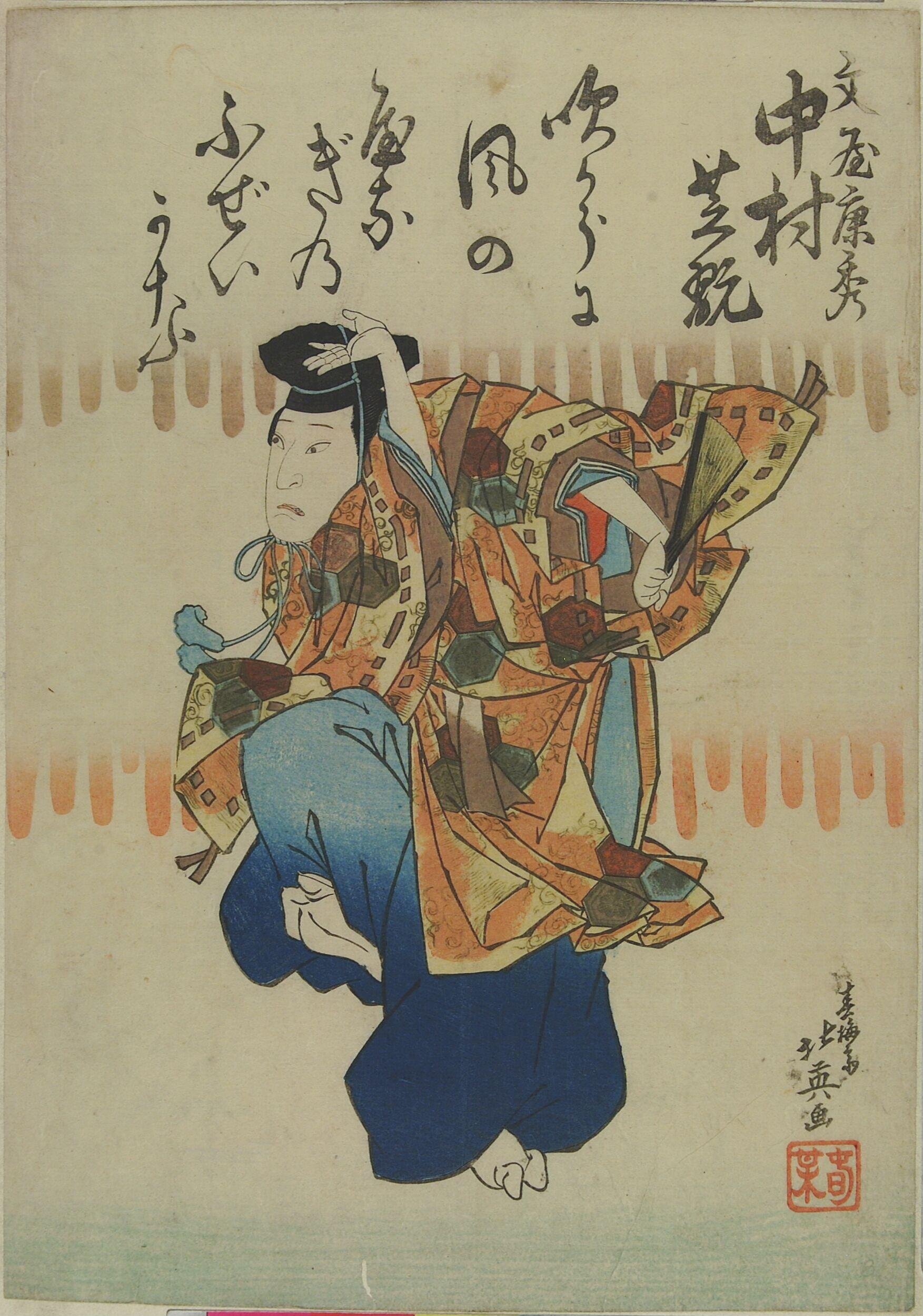
Actor Nakamura Shikan as Bunya no Yasuhide