
Spring Colors: Lion Dance at a Mansion (Shunshoku yakata no shishi-mai)
- Date:
- c. 1860s
- Medium:
- Color woodblock print; ōban triptych
- Source:
- Museum of Fine Arts, Boston
Description
A color ōban woodblock triptych in the Museum of Fine Arts, Boston, this Spring Colors: Lion Dance at a Mansion (Shunshoku yakata no shishi-mai) pictures a New Year's shishi-mai (lion dance) performance at a wealthy household. The shishi-mai — performed by costumed dancers manipulating a stylized lion's-head mask and a flowing cloth body — is one of the oldest folk performance traditions in Japan, descending from medieval temple ceremonies and surviving into the Edo period as a New Year's good-luck performance circulating through urban neighborhoods. The composition pictures the costumed dancers in mid-performance within an elaborate domestic interior, surrounded by spectators of both sexes in seasonal kimono; the chrysanthemum and pine motifs of the screens behind the figures invoke the calendrical iconography of the spring season. The MFA dating field gives the artist's lifespan (1835–1888) rather than a fixed year for this print; on stylistic and compositional grounds the work appears to belong to Kuniaki II's middle career in the 1860s, with the figural treatment, costume rendering, and bijin-ga conventions characteristic of his late-Bakumatsu and early-Meiji production.
More Prints by Utagawa Kuniaki II
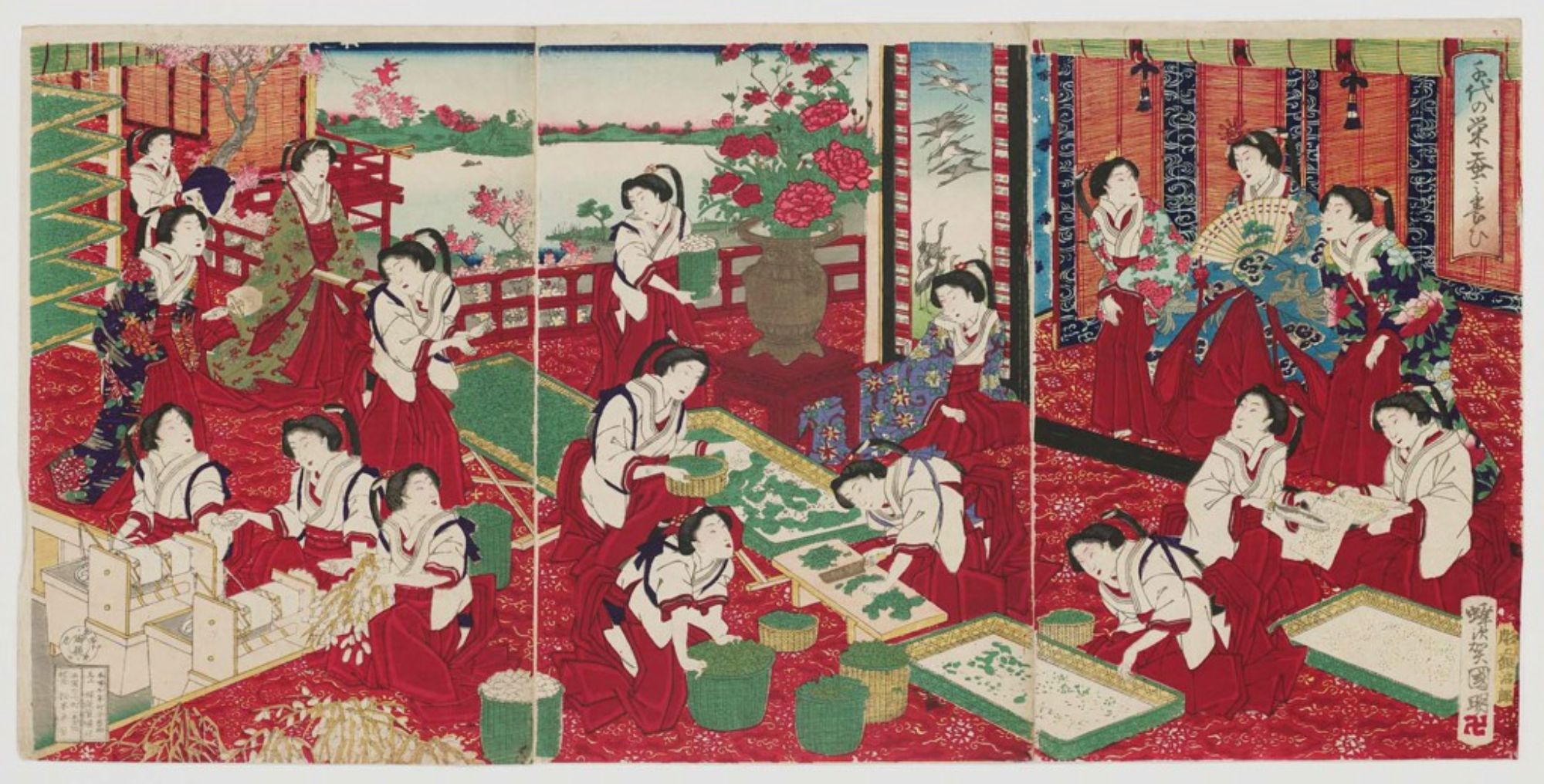
Raising Silk Worms for a Thousand Ages of Prosperity (Chiyo no sakae kaiko no yashinai)
1877
Color woodblock print; ōban triptych
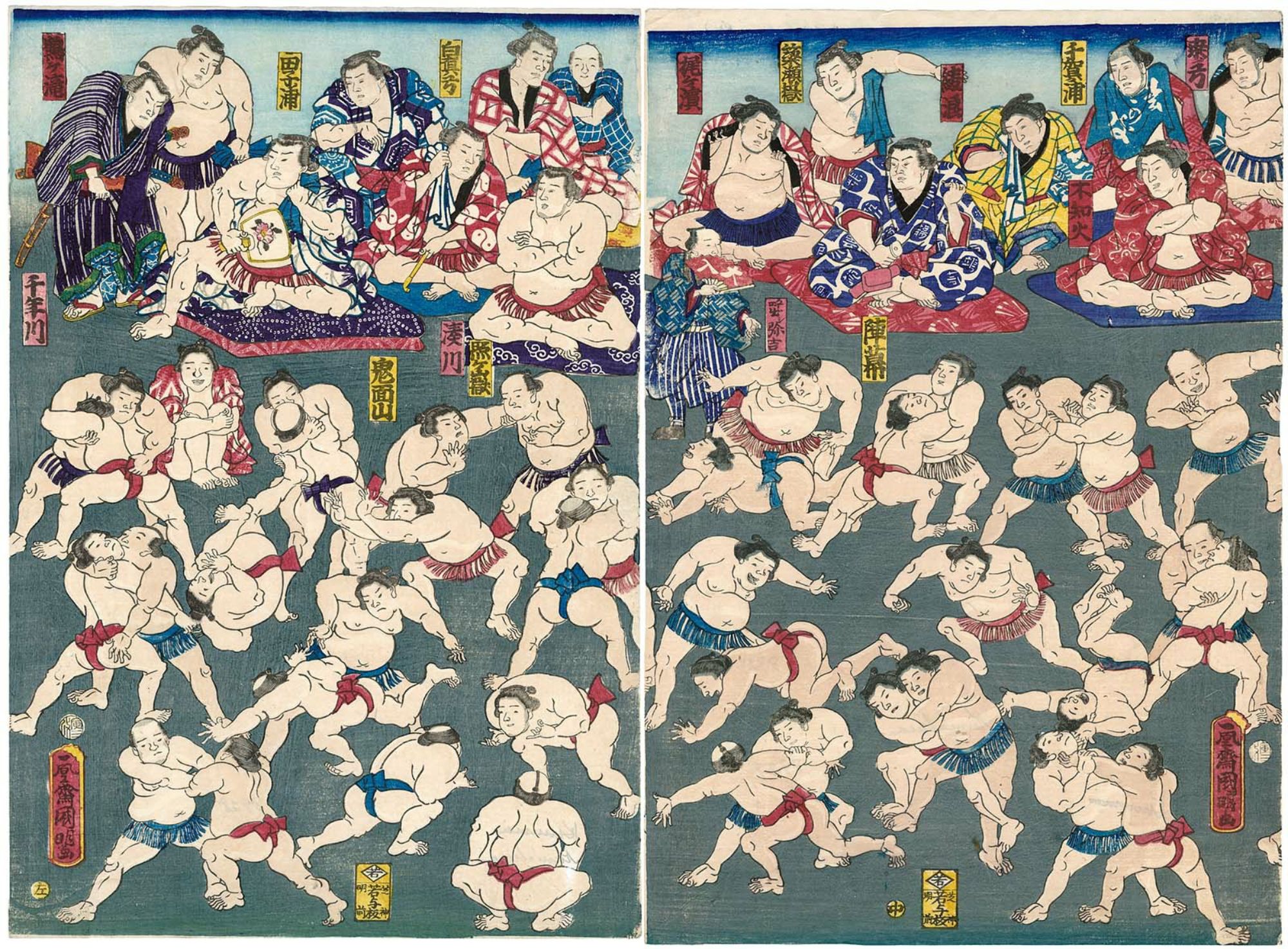
Sumō Wrestlers Practicing
1866
Color woodblock print; ōban
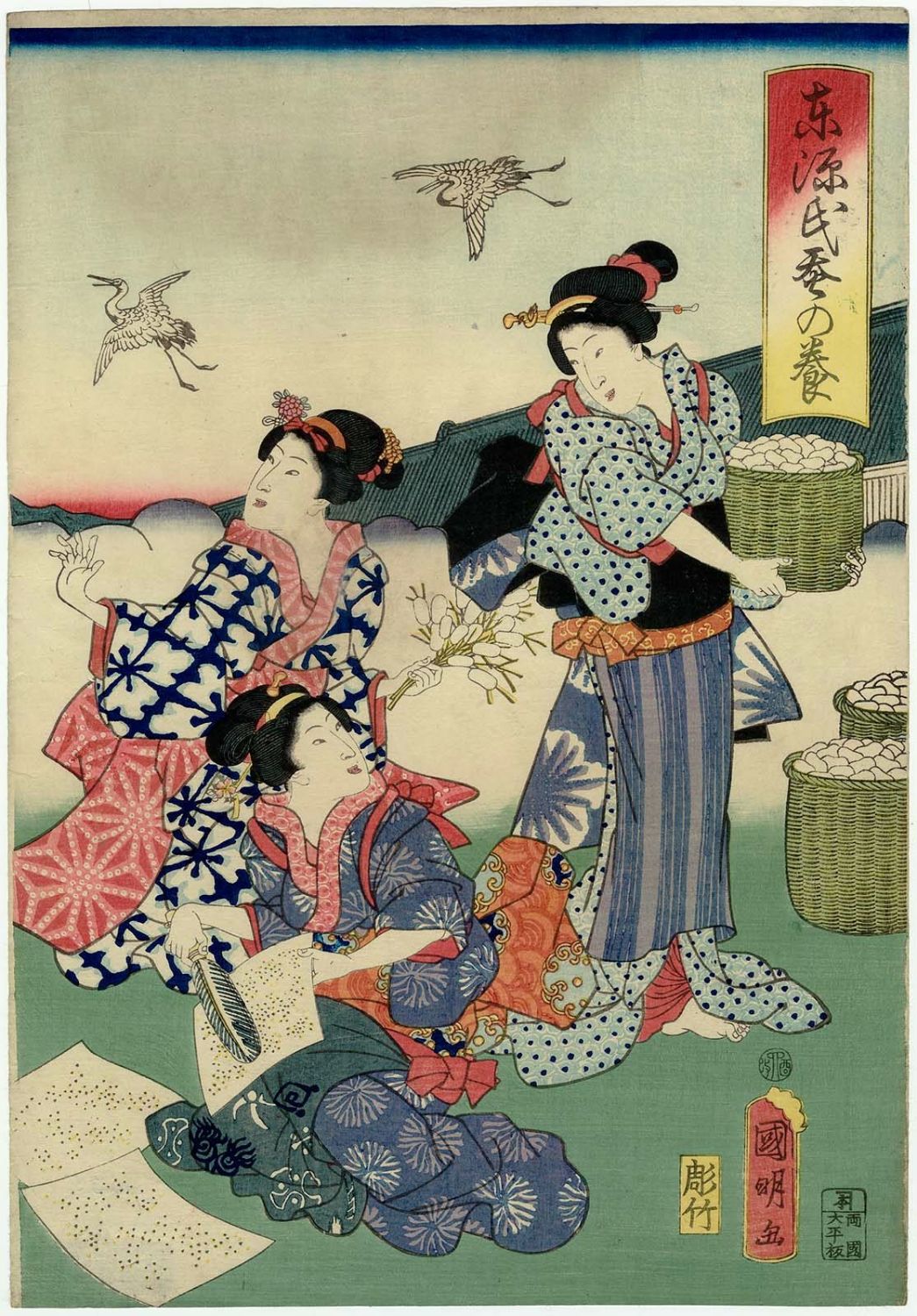
Eastern Genji's Silkworm Cultivation (Azuma Genji kaiko no yashinai)
1861
Color woodblock print; ōban
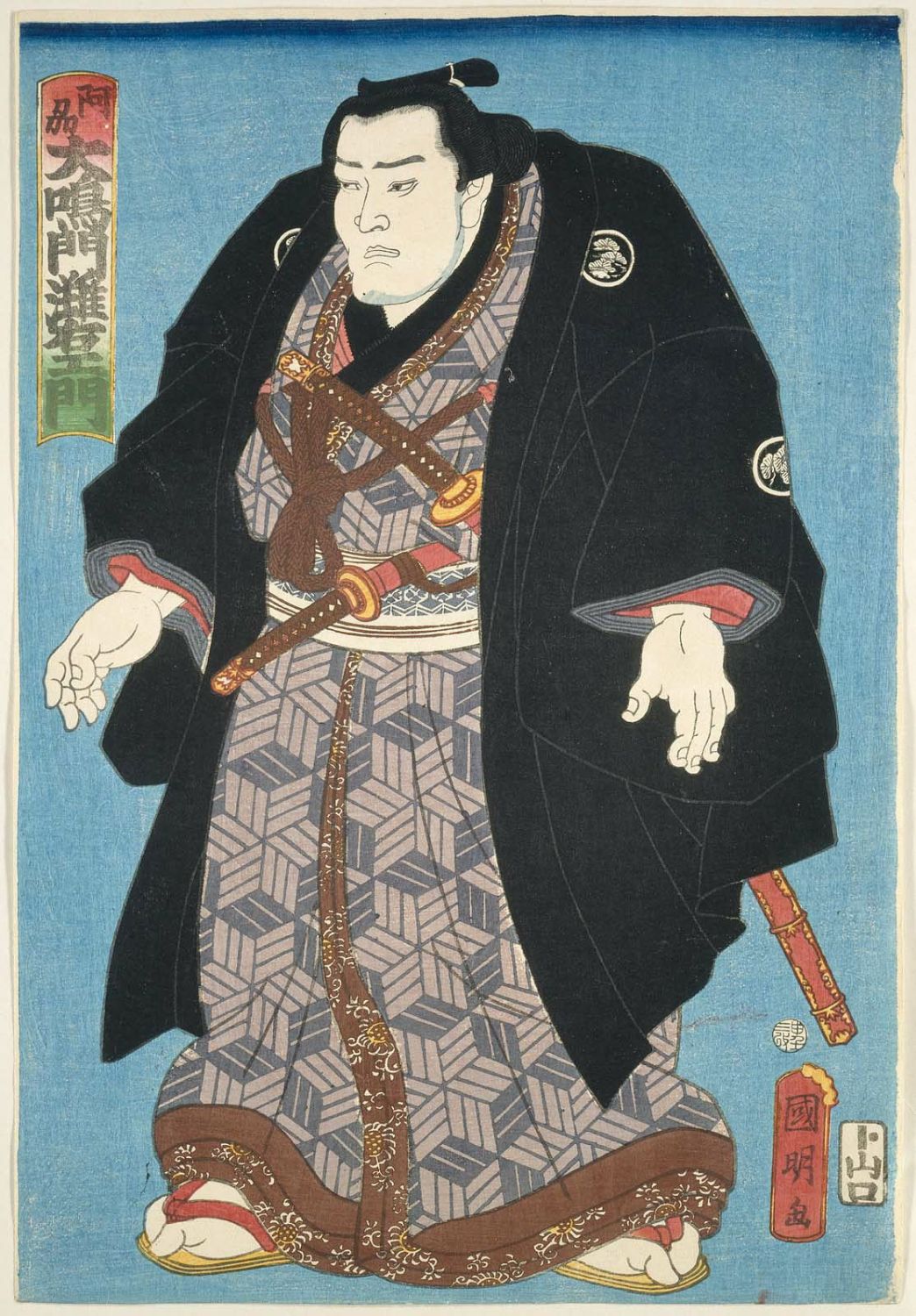
Sumō Wrestler Ōnaruto Nadaemon of Awa Province (Ashū Ōnaruto Nadaemon)
1860
Color woodblock print; ōban
More Spring Prints

Frequently Asked Questions
Spring Colors: Lion Dance at a Mansion (Shunshoku yakata no shishi-mai) was created by Utagawa Kuniaki II (二代歌川国明) in c. 1860s.
Spring Colors: Lion Dance at a Mansion (Shunshoku yakata no shishi-mai) depicts spring.