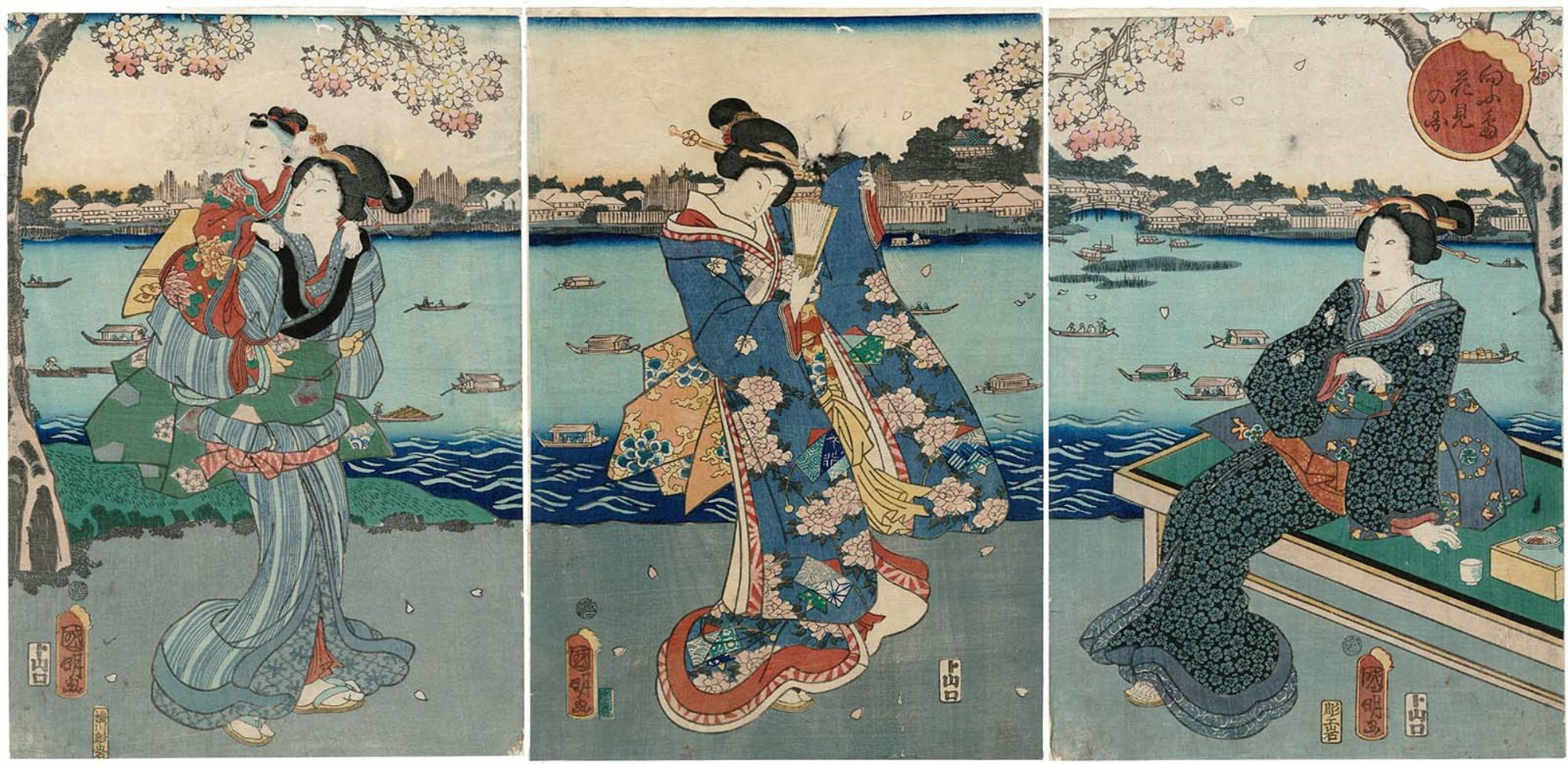
Viewing Cherry Blossoms at Mukōjima (Mukōjima hanami no zu)
- Date:
- 1862
- Medium:
- Color woodblock print; ōban triptych
- Source:
- Museum of Fine Arts, Boston
Description
A color ōban woodblock triptych of 1862 in the Museum of Fine Arts, Boston, this Viewing Cherry Blossoms at Mukōjima (Mukōjima hanami no zu) pictures the celebrated hanami (cherry-blossom viewing) site along the Sumida River north of Edo. Mukōjima — the east bank of the Sumida directly across from Asakusa — was one of the three great hanami destinations of the Edo period, alongside Ueno's Tōeizan compound and Asukayama in Ōji. Its long avenue of cherry trees, planted along the riverbank by the eighth shogun Yoshimune in the eighteenth century, attracted enormous crowds during the brief blossoming season each spring; the area's teahouses, food stalls, and waterside views generated a continuous flow of woodblock prints across the late-Edo and Meiji decades. Kuniaki II's triptych follows the bijin-ga and genre conventions of the season's print market: groups of women in seasonal kimono stroll beneath the blossoms; townspeople gather at picnic mats; and the river and distant shrine roofs anchor the composition's spatial recession. The 1862 dating places the print in the productive final years of the Tokugawa government, when the Sumida hanami remained one of the great calendrical pleasures of Edo life.
More Prints by Utagawa Kuniaki II
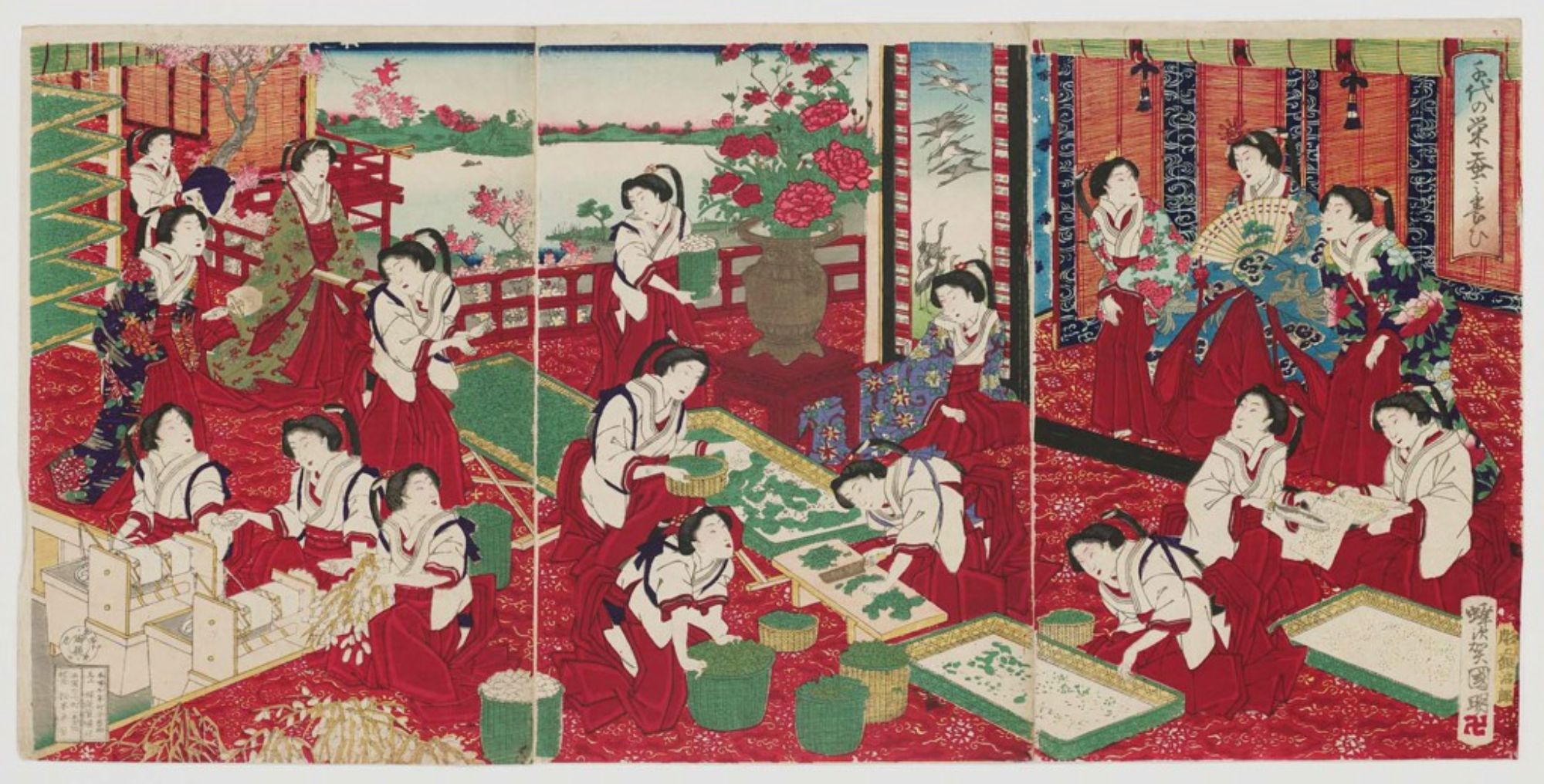
Raising Silk Worms for a Thousand Ages of Prosperity (Chiyo no sakae kaiko no yashinai)
1877
Color woodblock print; ōban triptych
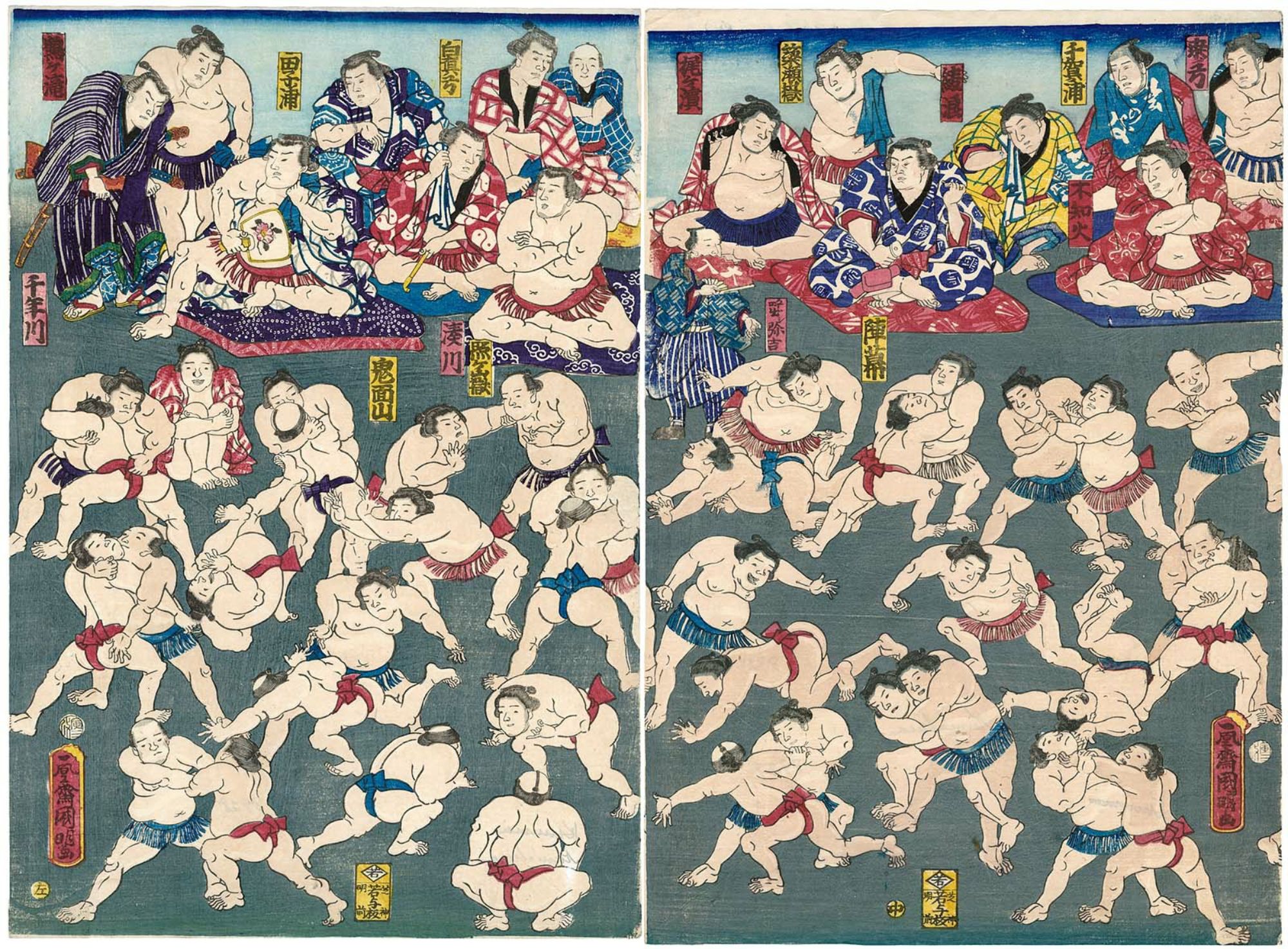
Sumō Wrestlers Practicing
1866
Color woodblock print; ōban
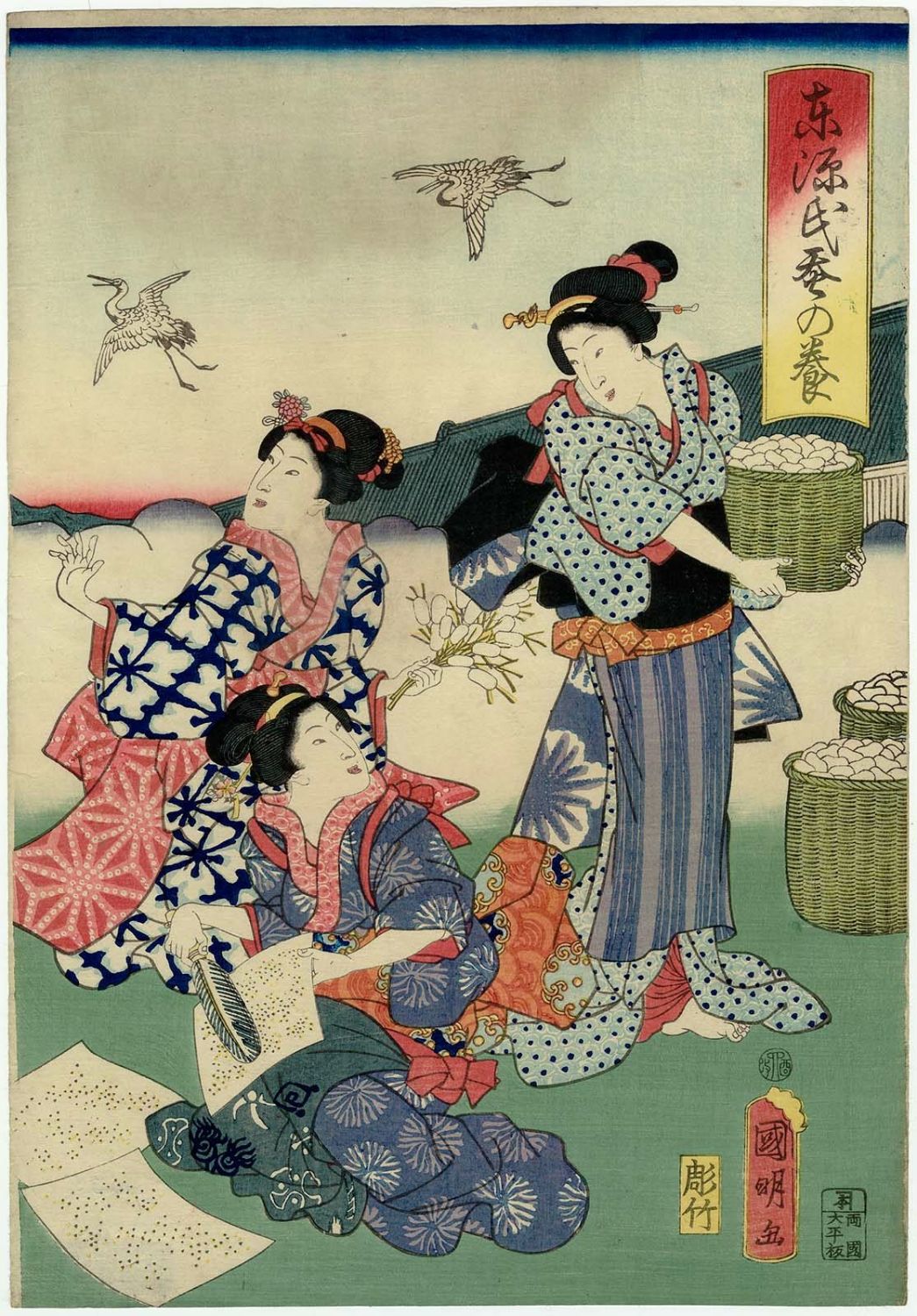
Eastern Genji's Silkworm Cultivation (Azuma Genji kaiko no yashinai)
1861
Color woodblock print; ōban
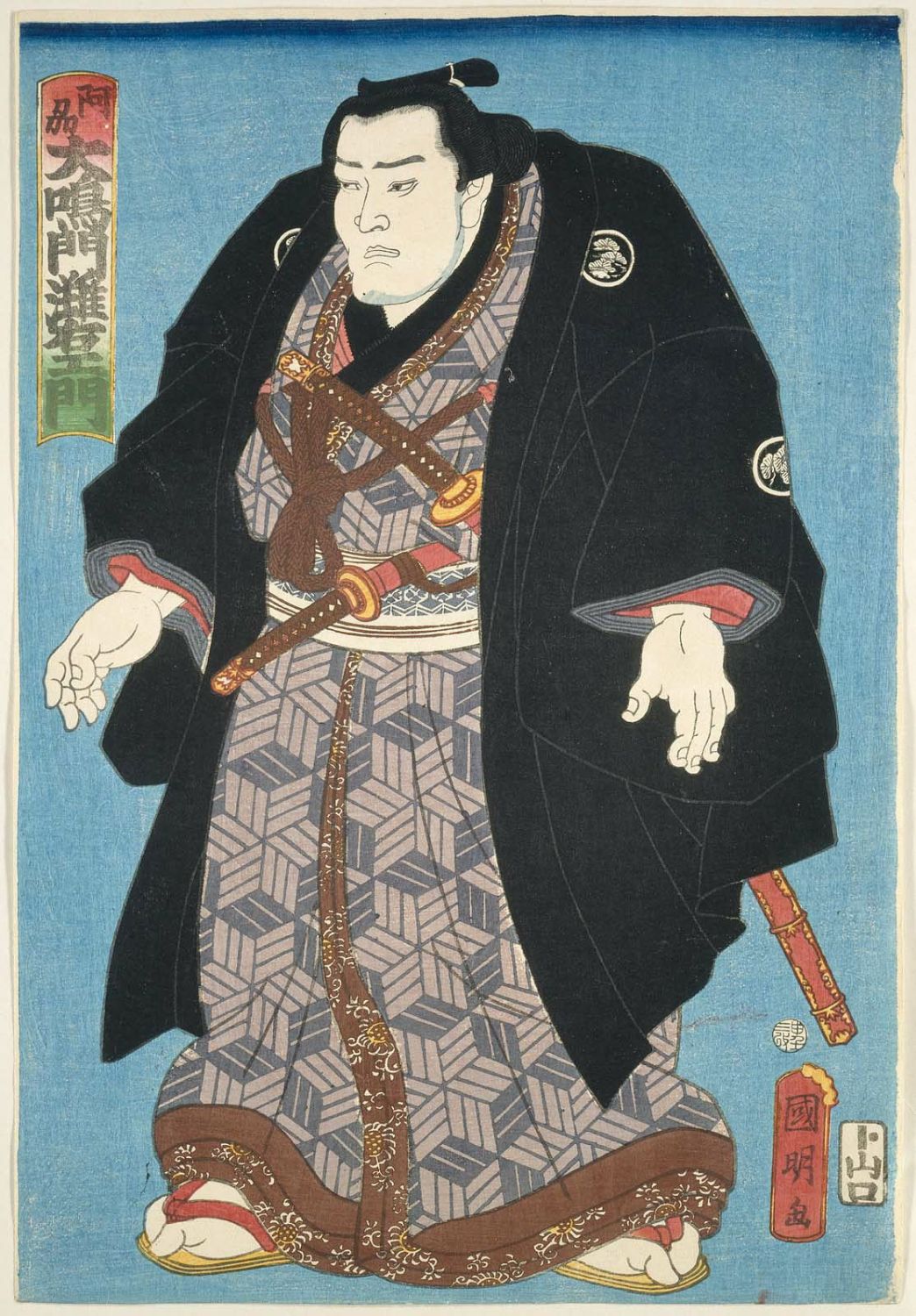
Sumō Wrestler Ōnaruto Nadaemon of Awa Province (Ashū Ōnaruto Nadaemon)
1860
Color woodblock print; ōban
More Spring Prints

Frequently Asked Questions
Viewing Cherry Blossoms at Mukōjima (Mukōjima hanami no zu) was created by Utagawa Kuniaki II (二代歌川国明) in 1862.
Viewing Cherry Blossoms at Mukōjima (Mukōjima hanami no zu) depicts spring.