Biography
Utagawa Kunimaru (歌川国丸, 1793-1829) was an Edo ukiyo-e designer of the Utagawa school, a direct pupil of Utagawa Toyokuni I, and a productive contributor to the bijin-ga (beautiful-women pictures), yakusha-e (actor pictures), and surimono (privately commissioned prints) markets of the Bunka and Bunsei eras. His career, cut short by his death at age thirty-six, coincided with a commercially intense period of Edo ukiyo-e publishing, and his surviving prints document the genre tastes of an Edo audience of the early nineteenth century.
Kunimaru entered the studio of Toyokuni I in the early nineteenth century, joining a generation of pupils that included the future giants Utagawa Kunisada (later Toyokuni III), Utagawa Kuniyoshi, and Utagawa Kuniyasu. Toyokuni's atelier was the dominant production-and-training operation of late-Edo ukiyo-e, and the Utagawa name granted to its pupils functioned as both an artistic genealogy and a market brand. Kunimaru signed his work with the Utagawa first character (国, kuni) inherited from his teacher, and also used the go Ichiensai. While Kunisada and Kuniyoshi went on to dominate Edo ukiyo-e through the Bunsei and Tenpo decades, Kunimaru's early death in 1829 meant that his oeuvre belongs entirely to the earlier Bunka-Bunsei moment, and his style retains more of the late-Toyokuni I idiom than the bolder manner his fellow students developed after Toyokuni's own death in 1825.
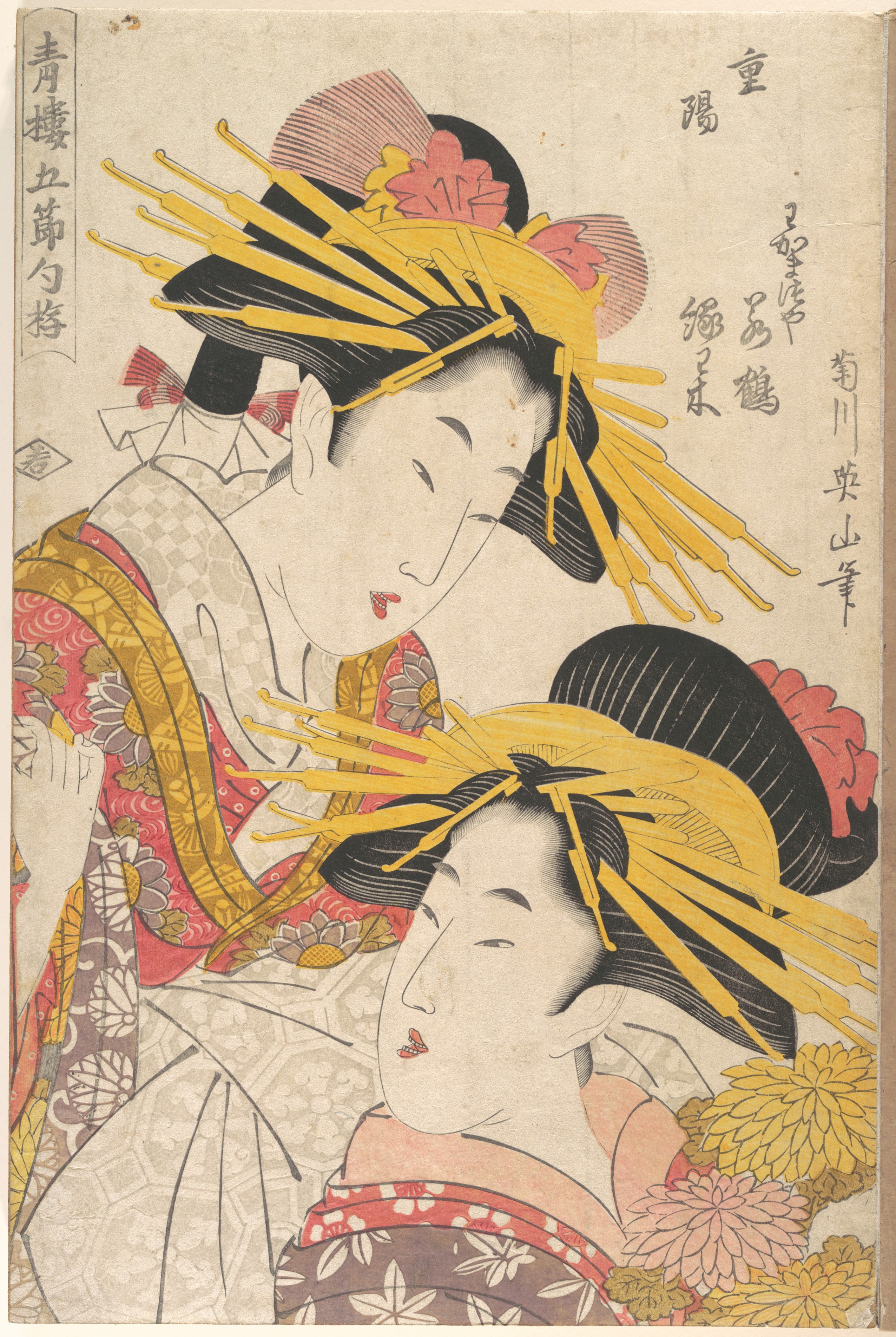
Kunimaru's bijin-ga are the largest single category of his surviving output. He drew on the late-Toyokuni I template for beauty pictures: elegant standing or seated women in elaborate kimono, often shown in domestic settings or as identified Yoshiwara courtesans depicted with their young kamuro attendants. Surviving examples include beauties shown reading, attending to household tasks, or accompanied by a small dog, placing him squarely in the mainstream of the Utagawa beauty-picture tradition.
In yakusha-e Kunimaru worked in the Toyokuni I tradition of dignified bust-portraits and full-figure stage portraits, with the actor's identifying crest (mon) and role inscription anchoring each image to a specific performance. His actor prints are fewer than his bijin-ga but document the same Edo kabuki troupes that Toyokuni I, Kunisada, and the early Kuniyoshi were portraying in parallel.
Surimono are the third major category of Kunimaru's output, and the one in which his work survives in the smallest but most prestigious examples. Surimono were luxurious privately commissioned prints, typically issued by kyoka poetry circles for New Year's celebrations in small editions on the finest paper with extensive metallic pigment and embossing. Kunimaru contributed designs to the surimono market during the Bunsei era; the Art Institute of Chicago's Bamboo and Rising Sun, a shikishiban surimono dated 1829, the year of his death, is among his most refined surviving prints.
Kunimaru also designed book illustrations (ehon); his Ehon Inazuma Soshi survives in the collection of the Museum of Fine Arts, Boston. The Metropolitan Museum of Art's earliest accession of Japanese prints (JP205, the gift of Mary L. Cassilly in 1894) is an album combining works by Kikugawa Eizan, Utagawa Kunisada, and Utagawa Kunimaru, reflecting the close association of those designers within the late-Bunka Edo print market. Examples of his work are today held in major public collections, among them the Metropolitan Museum of Art, the Art Institute of Chicago, the Museum of Fine Arts, Boston, and the MAK in Vienna. He died in Edo in 1829 at age thirty-six, leaving a body of work distinguished within the Bunka-Bunsei bijin-ga and surimono traditions.
Key Facts
Frequently Asked Questions
Utagawa Kunimaru (歌川国丸, 1793-1829) was an Edo ukiyo-e designer of the Utagawa school, a direct pupil of Utagawa Toyokuni I, and a productive contributor to the bijin-ga (beautiful-women pictures), yakusha-e (actor pictures), and surimono (privately commissioned prints) markets of the Bunka and Bunsei eras. His career, cut short by his death at age thirty-six, coincided with a commercially intense period of Edo ukiyo-e publishing, and his surviving prints document the genre tastes of an Edo audience of the early nineteenth century.
Utagawa Kunimaru was active from 1793 to 1829. They were associated with the Ukiyo-e movement.
Utagawa Kunimaru's work was shaped by the Ukiyo-e tradition in Japanese woodblock printmaking. Ukiyo-e: ## What is ukiyo-e? Ukiyo-e ([浮世絵](/glossary/ukiyo-e)) — literally "pictures of the floating world" — is the Edo-period Japanese print and painting tradition that flourished from roughly 1660 to 1868, depicting the pleasures of urban life in Edo (modern Tokyo): courtesans, kabuki actors, sumo wrestlers, famous landscapes, and seasonal beauties.
Utagawa Kunimaru's prints frequently feature winter.
Original prints by Utagawa Kunimaru can be found in collections including Victoria and Albert Museum, Art Institute of Chicago, Museum of Fine Arts, Boston.
Woodblock Prints by Utagawa Kunimaru (6)

Bamboo and rising sun
1829
Color woodblock print; shikishiban, surimono
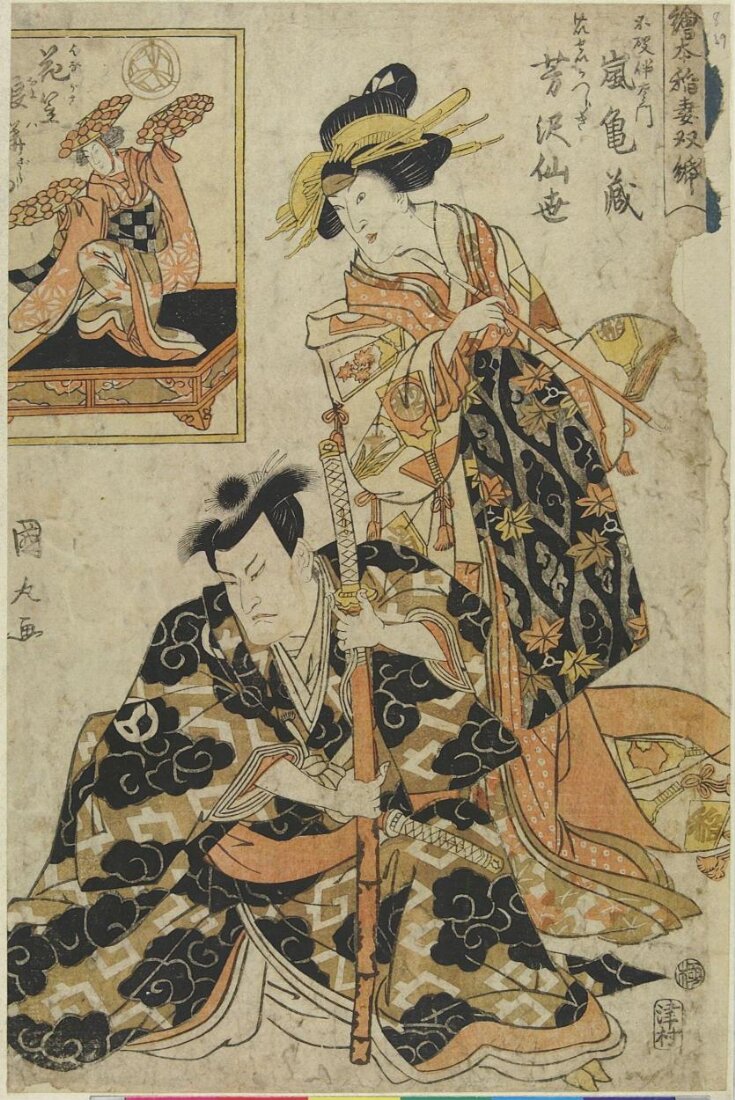
Woodblock print (two figures, ōban format)
c. 1810-1829
Woodblock print on paper
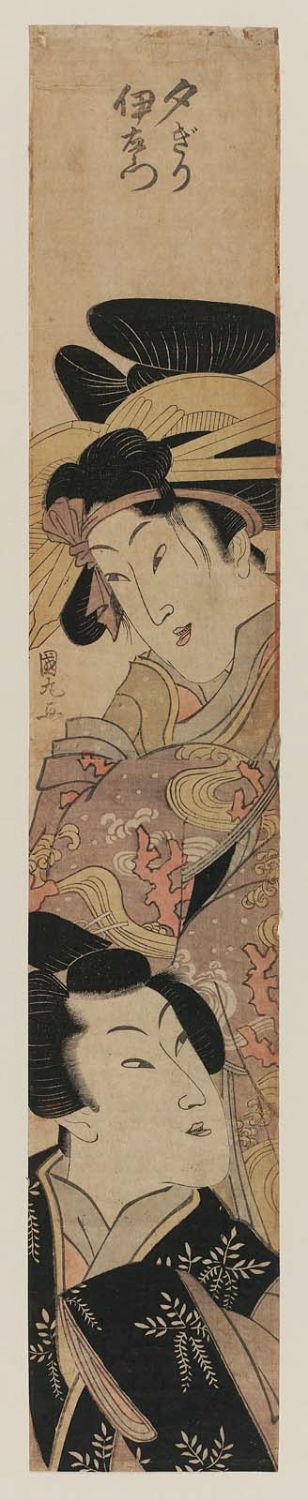
Yūgiri and Izaemon
c. 1810-1825
Woodblock print; ink and color on paper
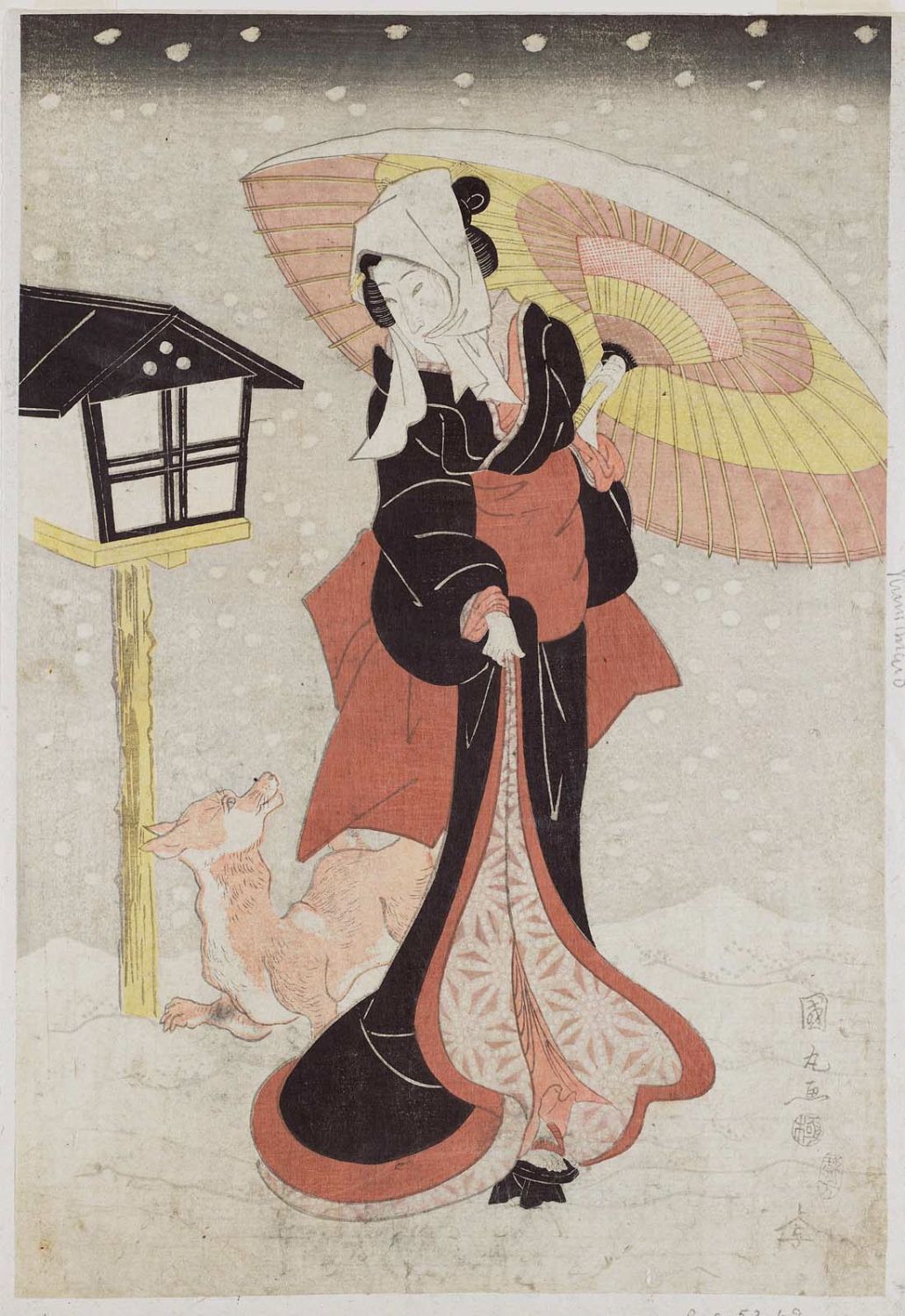
Woman with Umbrella and Dog in Snow
c. 1810-1825
Woodblock print; ink and color on paper
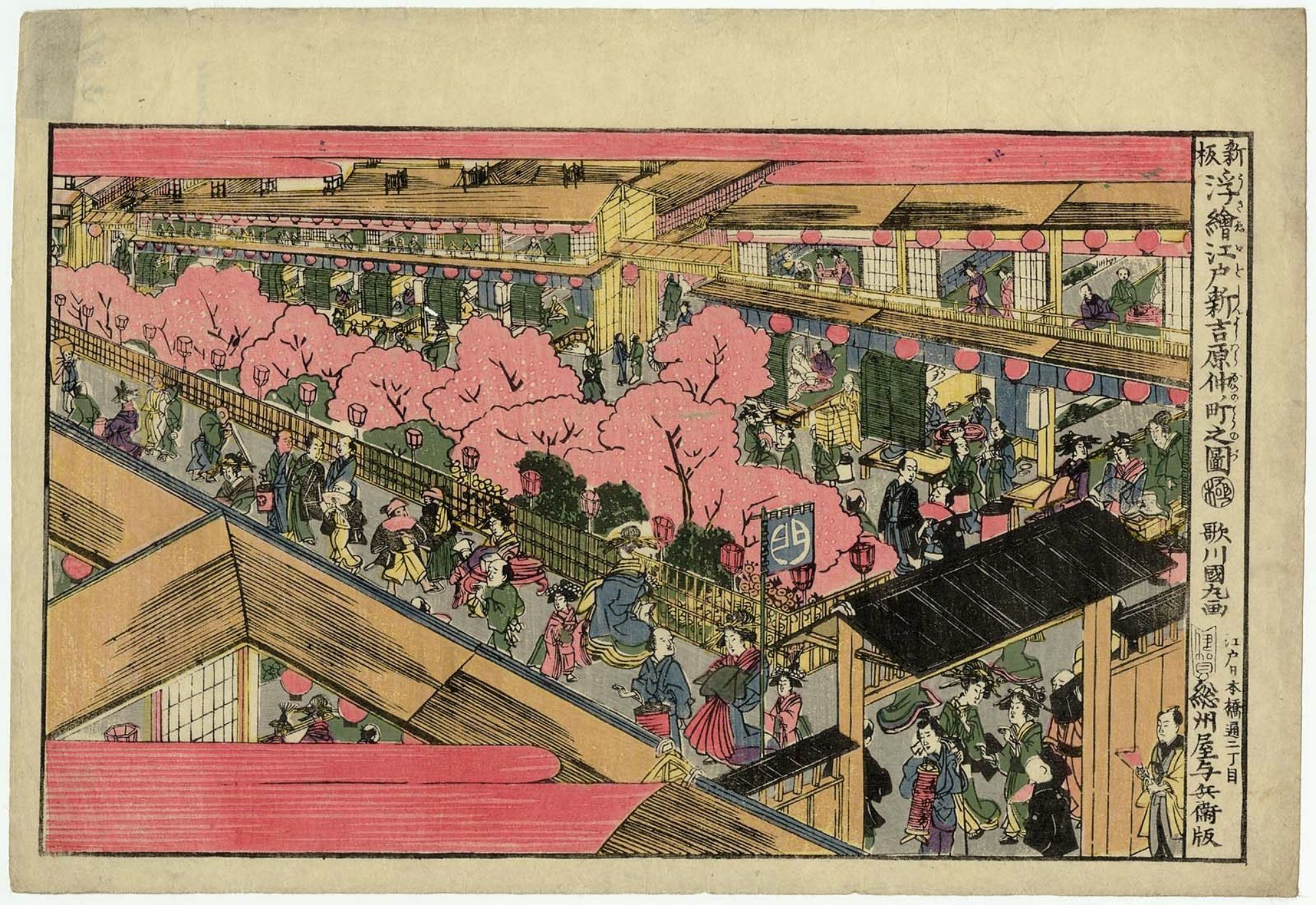
View of Naka-no-chō in the New Yoshiwara in Edo
c. 1810-1825
Woodblock print; ink and color on paper
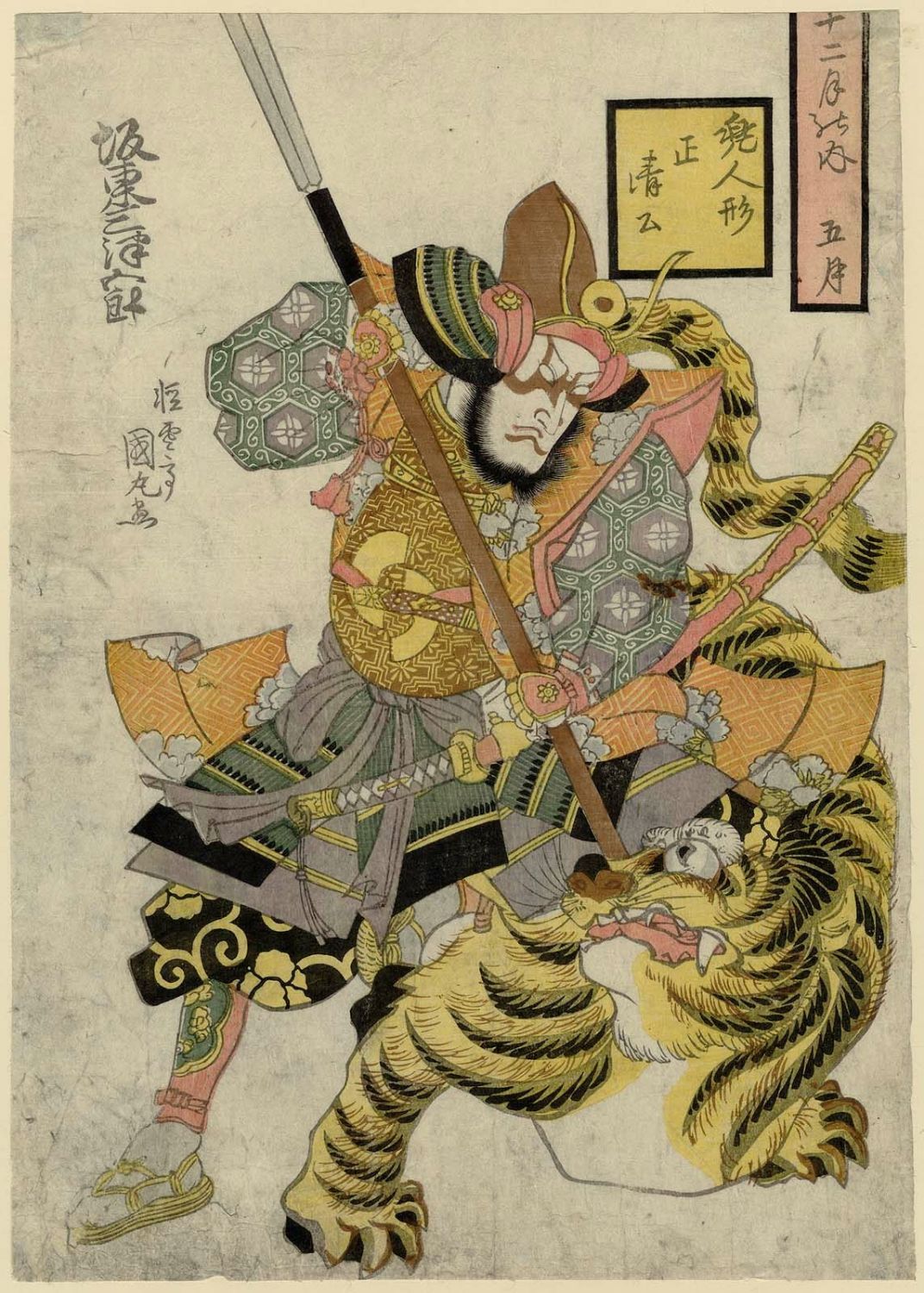
The Fifth Month: Actor Bandō Mitsugorō as Warrior Doll
c. 1810-1820
Woodblock print; ink and color on paper