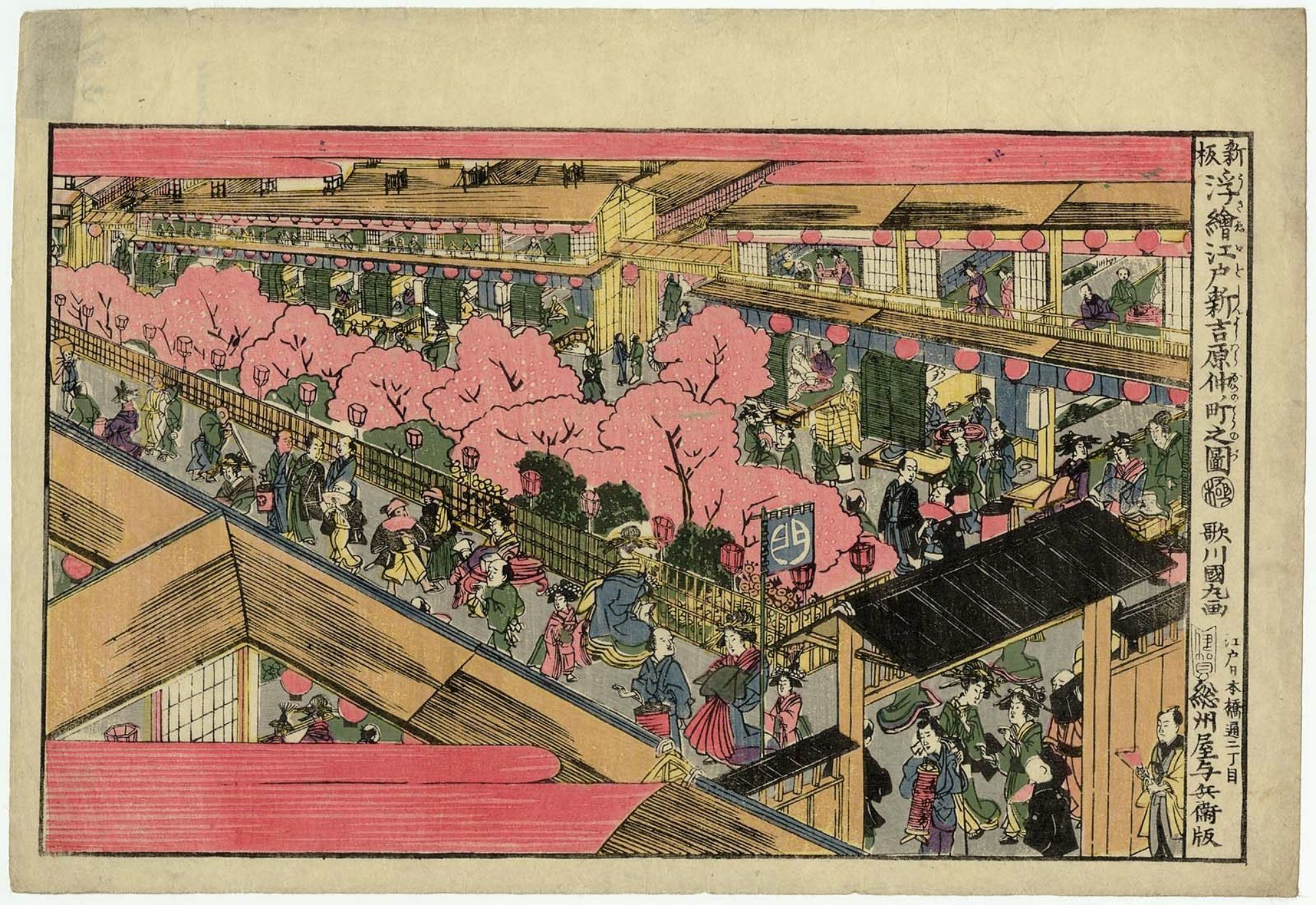
View of Naka-no-chō in the New Yoshiwara in Edo
- Date:
- c. 1810-1825
- Medium:
- Woodblock print; ink and color on paper
- Source:
- Museum of Fine Arts, Boston
Description
This meisho-e (famous-place picture) by Utagawa Kunimaru, held by the Museum of Fine Arts, Boston (object reference 138510), depicts a view of Naka-no-cho, the principal central avenue of the New Yoshiwara pleasure district in Edo. The Naka-no-cho was the formal entrance and processional axis of the Yoshiwara and was the standard pictorial representation of the quarter, with cherry trees lining the avenue in spring and lanterns illuminating it at night. Kunimaru's view belongs to the late-Bunka tradition of Yoshiwara meisho-e in which the pleasure-quarter geography was treated with the same iconographic seriousness as the religious and natural meisho of the broader Edo guidebook tradition. The print would have appealed both to Yoshiwara patrons as a souvenir of the quarter and to viewers outside the city as a documentary record of one of Edo's most famous places. The image is executed as a color woodblock print on paper in the standard Edo oban format. The Museum of Fine Arts, Boston's holding of this print is part of the William Sturgis Bigelow collection, the largest American repository of his work, and the print represents the meisho-e component of his diverse output alongside his more substantial bijin-ga and yakusha-e production.
More Prints by Utagawa Kunimaru
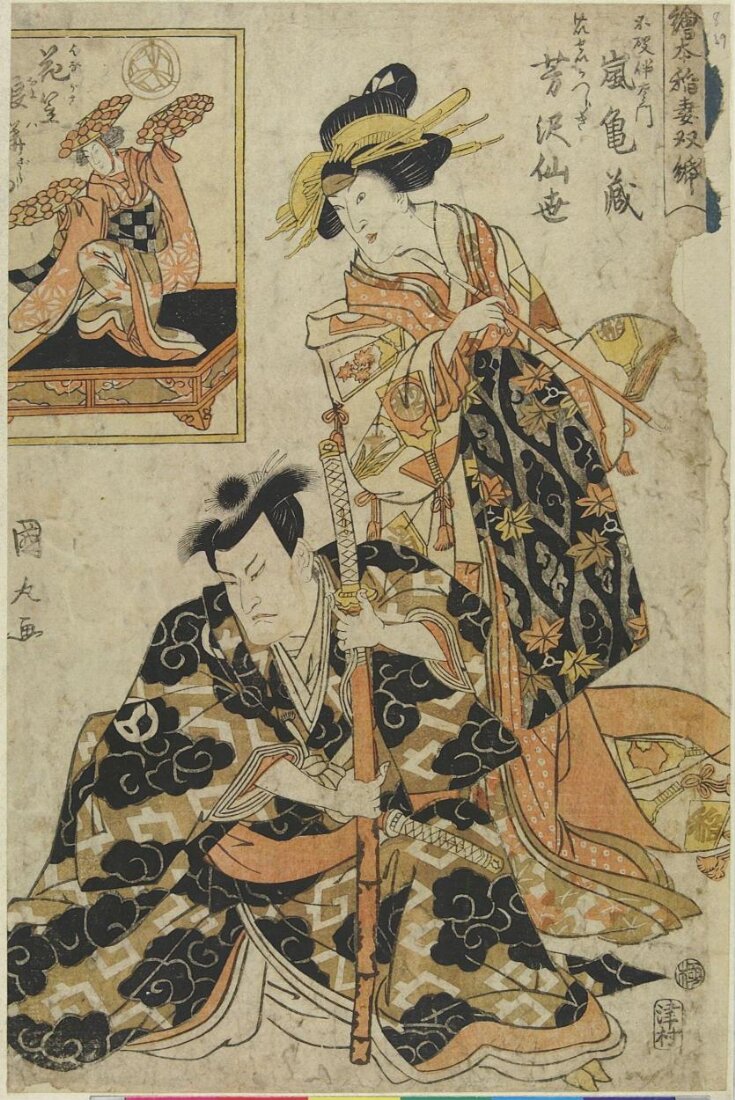
Woodblock print (two figures, ōban format)
c. 1810-1829
Woodblock print on paper

Bamboo and rising sun
1829
Color woodblock print; shikishiban, surimono
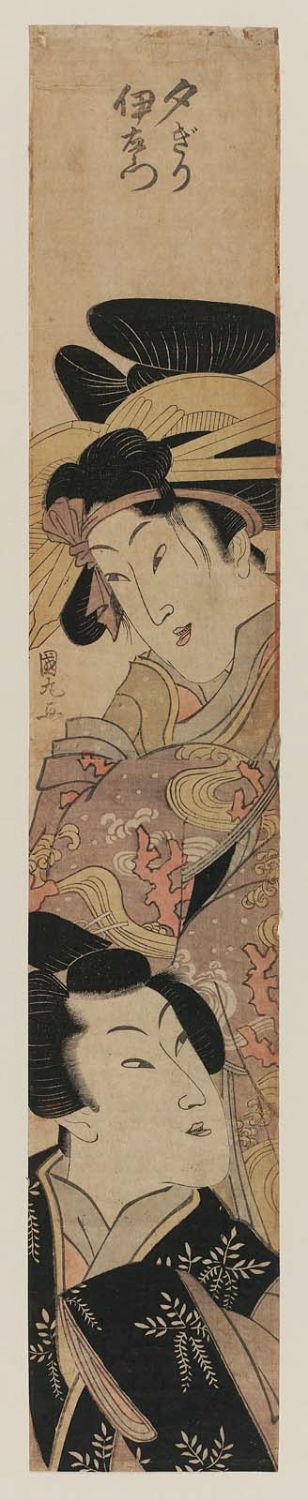
Yūgiri and Izaemon
c. 1810-1825
Woodblock print; ink and color on paper
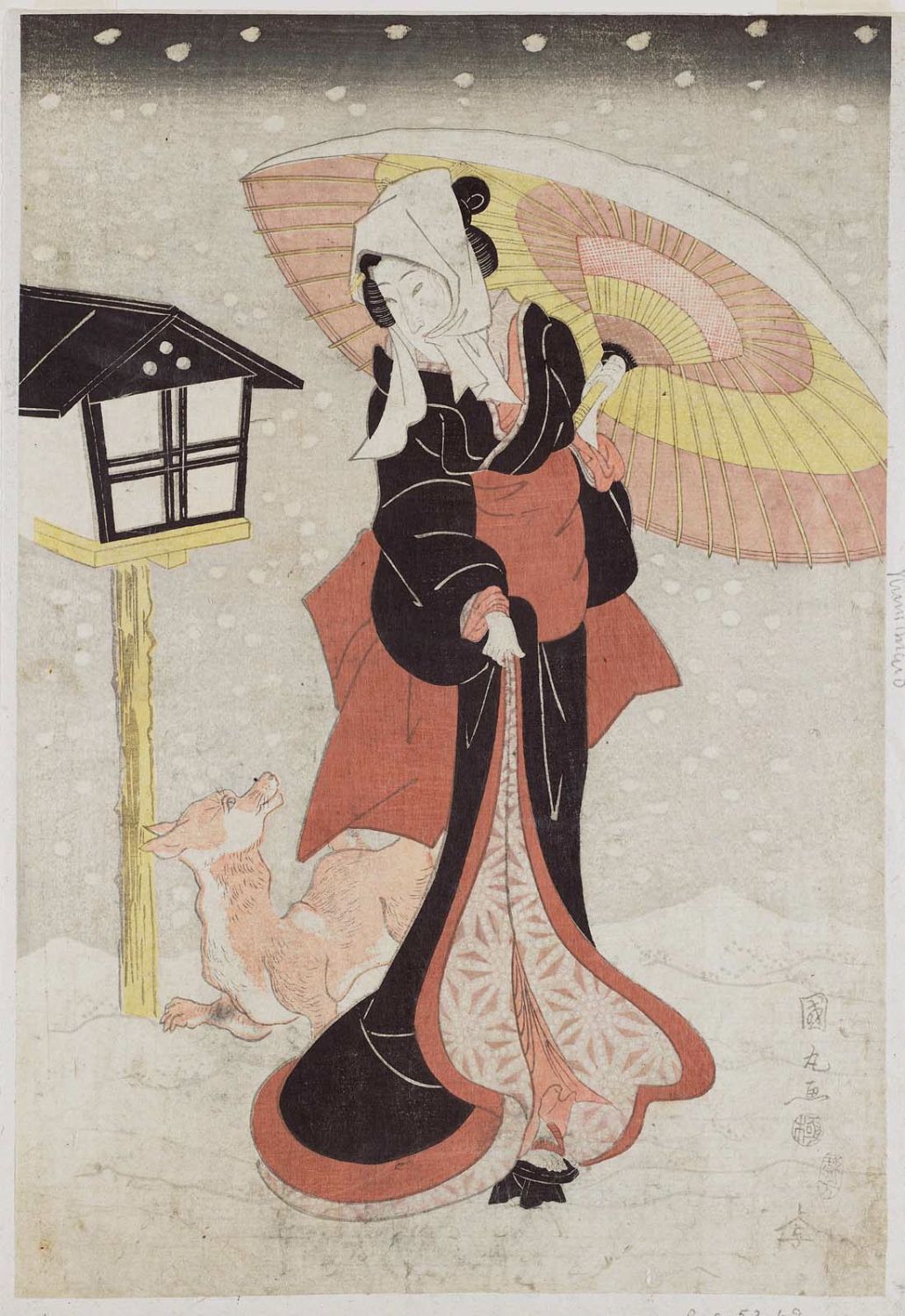
Woman with Umbrella and Dog in Snow
c. 1810-1825
Woodblock print; ink and color on paper
Frequently Asked Questions
View of Naka-no-chō in the New Yoshiwara in Edo was created by Utagawa Kunimaru (歌川国丸) in c. 1810-1825.