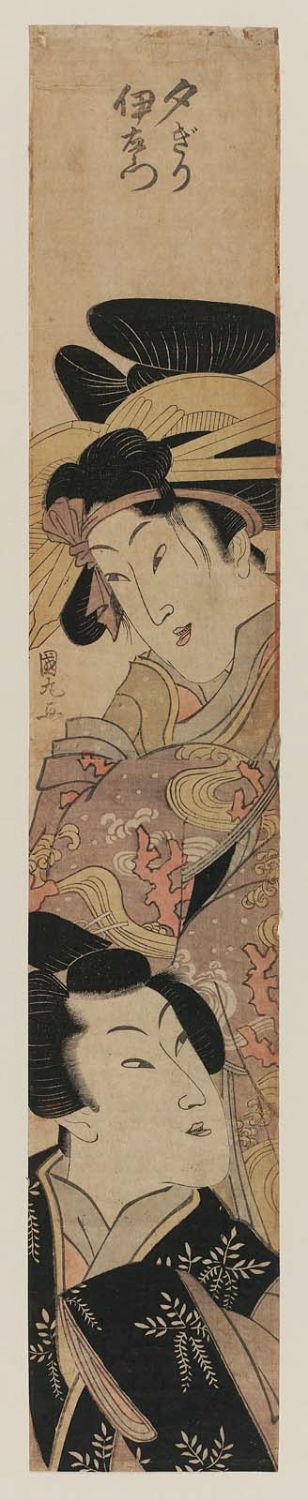
Yūgiri and Izaemon
- Date:
- c. 1810-1825
- Medium:
- Woodblock print; ink and color on paper
- Source:
- Museum of Fine Arts, Boston
Description
This Edo-period yakusha-e or bijin-ga by Utagawa Kunimaru, held by the Museum of Fine Arts, Boston (object reference 253680), portrays the celebrated tragic lovers Yugiri and Izaemon, central characters of the Osaka-Edo love-suicide story tradition. The story of the courtesan Yugiri of the Ogi-ya and the merchant heir Izaemon was one of the most enduring romantic narratives in eighteenth- and nineteenth-century Japanese popular culture, dramatized repeatedly on the kabuki stage and depicted across multiple generations of ukiyo-e designers. The composition reflects his Bunka-Bunsei treatment of the iconic pair: the courtesan in her elaborate kimono and the lover in his recognizable disguise, captured in a moment of tender encounter. The print is preserved at the Museum of Fine Arts, Boston, which holds the largest American collection of his work as part of its extensive William Sturgis Bigelow collection of Japanese prints. As a woodblock print in ink and color on paper, the work belongs to the mainstream commercial Edo nishiki-e tradition rather than the more exclusive surimono format, and it would have been sold through Edo publishers as a standard mid-price oban print to fans of the kabuki actors who interpreted these famous tragic lovers on the stage.
More Prints by Utagawa Kunimaru
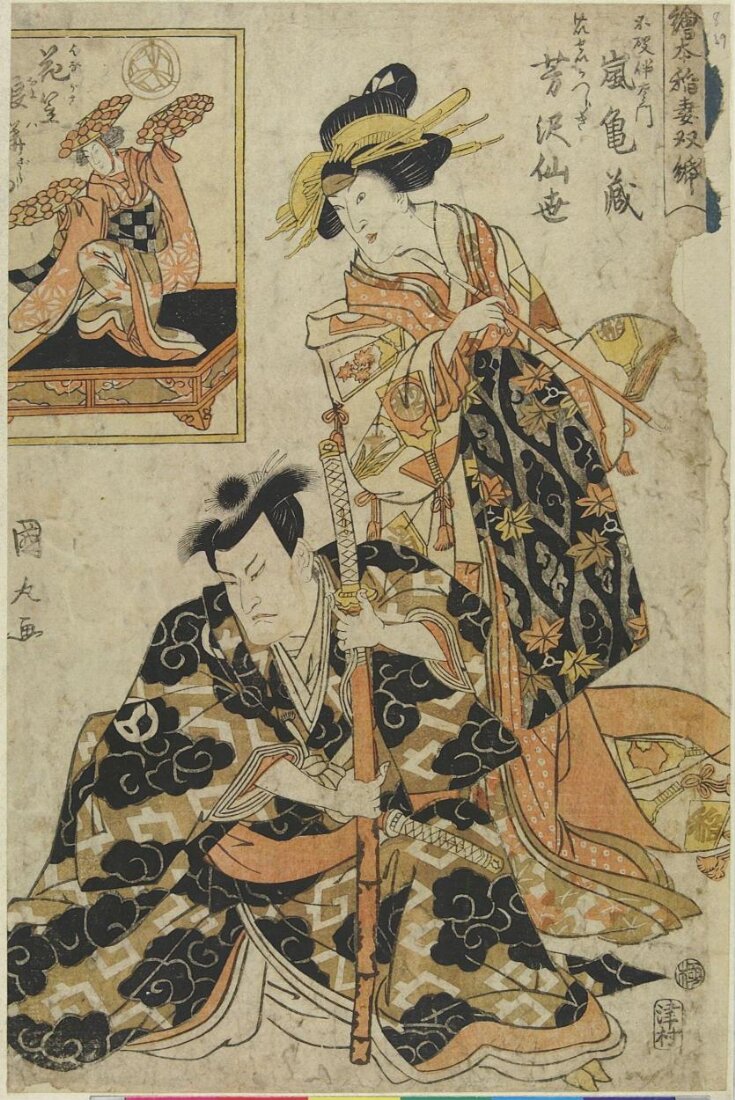
Woodblock print (two figures, ōban format)
c. 1810-1829
Woodblock print on paper

Bamboo and rising sun
1829
Color woodblock print; shikishiban, surimono
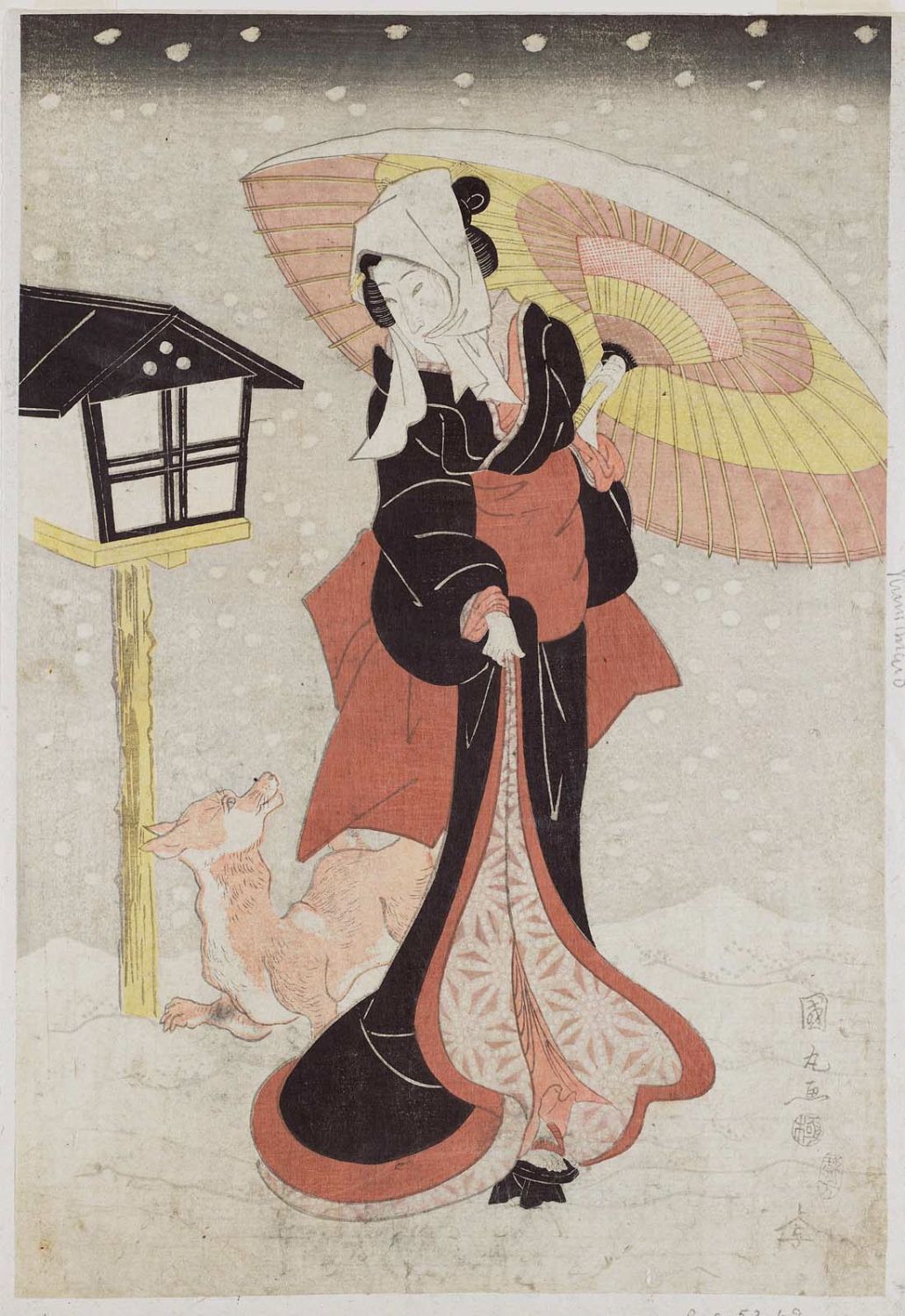
Woman with Umbrella and Dog in Snow
c. 1810-1825
Woodblock print; ink and color on paper
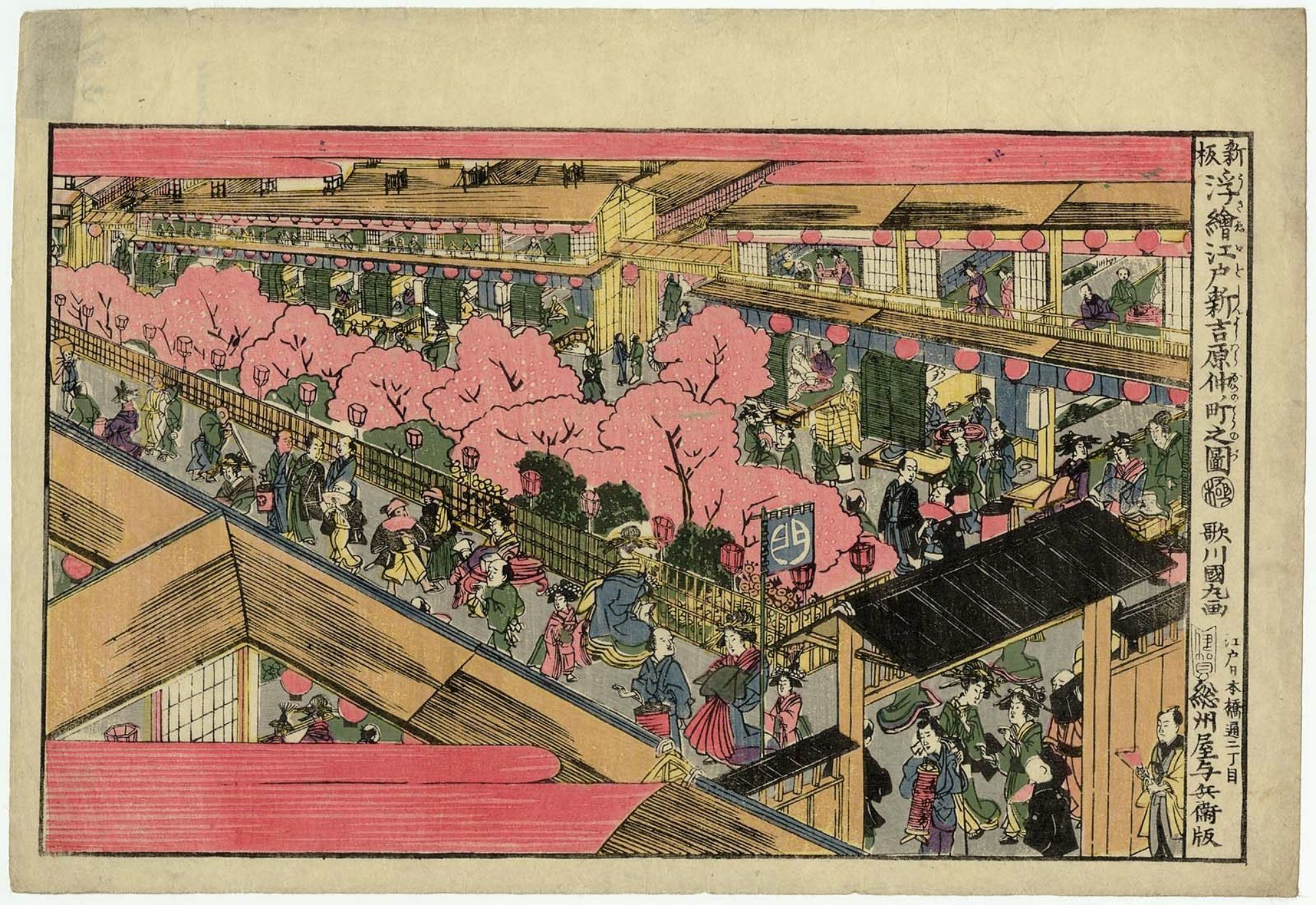
View of Naka-no-chō in the New Yoshiwara in Edo
c. 1810-1825
Woodblock print; ink and color on paper
Frequently Asked Questions
Yūgiri and Izaemon was created by Utagawa Kunimaru (歌川国丸) in c. 1810-1825.