
Bamboo and rising sun
- Date:
- 1829
- Medium:
- Color woodblock print; shikishiban, surimono
- Source:
- Art Institute of Chicago
Description
This 1829 surimono by Utagawa Kunimaru, held by the Art Institute of Chicago (accession reference 86741), depicts a stylized arrangement of bamboo and a rising sun in the shikishiban (square) format characteristic of New Year surimono. Surimono were luxury privately commissioned prints, typically issued by kyoka (comic-verse) poetry circles for New Year's exchanges, and the bamboo-and-rising-sun motif belongs to the standard repertoire of auspicious New Year imagery: bamboo for resilience and longevity, the rising sun for renewal and the dawn of the year. The print measures approximately 22 by 19.7 centimeters in the shikishiban surimono format and is executed as a color woodblock print, the medium of the highest-quality privately commissioned printing of the period. The 1829 date places the print in the final year of Kunimaru's short life, and the work is one of the most accomplished surviving examples of his contribution to the surimono tradition. The shikishiban format was favored by Edo kyoka circles for prints whose modest size allowed inclusion in poetry albums, and the auspicious New Year subject would have made the design appropriate for inclusion in a Bunsei-era surimono exchange. Held in the Art Institute of Chicago's Clarence Buckingham Collection, the print is a Met-comparable American holding of his surimono work and one of the principal documents of his late-career involvement with the kyoka poetry network.
More Prints by Utagawa Kunimaru
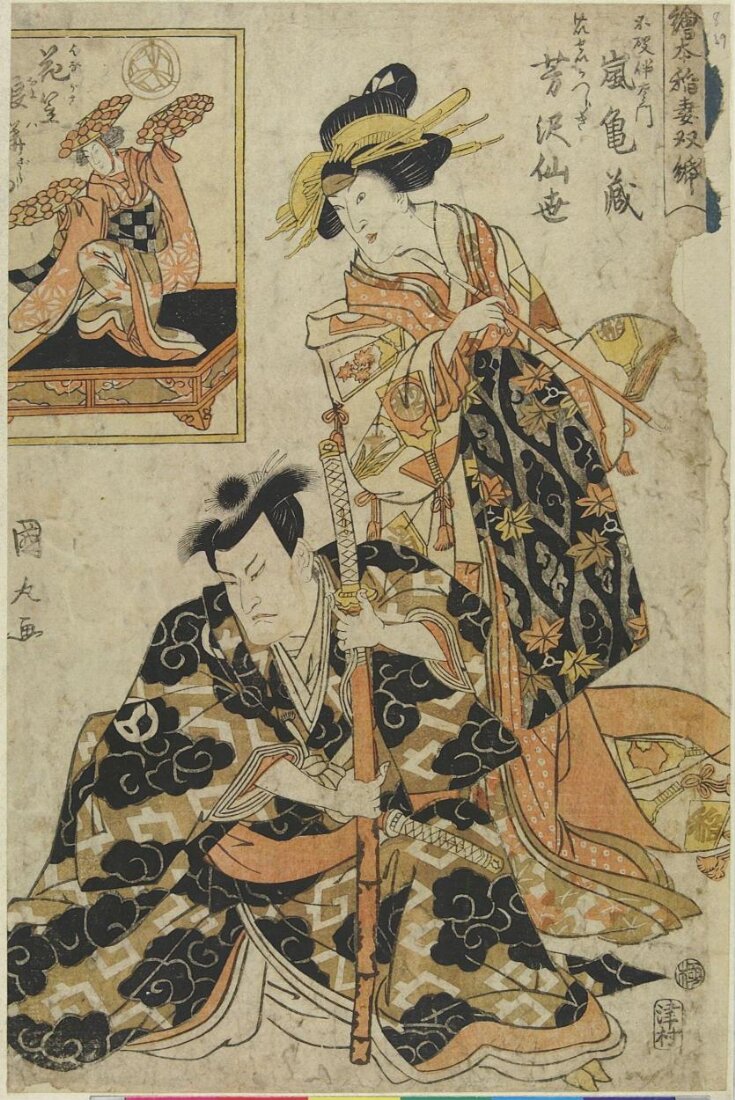
Woodblock print (two figures, ōban format)
c. 1810-1829
Woodblock print on paper
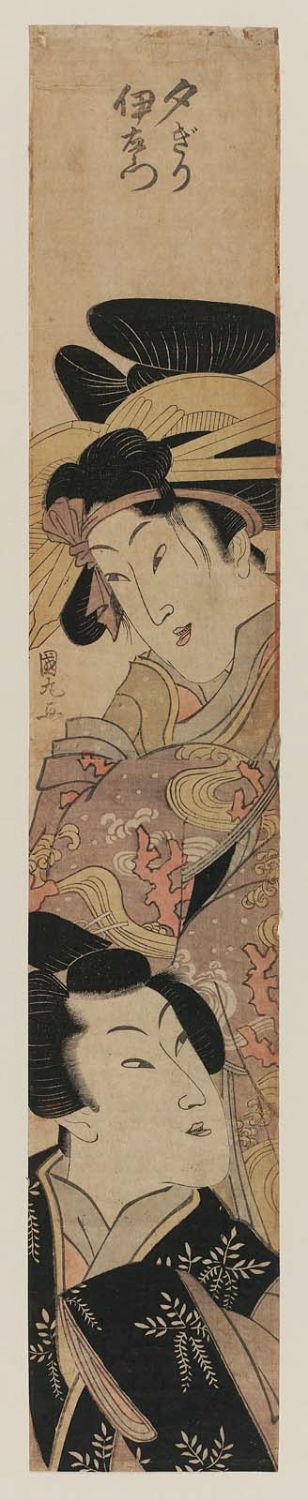
Yūgiri and Izaemon
c. 1810-1825
Woodblock print; ink and color on paper
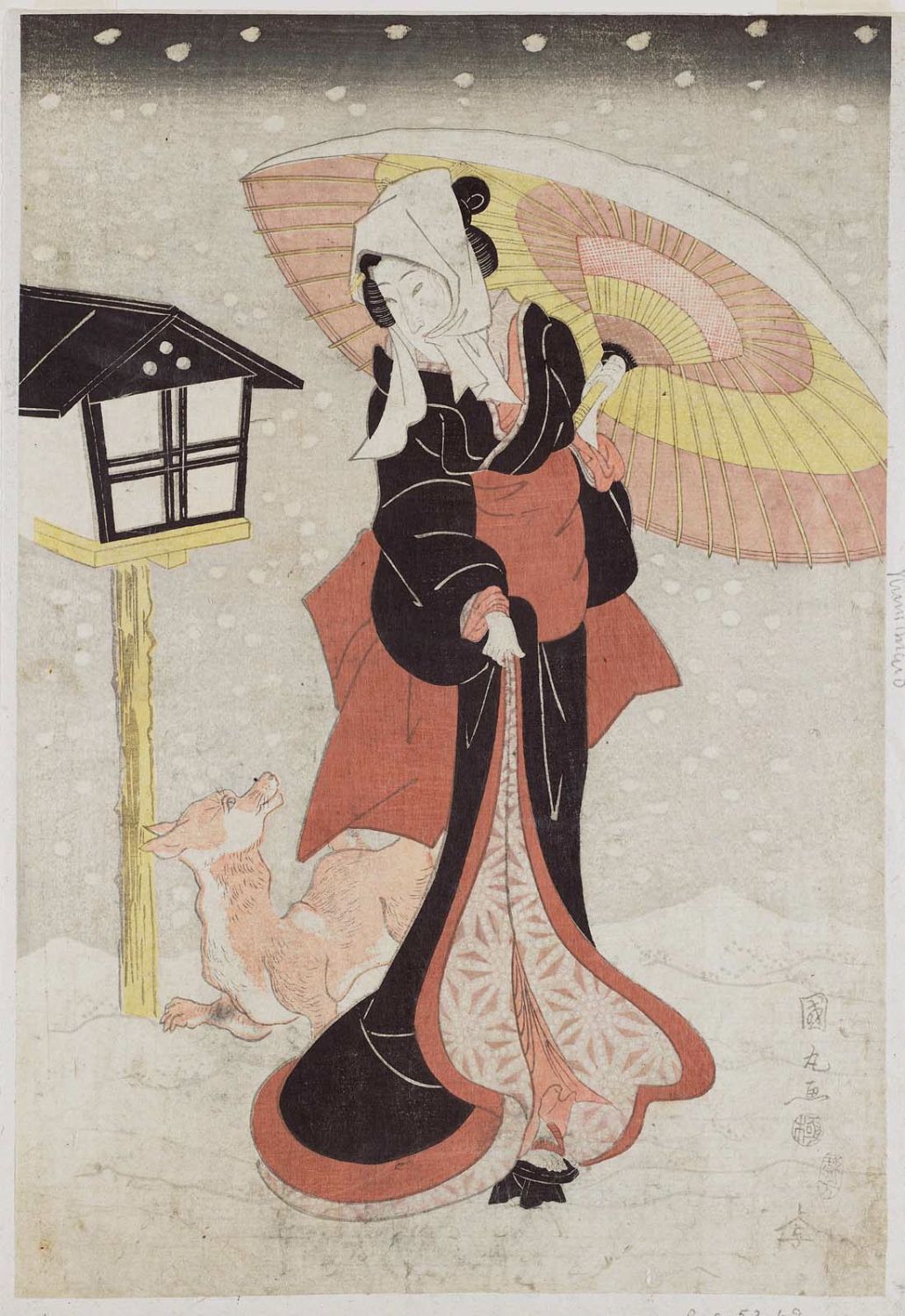
Woman with Umbrella and Dog in Snow
c. 1810-1825
Woodblock print; ink and color on paper
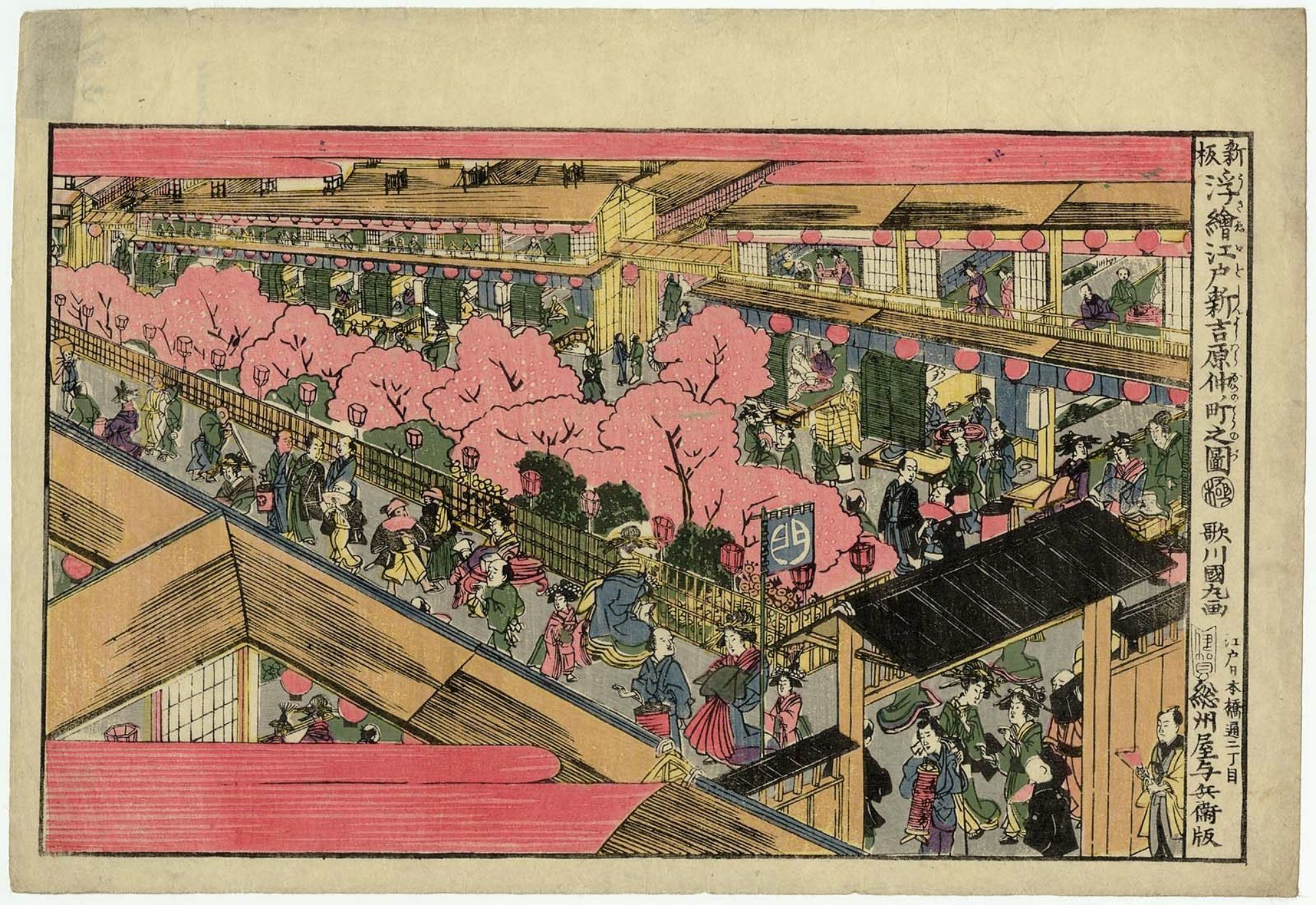
View of Naka-no-chō in the New Yoshiwara in Edo
c. 1810-1825
Woodblock print; ink and color on paper
Frequently Asked Questions
Bamboo and rising sun was created by Utagawa Kunimaru (歌川国丸) in 1829.