
Youg women strolling
by Asada Benji
- Source:
- ukiyo-e.org
Description
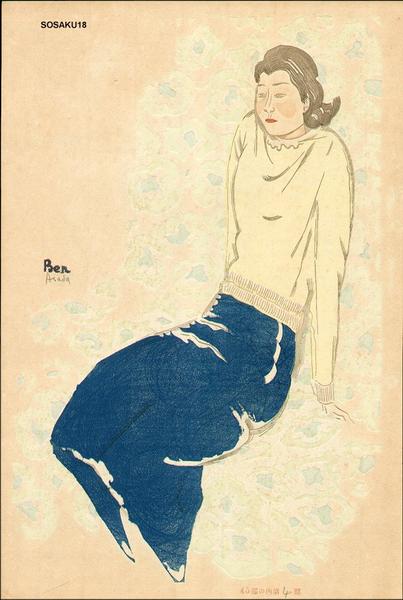
Young Women Strolling is a Japanese woodblock print attributed to Asada Benji, a shin-hanga artist whose figural subjects belong to the bijin-ga tradition of beautiful-women imagery as it was reimagined in the early to mid-twentieth century. The print depicts young women in motion, a quiet genre scene that draws on a lineage extending from Edo-period ukiyo-e masters such as Suzuki Harunobu and Kitagawa Utamaro through to the shin-hanga revival led by figures like Ito Shinsui and Hashiguchi Goyo. Within the shin-hanga movement, which emerged in the 1910s and continued through the postwar decades, depictions of women emphasized refined draftsmanship, sensitive treatment of textiles, and a heightened atmospheric realism that distinguished the new prints from their Edo-era predecessors. As a Japanese woodblock print, the work would have been produced through the collaborative shin-hanga system in which the designer's drawing was translated by specialist carvers into a series of cherry-wood blocks and then printed by hand on absorbent washi paper, with each color requiring its own block and registration. Asada Benji's contribution to this tradition reflects the broader shin-hanga interest in everyday subjects rendered with quiet dignity: a stroll, a passing moment, the rhythm of kimono fabric in soft light. Such scenes appealed both to Japanese collectors nostalgic for traditional dress and to Western audiences who discovered shin-hanga through exhibitions and exports during the interwar and postwar periods. The impression of this design is documented through ukiyo-e.org, which catalogs the print alongside related Japanese woodblock works and preserves the visual record of mid-century shin-hanga figure compositions. For collectors, Asada Benji's strolling women offer an approachable entry point into the shin-hanga bijin-ga genre and its careful balance of tradition and modernity.
More Prints by Asada Benji

Featured in Collections
Curated cross-cuts that include this print.
Frequently Asked Questions
Youg women strolling was created by Asada Benji (浅田弁治).