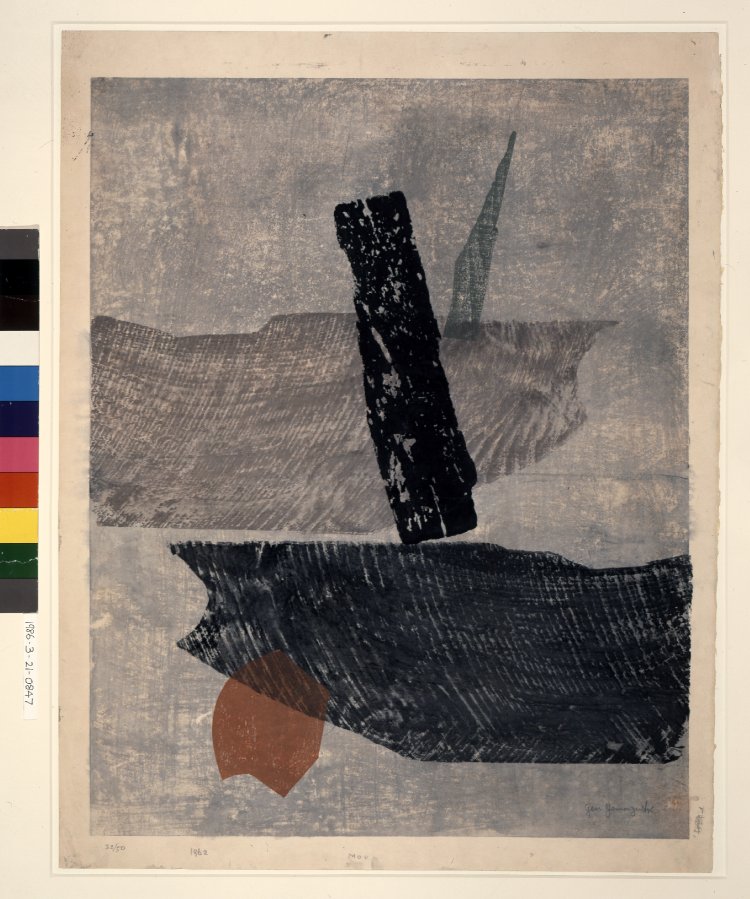
Mou
- Medium:
- Woodblock print
- Edition:
- Self-printed
- Source:
- British Museum
Description
Mou — a Japanese word of multiple meanings depending on context: "already," "no more," "enough," or (in literary usage) an expression of vague, helpless feeling at one's limits. The word's semantic ambiguity makes it an apt title for an abstract work that resists definitive interpretation. Yamaguchi's "Mou" may express satiation, resignation, or the weariness that comes from having reached the edge of what can be borne — a psychological state rendered in abstract visual form.
More Prints by Gen Yamaguchi


More Landscapes Prints

Lake Kugushi in Wakasa Province (Wakasa Kugushiko), from the series Souvenirs of Travel I (Tabi miyage dai isshu)"
Wakasa Kugushiko
1920
Color woodblock print; oban
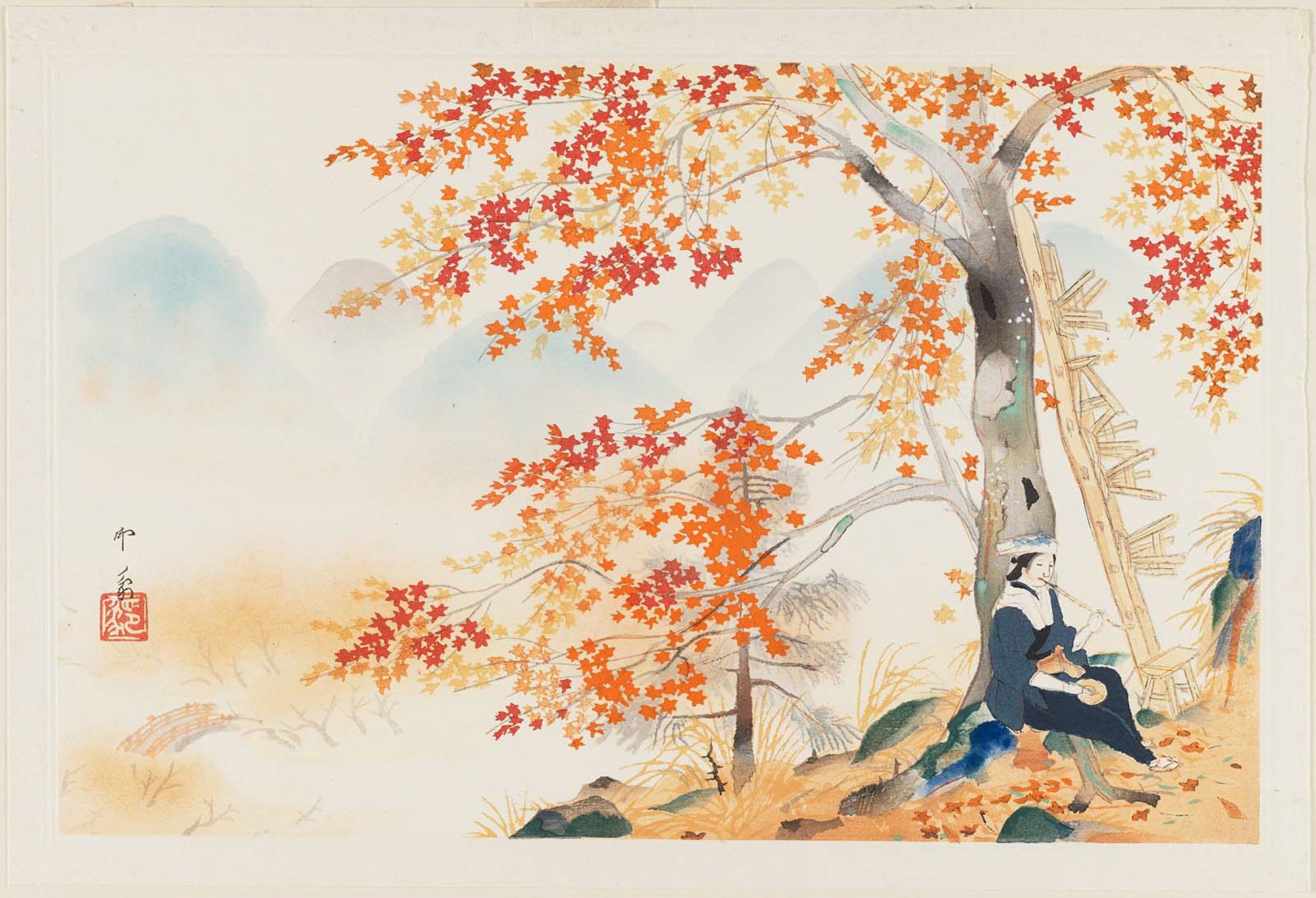
Autumn Maple Leaves at Takao, from the album Eight Views of Kyoto (Kyôto hakkei)
Woodblock print

The Beach at Kaiganji in Sanuki Province (Sanuki Kaiganji no hama), from the series "Collection of Views of Japan II, Kansai Edition (Nihon fukei shu II Kansai hen)"
1934
Color woodblock print; oban

Tea Kettle, section of a sheet from the series "Mirror of Stone Rubbings of Views of the Provinces" (Kohon meihitsu ishizuri kagami)
n.d.
Woodblock print; ishizuri-e, section of harimaze sheet
Featured in Collections
Curated cross-cuts that include this print.
Frequently Asked Questions
Mou was created by Gen Yamaguchi (山口源).
Mou depicts landscapes and abstract.