Biography
Gen Yamaguchi (山口源, 1896–1976) was a leading figure of the sosaku-hanga movement whose abstract prints, made with unconventional materials and innovative techniques, earned him major international prizes and helped bring Japanese creative printmaking to worldwide attention during the 1950s. He was born in 1896 in what is now Fuji City, Shizuoka Prefecture, into a prosperous family that owned liquor and beer breweries — a background that spared him the financial hardships constraining many artists' careers and allowed him to pursue printmaking with sustained dedication.
Yamaguchi came to art indirectly. At about the age of twenty he traveled with his father on a business trip to Taiwan, where he met Fujimori Shizuo, an early sosaku-hanga practitioner who first interested him in printmaking. After returning to Japan, Yamaguchi renounced his family's financial support and joined an ascetic religious community whose members went door to door offering menial labor as a form of purification. In 1923 Fujimori formally introduced him to Onchi Koshiro, the artist widely regarded as the father of the sosaku-hanga movement; once his work was accepted into the Hanga Kyokai exhibition, Yamaguchi left the community to devote himself to printmaking. He became a devoted follower of Onchi, and in 1937 moved into a house near his mentor, taking part in the regular Ichimokukai (First Thursday Society) gatherings that met at Onchi's home and became a crucible for sosaku-hanga experimentation.
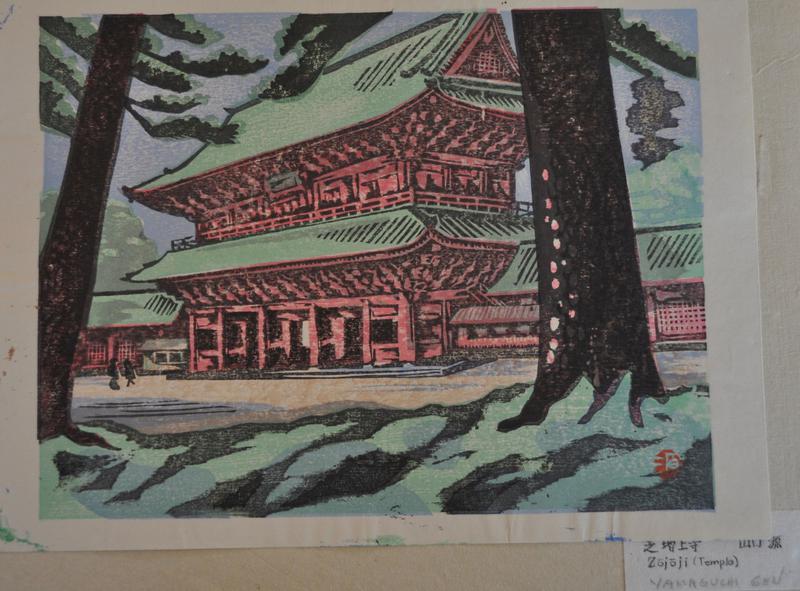
Yamaguchi's early work was representational, depicting landscapes and natural subjects with sensitive observation. Like his mentor Onchi, he moved decisively toward abstraction after the Second World War. His mature prints employed a distinctive technique that set him apart from his contemporaries: he incorporated natural and manufactured objects directly into the printing process, pressing them against inked surfaces to create textures and patterns that no carved block could replicate.
International recognition came rapidly in the 1950s. Yamaguchi won a major prize at the Ljubljana Biennial of Graphic Arts in 1956, and in 1958 became the first Japanese artist to win the Grand Prix at Lugano, Switzerland. These awards placed him among the most honored Japanese artists of his generation and demonstrated that sosaku-hanga could compete with the best contemporary printmaking from any tradition.
Throughout his career Yamaguchi remained committed to the sosaku-hanga principle of jiga-jikoku-jizuri — self-drawn, self-carved, self-printed — and exhibited with the Nihon Hanga Kyokai (Japan Print Association). Having evacuated during the Pacific War to the fishing village of Enoura in Numazu, Shizuoka Prefecture, he remained there for the rest of his life and died in 1976 at the age of eighty. His family later donated a large body of his work — some 3,500 pieces and related materials, now held at the Numazu City Shoji Art Museum (Mon Musée Numazu) — and Numazu established the Yamaguchi Gen Prize to recognize and encourage young printmaking artists, ensuring that his legacy continued to support the creative print tradition he had helped build.
Key Facts
- Active Period
- 1896–1976
- Nationality
- 🇯🇵Japan
- Movement
- Sōsaku-hanga
- Works Indexed
- 62
Frequently Asked Questions
Gen Yamaguchi (山口源, 1896–1976) was a leading figure of the sosaku-hanga movement whose abstract prints, made with unconventional materials and innovative techniques, earned him major international prizes and helped bring Japanese creative printmaking to worldwide attention during the 1950s. He was born in 1896 in what is now Fuji City, Shizuoka Prefecture, into a prosperous family that owned liquor and beer breweries — a background that spared him the financial hardships constraining many artists' careers and allowed him to pursue printmaking with sustained dedication.
Gen Yamaguchi was active from 1896 to 1976. They were associated with the Sōsaku-hanga movement.
Gen Yamaguchi's work was shaped by the Sōsaku-hanga tradition in Japanese woodblock printmaking. Sōsaku-hanga: ## What is sōsaku-hanga? Sōsaku-hanga (創作版画, "creative prints") was a twentieth-century Japanese print movement defined by a single commitment: the artist must design, carve, and print every work alone.
Gen Yamaguchi's prints frequently feature abstract, trees, figures, autumn foliage, temples & shrines, landscapes.
Original prints by Gen Yamaguchi can be found in collections including Art Institute of Chicago, Japanese Art Open Database, Fine Arts Museums of San Francisco, Harvard Art Museum.
Series by Gen Yamaguchi
Woodblock Prints by Gen Yamaguchi (62)

Untitled (Leaves and string)
20th century
Color woodblock print with leaves and string

Grasp
20th century
Color woodblock print; edition 3/50

A Journey
20th century
Color woodblock print

Poetry of Early Autumn (B)
1947
Color print with leaves

Untitled
1948
Color woodblock print

Human Beings
1953
Woodblock print, ink and color on paper
Temple
1953
Woodblock print, ink and color on paper

A Tacit Agreement
1958
Color woodblock print

Only a Little Hope
1956
Color woodblock print

Curtain Lecture
1957
Color woodblock print

Noh Actor
1958
Color woodblock print

Germinate
1959
Color woodblock print; edition 3/50
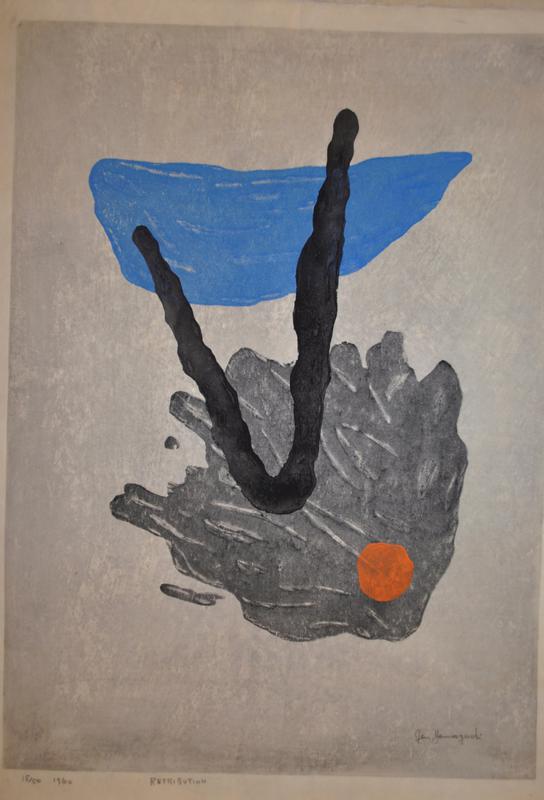
Retribution
1960
Woodblock print, ink and color on paper

Mount Fuji
Mokuhanga (Japanese woodblock)
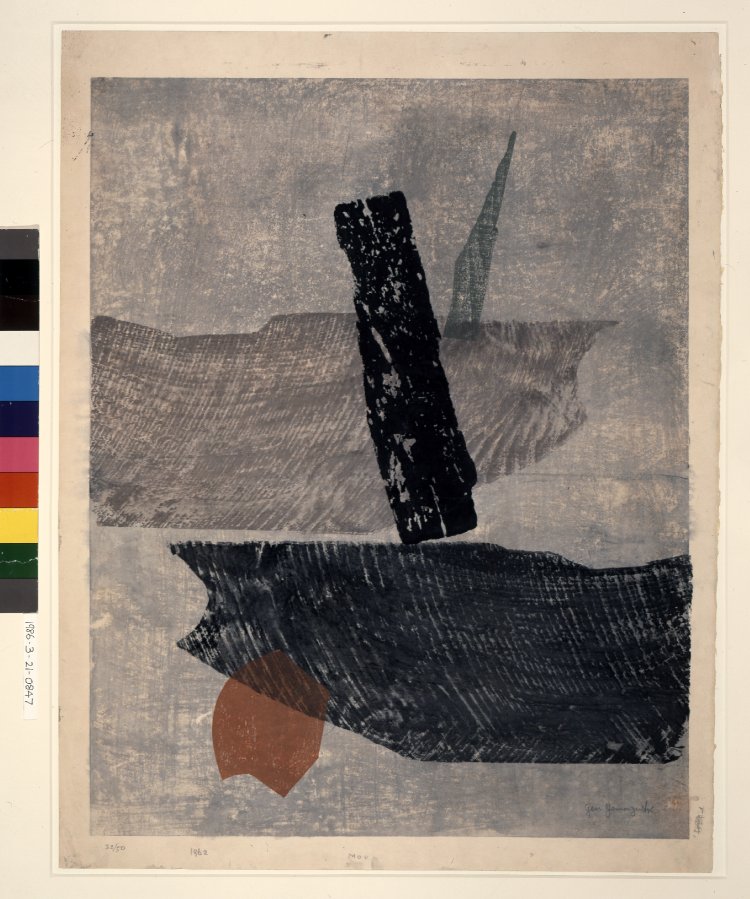
Mou
Woodblock print
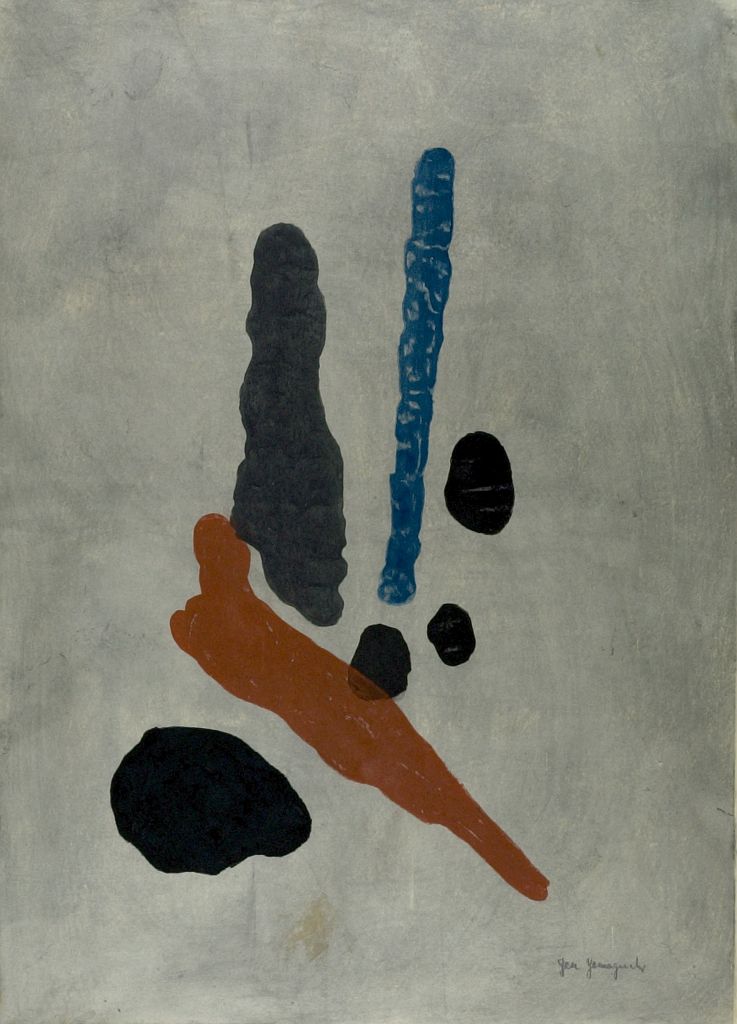
Work No. 0, Shôwa period, dated 1960
Woodblock print
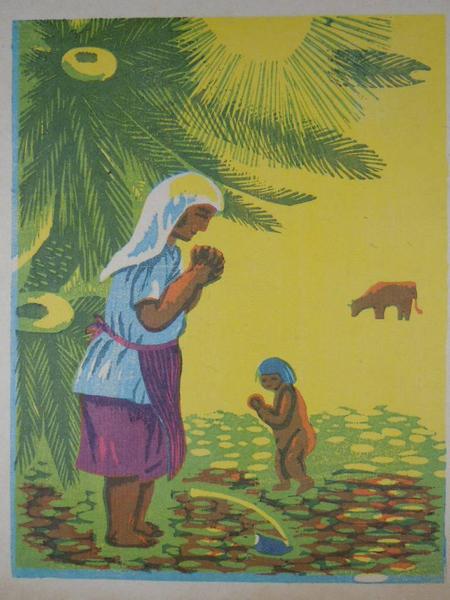
The Evening Bell in Amakusa
Woodblock print
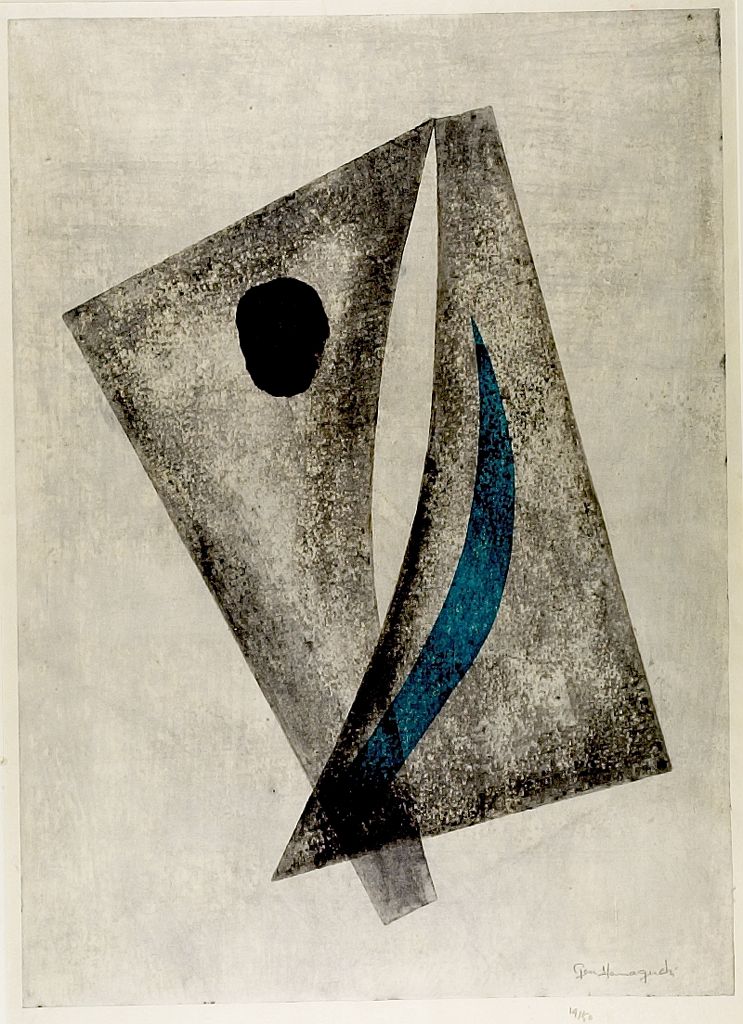
Tea Ceremony, Shôwa period, mid 20th century
Woodblock print
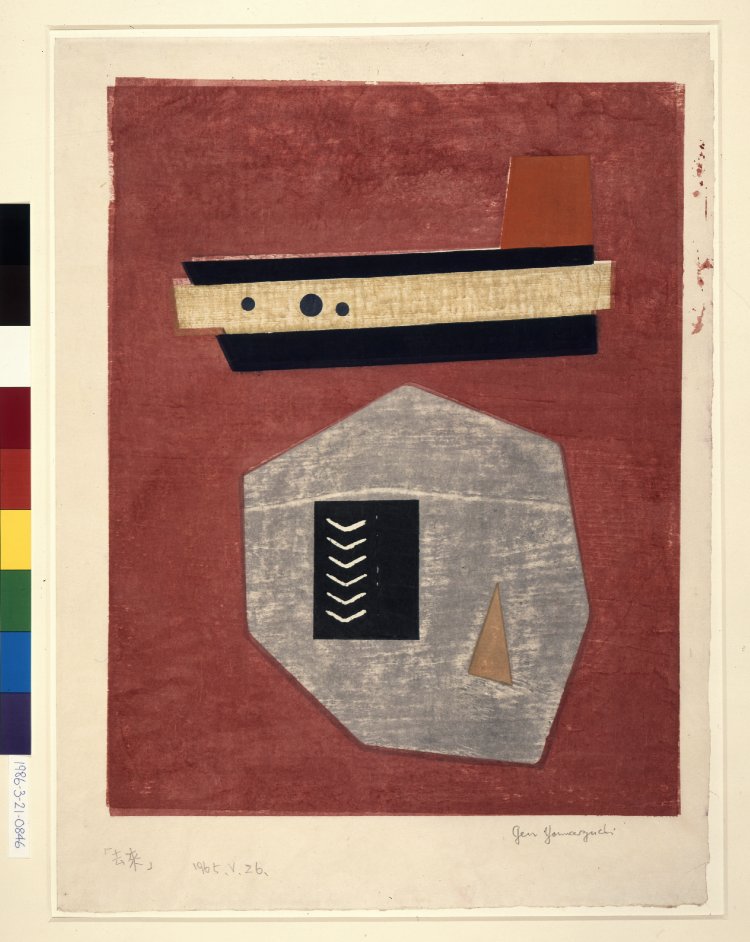
Kyorai (Past and Future)
Woodblock print
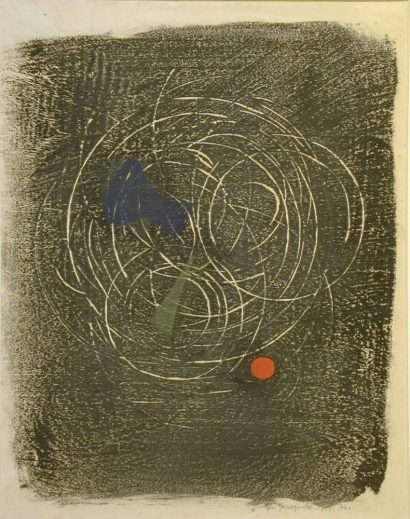
Small Desire
Woodblock print
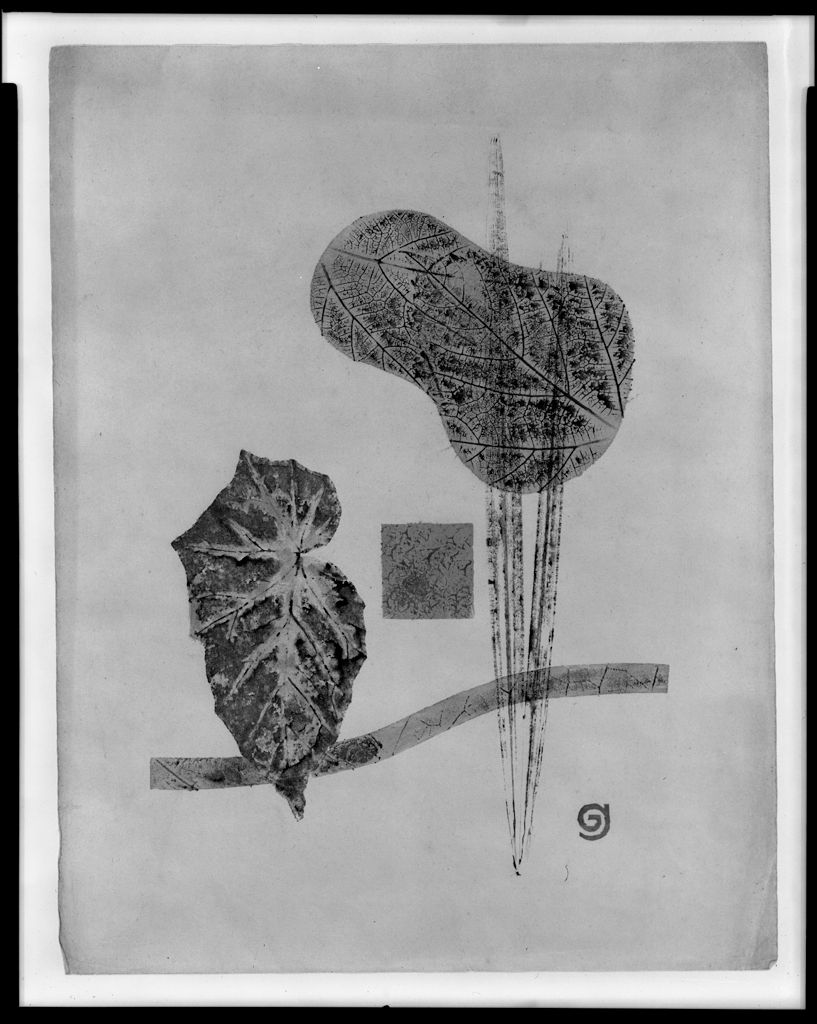
Composition with Leaves, Shôwa period, dated 1940
Woodblock print
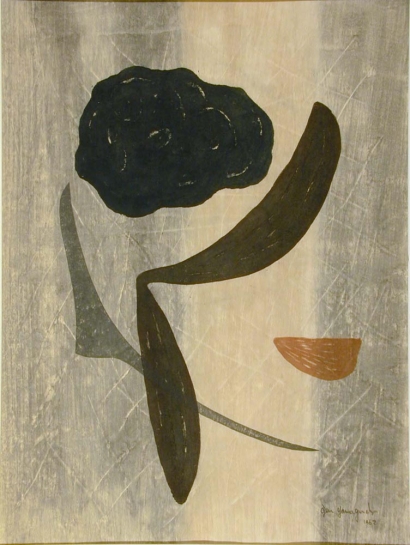
Work
Woodblock print

Human Being
Midnight - Ichimokushu Vol 6
Woodblock print