
A Market in Mukden
- Date:
- 1937
- Medium:
- Color woodblock print
- Format:
- Oban
- Dimensions:
- 26.9 × 26.5 cm
- Publisher:
- Yoshida Studio
- Source:
- Art Institute of Chicago
Description
Mukden — now Shenyang, the capital of Liaoning Province in northeastern China — held strategic and cultural significance as the former imperial capital of the Qing dynasty, and Yoshida visited during the politically charged late 1930s. This 1937 print records the commercial vitality of a Mukden market, its stalls and figures rendered with the observational clarity Yoshida brought to all his urban subjects. Unlike his landscape work, which tends toward stillness and solitude, the market scene embraces activity and human density — vendors, goods, and passersby — captured with a reportorial directness filtered through woodblock's inherent tendency toward the lyrical.
More Prints by Hiroshi Yoshida
More Market Scenes Prints
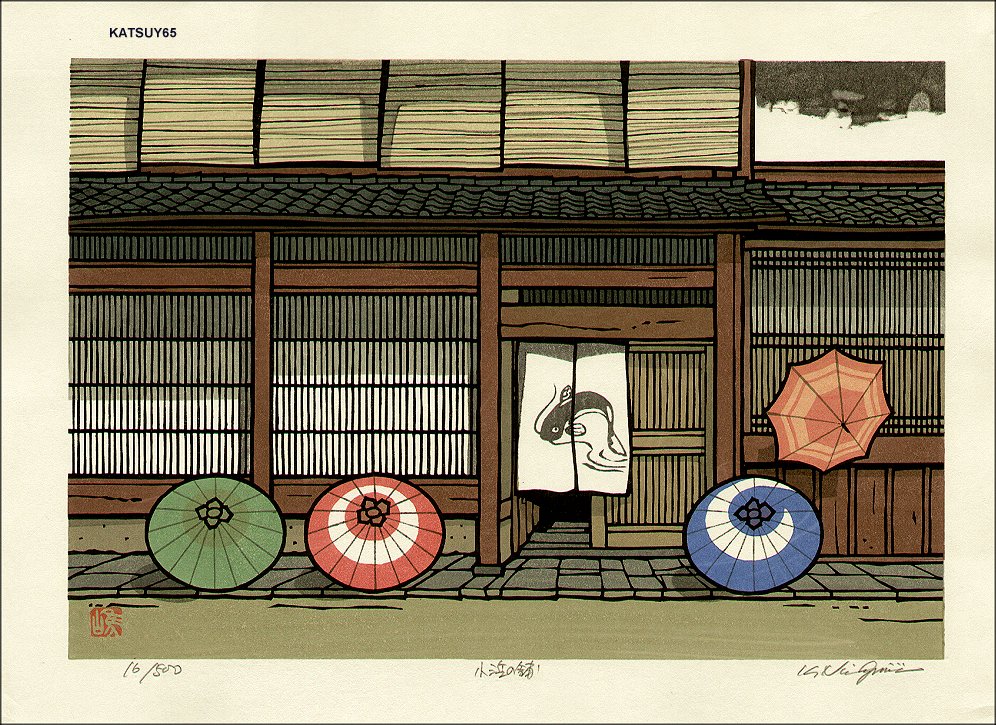
Shop in Obama, Fukui Prefecture
Woodblock print

Mariko: Famous Tea Shop (Mariko, meibutsu chamise), from the series "Fifty-three Stations of the Tokaido Road (Tokaido gojusan tsugi no uchi)," also known as the Hoeido Tokaido
c. 1833/34
Color woodblock print; oban
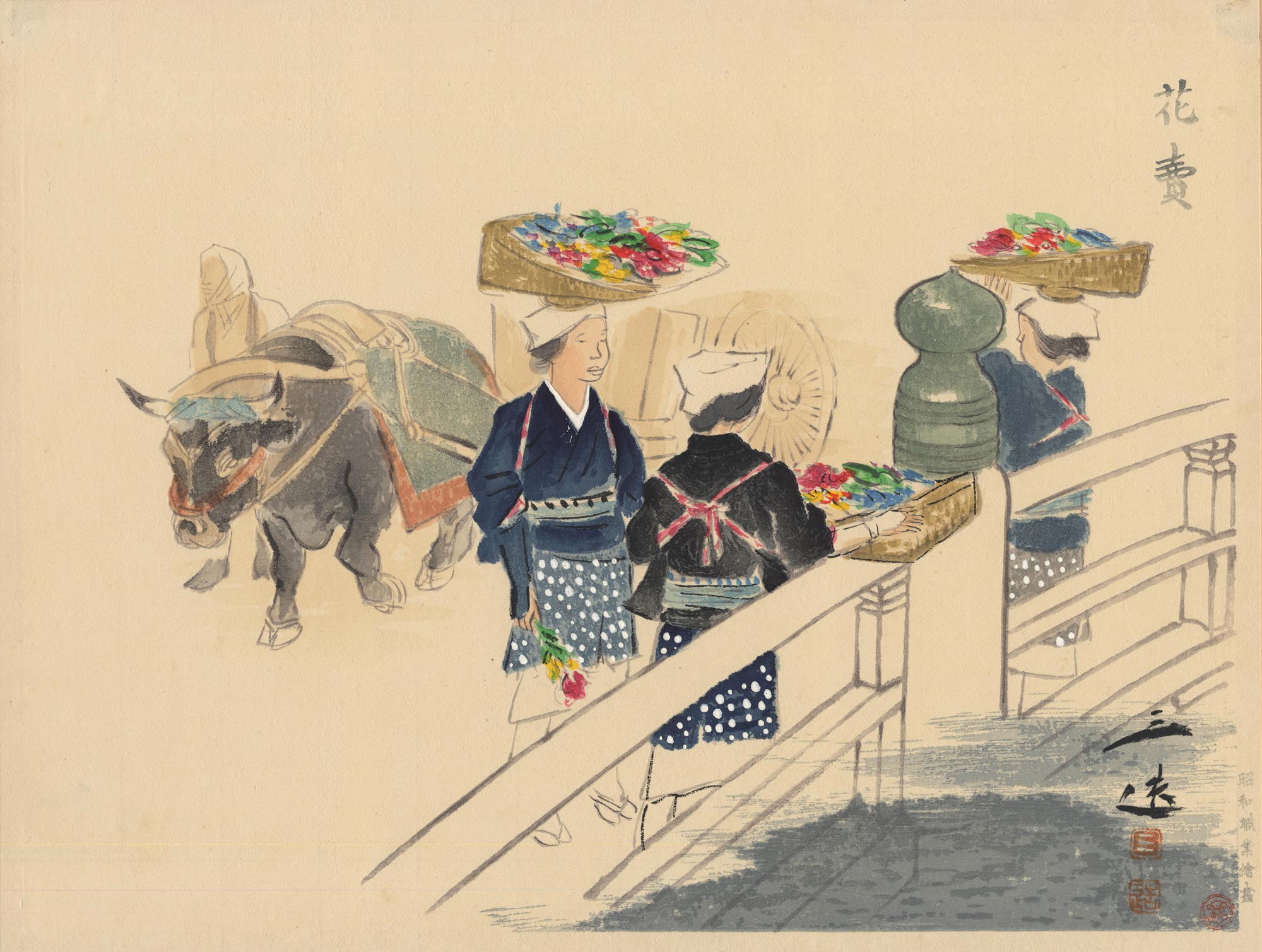
Street Vendor
行商人
c. 1940
Color woodblock print
Corner Shop
Shōwa period, 1977
Woodblock print; ink and color on paper
Featured in Collections
Curated cross-cuts that include this print.
Frequently Asked Questions
A Market in Mukden was created by Hiroshi Yoshida (吉田博) in 1937.
A Market in Mukden uses Bokashi, Nishiki-e, and Moku-hanga, on color woodblock print.
A Market in Mukden was published by Yoshida Studio (1937).
A Market in Mukden depicts market scenes.
A Market in Mukden measures 26.9 × 26.5 cm (Oban format).