
A Window in Fatehpur-Sikri from the series “India and Southeast Asia”
- Series:
- India and Southeast Asia
- Date:
- 1931
- Medium:
- Color woodblock print
- Format:
- Oban
- Dimensions:
- 27.6 × 40.8 cm
- Publisher:
- Yoshida Studio
- Source:
- Art Institute of Chicago
Description
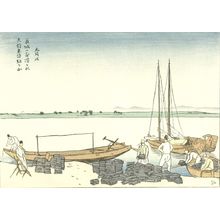
Two seated figures in loose robes and turbans face each other on a polished stone floor, one with a green bundle beside him, before a large latticed stone window whose pierced geometric screen glows amber and gold with backlit sunlight. The palette is dominated by warm oranges, browns, and ochres, with the reflective floor mirroring the figures' silhouettes; Japanese text and the artist's seal appear in the left margin. *A Window in Fatehpur-Sikri*, from Hiroshi Yoshida's series "India and Southeast Asia," 1931, color woodblock print.
More Prints by Hiroshi Yoshida
More Interiors Prints



Featured in Collections
Curated cross-cuts that include this print.
Frequently Asked Questions
A Window in Fatehpur-Sikri from the series “India and Southeast Asia” was created by Hiroshi Yoshida (吉田博) in 1931.
Yes — A Window in Fatehpur-Sikri from the series “India and Southeast Asia” is part of the India and Southeast Asia series (print 1) by Hiroshi Yoshida.
A Window in Fatehpur-Sikri from the series “India and Southeast Asia” uses Bokashi, Nishiki-e, and Moku-hanga, on color woodblock print.
A Window in Fatehpur-Sikri from the series “India and Southeast Asia” was published by Yoshida Studio (1931).
A Window in Fatehpur-Sikri from the series “India and Southeast Asia” depicts interiors.
A Window in Fatehpur-Sikri from the series “India and Southeast Asia” measures 27.6 × 40.8 cm (Oban format).