
Window and Stone Garden
- Medium:
- Woodblock print
- Publisher:
- Yoshida Studio
- Source:
- ukiyo-e.org
Description
Window and Stone Garden depicts the classic compositional pairing of the Japanese garden view framed by architectural opening — the window or engawa edge through which the stone and moss garden is seen creating a frame within the frame. The view from inside to outside, with the garden's raked gravel, stones, and plantings arranged for exactly this kind of meditative viewing, was one of the defining experiences of traditional Japanese domestic and temple architecture. Yoshida's treatment captures this threshold experience, the window creating an aesthetic distance that transforms the garden into a composition within a composition.
More Prints by Toshi Yoshida




More Gardens Prints
![[Garden of] Taj Mahal, No. 1 (Taji Maharu no niwa, dai ichi) by Hiroshi Yoshida](https://www.artic.edu/iiif/2/230993a7-d4f0-c979-c267-127d48e1ef1c/full/843,/0/default.jpg)
[Garden of] Taj Mahal, No. 1 (Taji Maharu no niwa, dai ichi)
Taji Maharu no niwa, dai ichi
1931
Color woodblock print; oban

Kiyozumi Garden in Moonlight
January 1938
Woodblock print, ink and color on paper

Moon over Kiyosumi Garden (Tsuki no Kiyosumien)
1938
Color woodblock print; oban
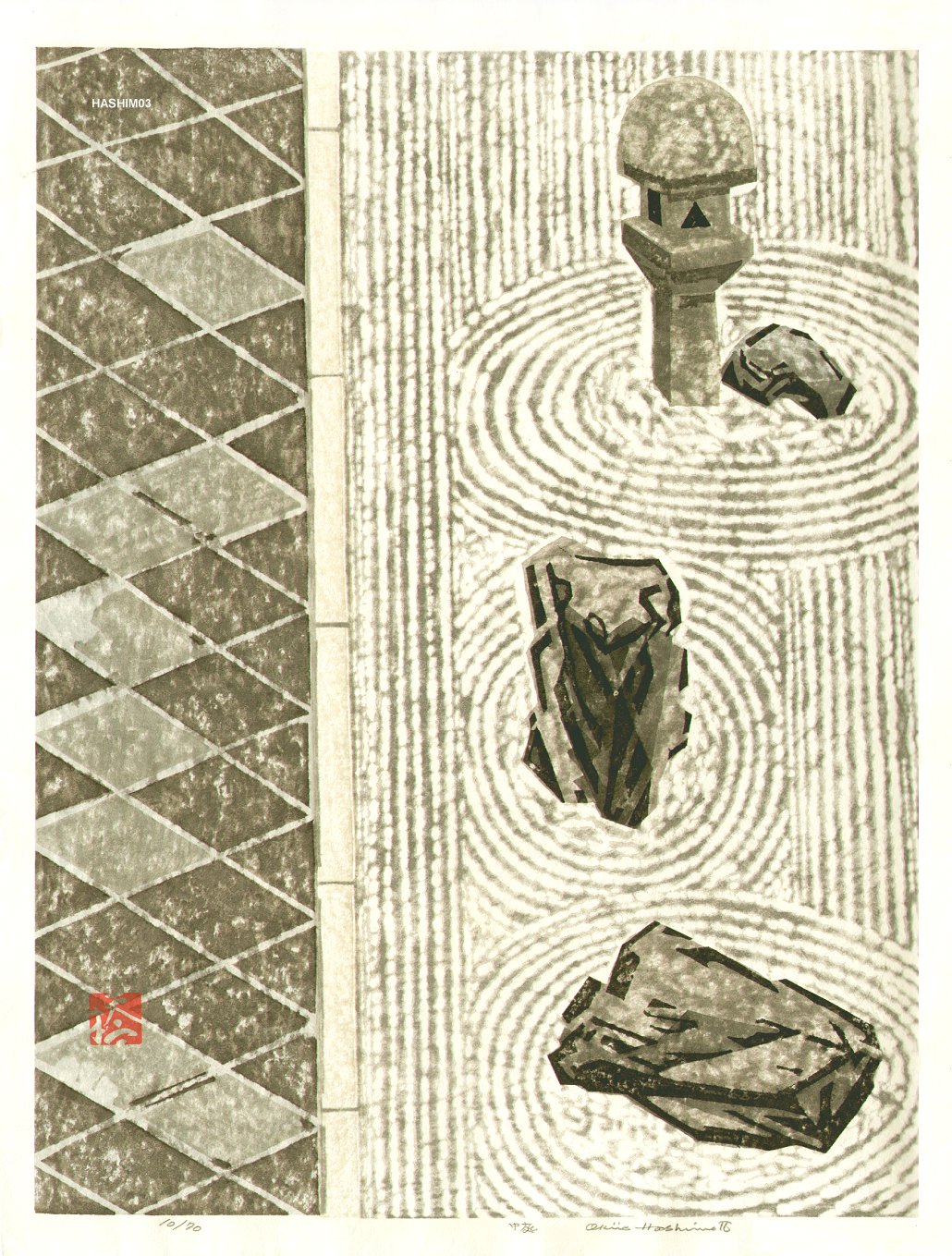
Rock garden
10/70, 1966
Woodblock print
Featured in Collections
Curated cross-cuts that include this print.
Frequently Asked Questions
Window and Stone Garden was created by Toshi Yoshida (吉田遠志).
Window and Stone Garden uses Moku-hanga, Nishiki-e, and Sumi, on woodblock print.
Window and Stone Garden was published by Yoshida Studio.
Window and Stone Garden depicts gardens and interiors.