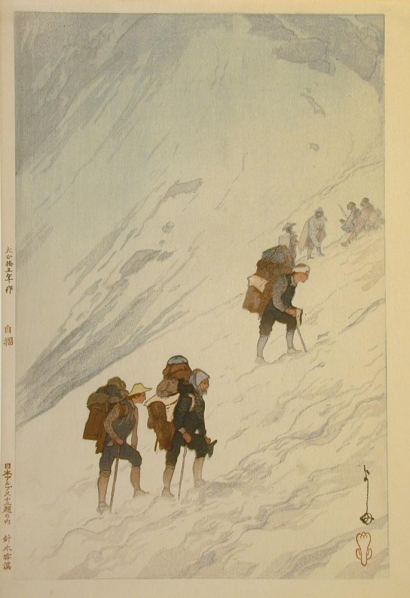
Climbing Snow Valley at Harinoki
- Date:
- 1920
- Medium:
- Woodblock print
- Format:
- Oban
- Publisher:
- Yoshida Studio
- Source:
- Art Gallery of Greater Victoria
Description
In 1920 Yoshida depicted the Harinoki Pass — one of the high-altitude crossings of the Ōmachi Range in the Northern Japanese Alps, rising above 2,541 meters — as a landscape of deep snow still covering the valley floor, climbers making their way up through the winter snowpack along a route that served as both a traditional pass and a mountaineering challenge. The composition captures the physical effort of alpine travel in deep snow: the path disappearing into white, the surrounding terrain defined more by what is buried than by what is visible, the sky above pressing down with the cold clarity that high altitude and winter produce together. This early Alpine print anticipates the extensive mountain series that would define his work in the mid-1920s.
More Prints by Hiroshi Yoshida
More Landscapes Prints

Lake Kugushi in Wakasa Province (Wakasa Kugushiko), from the series Souvenirs of Travel I (Tabi miyage dai isshu)"
Wakasa Kugushiko
1920
Color woodblock print; oban
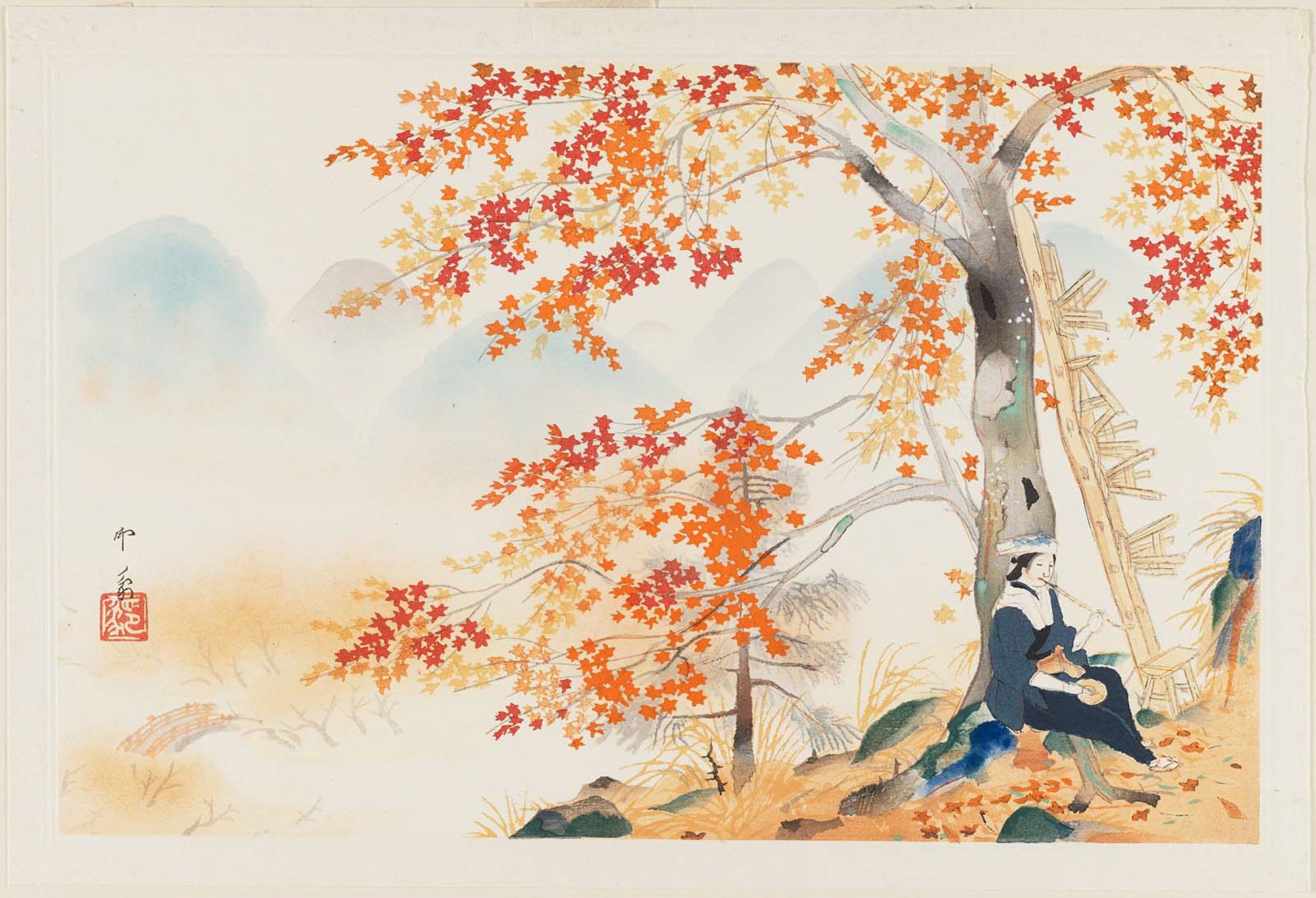
Autumn Maple Leaves at Takao, from the album Eight Views of Kyoto (Kyôto hakkei)
Woodblock print

The Beach at Kaiganji in Sanuki Province (Sanuki Kaiganji no hama), from the series "Collection of Views of Japan II, Kansai Edition (Nihon fukei shu II Kansai hen)"
1934
Color woodblock print; oban

Tea Kettle, section of a sheet from the series "Mirror of Stone Rubbings of Views of the Provinces" (Kohon meihitsu ishizuri kagami)
n.d.
Woodblock print; ishizuri-e, section of harimaze sheet
Featured in Collections
Curated cross-cuts that include this print.
Frequently Asked Questions
Climbing Snow Valley at Harinoki was created by Hiroshi Yoshida (吉田博) in 1920.
Climbing Snow Valley at Harinoki was published by Yoshida Studio (1920).
Climbing Snow Valley at Harinoki depicts landscapes and snow scenes.