The edition type is the primary value driver for Yoshida prints. The jizuri seal — indicating the artist personally supervised every aspect of printing — typically commands 2–3× the price of posthumous reprints. Standard jizuri prints of Japanese landscapes cluster around $2,149 at dealer level (1stDibs benchmark). PBS Antiques Roadshow valued a pair of lifetime prints at $2,500 total (~$1,250 each) for non-jizuri examples.
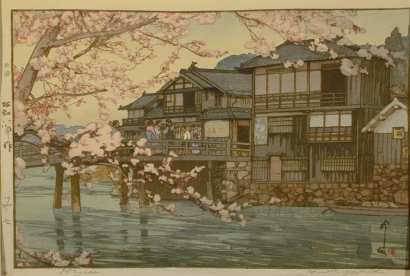
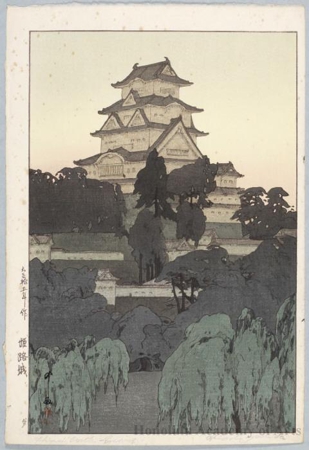
This 1933 [oban](/glossary/oban)-format print of Nara at evening (Nara no yube) shows the ancient city settling into dusk — a moment when the grandeur of its eighth-century temple complexes recedes into silhouette and the more intimate, sensory qualities of the scene take precedence. Yoshida's depiction likely incorporates one of Nara's signature elements: the Sarusawa Pond reflecting pagoda or lantern light, or the forested approach to Kasuga Shrine in the blue-grey transition between day and night. His Western training gave him an instinctive feel for the warm-cool contrast of artificial and natural light at twilight, and the oban format allowed him to compose the scene with the horizontal breadth that the open Nara landscape required.
Woodblock print

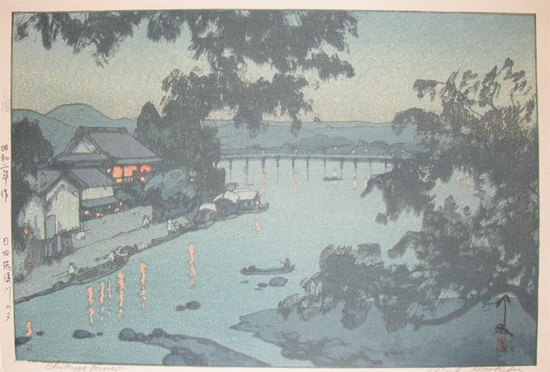
Teradomari no yau
1921
Color woodblock print; oban
![Mount Fuji on a Moonlit Night, Kawai Bridge (Tsukiyo no Fuji [Kawaibashi]), from the series "Selection of Views of the Tokaido (Tokaido fukei senshu)" by Kawase Hasui](https://www.artic.edu/iiif/2/d0960668-1e73-339a-b182-fb995a54bff0/full/843,/0/default.jpg)
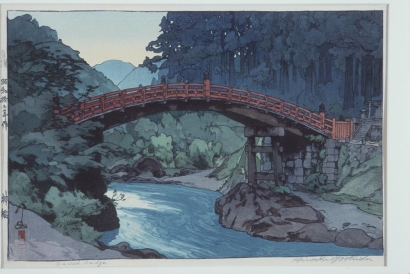
1947
Color woodblock print; oban

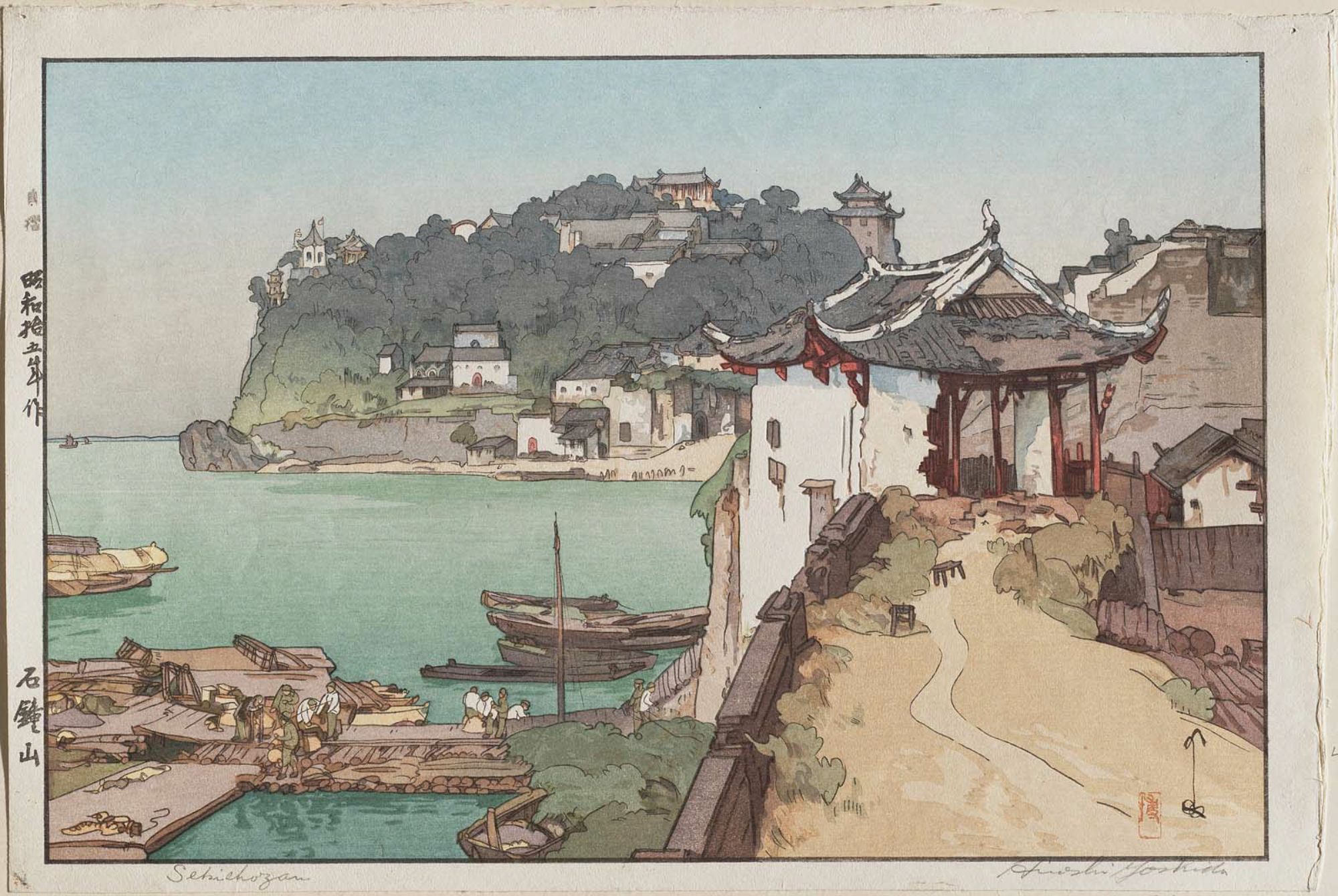
March 1933
Color woodblock print; oban
Curated cross-cuts that include this print.
Evening in Nara (Nara no yube) (Nara no yube) was created by Hiroshi Yoshida (吉田博) in 1933.
Evening in Nara (Nara no yube) uses Bokashi, Nishiki-e, and Moku-hanga, on color woodblock print; oban.
Evening in Nara (Nara no yube) was published by Yoshida Studio (1933).
Evening in Nara (Nara no yube) depicts night scenes, set at Nara.
Evening in Nara (Nara no yube) measures 27.5 × 39.7 cm (Oban format).