Nara (奈良)
41 prints by 13 artists
About Nara
Nara is a city in the northern Yamato basin of central Honshu, the principal city of Nara Prefecture and the historical capital of Japan from 710 to 784, during the period now known as the Nara period. The capital, known then as Heijo-kyo, was laid out on a Chinese grid plan modeled on the Tang capital at Chang'an as the first permanent imperial capital of Japan (preceding capitals having been relocated with each new emperor), and the surviving institutions of the city, including the great Buddhist temples of Todai-ji, Kofuku-ji, Yakushi-ji, Toshodai-ji, Saidai-ji, and the smaller temples of the original urban grid; the Shinto Kasuga Taisha shrine on the wooded slopes of Mount Mikasa; and the broad Nara Park preserving substantial portions of the original imperial grounds, constitute one of the most important concentrations of early Buddhist monumental architecture in East Asia. Todai-ji houses the bronze Great Buddha (Daibutsu) of the Birushana figure, originally cast in 752 at imperial command during the reign of Emperor Shomu and rebuilt several times after fires in the medieval and early modern periods, the present figure dating principally to the seventeenth-century reconstruction completed in 1709, and contained within the great Daibutsuden hall which is one of the largest wooden buildings in the world. The wild sika deer that wander freely through Nara Park, traditionally considered messengers of the Kasuga deity since the establishment of the Kasuga shrine in 768, are one of the recognizable features of the city, with approximately 1,200 deer documented in the park. After the relocation of the capital first to Nagaoka in 784 and then to Heian-kyo (Kyoto) in 794, Nara declined to a provincial center and pilgrimage town, retaining its importance as the seat of major Buddhist institutions but losing its political centrality. The Historic Monuments of Ancient Nara were designated a UNESCO World Heritage Site in 1998. For Japanese printmaking Nara appears in the late Edo meisho-e tradition, in the printed travel guides to the Kansai region, and in the shin-hanga revival of the early twentieth century. Utagawa Hiroshige treated Nara in his Famous Views of the Sixty-Odd Provinces, including views of Kasuga Taisha and the surrounding deer park, and individual sheets of Todai-ji and the Daibutsu appear across the late Edo and Meiji periods. Hokusai included Nara subjects in his printed-book sets, and Hasegawa Sadanobu of the Osaka kamigata school produced Kansai-region sheets that include Nara views. The shin-hanga revival brought a sustained engagement, with Kawase Hasui producing views of the temples and Nara Park including snow and twilight compositions, and Yoshida Hiroshi, Tsuchiya Koitsu, Asano Takeji, and Tokuriki Tomikichiro contributing further compositions of the Daibutsu hall, the Kasuga lanterns (with the celebrated Mantoro lantern festival providing one principal motif), the five-story pagoda of Kofuku-ji, and the seasonal phenomena. Tokuriki Tomikichiro included Nara in his Kyoto and Kansai-centered creative-print series. The visual character of Nara in prints is built on the broad sweep of Nara Park with its wandering deer, the dark roofs of the Daibutsuden of Todai-ji rising above the trees as one of the most distinctive silhouettes of any temple architecture in Japan, the stone lanterns of Kasuga Taisha in their lines through the cedar forest leading to the shrine, the five-story pagoda of Kofuku-ji on the western edge of the park, the cherry blossom and autumn maple of the temple precincts, and frequently the diffused atmospheric conditions of the Yamato basin including morning fog and evening haze. The deer figure as the principal foreground motif in many Nara compositions. Contemporary visitors reach Nara from Kyoto and Osaka by frequent direct trains on the JR and Kintetsu lines in under an hour, with the major temples and Nara Park preserving the principal sites of the historical and pictorial geography, and the Nara National Museum holding significant collections of early Buddhist art and the surrounding shrine and temple treasures.
Prints Depicting Nara (41)

Ancient City, Nara
1954
Color woodblock print; edition 18/100

Buddha Asuyra Nara (C)
Woodblock print
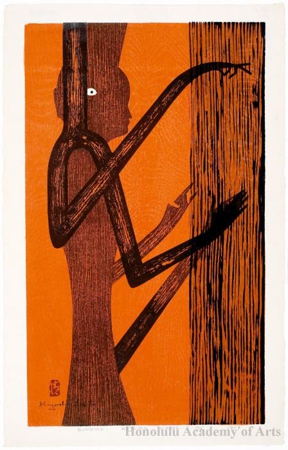
Buddha Asyura Nara (A)
Woodblock print
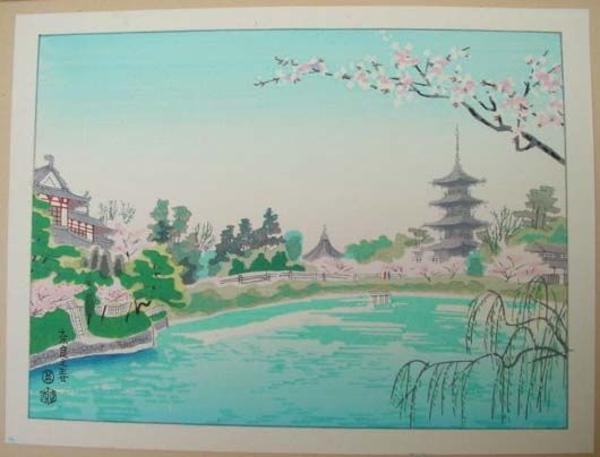
Cherry Blossoms in Nara — 奈良の春
circa 1930-1950
Woodblock print
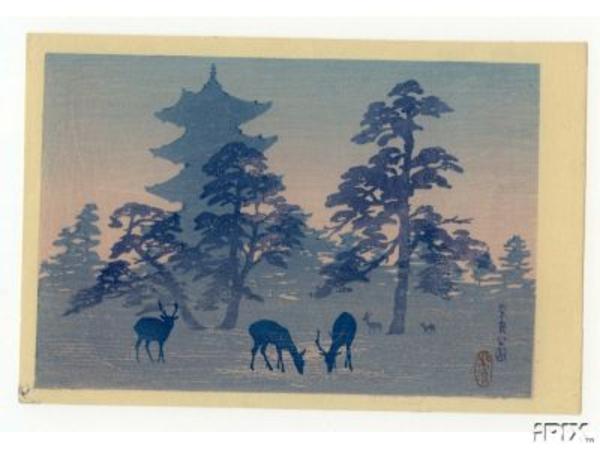
Deer at Nara
Woodblock print

Distance View of Nara Pagoda from the Pond of Sarusawa and Willow Trees on the Right at Evening
Woodblock print

Evening in Nara, from the series "Kansai District"
1933
Color woodblock print
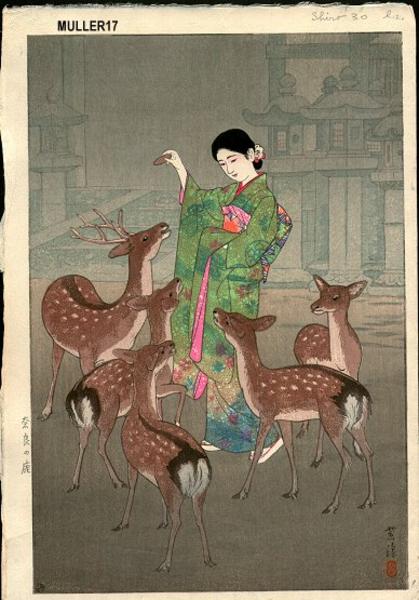
Garden in Nara
Woodblock print

Hall of the Great Buddha (Nara Daibutsuden)
1950
Color woodblock print

Hokki-ji Temple, Nara
1970
Woodblock print
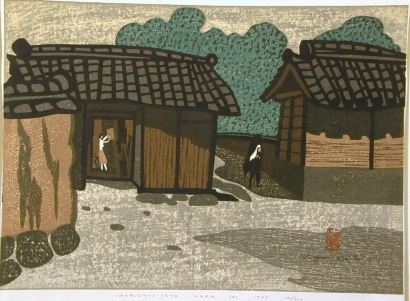
Ikarugano Sato (A) (Nara)
Woodblock print
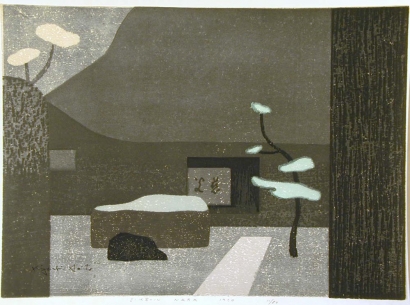
Jiko-in, Nara
Woodblock print

Kasuga Shrine, Nara (Nara Kasuga jinja), from the series "Souvenirs of Travel, Second Series (Tabi miyage dai nishu)"
February 1921
Color woodblock print; oban

Kasuga Shrine, Nara, from the series "Collection of Scenic Views of Japan II, Kansai Edition" (Nihon fukei shu II Kansai hen, Nara Kasuga taisha)
April 1933
Color woodblock print

Kiko Temple, Nara Prefecture (Kikoji (Nara ken))
1950
Color woodblock print; oban

Kofukuji Temple, Nara
1937
Color woodblock print
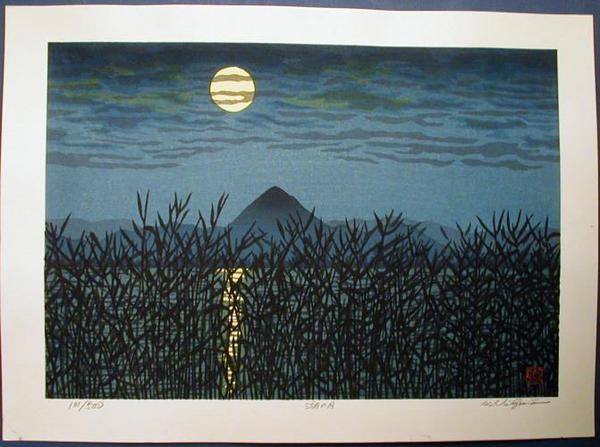
Moon
Woodblock print
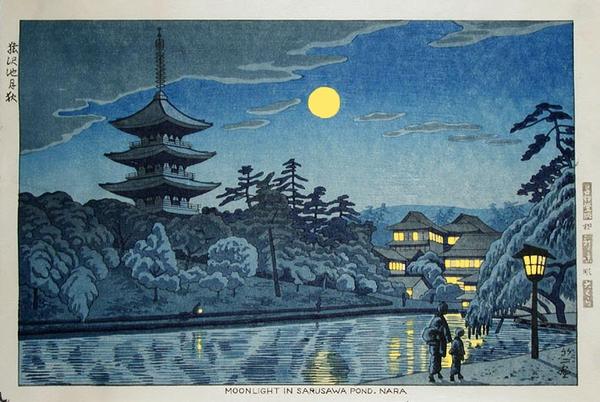
Moonlight in Sarusawa Pond, Nara
猿沢の池月光
Woodblock print

Nara Kofuku Temple
Woodblock print

Nara Park
n.d. [1952]
Color woodblock print
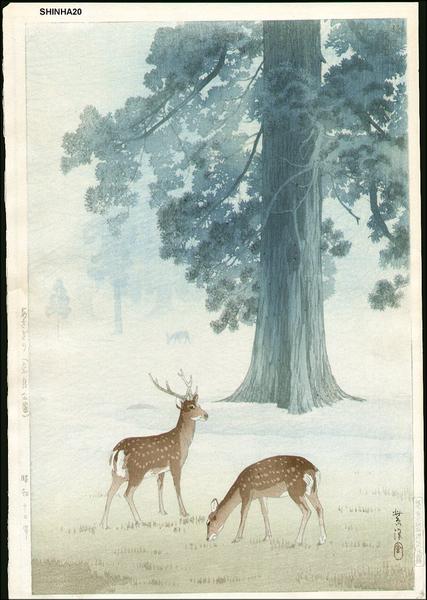
Nara Park (small aizuri-e)
Woodblock print

Nara Park in autumn — 奈良公園
circa 1950-1970
Woodblock print

Nigatsu Hall in Nara (Nara Nigatsudo), from the series “Collection of Scenic Views of Japan II, Kansai Edition (Nihon fukei shu II Kansai hen)"
1934
Color woodblock print; oban
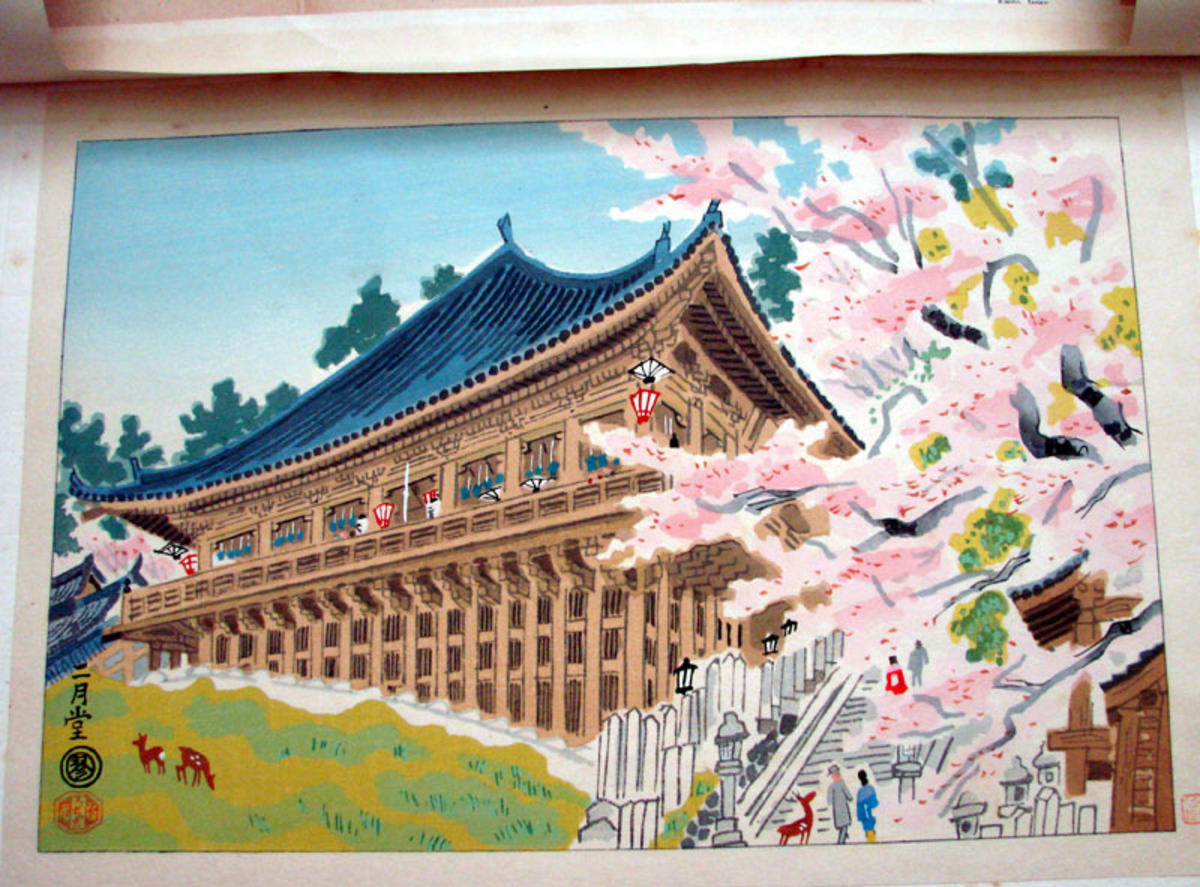
Nigatsu-Do of Nara in spring — 二月堂
circa 1950-1970
Woodblock print

Pagoda Reflected in Sarusawa Pond, Nara, from the series "Ten Views of Nara"
1960
Woodblock print
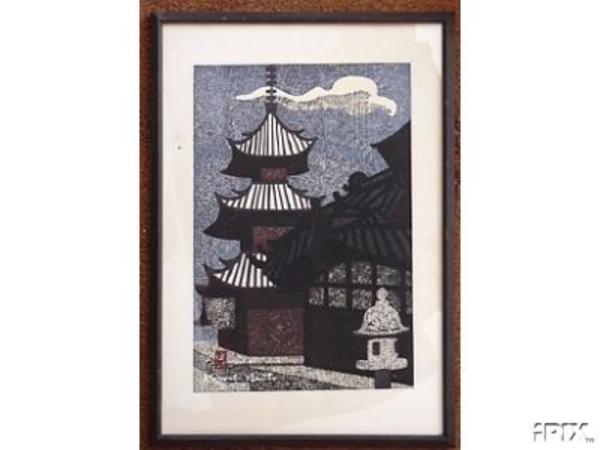
Pagoda, Nara
塔 奈良
1964
Color woodblock print
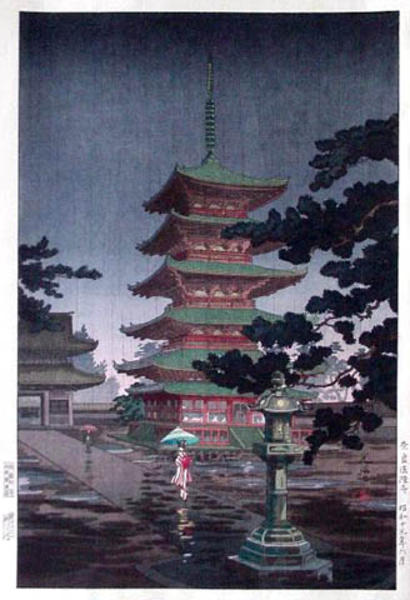
Rain at Horyuji Temple, Nara
Woodblock print

Rain at Nara, the Pagoda at Kofuku Temple (Nara no ame Kofukuji no to)
Nara no ame Kofukuji no to
1951
Color woodblock print
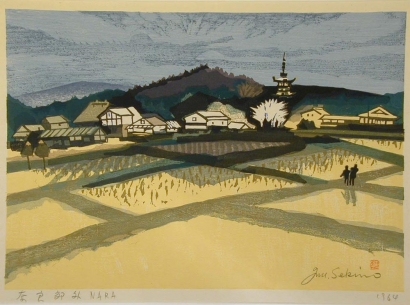
Rice Field near Nara
Woodblock print

Rooftop of the Yumedono, Horyuji Temple, Nara
1950
Woodblock print

Sanctuary of Muroji Temple, Nara
1960
Woodblock print
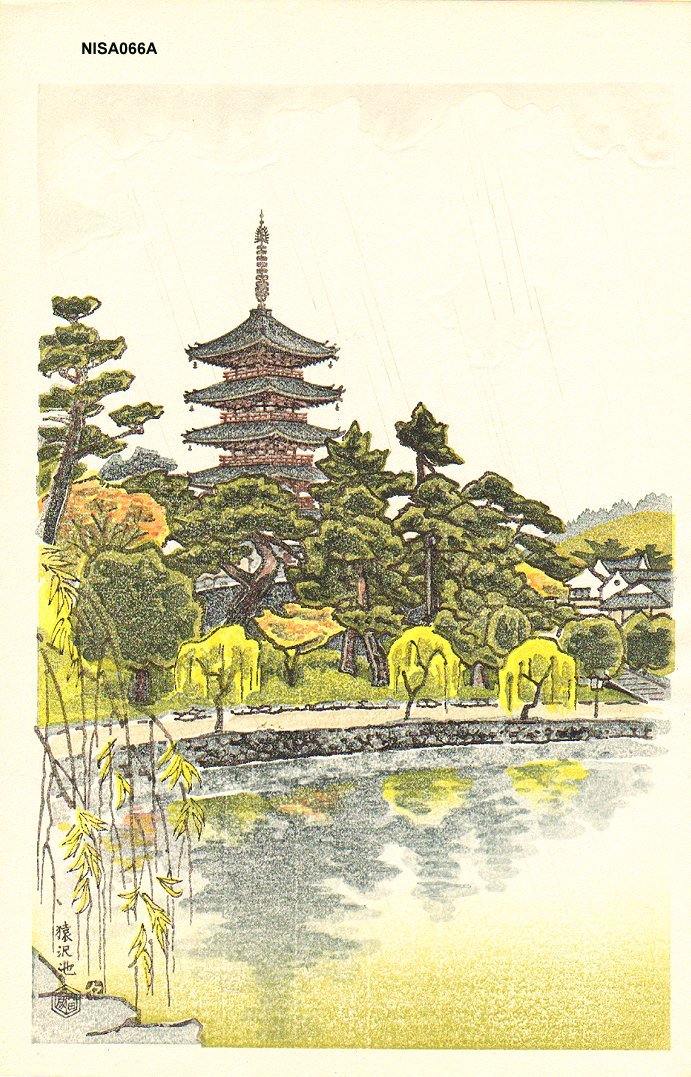
Sarusawa Pond (Nara)
Woodblock print
Sarusawa Pond in Nara
c. 1935
Woodblock print; ink and color on paper

Shosoin, Nara
1958
Woodblock print, ink on paper

Statue of of Jizo at Jurin-in in Takahata, Nara, from the series "Ten Views of Nara"
1960
Woodblock print
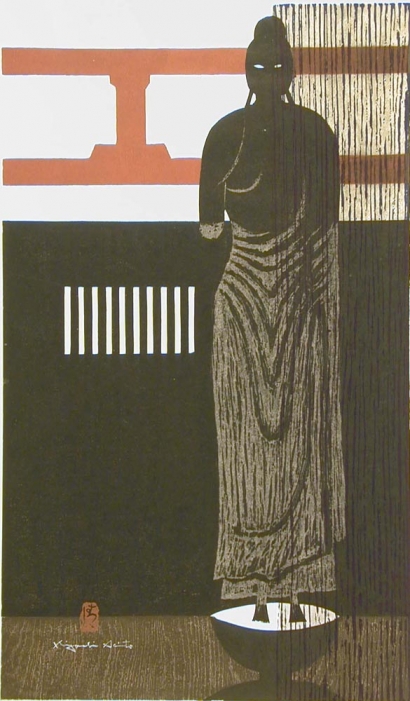
Tosyodai-Ji, Nara
Woodblock print
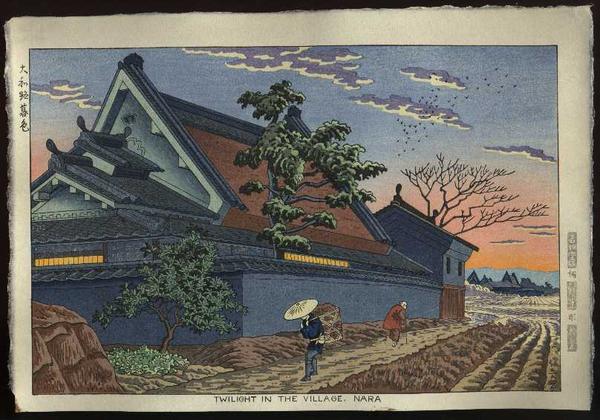
Twilight in the Village, Nara
ca. 1950s
Woodblock print
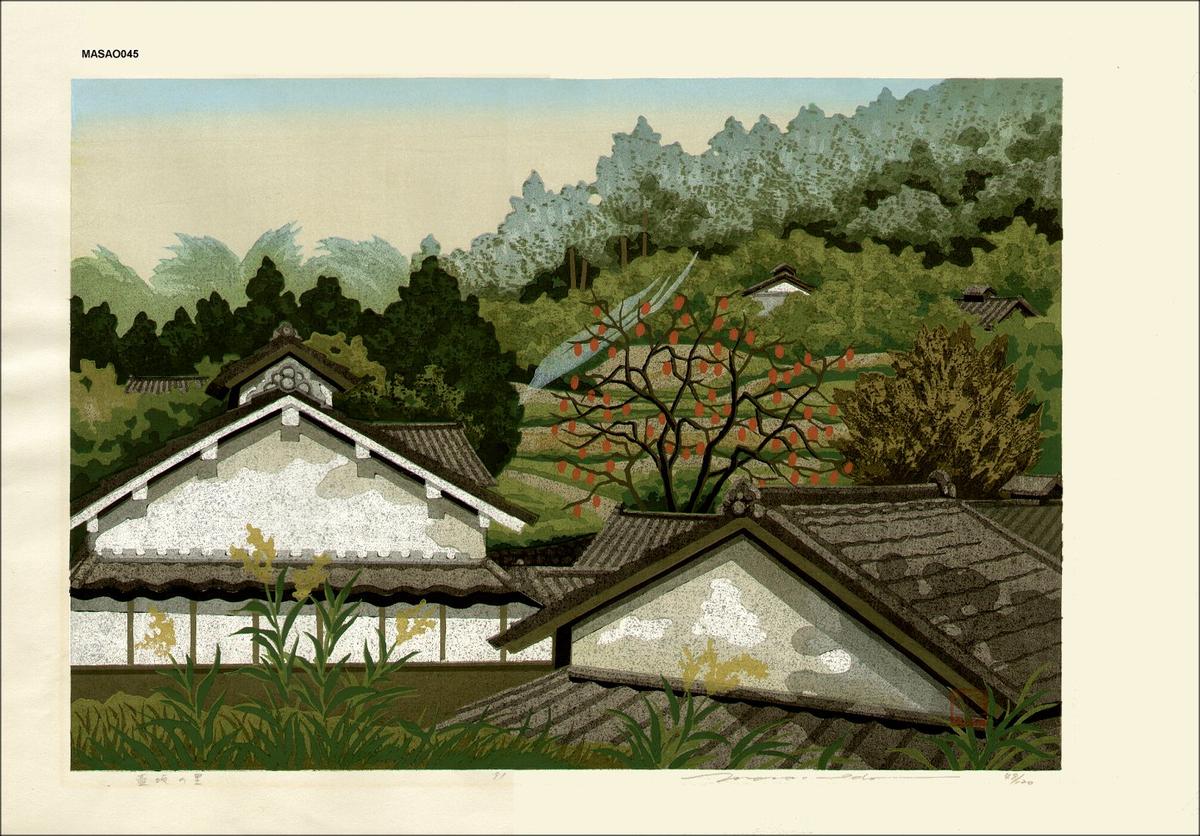
Village Scene in Nara
Woodblock print
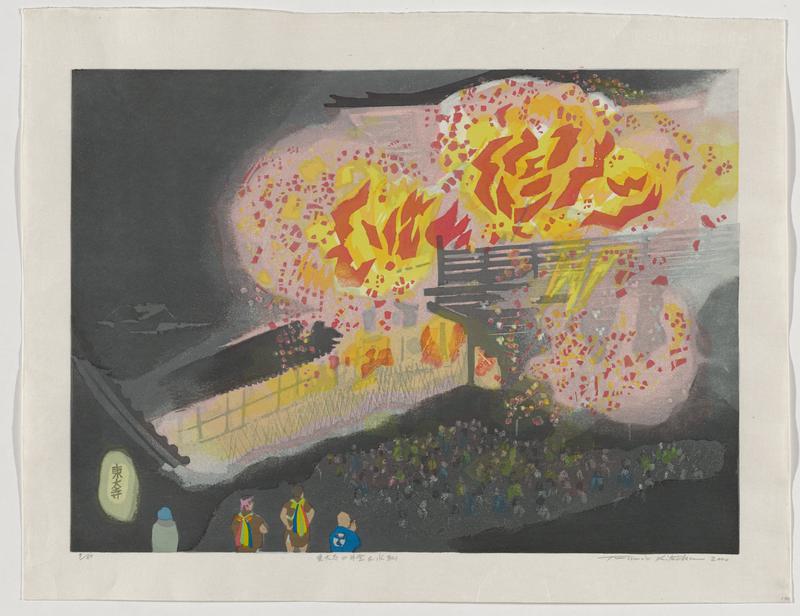
Water-Drawing Festival (omizutori) at the Nigatsudo Hall of Todaiji, Nara
2000
Woodblock print, ink and color on paper

Yakushi Temple, Nara (Nara Yakushiji)
1951
Color woodblock print

Yakushiji Temple Pagoda West of Nara (Nara Nishi-no-kyo, Yakushiji to)
1962
Woodblock print
Artists Who Depicted Nara (13)
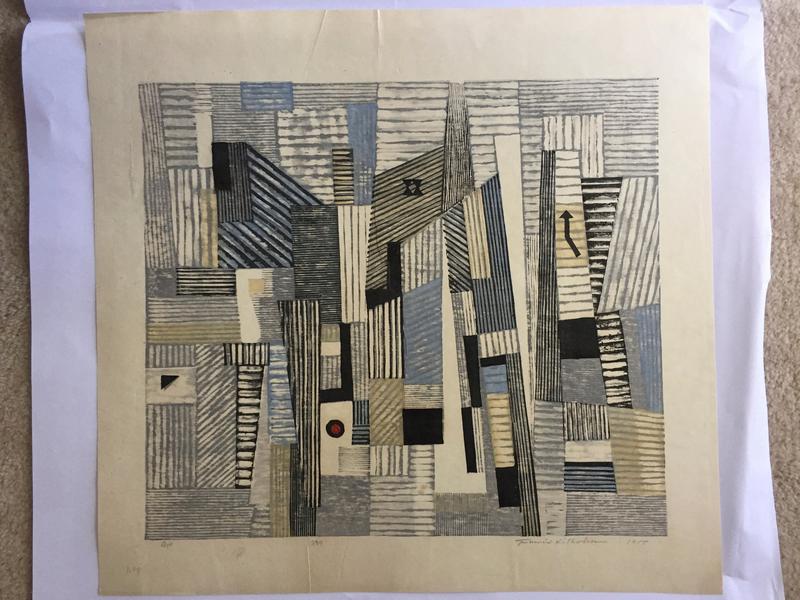
Fumio Kitaoka
北岡文雄
1918–2007
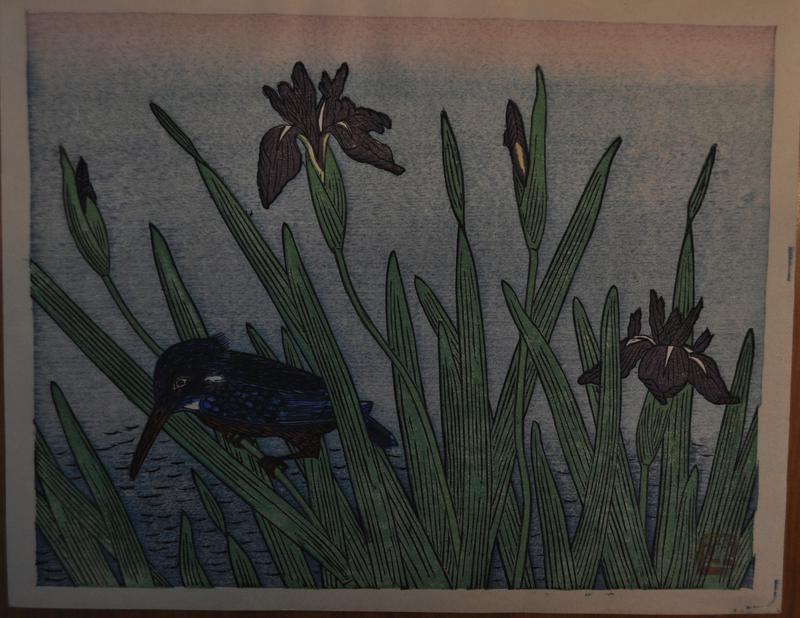
Hiratsuka Un'ichi
平塚運一
1895–1997
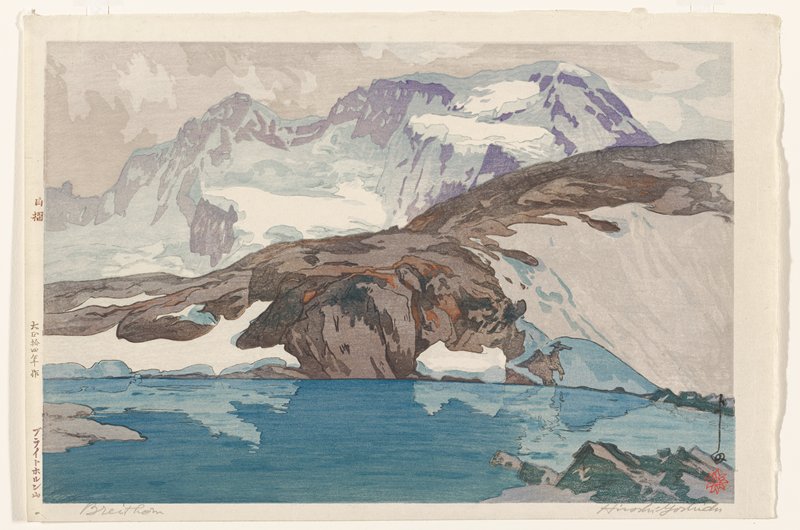
Hiroshi Yoshida
吉田博
1876–1950
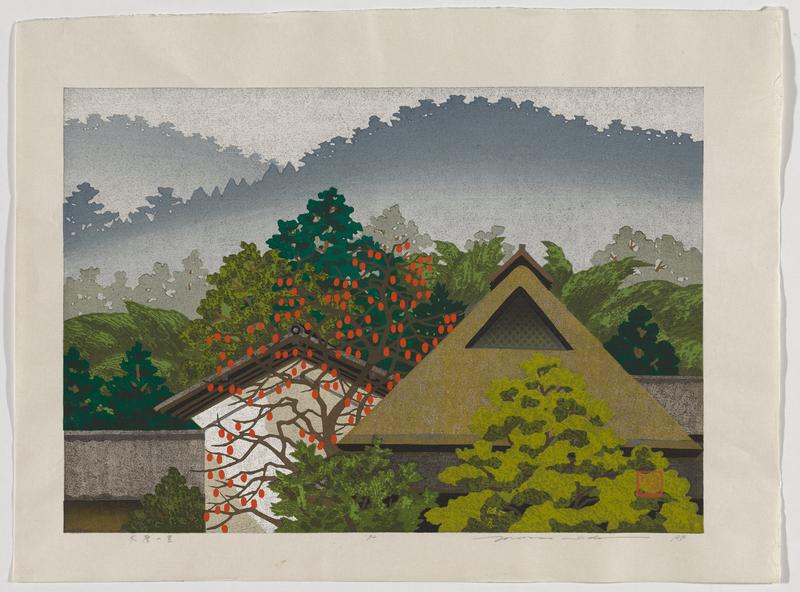
Ido Masao
井堂雅夫
1945–2016
Ito Nisaburo
伊藤仁三郎
1910–1988

Jun'ichiro Sekino
関野準一郎
1914–1988

Kawase Hasui
川瀬巴水
1883–1957
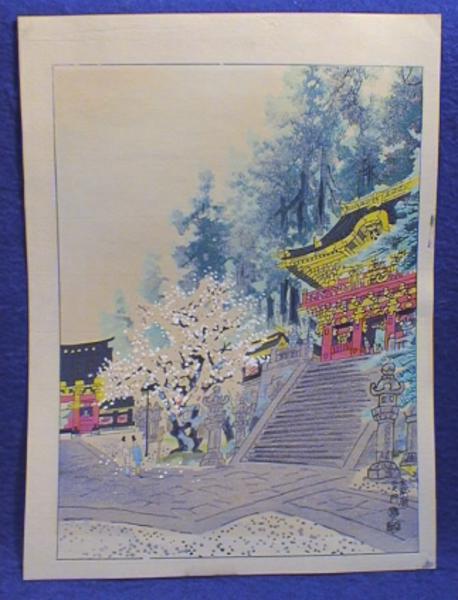
Kotozuka Eiichi
琴塚英一
1906–1979

Saito Kiyoshi
斎藤清
1907–1997

Shiro Kasamatsu
笠松紫浪
1898–1991
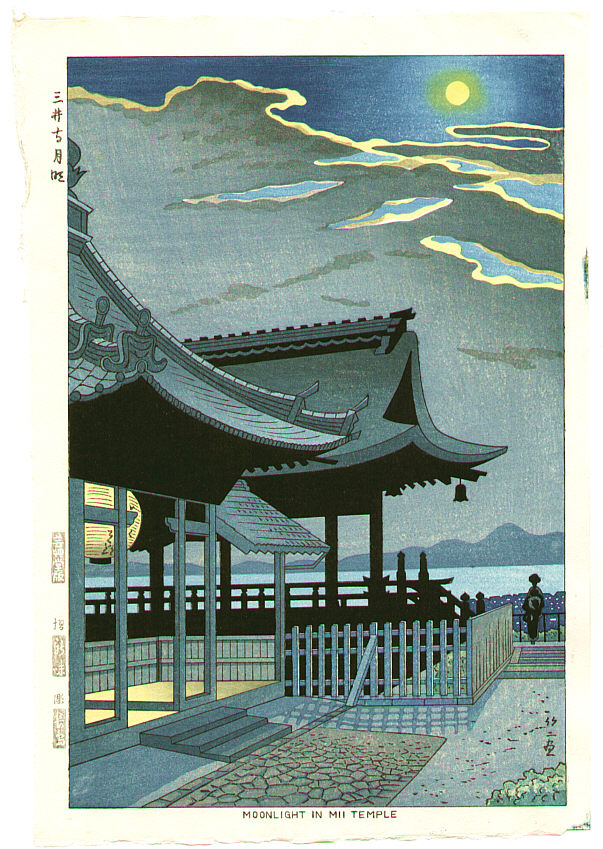
Takeji Asano
浅野竹二
1900–1999

Tsuchiya Koitsu
土屋光逸
1870–1949

Yuhan Ito
伊藤雄半
Frequently Asked Questions
Nara is a city in the northern Yamato basin of central Honshu, the principal city of Nara Prefecture and the historical capital of Japan from 710 to 784, during the period now known as the Nara period. The capital, known then as Heijo-kyo, was laid out on a Chinese grid plan modeled on the Tang capital at Chang'an as the first permanent imperial capital of Japan (preceding capitals having been relocated with each new emperor), and the surviving institutions of the city, including the great Buddhist temples of Todai-ji, Kofuku-ji, Yakushi-ji, Toshodai-ji, Saidai-ji, and the smaller temples of the original urban grid; the Shinto Kasuga Taisha shrine on the wooded slopes of Mount Mikasa; and the broad Nara Park preserving substantial portions of the original imperial grounds, constitute one of the most important concentrations of early Buddhist monumental architecture in East Asia. Todai-ji houses the bronze Great Buddha (Daibutsu) of the Birushana figure, originally cast in 752 at imperial command during the reign of Emperor Shomu and rebuilt several times after fires in the medieval and early modern periods, the present figure dating principally to the seventeenth-century reconstruction completed in 1709, and contained within the great Daibutsuden hall which is one of the largest wooden buildings in the world. The wild sika deer that wander freely through Nara Park, traditionally considered messengers of the Kasuga deity since the establishment of the Kasuga shrine in 768, are one of the recognizable features of the city, with approximately 1,200 deer documented in the park. After the relocation of the capital first to Nagaoka in 784 and then to Heian-kyo (Kyoto) in 794, Nara declined to a provincial center and pilgrimage town, retaining its importance as the seat of major Buddhist institutions but losing its political centrality. The Historic Monuments of Ancient Nara were designated a UNESCO World Heritage Site in 1998. For Japanese printmaking Nara appears in the late Edo meisho-e tradition, in the printed travel guides to the Kansai region, and in the shin-hanga revival of the early twentieth century. Utagawa Hiroshige treated Nara in his Famous Views of the Sixty-Odd Provinces, including views of Kasuga Taisha and the surrounding deer park, and individual sheets of Todai-ji and the Daibutsu appear across the late Edo and Meiji periods. Hokusai included Nara subjects in his printed-book sets, and Hasegawa Sadanobu of the Osaka kamigata school produced Kansai-region sheets that include Nara views. The shin-hanga revival brought a sustained engagement, with Kawase Hasui producing views of the temples and Nara Park including snow and twilight compositions, and Yoshida Hiroshi, Tsuchiya Koitsu, Asano Takeji, and Tokuriki Tomikichiro contributing further compositions of the Daibutsu hall, the Kasuga lanterns (with the celebrated Mantoro lantern festival providing one principal motif), the five-story pagoda of Kofuku-ji, and the seasonal phenomena. Tokuriki Tomikichiro included Nara in his Kyoto and Kansai-centered creative-print series. The visual character of Nara in prints is built on the broad sweep of Nara Park with its wandering deer, the dark roofs of the Daibutsuden of Todai-ji rising above the trees as one of the most distinctive silhouettes of any temple architecture in Japan, the stone lanterns of Kasuga Taisha in their lines through the cedar forest leading to the shrine, the five-story pagoda of Kofuku-ji on the western edge of the park, the cherry blossom and autumn maple of the temple precincts, and frequently the diffused atmospheric conditions of the Yamato basin including morning fog and evening haze. The deer figure as the principal foreground motif in many Nara compositions. Contemporary visitors reach Nara from Kyoto and Osaka by frequent direct trains on the JR and Kintetsu lines in under an hour, with the major temples and Nara Park preserving the principal sites of the historical and pictorial geography, and the Nara National Museum holding significant collections of early Buddhist art and the surrounding shrine and temple treasures.
Hanga catalogues 41 prints depicting Nara (奈良), by 13 different artists.
Fumio Kitaoka, Hiratsuka Un'ichi, and Hiroshi Yoshida are among the 13 artists who depicted Nara in our collection.
Want to rate prints from Nara?
Sign up to start rating