
Kameido Bridge, Tokyo
- Date:
- 1927
- Medium:
- Color woodblock print
- Format:
- Oban
- Dimensions:
- 27.2 × 40.7 cm
- Publisher:
- Yoshida Studio
- Source:
- Art Institute of Chicago
Description
Kameido, in eastern Tokyo, was home to one of the city's most beloved plum and wisteria gardens, and its bridge over the Kameido Tenjin Shrine's pond provided Yoshida with a composition of elegant simplicity in this 1927 print. The arched drum bridge (taiko-bashi) reflected in the pond below creates a near-perfect circle — a compositional form with deep resonance in Japanese aesthetics — while the surrounding landscape suggests the season through foliage or flowering plants. Yoshida's Tokyo series gave him license to treat the modern city's surviving traditional spaces with the same reverence he brought to rural landscapes, finding in Kameido's bridge and pond a geometry that transcended its urban setting.
More Prints by Hiroshi Yoshida
More Landscapes Prints

Lake Kugushi in Wakasa Province (Wakasa Kugushiko), from the series Souvenirs of Travel I (Tabi miyage dai isshu)"
Wakasa Kugushiko
1920
Color woodblock print; oban
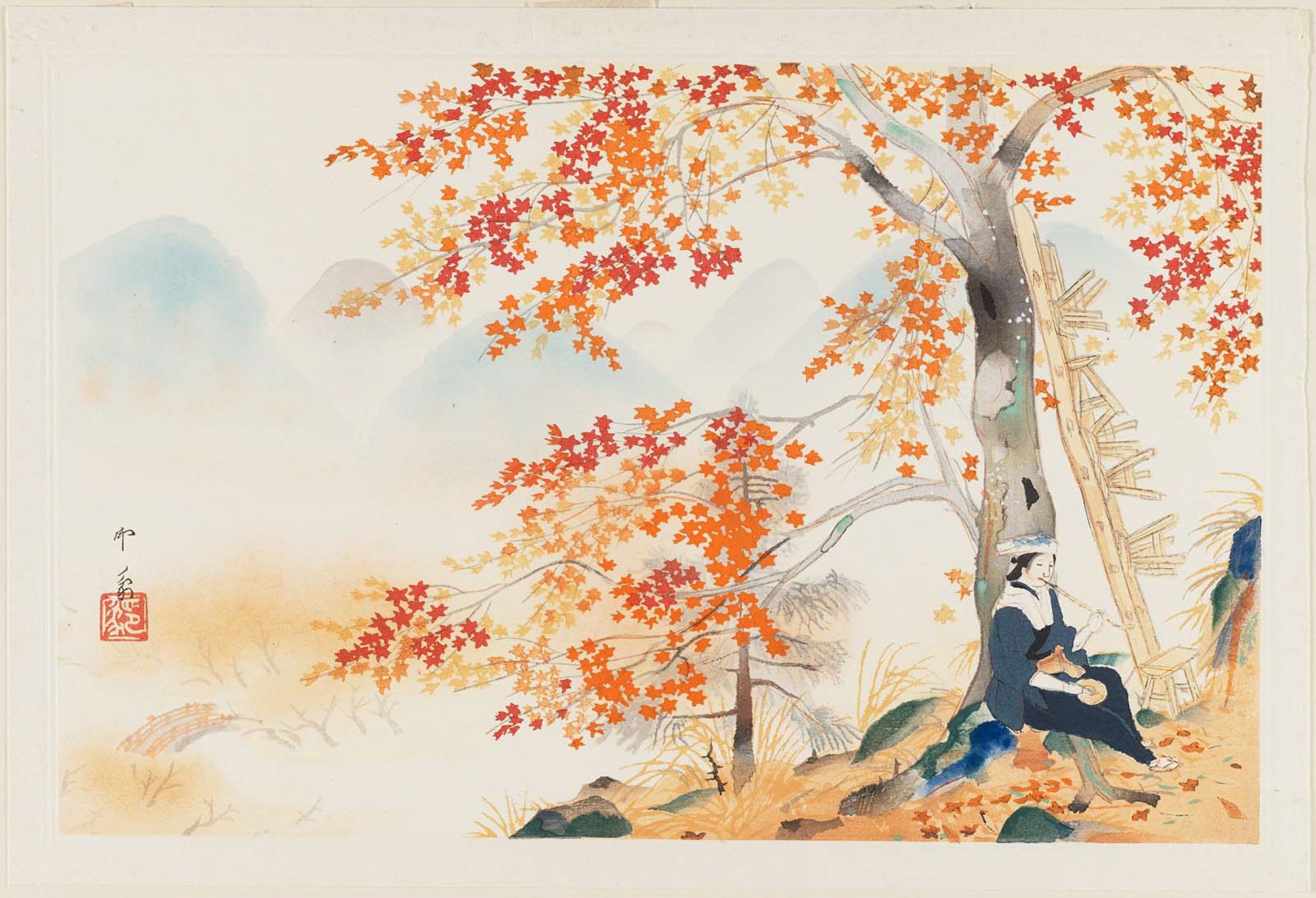
Autumn Maple Leaves at Takao, from the album Eight Views of Kyoto (Kyôto hakkei)
Woodblock print

The Beach at Kaiganji in Sanuki Province (Sanuki Kaiganji no hama), from the series "Collection of Views of Japan II, Kansai Edition (Nihon fukei shu II Kansai hen)"
1934
Color woodblock print; oban

Tea Kettle, section of a sheet from the series "Mirror of Stone Rubbings of Views of the Provinces" (Kohon meihitsu ishizuri kagami)
n.d.
Woodblock print; ishizuri-e, section of harimaze sheet
Featured in Collections
Curated cross-cuts that include this print.
Frequently Asked Questions
Kameido Bridge, Tokyo was created by Hiroshi Yoshida (吉田博) in 1927.
Kameido Bridge, Tokyo uses Moku-hanga, Nishiki-e, and Bokashi, on color woodblock print.
Kameido Bridge, Tokyo was published by Yoshida Studio (1927).
Kameido Bridge, Tokyo depicts landscapes and bridges, set at Tokyo.
Kameido Bridge, Tokyo measures 27.2 × 40.7 cm (Oban format).