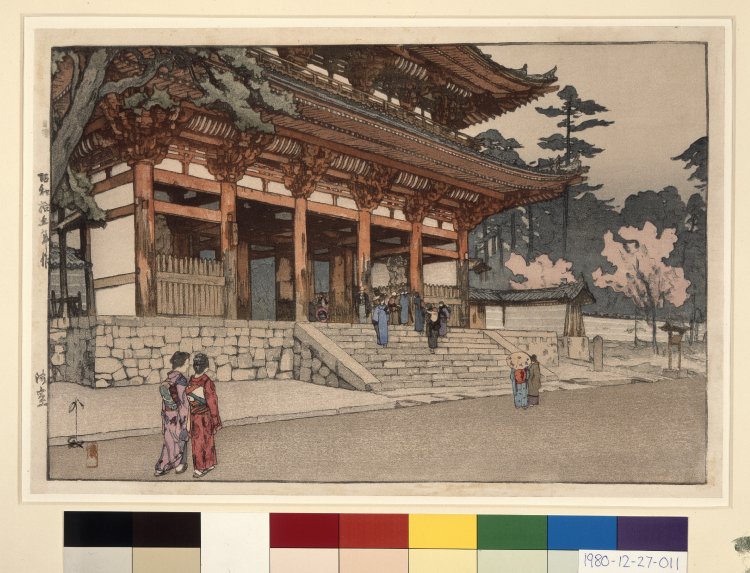
Omuro
- Medium:
- Woodblock print
- Format:
- Oban
- Dimensions:
- 27 × 40 cm
- Publisher:
- Yoshida Studio
- Source:
- ukiyo-e.org
Description
Omuro — a district within the precincts of Ninna-ji Temple in Kyoto, famous for its late-blooming cherry trees, the Omuro cherries (omuro no sakura) among the last in the city to flower each spring — provides the setting for this circa-1940 print. The Omuro cherries, squat and ancient, bloom in mid-April after most of Kyoto's blossoms have already fallen, creating a final season of cherry viewing that Yoshida captured with a quietude appropriate to the closing of spring. The Ninna-ji precinct, with its five-story pagoda visible above the cherry canopy, offered him the combination of architectural and natural elements that his best compositions balanced with particular skill.
More Prints by Hiroshi Yoshida
More Cherry Blossoms Prints

Kumoi Cherry Trees (Kumoi sakura)
Kumoi sakura
1926
Color woodblock print

Hirosaki Castle, from the series "Eight Views of Cherry Blossoms"
1935
Color woodblock print

Chion-in Temple Gate (Romon), from the series Eight Scenes of Cherry Blossoms (Sakura hachidai)
Romon
1935
Color woodblock print
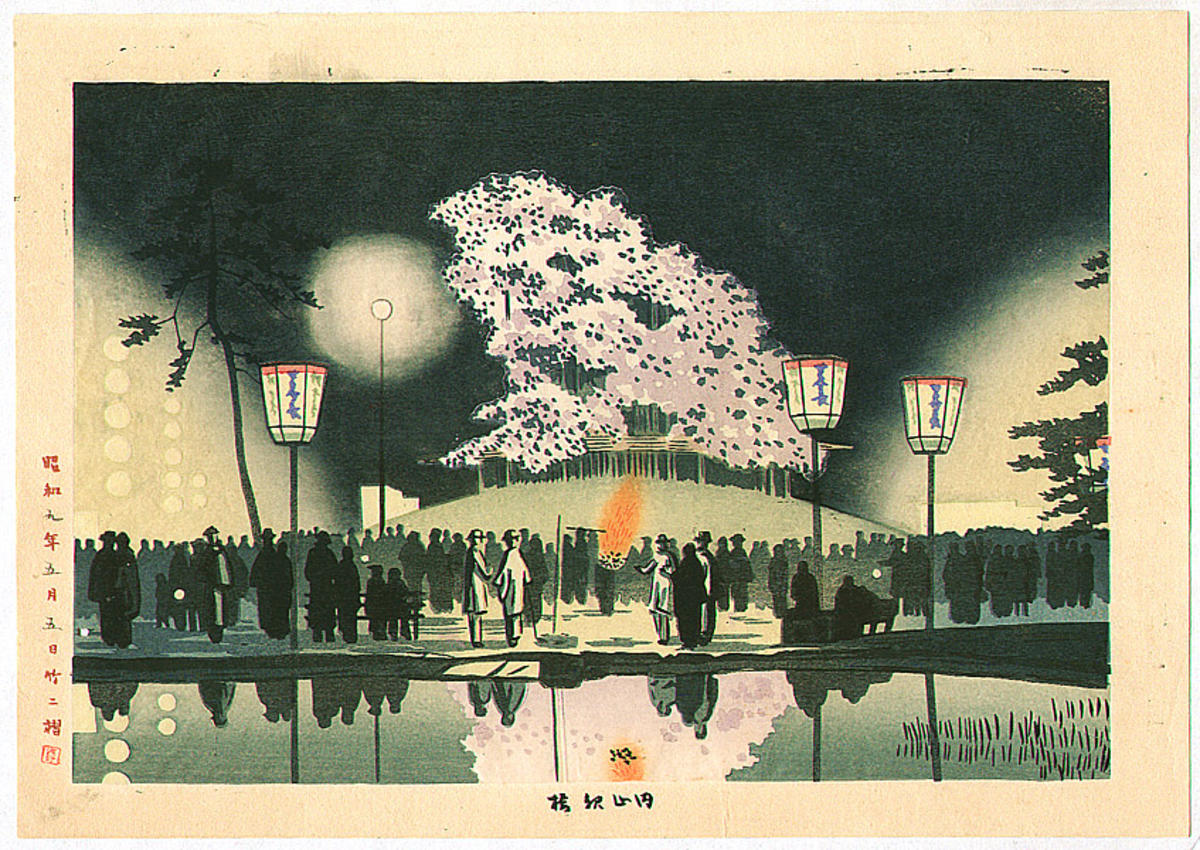
Cherry Blossoms at Maruyama Park
円山公園桜
Woodblock print
Featured in Collections
Curated cross-cuts that include this print.
Frequently Asked Questions
Omuro was created by Hiroshi Yoshida (吉田博).
Omuro uses Bokashi, Nishiki-e, and Moku-hanga, on woodblock print.
Omuro was published by Yoshida Studio.
Omuro depicts cherry blossoms, temples & shrines, and spring.
Omuro measures 27 × 40 cm (Oban format).