
Rapids
- Date:
- 1928
- Medium:
- Color woodblock print
- Format:
- Oban
- Dimensions:
- 86.8 × 57.9 cm
- Publisher:
- Yoshida Studio
- Source:
- Art Institute of Chicago
Description
Mountain rapids — water white with energy, tumbling over and between boulders worn smooth by centuries of current — were among Yoshida's recurring subjects, and this 1928 print brings his sustained engagement with kinetic water to a formal peak. The challenge of depicting fast-moving water in a medium that arrests all motion was one Yoshida approached through compositional strategy: he captures the moment of maximum visual complexity, the spray at the point of impact, the directional flow lines of the current, the contrast between turbulent white water and the dark, still pools in the eddies behind rocks. His training in Western oil painting gave him a vocabulary for this kind of dynamic landscape subject that he translated systematically into the woodblock medium.
More Prints by Hiroshi Yoshida
More Landscapes Prints

Lake Kugushi in Wakasa Province (Wakasa Kugushiko), from the series Souvenirs of Travel I (Tabi miyage dai isshu)"
Wakasa Kugushiko
1920
Color woodblock print; oban
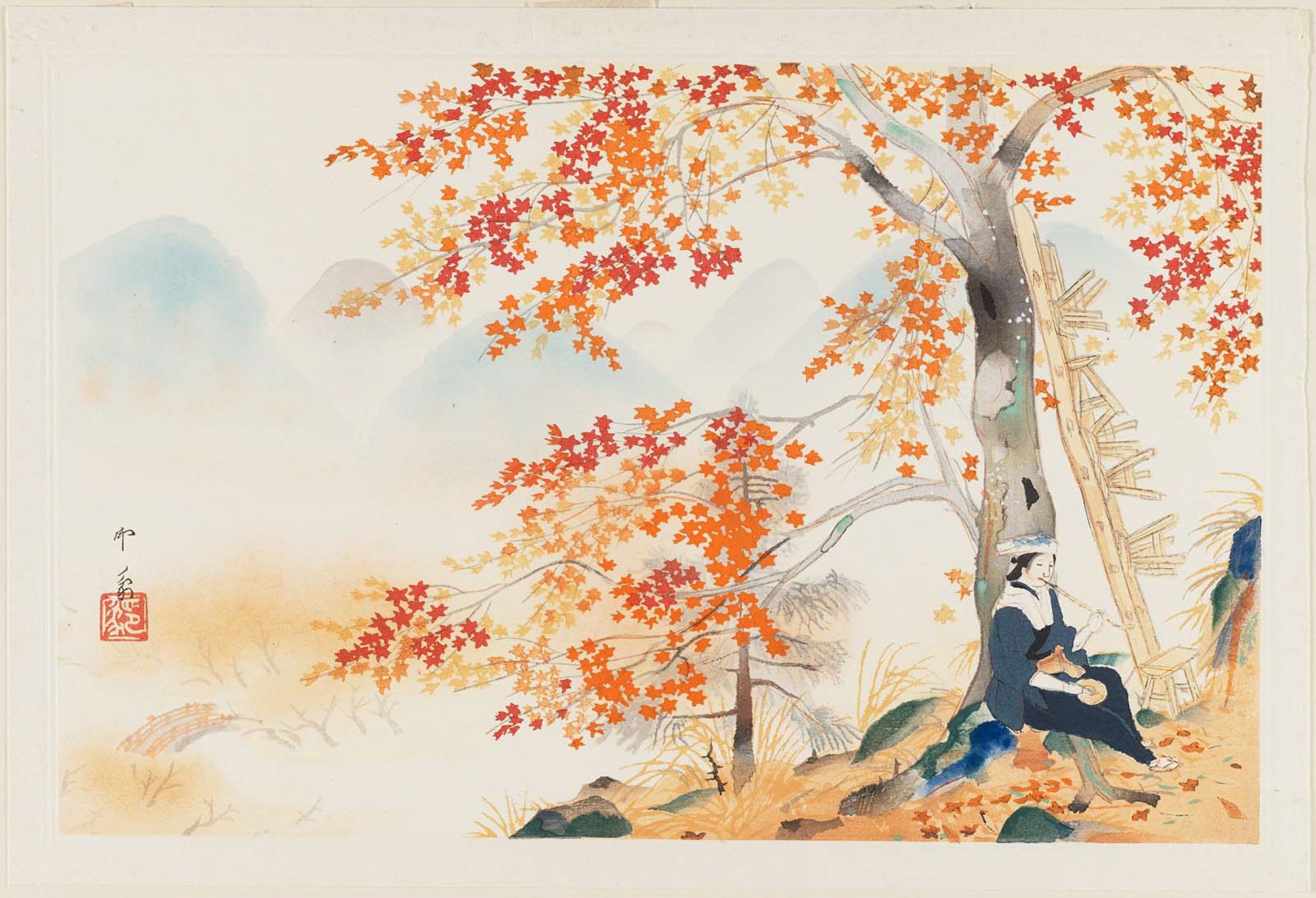
Autumn Maple Leaves at Takao, from the album Eight Views of Kyoto (Kyôto hakkei)
Woodblock print

The Beach at Kaiganji in Sanuki Province (Sanuki Kaiganji no hama), from the series "Collection of Views of Japan II, Kansai Edition (Nihon fukei shu II Kansai hen)"
1934
Color woodblock print; oban

Tea Kettle, section of a sheet from the series "Mirror of Stone Rubbings of Views of the Provinces" (Kohon meihitsu ishizuri kagami)
n.d.
Woodblock print; ishizuri-e, section of harimaze sheet
Featured in Collections
Curated cross-cuts that include this print.
Frequently Asked Questions
Rapids was created by Hiroshi Yoshida (吉田博) in 1928.
Rapids uses Moku-hanga, Nishiki-e, and Bokashi, on color woodblock print.
Rapids was published by Yoshida Studio (1928).
Rapids depicts landscapes.
Rapids measures 86.8 × 57.9 cm (Oban format).