
Sankeien
- Date:
- 1935
- Medium:
- Color woodblock print
- Format:
- Oban
- Dimensions:
- 27.5 × 40.8 cm
- Publisher:
- Yoshida Studio
- Source:
- Art Institute of Chicago
Description
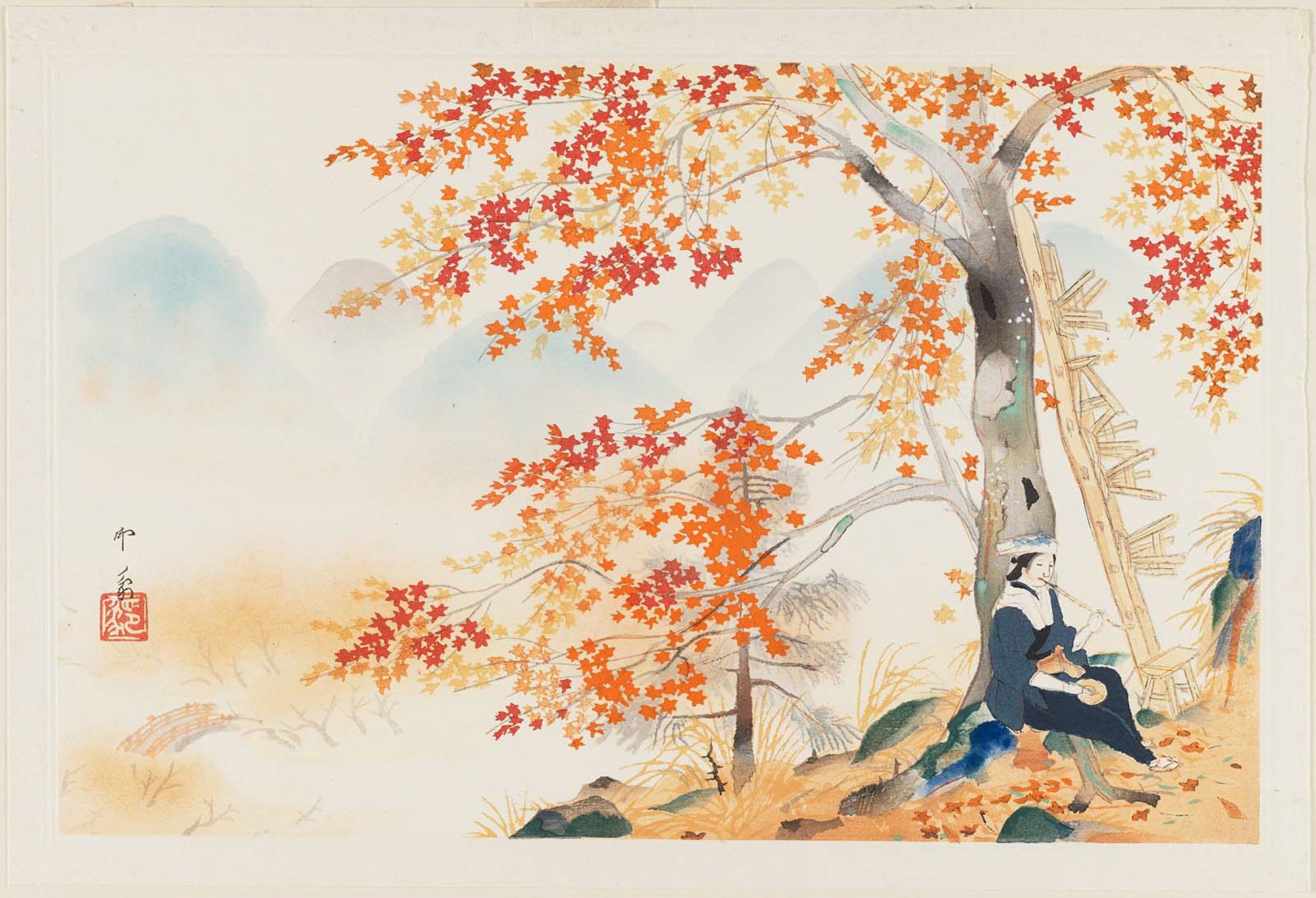
Sankeien — the historic garden in Yokohama developed by silk merchant Hara Tomitaro in the early twentieth century, which contains transplanted historical buildings from around Japan including several designated National Treasures — provided Yoshida with a garden landscape of unusual depth and historical resonance in this 1935 print. The garden's transplanted architecture — a three-story pagoda from Kyoto's Tomyo-ji temple, a farmhouse from Gifu, tea ceremony buildings from various origins — sits within a designed landscape of ponds, hills, and seasonal plantings that offered Yoshida the combination of architectural and natural elements he found most compositionally generative. Sankeien was a site he could visit easily from Tokyo, and his treatment reflects the intimacy of repeated observation.
More Prints by Hiroshi Yoshida
More Landscapes Prints

Lake Kugushi in Wakasa Province (Wakasa Kugushiko), from the series Souvenirs of Travel I (Tabi miyage dai isshu)"
Wakasa Kugushiko
1920
Color woodblock print; oban
Autumn Maple Leaves at Takao, from the album Eight Views of Kyoto (Kyôto hakkei)
Woodblock print

The Beach at Kaiganji in Sanuki Province (Sanuki Kaiganji no hama), from the series "Collection of Views of Japan II, Kansai Edition (Nihon fukei shu II Kansai hen)"
1934
Color woodblock print; oban

Tea Kettle, section of a sheet from the series "Mirror of Stone Rubbings of Views of the Provinces" (Kohon meihitsu ishizuri kagami)
n.d.
Woodblock print; ishizuri-e, section of harimaze sheet
Featured in Collections
Curated cross-cuts that include this print.
Frequently Asked Questions
Sankeien was created by Hiroshi Yoshida (吉田博) in 1935.
Sankeien uses Bokashi, Nishiki-e, and Moku-hanga, on color woodblock print.
Sankeien was published by Yoshida Studio (1935).
Sankeien depicts landscapes, architecture, and gardens.
Sankeien measures 27.5 × 40.8 cm (Oban format).