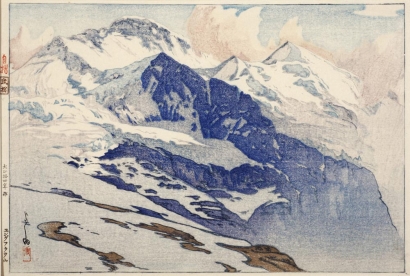
The Jungfrau
- Medium:
- Woodblock print
- Source:
- Art Gallery of Greater Victoria
- Image courtesy of
- Art Gallery of Greater Victoria
Description
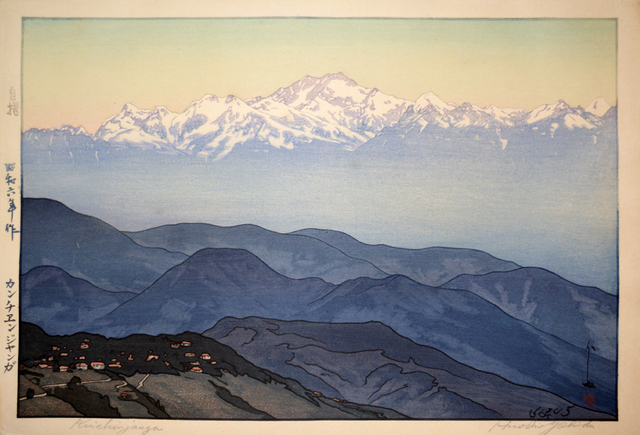
The Jungfrau is a 4,158-meter peak in the Bernese Alps and one of the highest summits in the Alps, likely depicted by Yoshida during his European travels of the 1920s as part of a suite of Swiss mountain subjects that also includes the Breithorn and Matterhorn. The composition probably isolates the snow-covered peak above a line of cloud or rocky ridge, with the vast white snowfield rendered through graduated bokashi passages that shift from blue-grey shadow to warm white at the summit crest. Yoshida's training in Western oil painting informed his understanding of how snow absorbs and reflects directional light, and he translated these observations into woodblock through multiple registration passes of closely valued pigments. The Jungfrau series demonstrates how Yoshida extended the landscape print tradition — largely defined by Japanese subjects in ukiyo-e — into a truly global documentary practice, applying the same technical rigor to Alpine summits that Japanese artists had long devoted to Mount Fuji.
More Prints by Hiroshi Yoshida
More Landscapes Prints

Lake Kugushi in Wakasa Province (Wakasa Kugushiko), from the series Souvenirs of Travel I (Tabi miyage dai isshu)"
Wakasa Kugushiko
1920
Color woodblock print; oban
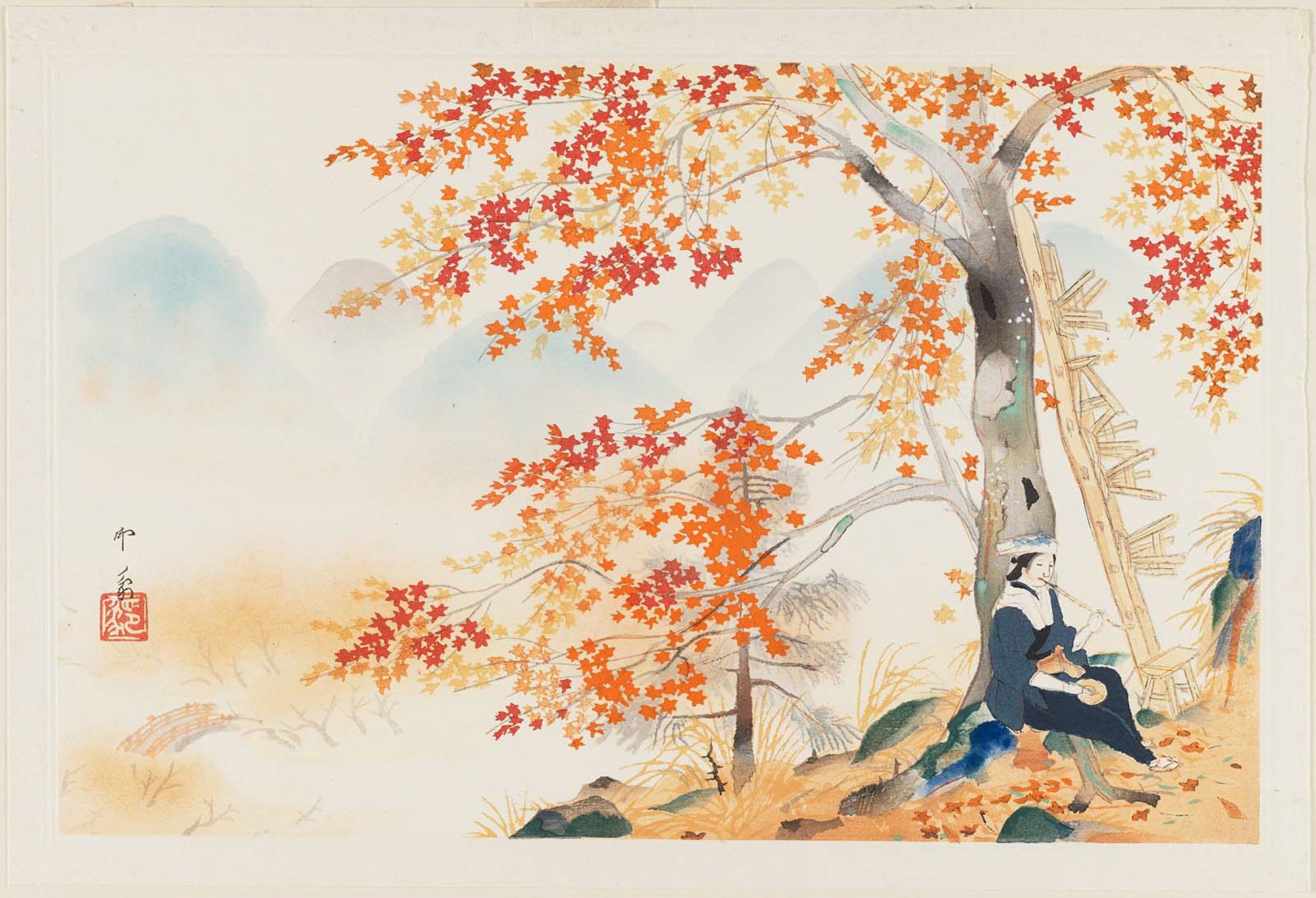
Autumn Maple Leaves at Takao, from the album Eight Views of Kyoto (Kyôto hakkei)
Woodblock print

The Beach at Kaiganji in Sanuki Province (Sanuki Kaiganji no hama), from the series "Collection of Views of Japan II, Kansai Edition (Nihon fukei shu II Kansai hen)"
1934
Color woodblock print; oban

Tea Kettle, section of a sheet from the series "Mirror of Stone Rubbings of Views of the Provinces" (Kohon meihitsu ishizuri kagami)
n.d.
Woodblock print; ishizuri-e, section of harimaze sheet
Featured in Collections
Curated cross-cuts that include this print.
Frequently Asked Questions
The Jungfrau was created by Hiroshi Yoshida (吉田博).
The Jungfrau depicts landscapes and mountains.