
Yoshikawa
- Date:
- 1935
- Medium:
- Color woodblock print
- Format:
- Oban
- Dimensions:
- 39.6 × 26.4 cm
- Publisher:
- Yoshida Studio
- Source:
- Art Institute of Chicago
Description
Yoshikawa — likely a river town or village name referencing a place along one of Japan's many rivers (kawa meaning "river") — appears in this 1935 print as a landscape defined by the relationship between flowing water and settled human community. The composition may depict a town or village on the banks of a named river, its buildings reflected in the current, the natural and built environments coexisting in the kind of organic integration that characterized traditional Japanese riverside communities. Yoshida was drawn throughout his career to the places where rivers defined the character of landscapes and communities, and his treatment of this subject reflects the accumulated skill of decades spent rendering water in all its conditions and settings.
More Prints by Hiroshi Yoshida
More Landscapes Prints

Lake Kugushi in Wakasa Province (Wakasa Kugushiko), from the series Souvenirs of Travel I (Tabi miyage dai isshu)"
Wakasa Kugushiko
1920
Color woodblock print; oban
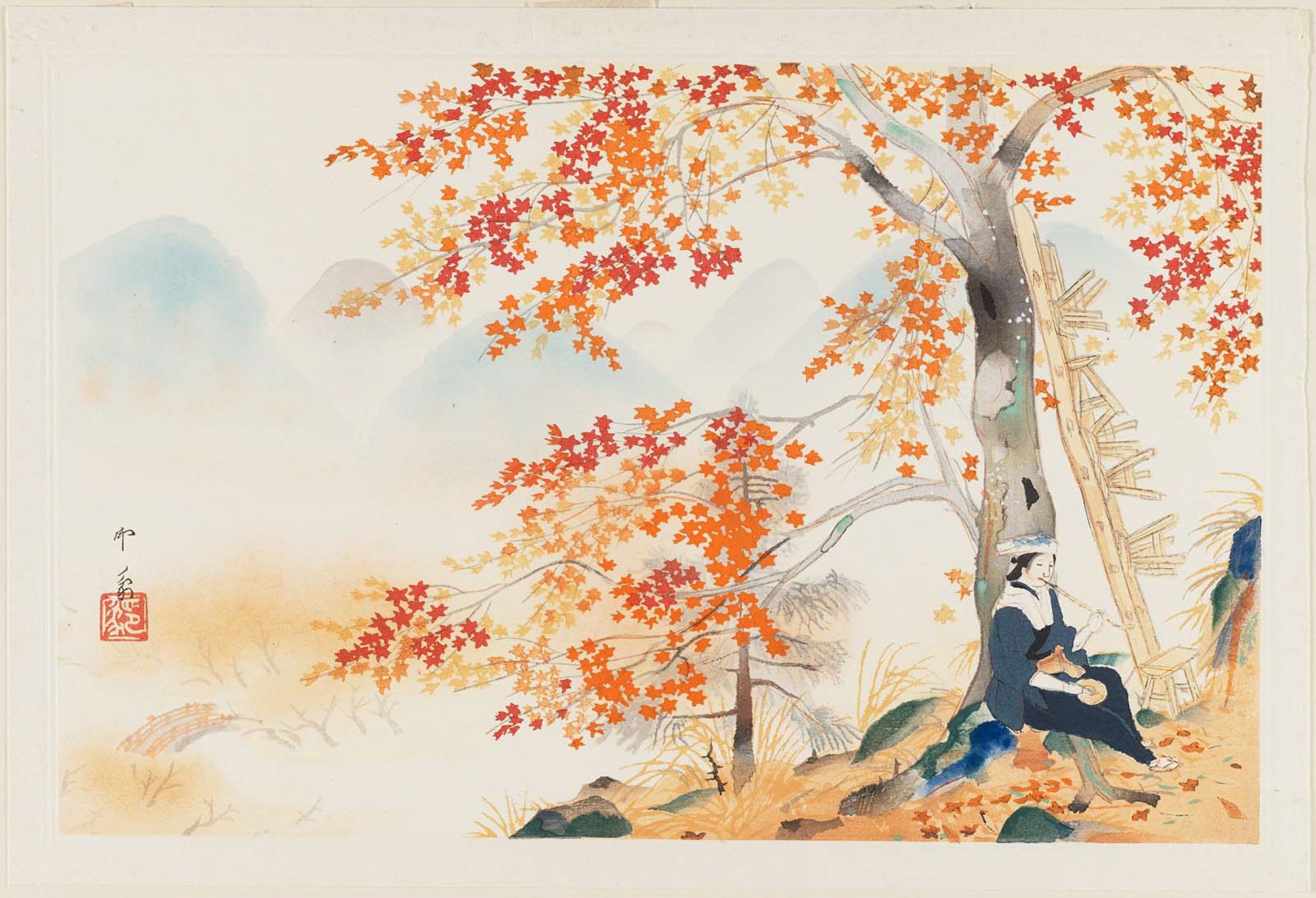
Autumn Maple Leaves at Takao, from the album Eight Views of Kyoto (Kyôto hakkei)
Woodblock print

The Beach at Kaiganji in Sanuki Province (Sanuki Kaiganji no hama), from the series "Collection of Views of Japan II, Kansai Edition (Nihon fukei shu II Kansai hen)"
1934
Color woodblock print; oban

Tea Kettle, section of a sheet from the series "Mirror of Stone Rubbings of Views of the Provinces" (Kohon meihitsu ishizuri kagami)
n.d.
Woodblock print; ishizuri-e, section of harimaze sheet
Featured in Collections
Curated cross-cuts that include this print.
Frequently Asked Questions
Yoshikawa was created by Hiroshi Yoshida (吉田博) in 1935.
Yoshikawa uses Bokashi, Nishiki-e, and Moku-hanga, on color woodblock print.
Yoshikawa was published by Yoshida Studio (1935).
Yoshikawa depicts landscapes, rivers & lakes, and village scenes.
Yoshikawa measures 39.6 × 26.4 cm (Oban format).