
Burntout Remains at Ryougokubashi Bridge — 両国橋焼跡
by Inoue Yasuji
- Source:
- ukiyo-e.org
Description
Burnt-out Remains at Ryougokubashi Bridge is one of Inoue Yasuji's most affecting documentary prints, depicting the ruins along the Sumida River near Ryogoku Bridge after one of the great Tokyo fires of the early Meiji era. The capital suffered repeated conflagrations during these decades, and prints of fire damage became a recognized subspecies of Meiji prints, sold as news souvenirs and as visual records for residents and distant readers alike. Inoue Yasuji approaches the scene with the same disciplined kosen-ga technique he developed under Kobayashi Kiyochika and refined in his Tokyo Famous Places work: a level horizon, carefully measured recession of building stubs and charred posts, and bokashi gradations in the sky that translate ash-laden haze into a continuous tonal field. Figures pick their way through the rubble in the middle distance, small enough to register loss without sliding into melodrama. The print's relationship to the meisho tradition is pointed; rather than commemorating Ryogoku's celebrated fireworks or restaurants, Inoue Yasuji records the same site in its moment of erasure. The ukiyo-e.org archive preserves this impression, where it remains one of the clearest examples of how late nineteenth-century woodblock artists could turn the conventions of Tokyo Famous Places toward sober reportage. For readers studying Inoue Yasuji's range, the sheet shows that his commitment to atmospheric printing extended naturally from moonlit embankments to scenes of urban catastrophe.
More Prints by Inoue Yasuji

The Emperor Meiji and Empress in a Carriage during their Silver Wedding Anniversary Celebration at Aoyama
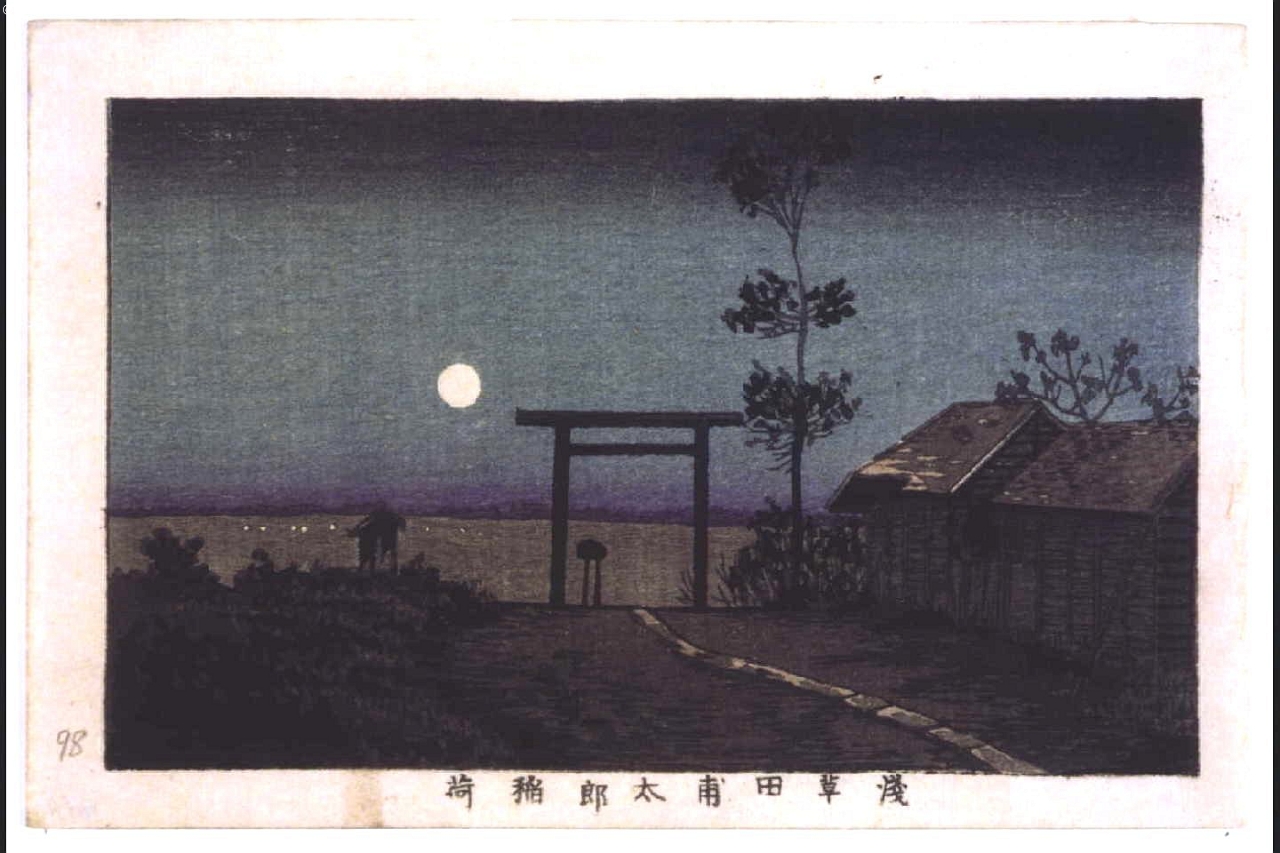
True Pictures of Famous Places in Tokyo: Taro Inari Shrine in Asakusa-tanbo
Woodblock print
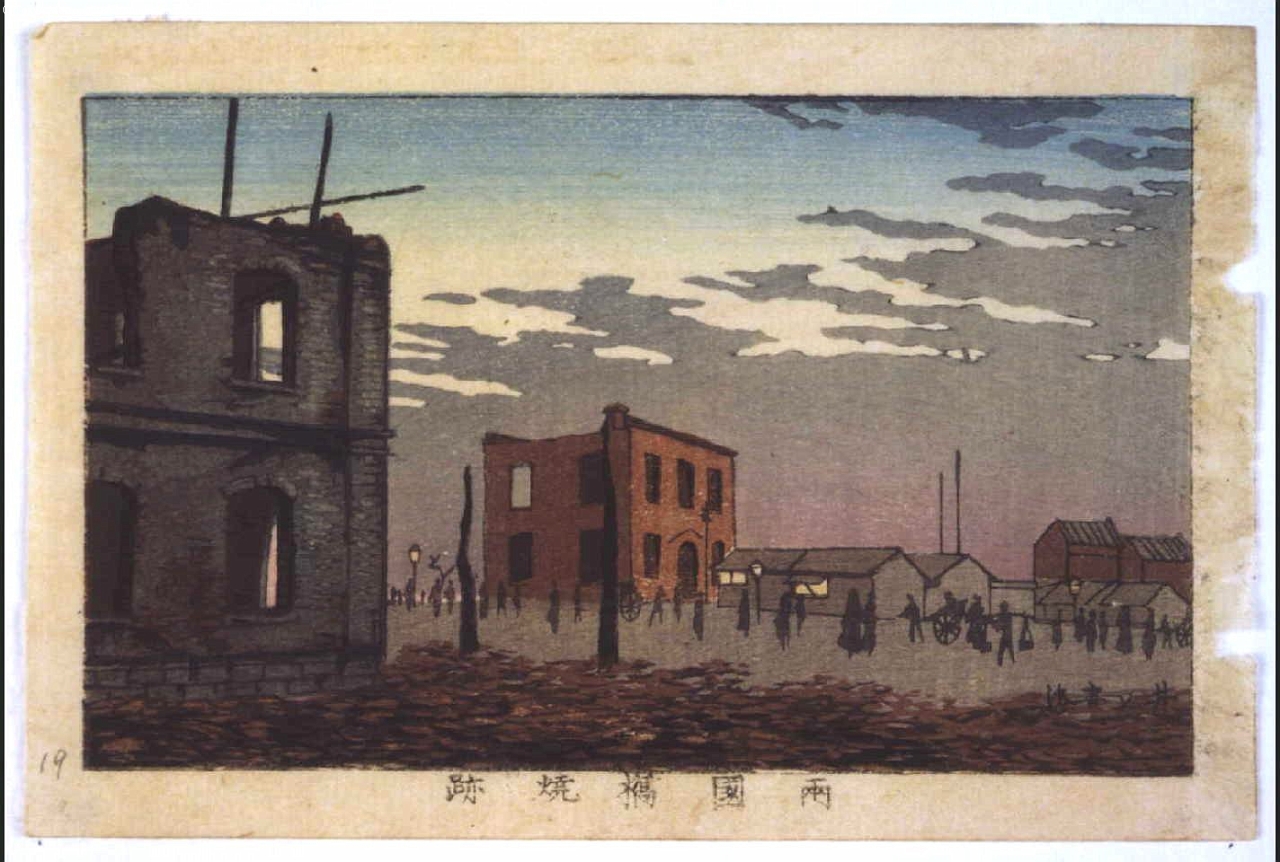
True Pictures of Famous Places in Tokyo: The Burnt Remains of Ryogokubashi Bridge
Woodblock print
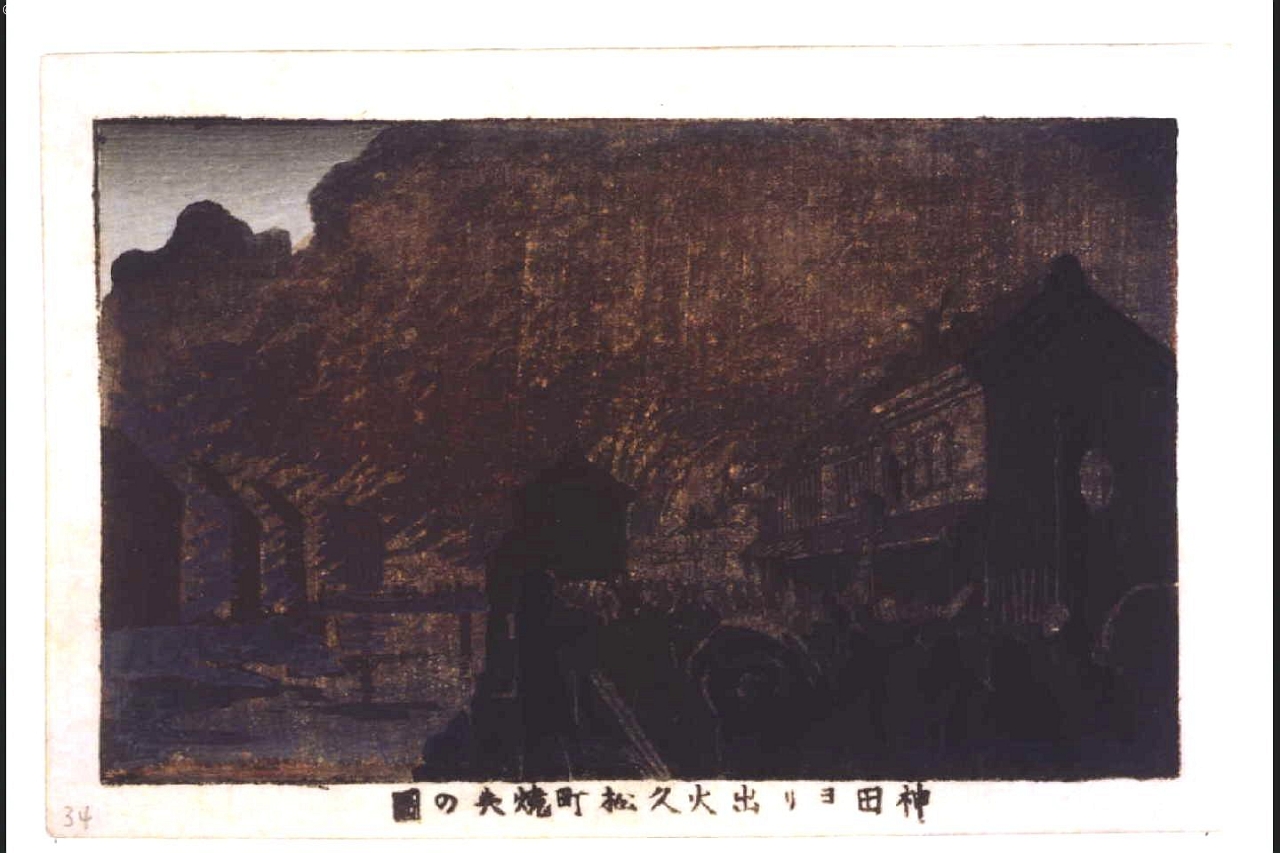
True Pictures of Famous Places in Tokyo: The Destruction of Hisamatsucho in a Fire that Started in Kanda
Woodblock print
More Bridges Prints
Fair Weather After Snow at Yamato Bridge, Kyoto (Yamato bashi no yukibare), Taishô period, dated 1924
Woodblock print
![Mount Fuji on a Moonlit Night, Kawai Bridge (Tsukiyo no Fuji [Kawaibashi]), from the series "Selection of Views of the Tokaido (Tokaido fukei senshu)" by Kawase Hasui](https://www.artic.edu/iiif/2/d0960668-1e73-339a-b182-fb995a54bff0/full/843,/0/default.jpg)
Mount Fuji on a Moonlit Night, Kawai Bridge (Tsukiyo no Fuji [Kawaibashi]), from the series "Selection of Views of the Tokaido (Tokaido fukei senshu)"
1947
Color woodblock print; oban

Shin Ohashi Bridge (Shin Ohashi), from the series "Twenty View of Tokyo (Tokyu nijukkei)"
1926
Color woodblock print; oban

Sacred Bridge in Nikko (Nikko Shinkyo)
1930
Color woodblock print; oban
Frequently Asked Questions
Burntout Remains at Ryougokubashi Bridge — 両国橋焼跡 was created by Inoue Yasuji (井上安治).
Burntout Remains at Ryougokubashi Bridge — 両国橋焼跡 depicts bridges.