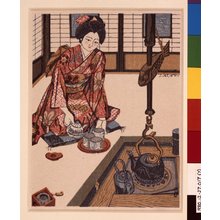
"Tohoku no irori ha (Home-life in Winter-time (Northern Japan)) / Nihon jozoku sen (Woman's Customs in Japan)"
- Medium:
- Woodblock print
- Source:
- British Museum
- Image courtesy of
- British Museum
This print documents domestic life in the Tohoku region of northern Japan, depicting an irori—the traditional sunken hearth used for heating and cooking in rural farmhouses. The scene belongs to Sekino's sustained engagement with the folk customs and everyday life of Aomori and surrounding northern prefectures, a subject rooted in his own biography as a native of the region. An irori scene typically shows figures gathered around the central fire, their faces lit by warm light against the deep shadow of a heavy-timbered interior. Sekino's personal knowledge of this domestic world lends the composition authenticity beyond tourism or ethnography. As part of a series on women's customs in Japan, the print foregrounds the gendered labor of the hearth, capturing both the physical arrangement of the space and the social rituals organized around it.
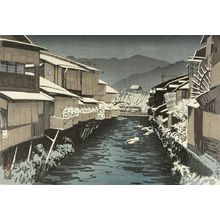
Woodblock print

c. 1832/38
Color woodblock print; oban

Yuki no Miyajima
1929
Color woodblock print; oban
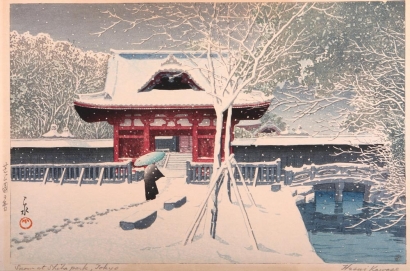
1932
Woodblock print
Curated cross-cuts that include this print.
"Tohoku no irori ha (Home-life in Winter-time (Northern Japan)) / Nihon jozoku sen (Woman's Customs in Japan)" was created by Jun'ichiro Sekino (関野準一郎).
"Tohoku no irori ha (Home-life in Winter-time (Northern Japan)) / Nihon jozoku sen (Woman's Customs in Japan)" depicts snow scenes.