
The full moon at Uji Bridge
by Kamei Tobei
- Medium:
- Mokuhanga (Japanese woodblock)
- Image courtesy of
- Saru Gallery
Description
A view of the bridge at Uji — south of Kyoto, among the oldest documented bridges in Japan and a site with long-standing literary and visual associations through the Genji monogatari and the Hyakunin Isshu — under a full moon. Uji Bridge is a classic meisho subject, treated by ukiyo-e designers from Hokusai and Hiroshige onward, and the moonlit register places the print in the tsukimi tradition of autumn moon viewing. A composition of this type generally uses the bridge as a horizontal anchor across the middle band of the sheet, with the moon set high in a gradated indigo or grey sky carried by bokashi, and the river surface registered as a flat band of darker ink. Mokuhanga production would carry the bridge structure through the keyblock and use a restrained palette of indigo, grey, and black for the night atmosphere. Within Kamei's wider output, an Uji Bridge moonlight scene fits squarely within the shin-hanga landscape and meisho-e register that defined his career.
More Prints by Kamei Tobei


More Bridges Prints
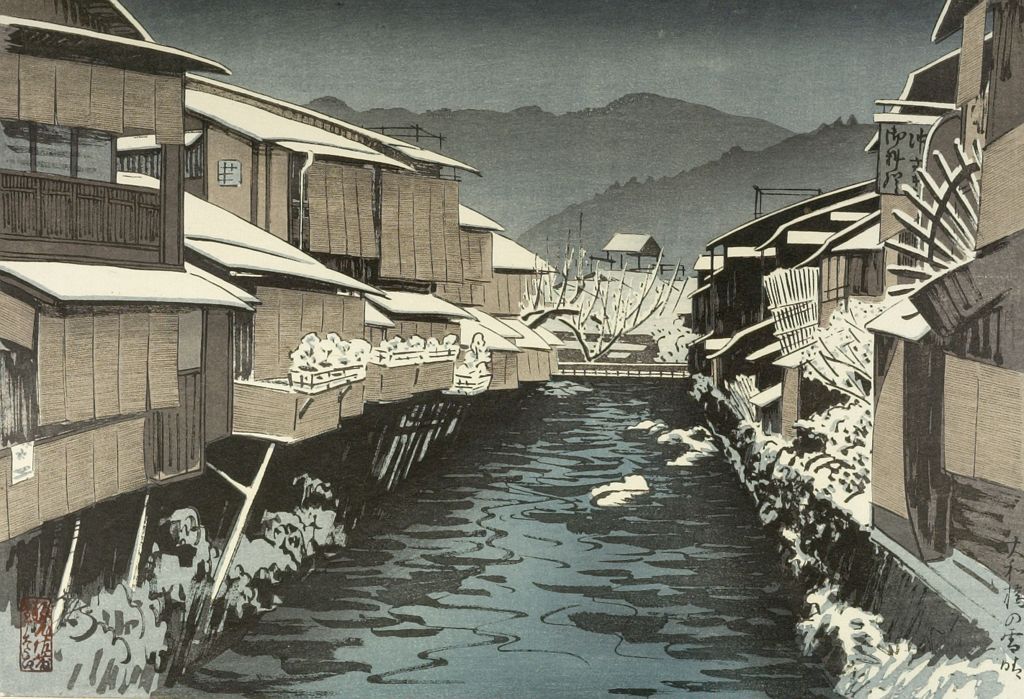
Fair Weather After Snow at Yamato Bridge, Kyoto (Yamato bashi no yukibare), Taishô period, dated 1924
Woodblock print
![Mount Fuji on a Moonlit Night, Kawai Bridge (Tsukiyo no Fuji [Kawaibashi]), from the series "Selection of Views of the Tokaido (Tokaido fukei senshu)" by Kawase Hasui](https://www.artic.edu/iiif/2/d0960668-1e73-339a-b182-fb995a54bff0/full/843,/0/default.jpg)
Mount Fuji on a Moonlit Night, Kawai Bridge (Tsukiyo no Fuji [Kawaibashi]), from the series "Selection of Views of the Tokaido (Tokaido fukei senshu)"
1947
Color woodblock print; oban

Shin Ohashi Bridge (Shin Ohashi), from the series "Twenty View of Tokyo (Tokyu nijukkei)"
1926
Color woodblock print; oban

Sacred Bridge in Nikko (Nikko Shinkyo)
1930
Color woodblock print; oban
Featured in Collections
Curated cross-cuts that include this print.
Frequently Asked Questions
The full moon at Uji Bridge was created by Kamei Tobei (亀井東平).
The full moon at Uji Bridge depicts bridges and moonlight.