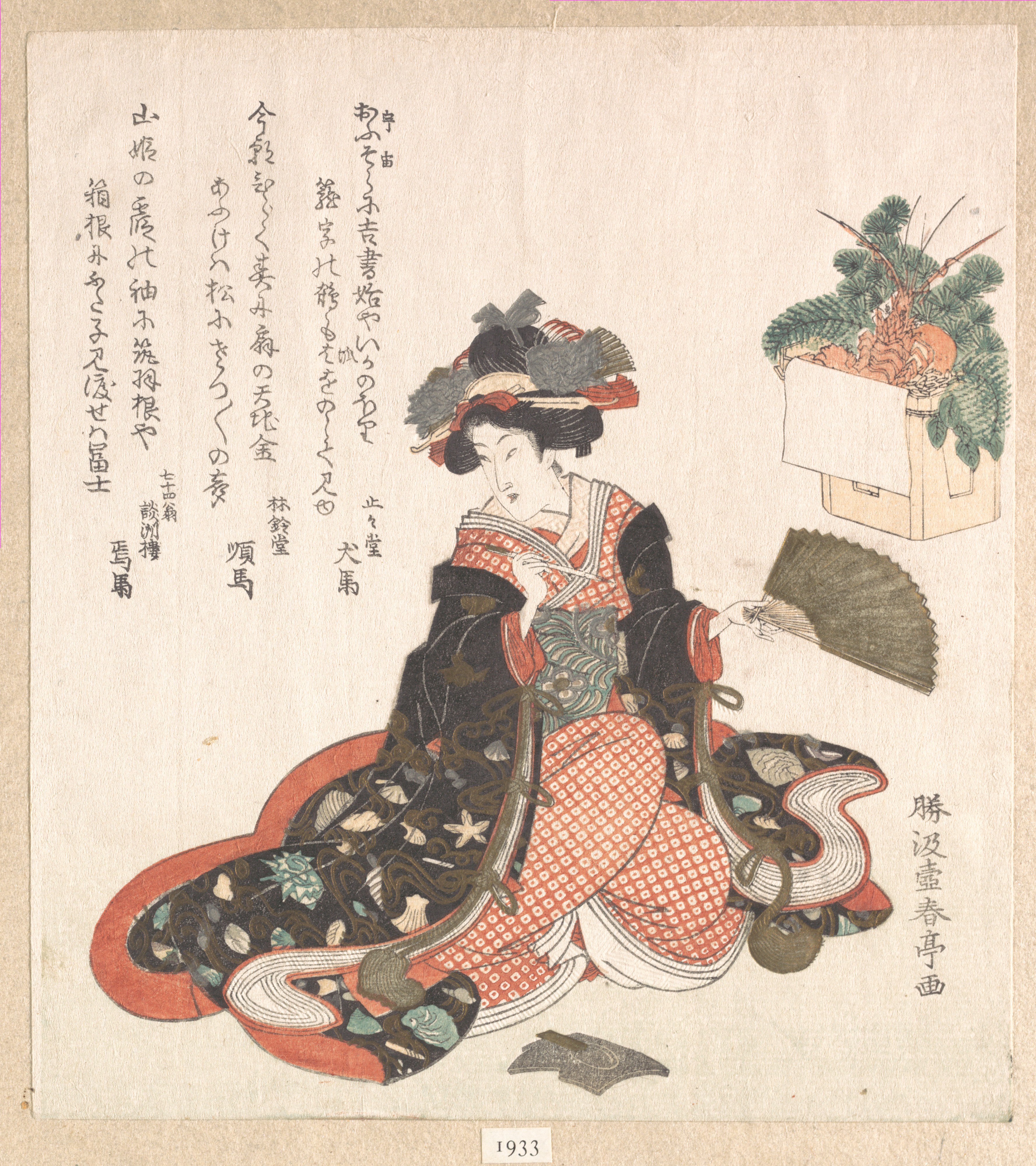
Courtesan and New Year Decoration
- Date:
- ca. 1816
- Medium:
- Woodblock print (surimono); ink and color on paper
- Source:
- Metropolitan Museum of Art
Description
Dated about 1816 and held by the Metropolitan Museum of Art (accession JP1933), this Katsukawa Shuntei shikishiban surimono is part of the H. O. Havemeyer Collection bequeathed to the Met in 1929. The print depicts a courtesan with a New Year decoration, an auspicious seasonal subject suited to the surimono format's typical distribution as New Year's gifts within poetry-club networks. The small shikishiban size (approximately 20 cm square) and the use of refined pigments and careful registration reflect the technical standards of the Bunka-era surimono medium; the privately commissioned nature of the genre permitted publishers and designers to invest production resources well beyond the economics of commercial mass-market prints. Courtesans of the Yoshiwara pleasure quarter were a standard surimono subject, alongside literary scenes, beauty types, mitate transformations, and seasonal observances; the New Year decoration that anchors this composition would have been recognizable to contemporary viewers as a specific seasonal motif tied to the auspicious imagery of the first month. The print belongs to Shuntei's substantial body of surimono work, the lesser-known counterpart to his warrior prints, and shows the artist working in a refined small format quite different in scale and intention from his ōban musha-e triptychs. The Havemeyer Collection — formed in late nineteenth- and early twentieth-century New York by Henry Osborne Havemeyer and his wife Louisine — was one of the great American collections of Japanese prints, and its 1929 bequest to the Met established the museum's foundational holdings in the medium.
More Prints by Katsukawa Shuntei

No. 3: Kato Kiyomasa, from the series "Three Tales of Valor (Buyu sanban tsuzuki)"
1820
Color woodblock print; shikishiban, surimono

A Woman as Ebisu, from the series "Seven Women as the Gods of Good Fortune for the Hanagasa Poetry Club (Hanagasaren shichifukujin)"
c. 1820
Color woodblock print; shikishiban, surimono

Chohi (Zhang Fei) on Black Horse
1810s
Color woodblock print
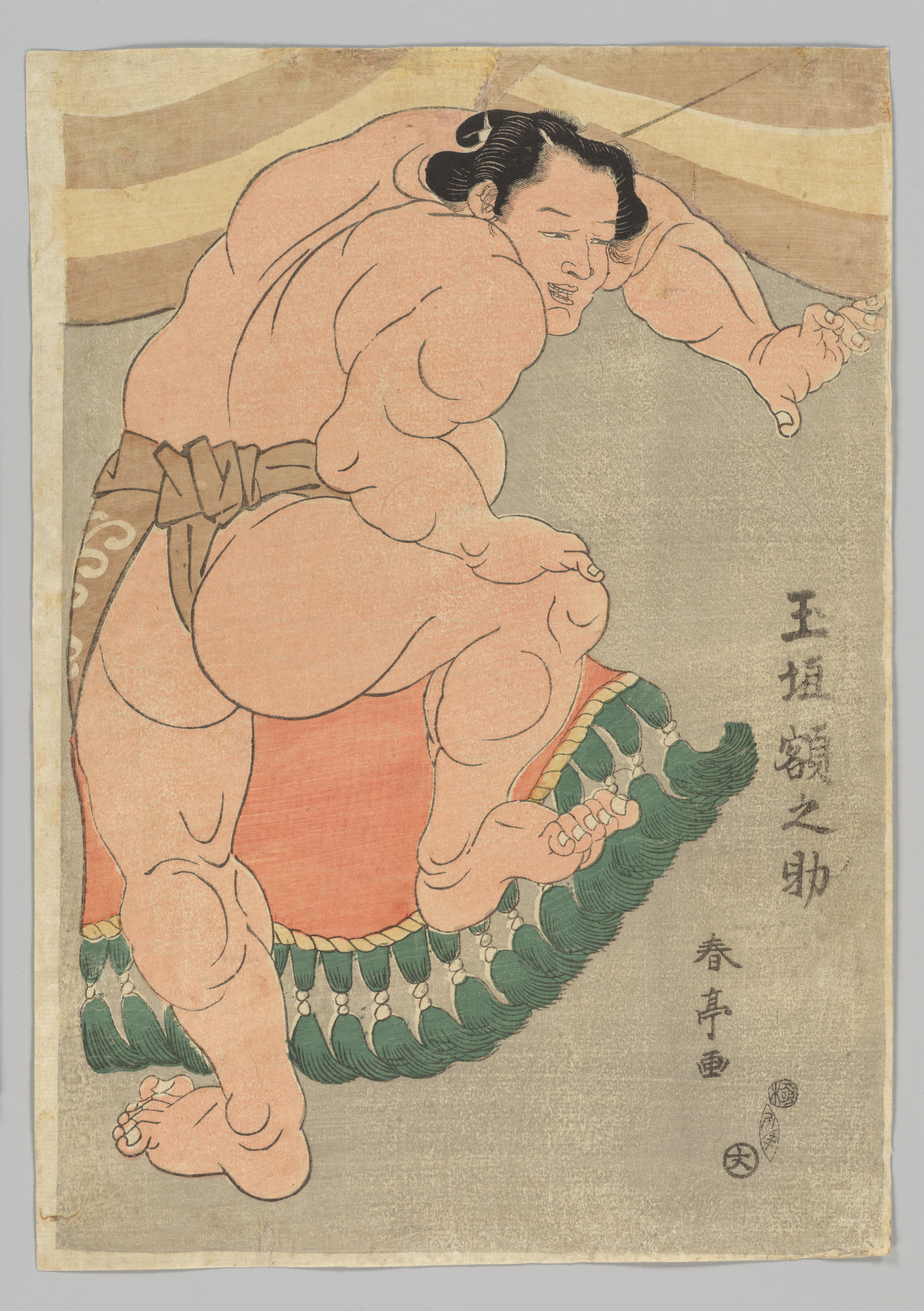
Sumo Wrestler Tamagaki Gakunosuke IV
1811-14 (possibly ca. 1813)
Wood-block print (nishiki-e); ink and color on paper
Frequently Asked Questions
Courtesan and New Year Decoration was created by Katsukawa Shuntei (勝川春亭) in ca. 1816.