
Two Young Attendants on New Year's Day from the series "Seven Women as the Gods of Good Fortune for the Hanagasa Poetry Club (Hanagasaren shichifukujin)"
- Date:
- c. 1820
- Medium:
- Color woodblock print; shikishiban, surimono
- Source:
- Art Institute of Chicago
Description
Dated about 1820 and held by the Art Institute of Chicago (accession 1939.351), this Katsukawa Shuntei shikishiban surimono depicts two young attendants on New Year's Day and belongs to the Seven Women as the Gods of Good Fortune for the Hanagasa Poetry Club series. The print's title indicates a scene of two figures engaged in New Year activity rather than the single-deity portraits of the other impressions in the series, suggesting either a paired Shichifukujin pairing (Ebisu and Daikoku, or one of the other conventional pairings of the Seven Lucky Gods) or a related ancillary subject. The first day of the New Year was the most important festival of the Edo calendar and the occasion for an extensive cultural apparatus of auspicious imagery, gift-giving, and ritual observance; surimono distributed within poetry-club networks at the New Year often referred to this body of seasonal practice. The Hanagasaren (Flower-Hat Society) was one of the many specialist poetry clubs active in Bunka- and Bunsei-era Edo, and surimono commissioned by such clubs were typically distributed to members as New Year's gifts. The shikishiban format and refined printing technique characterize the surimono medium of Shuntei's late period. The Art Institute of Chicago acquired this impression in 1939, part of an early institutional commitment to building a comprehensive collection of Edo prints across all categories — including the often-overlooked shikishiban surimono whose privately distributed circulation made them less visible to Western collectors than the better-known ōban actor and landscape prints.
More Prints by Katsukawa Shuntei

No. 3: Kato Kiyomasa, from the series "Three Tales of Valor (Buyu sanban tsuzuki)"
1820
Color woodblock print; shikishiban, surimono

A Woman as Ebisu, from the series "Seven Women as the Gods of Good Fortune for the Hanagasa Poetry Club (Hanagasaren shichifukujin)"
c. 1820
Color woodblock print; shikishiban, surimono

Chohi (Zhang Fei) on Black Horse
1810s
Color woodblock print
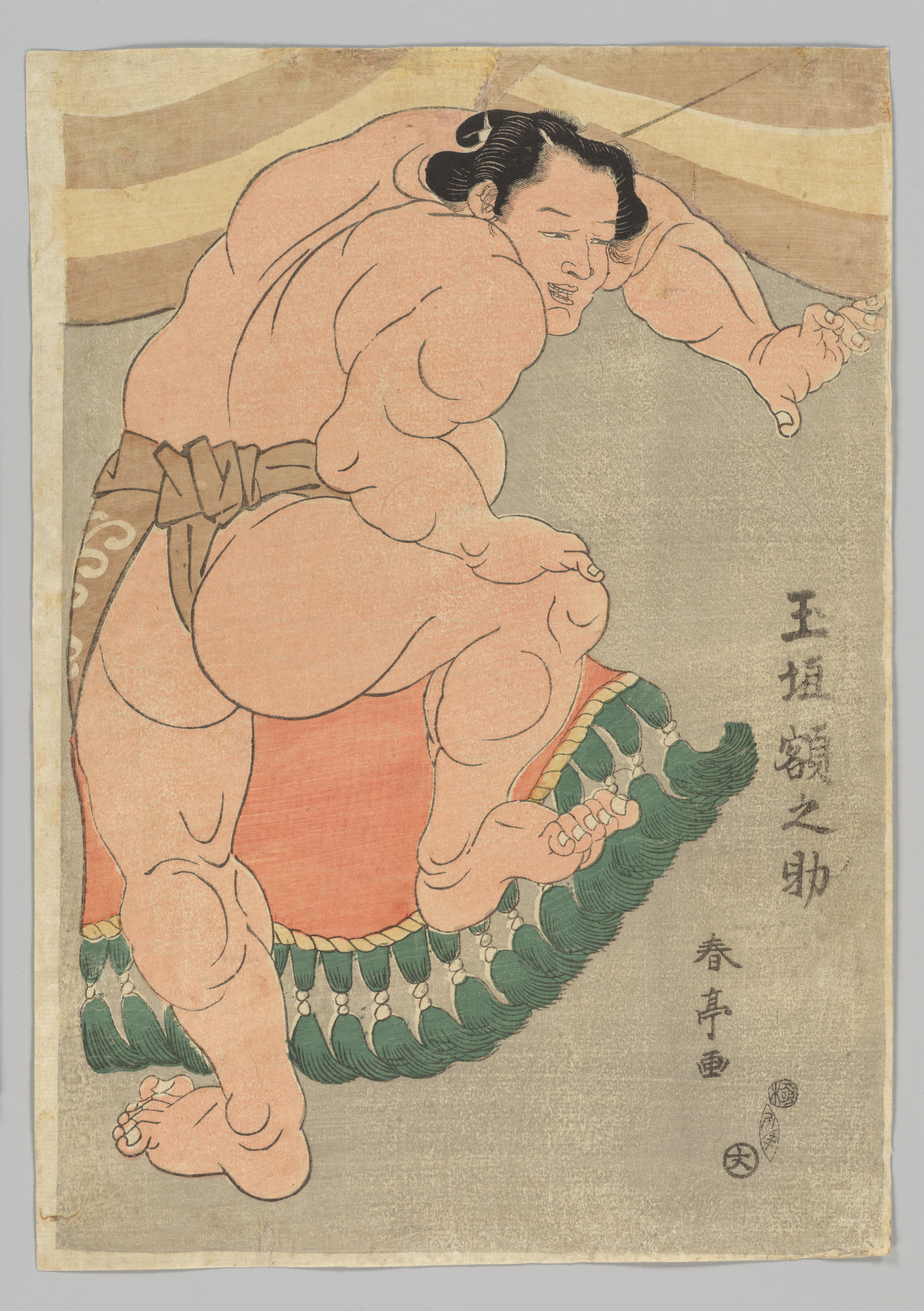
Sumo Wrestler Tamagaki Gakunosuke IV
1811-14 (possibly ca. 1813)
Wood-block print (nishiki-e); ink and color on paper
Frequently Asked Questions
Two Young Attendants on New Year's Day from the series "Seven Women as the Gods of Good Fortune for the Hanagasa Poetry Club (Hanagasaren shichifukujin)" was created by Katsukawa Shuntei (勝川春亭) in c. 1820.