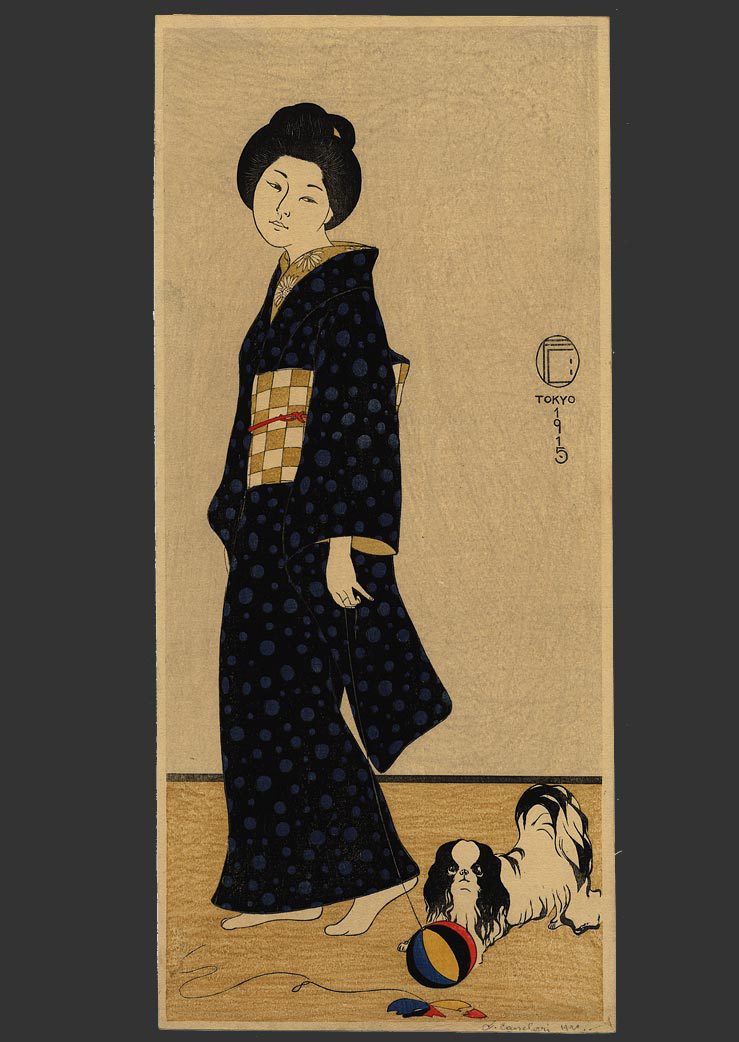
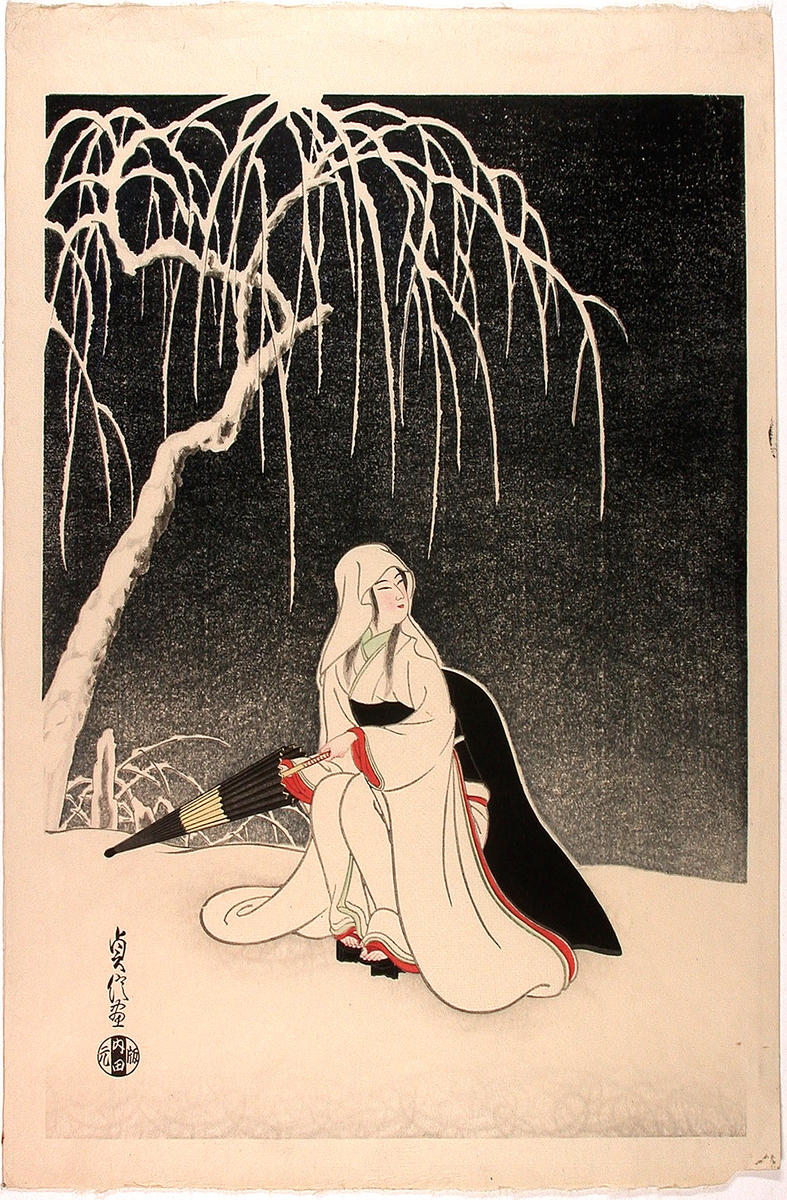
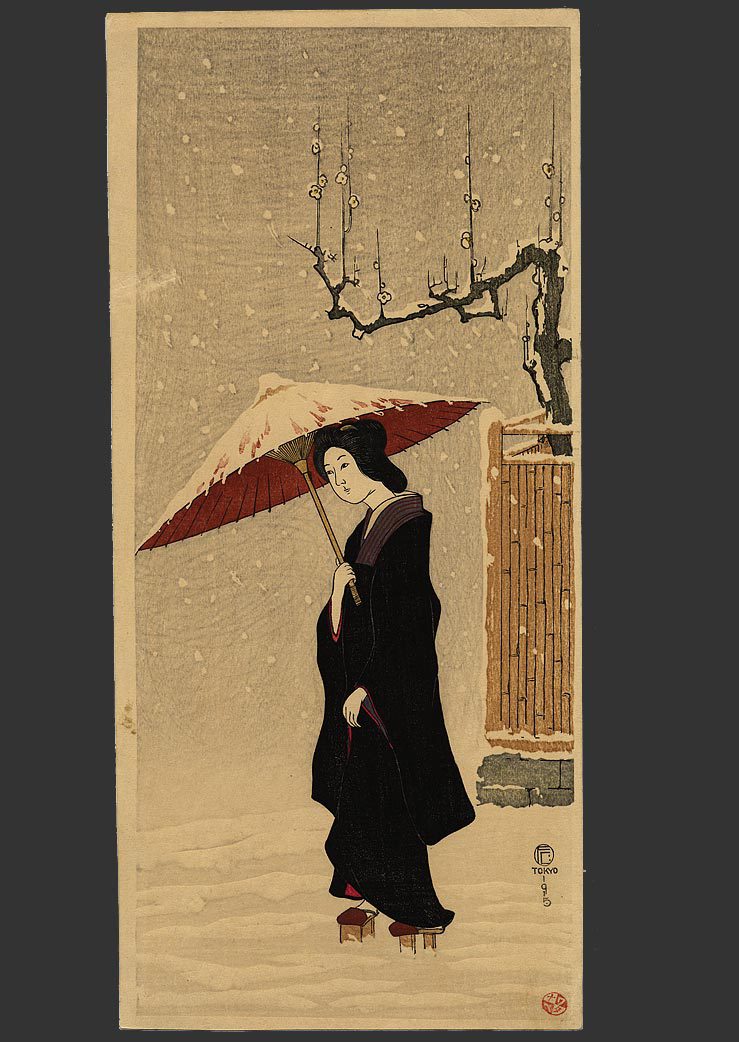
Long-sleeves kimono
- Medium:
- Mokuhanga (Japanese woodblock)
- Image courtesy of
- Saru Gallery
Description
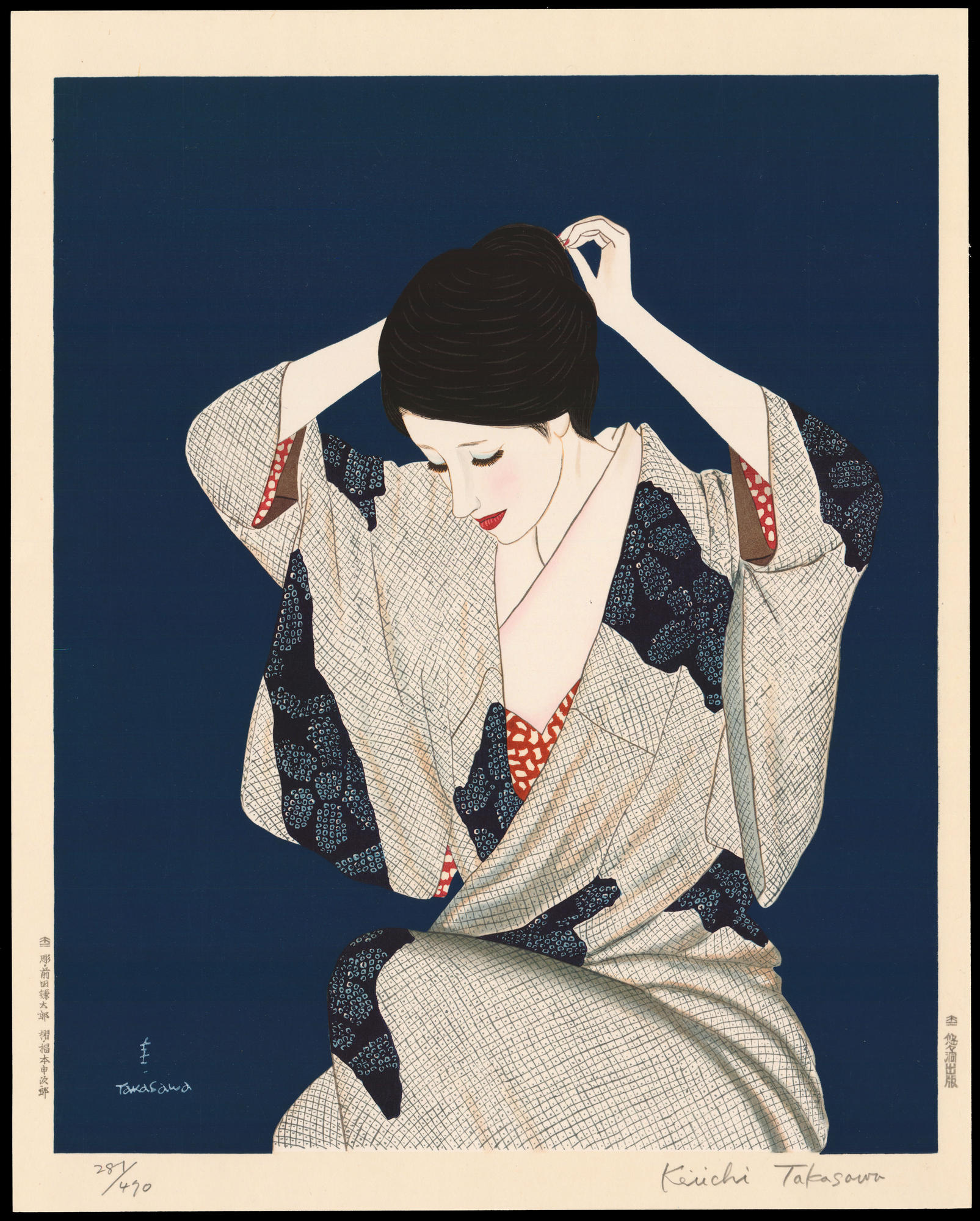
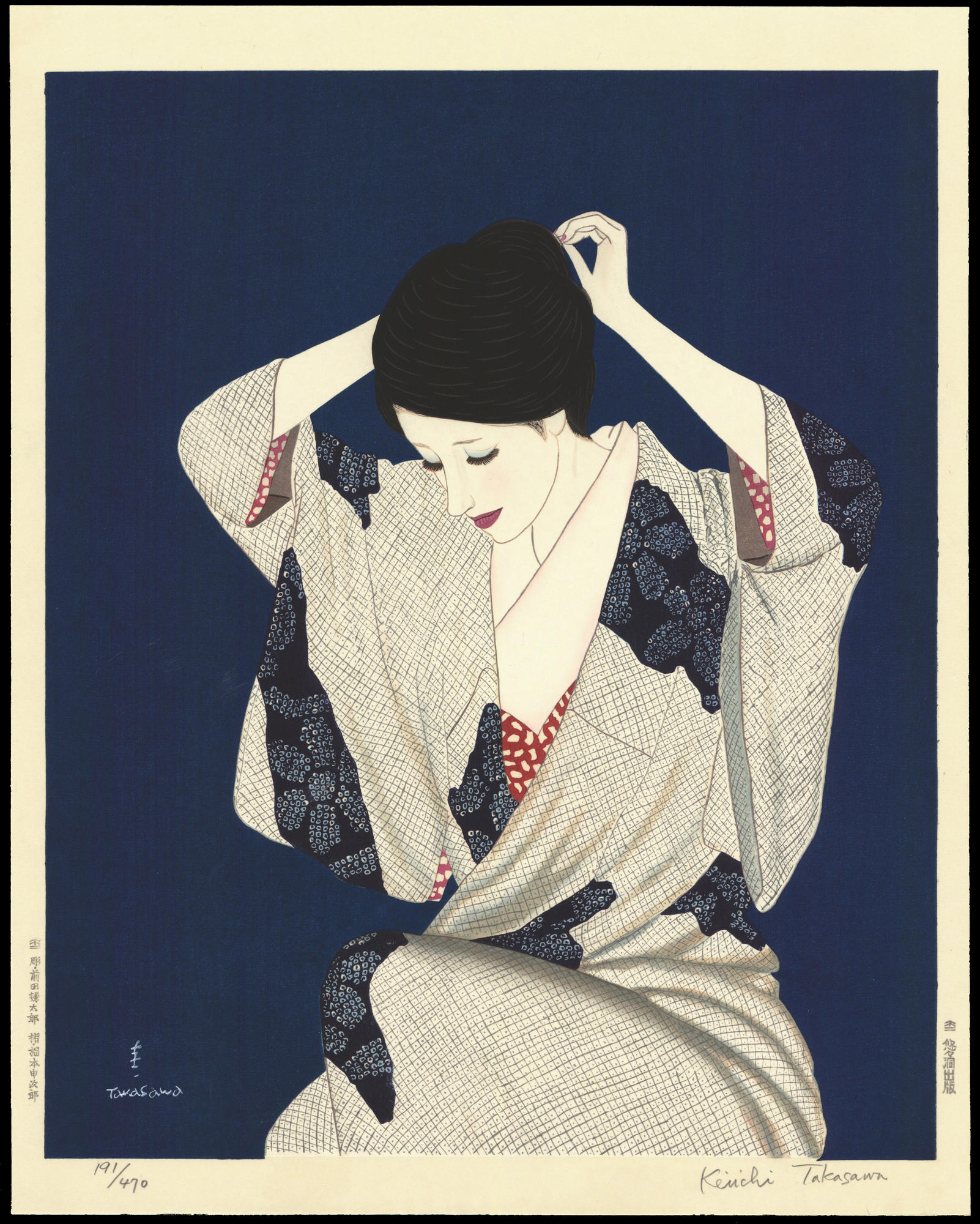
The title indicates a depiction of a furisode (振袖), the long-sleeved kimono traditionally worn by unmarried young women on formal occasions. Tagged as bijin-ga, this print continues a genre established in the Edo period by artists such as Suzuki Harunobu and Kitagawa Utamaro, in which the figure of an idealized woman serves as the primary subject. Twentieth-century printmakers working in this tradition often emphasized textile patterns, hairstyle, and pose rather than psychological narrative, treating the figure almost as a study in color and line. A furisode subject typically allows for substantial decorative work in the kimono, with the long hanging sleeves offering a vertical compositional element. Without further imagery, the specific seasonal motif, ground color, and registration of multiple blocks (kento) cannot be assessed, but a print of this title in Takasawa Keiichi's body of work locates it within the continuing demand for bijin-ga subjects in the postwar Japanese print market.