
Bridge
- Medium:
- Mokuhanga (Japanese woodblock)
- Image courtesy of
- Saru Gallery
Description
The image presents a Japanese bridge — likely a timber span of the kind found along temple precincts or rural pilgrimage routes — drawn from Sasajima's lifelong attention to traditional architecture. While he is principally identified with the temple complexes of Nara and Kyoto, the bridges connecting those sites appear periodically in his work. The treatment emphasizes the structural geometry of beams, balustrades, and abutments rather than picturesque atmosphere, with heavy black blocks defining the shadows beneath the span and the chisel marks left as a visible record of process. Sasajima's commitment to carving and printing every block himself, a discipline learned under Onchi Koshiro in the late 1930s, kept his line direct and his palette restrained — typically sumi black with one or two muted earth pigments on washi. The bridge functions less as a landscape motif than as a study in joinery and weathered wood.
More Prints by Kihei Sasajima

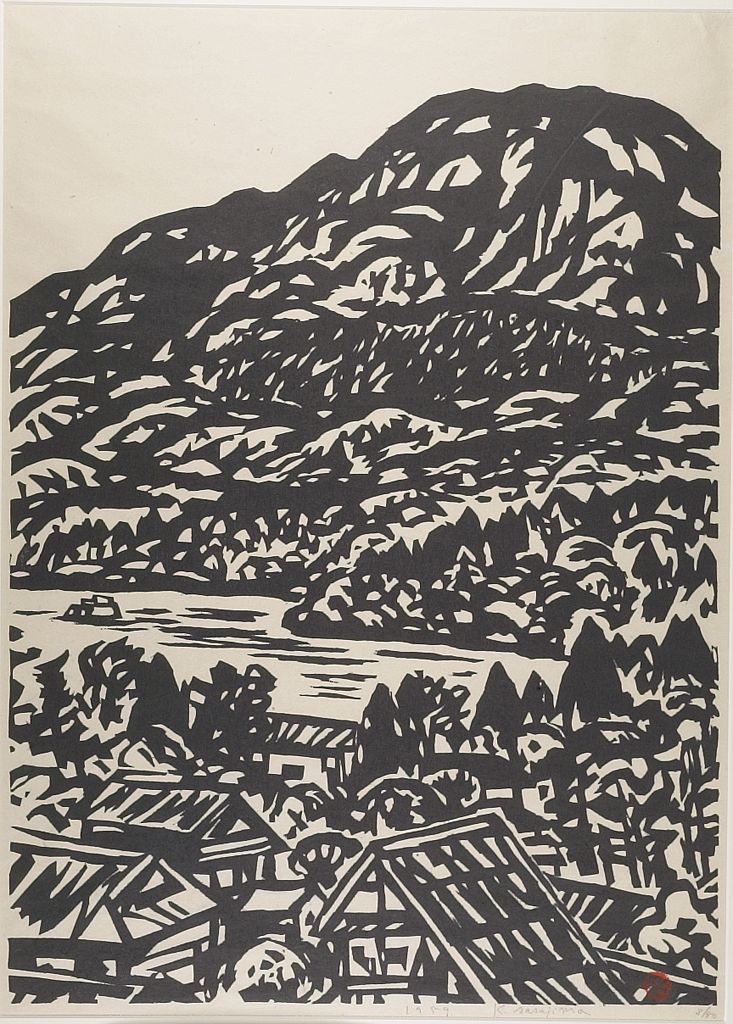
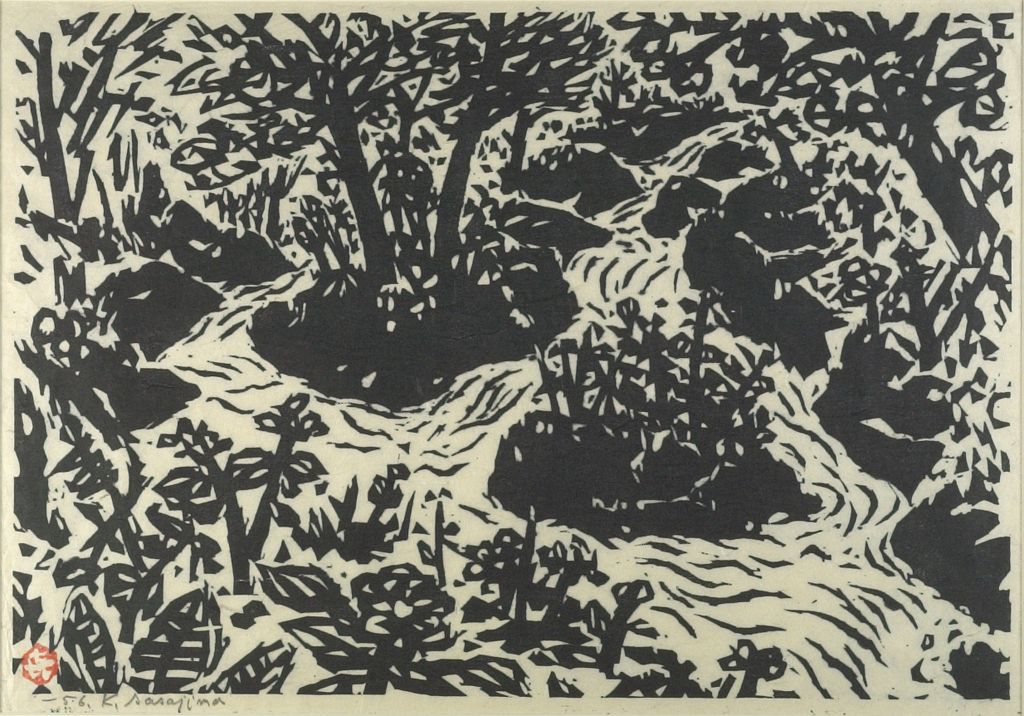

More Bridges Prints
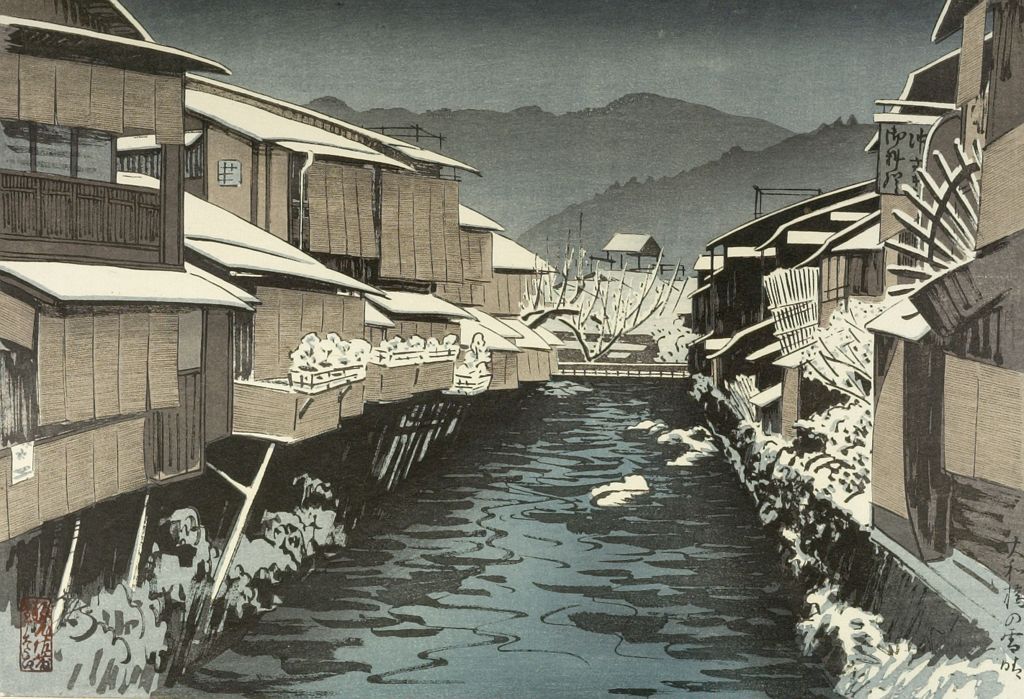
Fair Weather After Snow at Yamato Bridge, Kyoto (Yamato bashi no yukibare), Taishô period, dated 1924
Woodblock print
![Mount Fuji on a Moonlit Night, Kawai Bridge (Tsukiyo no Fuji [Kawaibashi]), from the series "Selection of Views of the Tokaido (Tokaido fukei senshu)" by Kawase Hasui](https://www.artic.edu/iiif/2/d0960668-1e73-339a-b182-fb995a54bff0/full/843,/0/default.jpg)
Mount Fuji on a Moonlit Night, Kawai Bridge (Tsukiyo no Fuji [Kawaibashi]), from the series "Selection of Views of the Tokaido (Tokaido fukei senshu)"
1947
Color woodblock print; oban

Shin Ohashi Bridge (Shin Ohashi), from the series "Twenty View of Tokyo (Tokyu nijukkei)"
1926
Color woodblock print; oban

Sacred Bridge in Nikko (Nikko Shinkyo)
1930
Color woodblock print; oban
Featured in Collections
Curated cross-cuts that include this print.
Frequently Asked Questions
Bridge was created by Kihei Sasajima (笹島喜平).
Bridge depicts bridges.