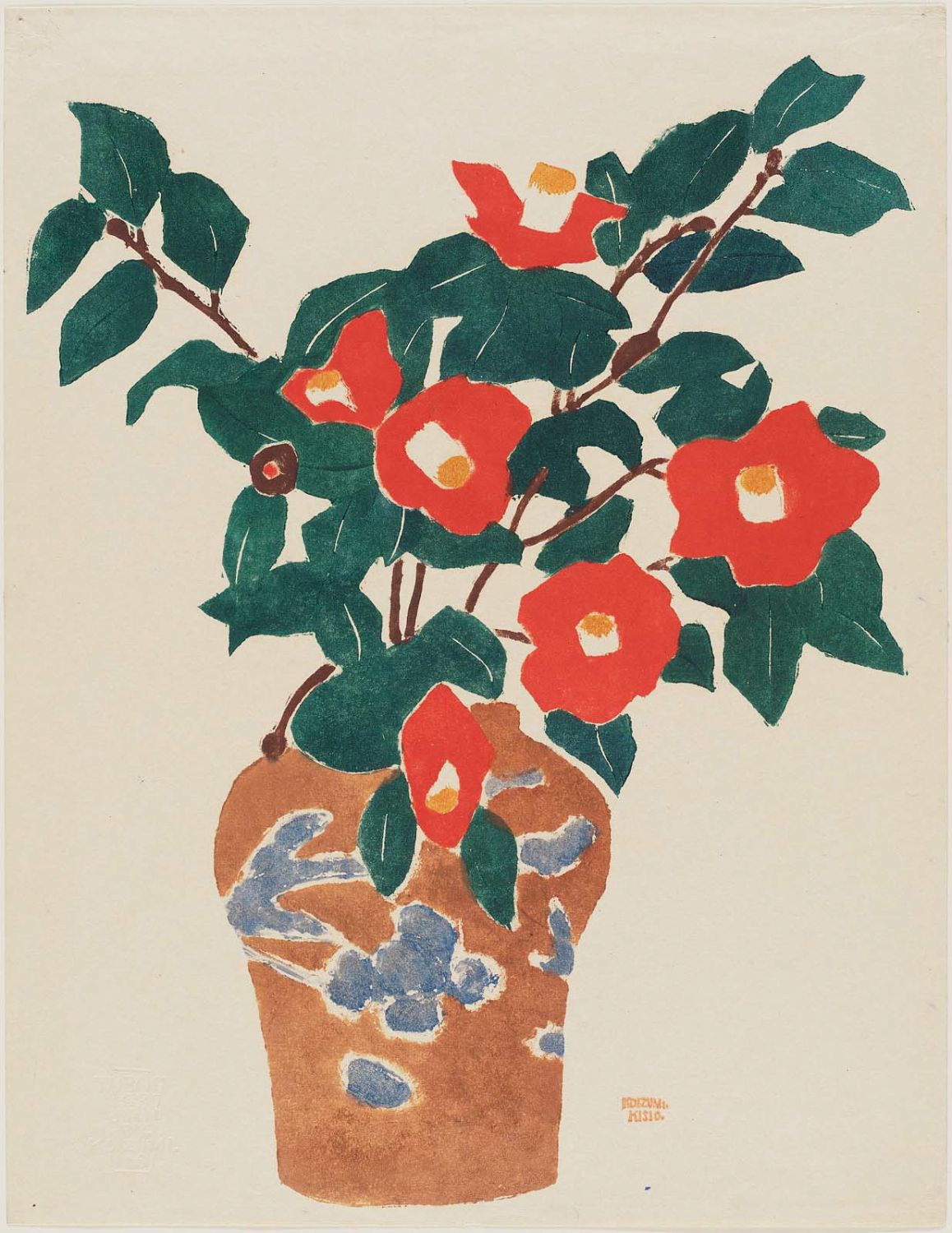
Camellia
- Medium:
- Woodblock print
- Source:
- Museum of Fine Arts Boston
- Image courtesy of
- Museum of Fine Arts Boston
Description
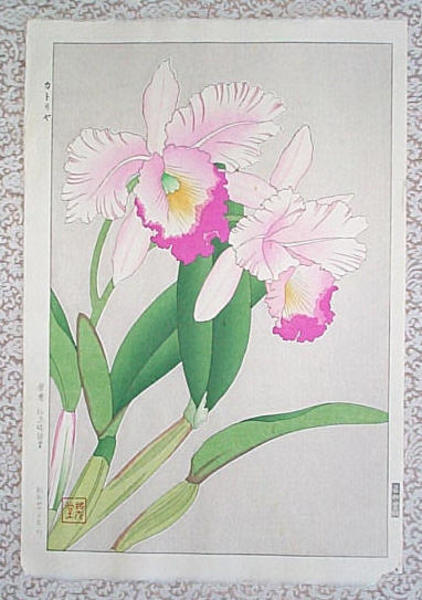
This kacho-e depicts the camellia (Camellia japonica, tsubaki), a flower associated in Japanese visual culture with late winter and early spring, and with the contrast between its waxy, enduring foliage and the abrupt fall of its intact blossoms. Koizumi's self-carved and self-printed technique would have required careful key-block registration across multiple color blocks to render the deep red or pink petals against dark green leaves, with gradations likely achieved through selective bokashi rather than flat fills. The camellia was a subject with a long history in Japanese decorative arts and woodblock printmaking; treating it outside the context of the One Hundred Views series allowed Koizumi greater formal latitude. The subject likely foregrounds one or two blooms at close range, emphasizing botanical precision over landscape setting.
More Prints by Kishio Koizumi
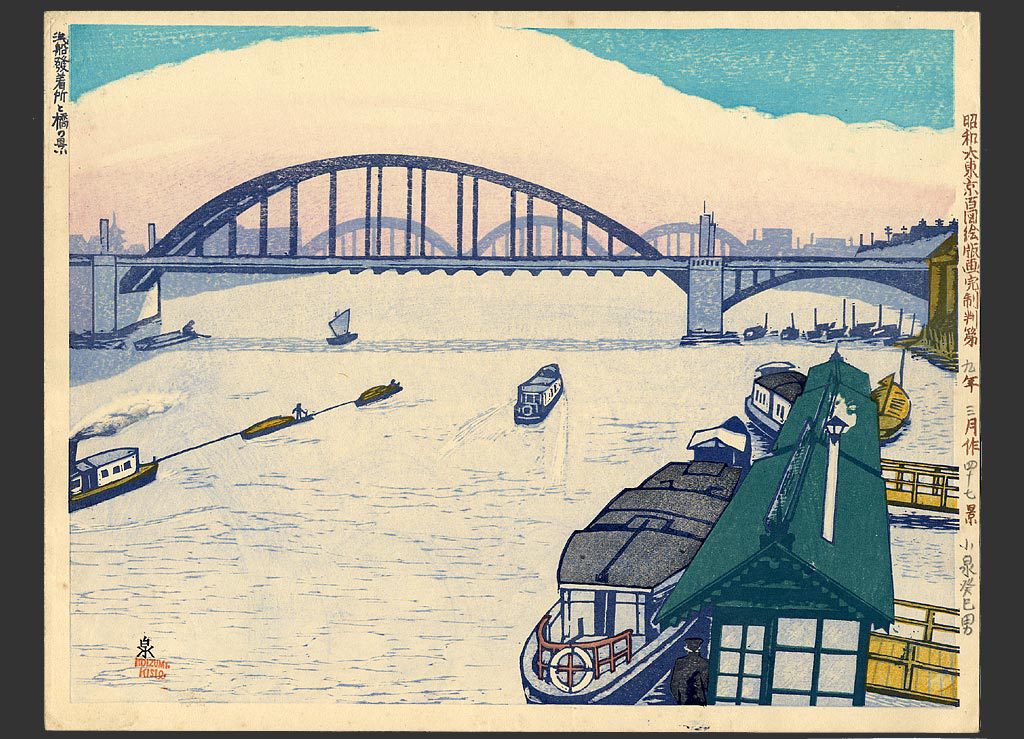
Untitled (kishio-koizumi)
Woodblock print
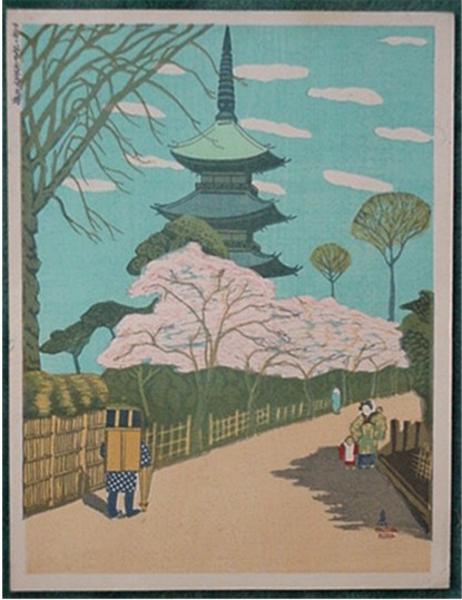
Unknown, spring scene
Woodblock print

Raft In Yoryoko River
Mokuhanga (Japanese woodblock)

Autumn Color along the Moat at Hanzo Gate (Hanzomon go-horihata no aki iro), from the series "One Hundred Views of Great Tokyo in the Showa Era (Showa dai Tokyo fukei hyaku zue hanga)"
1934
Color woodblock print; oban
More Birds & Flowers Prints
Featured in Collections
Curated cross-cuts that include this print.
Frequently Asked Questions
Camellia was created by Kishio Koizumi (小泉癸巳男).
Camellia depicts birds & flowers.