
Haystacks
- Medium:
- Mokuhanga (Japanese woodblock)
- Image courtesy of
- Saru Gallery
Description
Haystacks departs from Koizumi's typical metropolitan subjects to record an agricultural scene, likely showing the conical or columnar inekake constructions used to dry rice straw across rural Japan. The composition would emphasize the geometric repetition of the stacks against a flatter ground plane, a structural exercise that reflects Koizumi's training in Western-style oil and watercolor painting before he turned to mokuhanga. Working in the sosaku-hanga tradition of jiga, jikoku, jizuri (self-drawn, self-carved, self-printed), Koizumi cut every block and pulled every impression himself, which permitted closer control of tonal gradation than the divided-labor shin-hanga workshops allowed. Rural haystack subjects interested several Western-trained Japanese artists of the period, who recognized the formal parallel with Monet's Meules series and with Barbizon precedents. The print stands apart from the urban topography of his One Hundred Views of Great Tokyo, suggesting either an early work predating that series or a peripheral rural subject pursued during his decades of independent printmaking.
More Prints by Kishio Koizumi
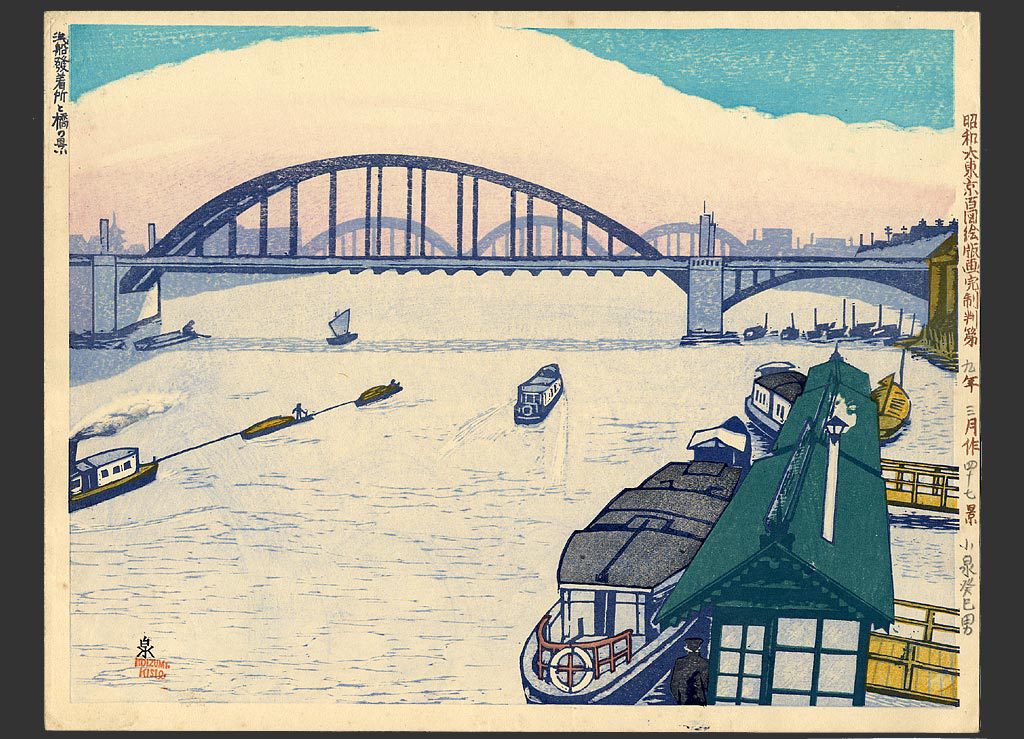
Untitled (kishio-koizumi)
Woodblock print
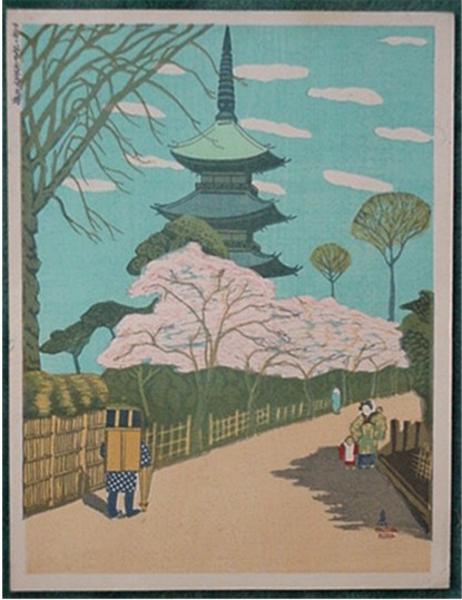
Unknown, spring scene
Woodblock print

Raft In Yoryoko River
Mokuhanga (Japanese woodblock)

Autumn Color along the Moat at Hanzo Gate (Hanzomon go-horihata no aki iro), from the series "One Hundred Views of Great Tokyo in the Showa Era (Showa dai Tokyo fukei hyaku zue hanga)"
1934
Color woodblock print; oban
Featured in Collections
Curated cross-cuts that include this print.
Frequently Asked Questions
Haystacks was created by Kishio Koizumi (小泉癸巳男).