
Hoshuku
- Medium:
- Mokuhanga (Japanese woodblock)
- Image courtesy of
- Saru Gallery
Description
Hoshuku appears within Koizumi's documentary project of recording Tokyo and its outlying districts in One Hundred Views of Great Tokyo. Like the other prints in the series, it was designed, carved, and printed by the artist alone between 1928 and 1940, embodying the sosaku-hanga ideal of the artist as sole maker while applying that discipline to the meisho-e tradition of place-by-place views. Compositionally Koizumi tended to favor specific, observed vantages over idealized prospects, with bokashi gradations carrying weather and time of day across the sky and water, and registered linework articulating tile, stone, and timber. Self-printed editions on washi often allow the paper's texture to read through thinner ink layers, a quality distinct from the polished surface of contemporary Watanabe-published shin-hanga prints. The image takes its place in his synthesis of inherited landscape subject matter with the workshop independence of the sosaku-hanga generation.
More Prints by Kishio Koizumi
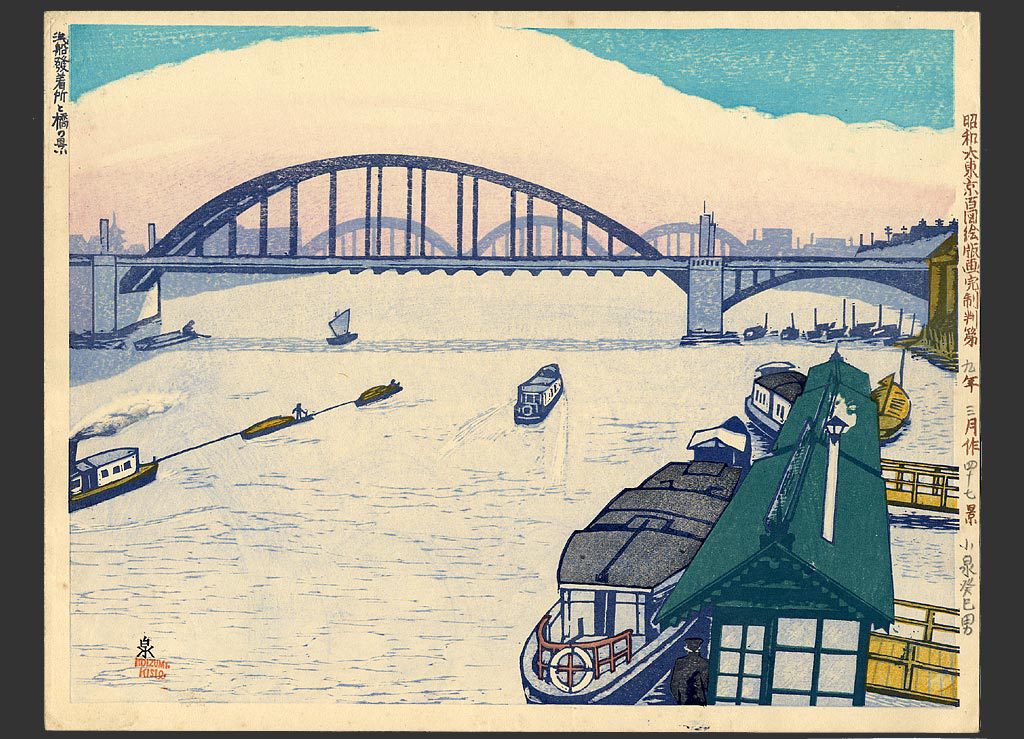
Untitled (kishio-koizumi)
Woodblock print
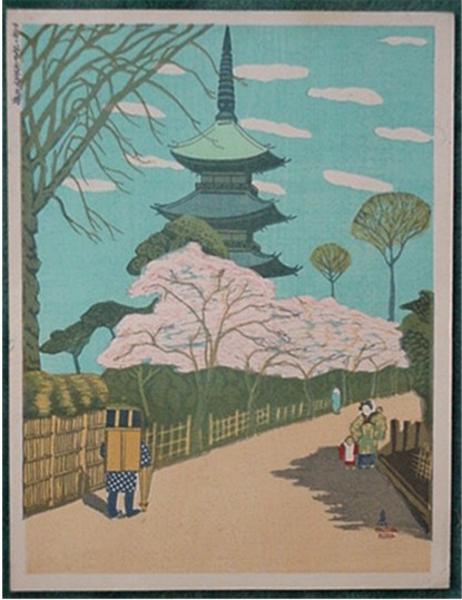
Unknown, spring scene
Woodblock print

Raft In Yoryoko River
Mokuhanga (Japanese woodblock)

Autumn Color along the Moat at Hanzo Gate (Hanzomon go-horihata no aki iro), from the series "One Hundred Views of Great Tokyo in the Showa Era (Showa dai Tokyo fukei hyaku zue hanga)"
1934
Color woodblock print; oban
Featured in Collections
Curated cross-cuts that include this print.
Frequently Asked Questions
Hoshuku was created by Kishio Koizumi (小泉癸巳男).