
Manchurian scene
- Medium:
- Mokuhanga (Japanese woodblock)
- Image courtesy of
- Saru Gallery
Description
This print departs from Koizumi's principal subject—Tokyo and its environs—to record a scene from Manchuria, the region of northeast China brought under Japanese control after 1931 and reorganized as the puppet state of Manchukuo. Japanese artists traveled to the region throughout the 1930s under various commissions and tourist programs, and prints depicting Manchurian landscapes, architecture, and street life formed a recognizable subgenre of the period. The composition likely draws on the wide horizons and continental architecture that distinguished Manchuria visually from the Japanese landscape, perhaps featuring a Chinese gate, a frozen river, or the broad agricultural plains around Mukden or Harbin. Koizumi's self-carved, self-printed approach—the hallmark of his sosaku-hanga practice—remains intact regardless of the foreign subject, and the technical care of the bokashi work and color registration would have followed the same disciplined method he applied to his Tokyo views. The print sits outside his major achievement, One Hundred Views of Great Tokyo (1928–1940), and reflects the wider geographic range that Japanese printmakers of the period engaged with as the empire expanded across East Asia.
More Prints by Kishio Koizumi
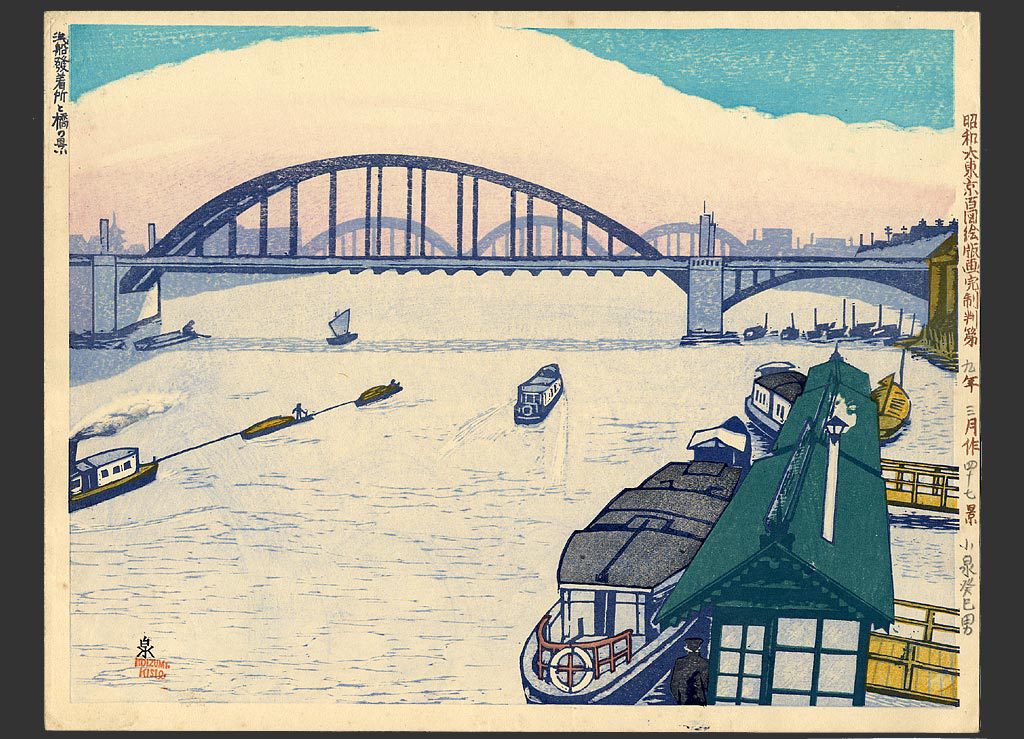
Untitled (kishio-koizumi)
Woodblock print
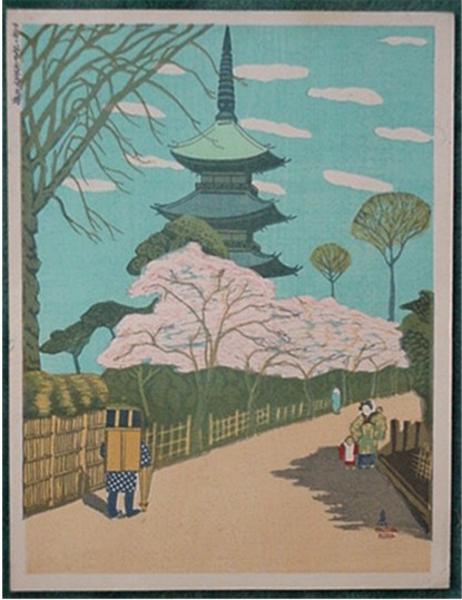
Unknown, spring scene
Woodblock print

Raft In Yoryoko River
Mokuhanga (Japanese woodblock)

Autumn Color along the Moat at Hanzo Gate (Hanzomon go-horihata no aki iro), from the series "One Hundred Views of Great Tokyo in the Showa Era (Showa dai Tokyo fukei hyaku zue hanga)"
1934
Color woodblock print; oban
Featured in Collections
Curated cross-cuts that include this print.
Frequently Asked Questions
Manchurian scene was created by Kishio Koizumi (小泉癸巳男).