
Nanushi Waterfall
- Medium:
- Mokuhanga (Japanese woodblock)
- Image courtesy of
- Saru Gallery
Description
Nanushi-no-taki, a waterfall in the wooded districts west of central Tokyo, was a destination for Edo-period excursionists and a subject for the meisho-e place-picture tradition long before Koizumi recorded it in the early Showa period. The composition frames the falling water as a vertical white passage against darker rock and foliage, the cascade rendered through fine keyblock lines and flat blocks of pigment rather than the calligraphic brush of painted depictions. Bokashi gradients in the surrounding rock convey the dampness and shadow of the gorge, while the water itself is left largely unprinted to register through the white of the washi sheet. As with other prints in Dai Tokyo Hyakkei (One Hundred Views of Great Tokyo, 1928-1940), the subject participates in the older meisho tradition of cataloguing famous places while being executed under the sosaku-hanga ideal of the artist as sole carver, printer, and publisher.
More Prints by Kishio Koizumi
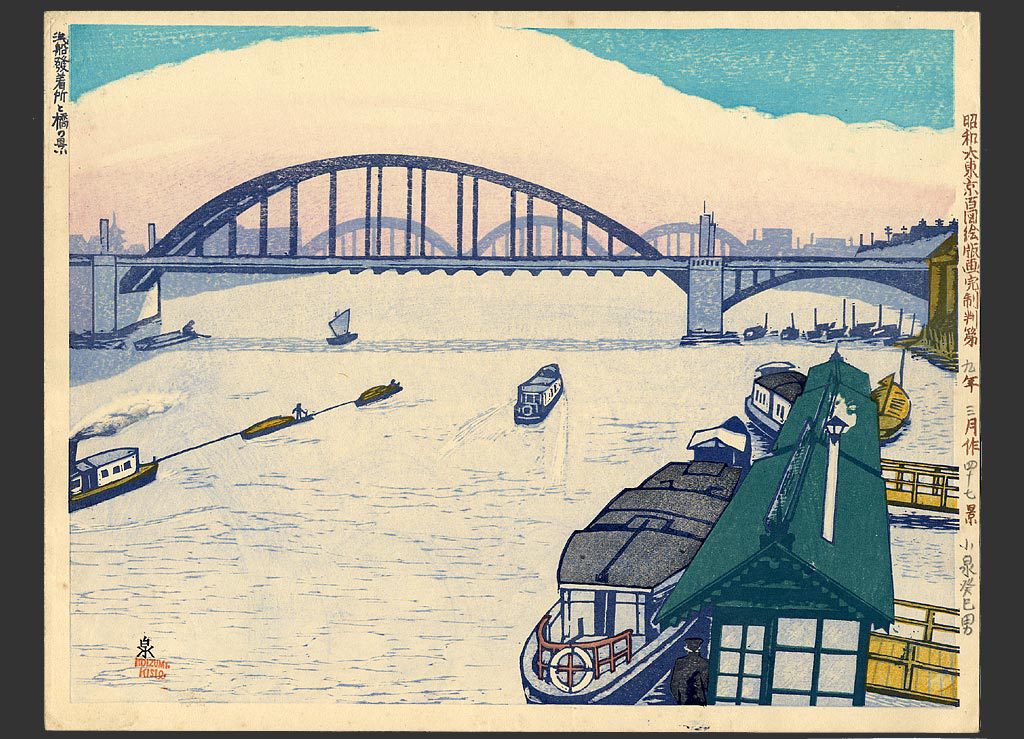
Untitled (kishio-koizumi)
Woodblock print
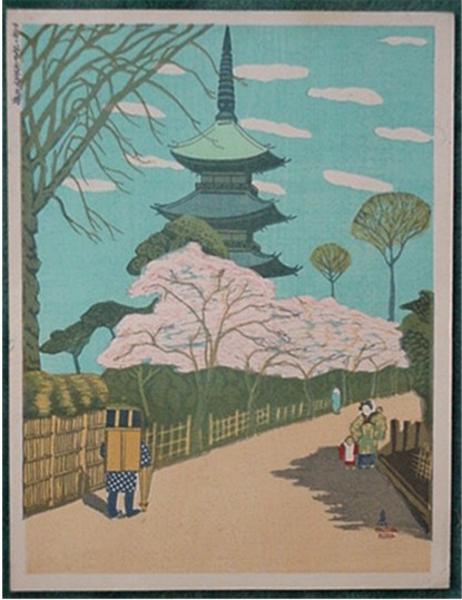
Unknown, spring scene
Woodblock print

Raft In Yoryoko River
Mokuhanga (Japanese woodblock)

Autumn Color along the Moat at Hanzo Gate (Hanzomon go-horihata no aki iro), from the series "One Hundred Views of Great Tokyo in the Showa Era (Showa dai Tokyo fukei hyaku zue hanga)"
1934
Color woodblock print; oban
More Waterfalls Prints


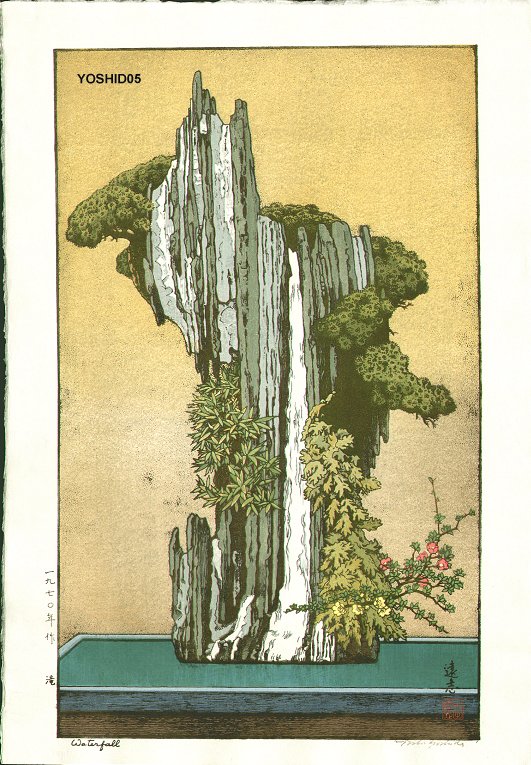
Featured in Collections
Curated cross-cuts that include this print.
Frequently Asked Questions
Nanushi Waterfall was created by Kishio Koizumi (小泉癸巳男).
Nanushi Waterfall depicts waterfalls.