
Waseda Dye factory
- Medium:
- Mokuhanga (Japanese woodblock)
- Image courtesy of
- Saru Gallery
Description
The Waseda district in northwest Tokyo housed dyeing workshops and small factories along the Kanda River, where dyed cloth was traditionally rinsed in the running water and stretched on poles to dry. Koizumi's print likely depicts the industrial buildings and water-rinsing activity that distinguished the area, a subject within One Hundred Views of Great Tokyo that documents working districts alongside the series' civic and religious landmarks. The composition would render factory architecture, drying cloth, or riverside rinsing through flat color planes with sharp keyblock outlines, characteristic of Koizumi's mokuhanga method. As with the rest of the Hyakkei series, the artist designed, carved, and printed every block himself between 1928 and 1940, fulfilling sosaku-hanga's principle of single-author production. The dye factory subject reflects the documentary breadth of the series: Koizumi recorded not only Tokyo's monuments and shrines but also the workshops and labor that constituted the city's daily economy. This range aligns him with shin-hanga interest in working-life subjects while preserving the sosaku-hanga manufacturing approach.
More Prints by Kishio Koizumi
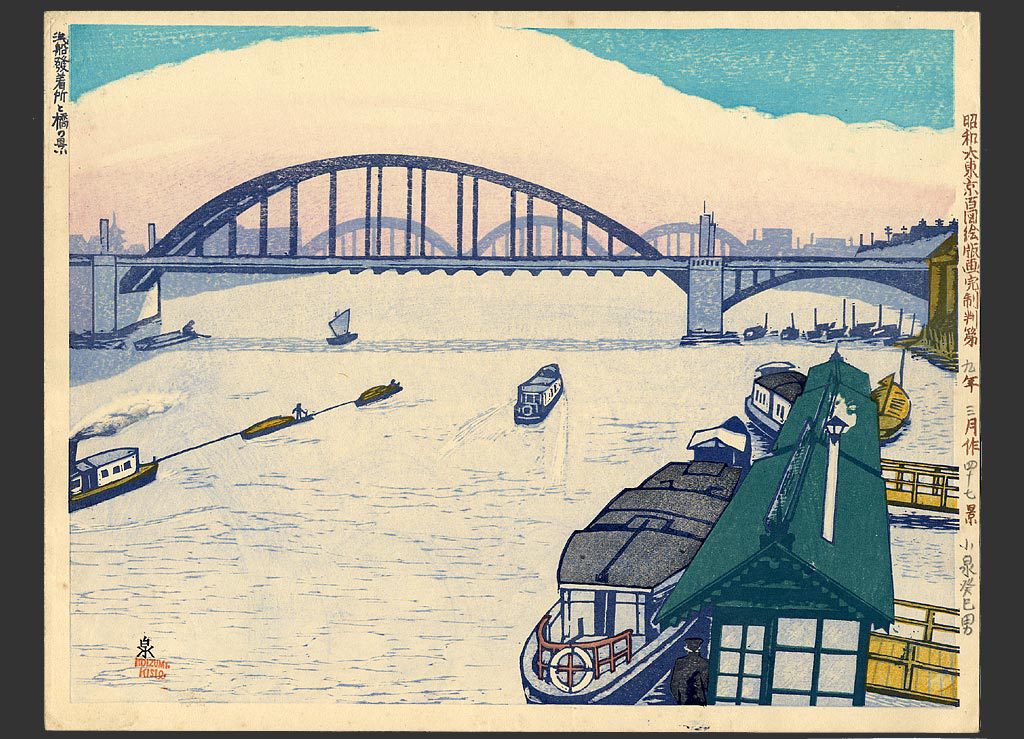
Untitled (kishio-koizumi)
Woodblock print
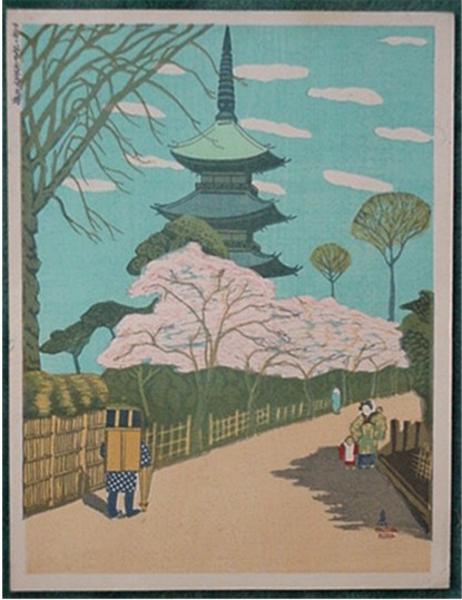
Unknown, spring scene
Woodblock print

Raft In Yoryoko River
Mokuhanga (Japanese woodblock)

Autumn Color along the Moat at Hanzo Gate (Hanzomon go-horihata no aki iro), from the series "One Hundred Views of Great Tokyo in the Showa Era (Showa dai Tokyo fukei hyaku zue hanga)"
1934
Color woodblock print; oban
Featured in Collections
Curated cross-cuts that include this print.
Frequently Asked Questions
Waseda Dye factory was created by Kishio Koizumi (小泉癸巳男).