
Waterfall
- Medium:
- Mokuhanga (Japanese woodblock)
- Image courtesy of
- Saru Gallery
Description
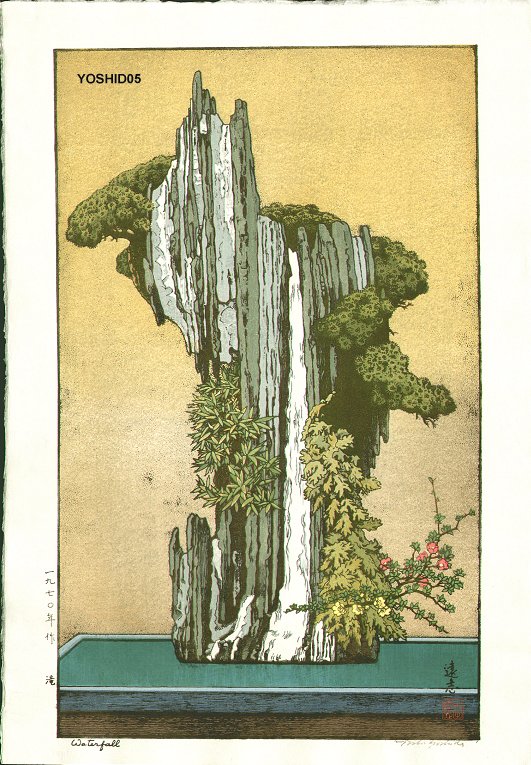
This second waterfall print presents a separate cascade or alternate vantage, indicating that Koizumi returned to the subject across multiple designs rather than treating it as a single image. Variation between waterfalls in his catalog would reflect different sites, seasons, or viewpoints — a study approach consistent with his methodical treatment of Tokyo landmarks across the One Hundred Views series. The print would have been carved on cherry blocks and printed by the artist himself with a baren onto washi, with the falling water reserved through registration of the surrounding blocks. Koizumi's Western painting training informed the modeling of rock faces and pooled water, while his sosaku-hanga commitments meant that both carving and printing remained in his own hands. The keyblock lines describing the water's vertical descent would carry particular weight, since these alone separate the white reserve from the surrounding tonal field. Considered alongside the companion waterfall design, the print shows Koizumi using mokuhanga's technical structure — the discrete carved blocks, the registered impressions — to compose distinct studies of a recurring subject.
More Prints by Kishio Koizumi
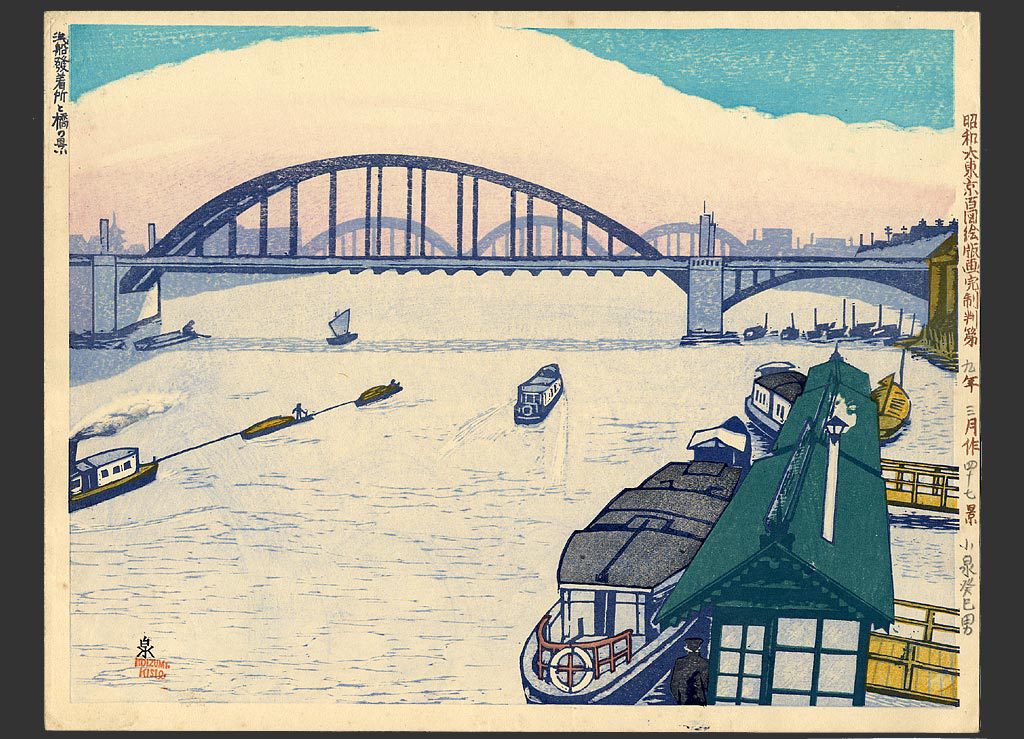
Untitled (kishio-koizumi)
Woodblock print
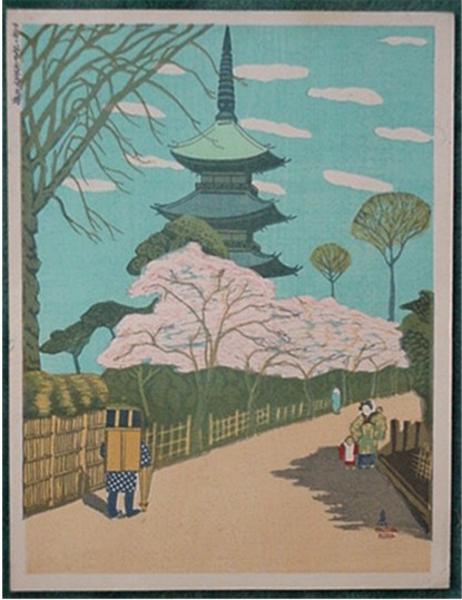
Unknown, spring scene
Woodblock print

Raft In Yoryoko River
Mokuhanga (Japanese woodblock)

Autumn Color along the Moat at Hanzo Gate (Hanzomon go-horihata no aki iro), from the series "One Hundred Views of Great Tokyo in the Showa Era (Showa dai Tokyo fukei hyaku zue hanga)"
1934
Color woodblock print; oban
More Waterfalls Prints


Featured in Collections
Curated cross-cuts that include this print.
Frequently Asked Questions
Waterfall was created by Kishio Koizumi (小泉癸巳男).
Waterfall depicts waterfalls.