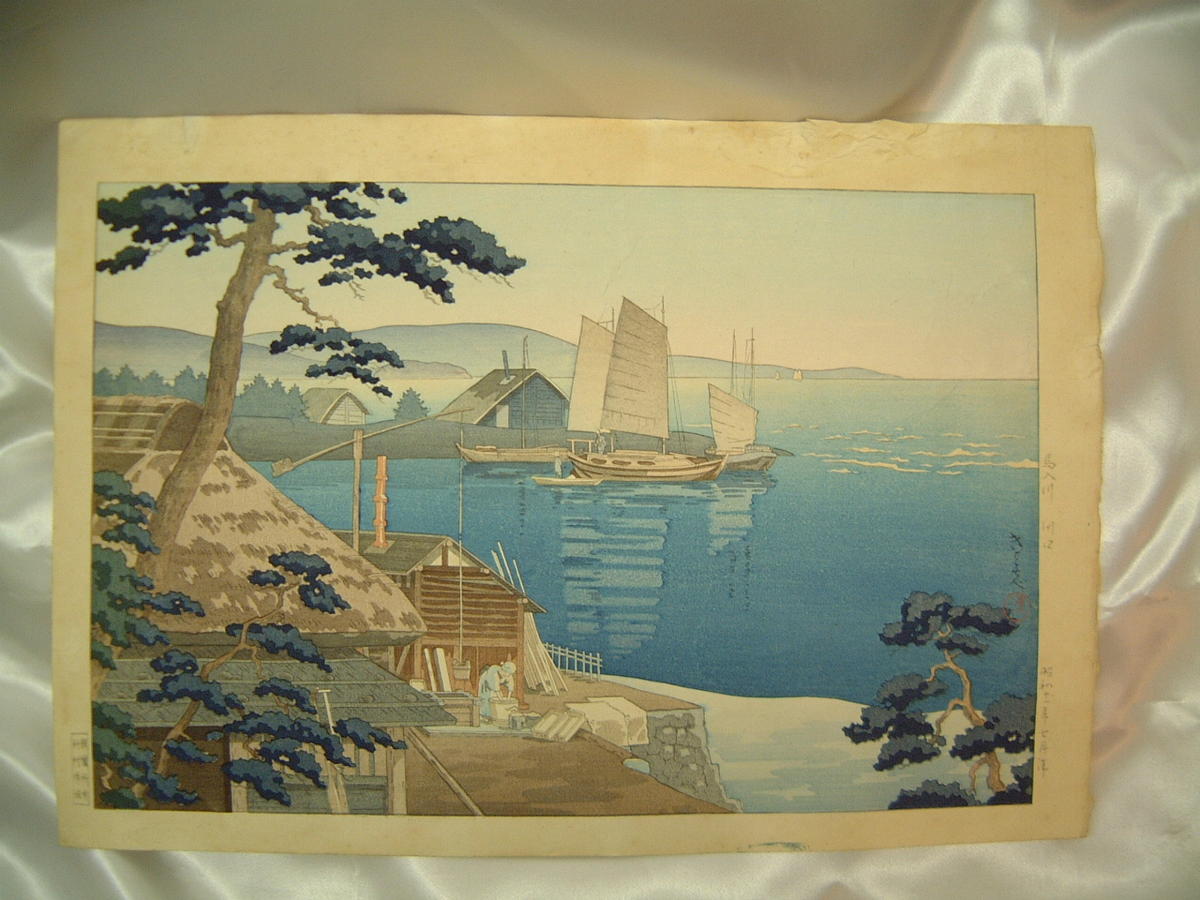
The Mouth of the Banyu River — 馬入川 川口
- Medium:
- Woodblock print
- Source:
- Japanese Art Open Database
- Image courtesy of
- Japanese Art Open Database
Description
The Banyu River (馬入川) drains the Sagami plain in Kanagawa Prefecture, emptying into Sagami Bay near Hiratsuka, and its wide, silted mouth was a familiar subject in meisho-e print traditions referencing the Tokaido coastal landscape. This woodblock print depicts the estuary where river current meets tidal water — a compositional situation favoring broad horizontal registers of land, water, and sky. Hasegawa likely employed graduated bokashi in the sky and water passages to convey the diffuse light characteristic of coastal lowlands. Fishing boats or small craft near the sandbar would anchor the foreground, giving human scale to the flat, open geography. As a topographic landscape made before his emigration, the print situates Hasegawa within the shin-hanga interest in regional Japanese scenery rendered with atmospheric naturalism.
More Prints by Kiyoshi Hasegawa
More Landscapes Prints

Lake Kugushi in Wakasa Province (Wakasa Kugushiko), from the series Souvenirs of Travel I (Tabi miyage dai isshu)"
Wakasa Kugushiko
1920
Color woodblock print; oban
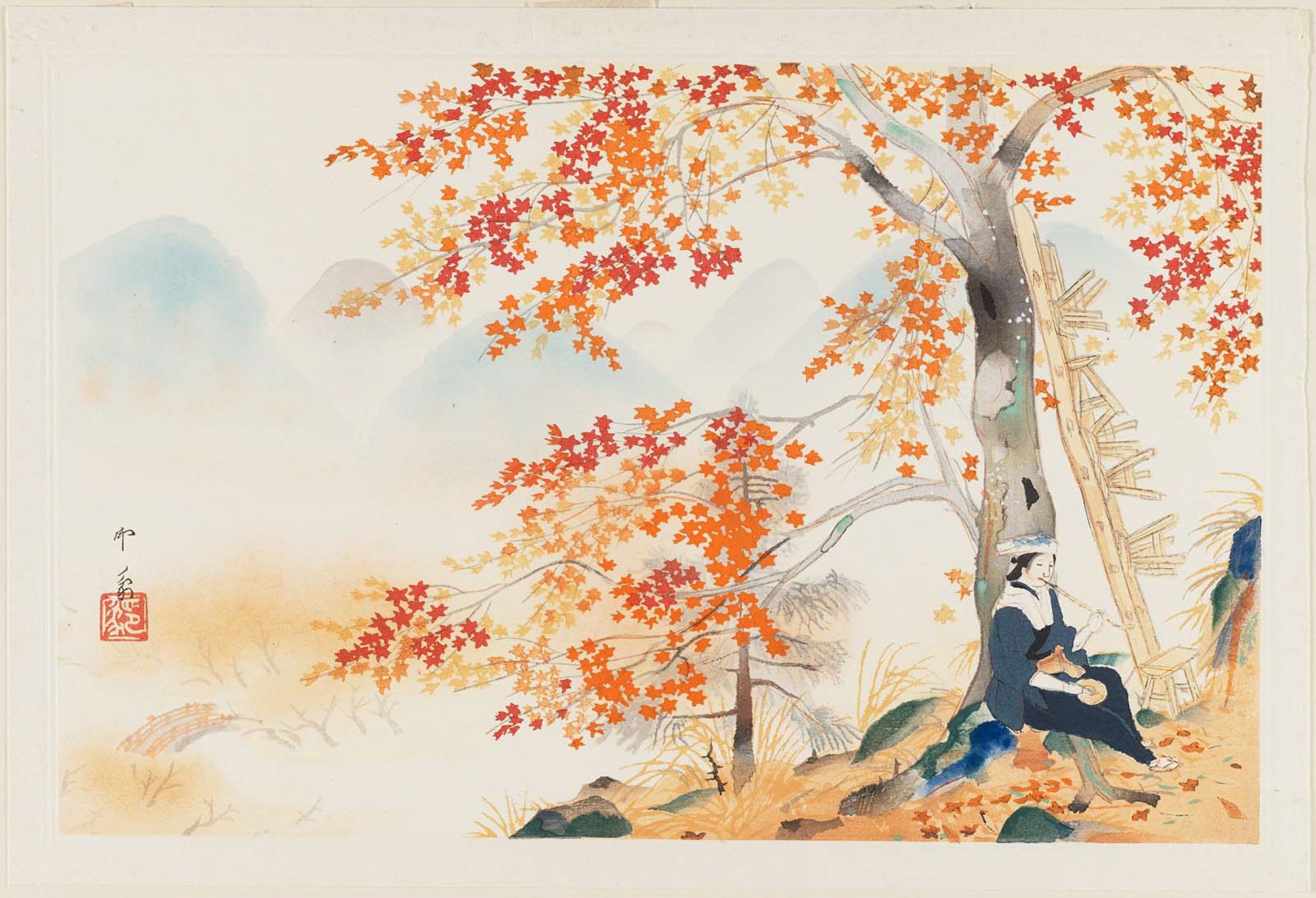
Autumn Maple Leaves at Takao, from the album Eight Views of Kyoto (Kyôto hakkei)
Woodblock print

The Beach at Kaiganji in Sanuki Province (Sanuki Kaiganji no hama), from the series "Collection of Views of Japan II, Kansai Edition (Nihon fukei shu II Kansai hen)"
1934
Color woodblock print; oban

Tea Kettle, section of a sheet from the series "Mirror of Stone Rubbings of Views of the Provinces" (Kohon meihitsu ishizuri kagami)
n.d.
Woodblock print; ishizuri-e, section of harimaze sheet
Featured in Collections
Curated cross-cuts that include this print.
Frequently Asked Questions
The Mouth of the Banyu River — 馬入川 川口 was created by Kiyoshi Hasegawa (長谷川潔).
The Mouth of the Banyu River — 馬入川 川口 depicts landscapes.